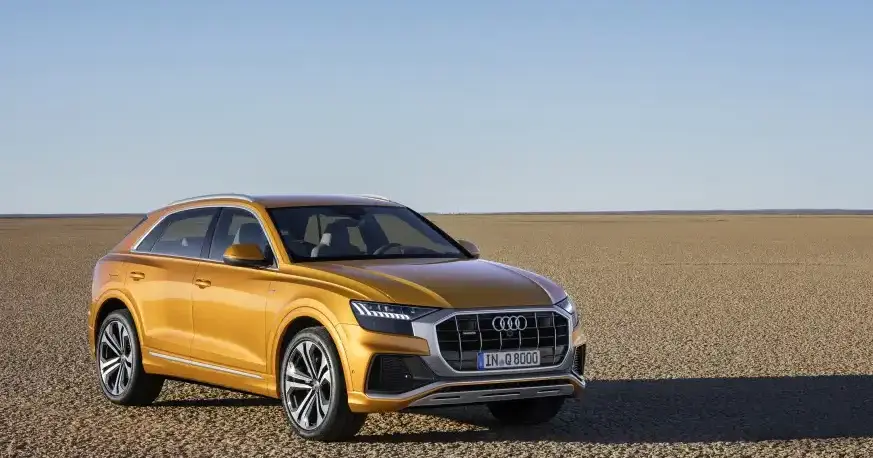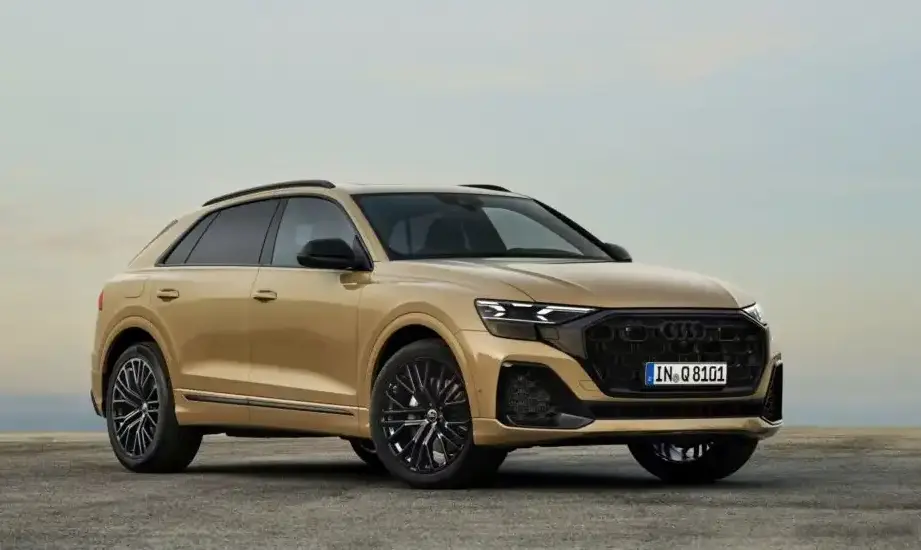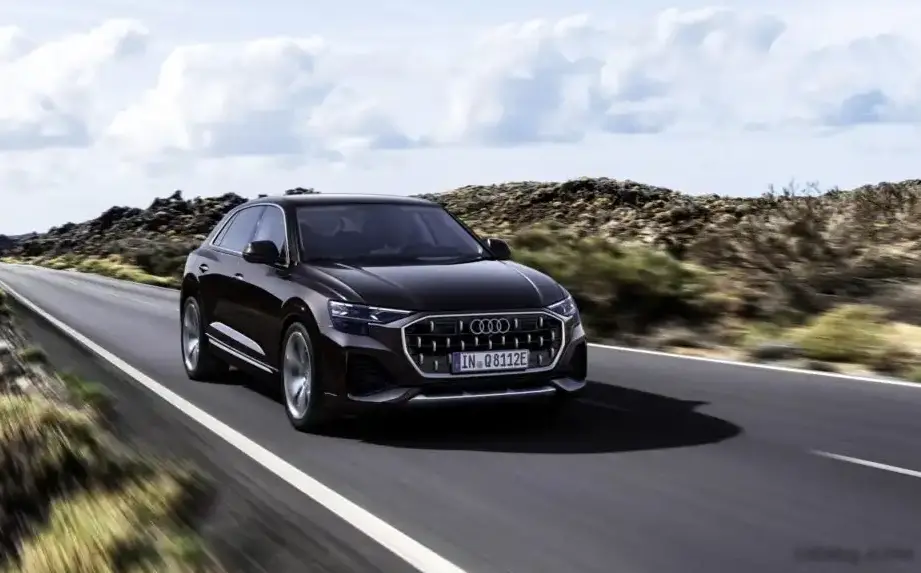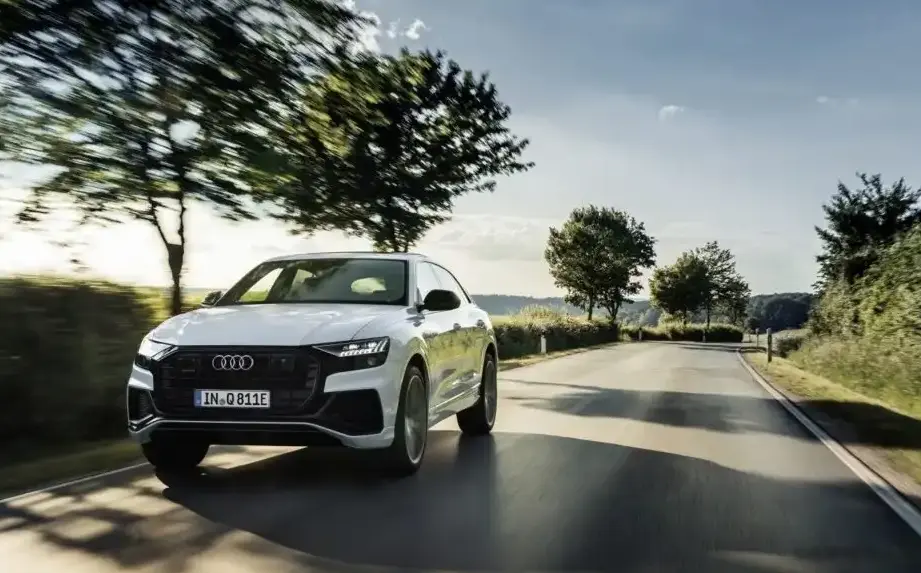
The Audi Q8 55 TFSI e, produced from October 2020 to July 2022, represents Audi’s entry into the premium plug-in hybrid SUV market. Based on the Q8 (4M) platform – shared with the Porsche Cayenne and other Volkswagen Group vehicles – this variant combines a 3.0-liter turbocharged V6 engine with an electric motor and a lithium-ion battery pack, offering a blend of performance and efficiency. Positioned as a mid-to-high range offering within the Q8 lineup, the 55 TFSI e aimed to appeal to buyers seeking a luxurious SUV with the benefits of electric driving capability. It was primarily sold in European and North American markets, where demand for PHEV vehicles was growing.
Technical Specifications
| Brand | Audi |
| Model | Q8 |
| Generation | Q8 (4M) |
| Type (Engine) | 55 TFSI e V6 (381 Hp) Plug-in Hybrid quattro tiptronic |
| Start of production | October, 2020 |
| End of production | July, 2022 |
| Powertrain Architecture | PHEV (Plug-in Hybrid Electric Vehicle) |
| Body type | SUV |
| Seats | 5 |
| Doors | 5 |
| Fuel consumption (combined) | 2.6-2.8 l/100 km (90.5 – 84 US mpg, 108.6 – 100.9 UK mpg, 38.5 – 35.7 km/l) |
| CO2 emissions | 59-63 g/km |
| Fuel Type | Petrol / electricity |
| Acceleration 0 – 100 km/h | 5.8 sec |
| Acceleration 0 – 62 mph | 5.8 sec |
| Acceleration 0 – 60 mph | 5.5 sec |
| Maximum speed | 240 km/h (149.13 mph) |
| Emission standard | Euro 6d-ISC-FCM |
| Weight-to-power ratio | 6.4 kg/Hp, 156.8 Hp/tonne |
| Weight-to-torque ratio | 4.1 kg/Nm, 246.9 Nm/tonne |
| Gross battery capacity | 17.9 kWh |
| Net (usable) battery capacity | 14.4 kWh |
| Battery technology | Lithium-ion (Li-Ion) |
| Battery location | Under the trunk |
| Recuperation output | 80 kW |
| All-electric range (WLTP) | 43-47 km (26.72 – 29.2 mi) |
| All-electric range (NEDC) | 59 km (36.66 mi) |
| Average Energy consumption (WLTP) | 21.9-22.9 kWh/100 km (35.24 – 36.85 kWh/100 mi, 96 – 91 MPGe, 4.6 – 4.4 km/kWh, 2.8 – 2.7 mi/kWh) |
| Max speed (electric) | 135 km/h (83.89 mph) |
| Electric motor power | 136 Hp |
| Electric motor Torque | 400 Nm (295.02 lb.-ft.) |
| Electric motor location | Between the combustion engine and the transmission |
| System power | 381 Hp |
| System torque | 600 Nm (442.54 lb.-ft.) |
| Power | 340 Hp @ 5300-6400 rpm (113.5 Hp/l) |
| Torque | 450 Nm @ 1340-5300 rpm (331.9 lb.-ft. @ 1340-5300 rpm) |
| Engine layout | Front, Longitudinal |
| Engine Model/Code | DCBE |
| Engine displacement | 2995 cm3 (182.77 cu. in.) |
| Number of cylinders | 6 |
| Engine configuration | V-engine |
| Cylinder Bore | 84.5 mm (3.33 in.) |
| Piston Stroke | 89 mm (3.5 in.) |
| Compression ratio | 11.2:1 |
| Number of valves per cylinder | 4 |
| Fuel injection system | Direct injection |
| Engine aspiration | Turbocharger, Intercooler |
| Valvetrain | DOHC |
| Engine oil capacity | 7.6 l (8.03 US qt | 6.69 UK qt) |
| Coolant | 20.7 l (21.87 US qt | 18.21 UK qt) |
| Kerb Weight | 2430 kg (5357.23 lbs.) |
| Max. weight | 3045 kg (6713.08 lbs.) |
| Max load | 615 kg (1355.84 lbs.) |
| Trunk (boot) space – minimum | 505 l (17.83 cu. ft.) |
| Trunk (boot) space – maximum | 1625 l (57.39 cu. ft.) |
| Fuel tank capacity | 75 l (19.81 US gal | 16.5 UK gal) |
| Max. roof load | 100 kg (220.46 lbs.) |
| Permitted trailer load with brakes (8%) | 2800 kg (6172.94 lbs.) |
| Permitted trailer load with brakes (12%) | 2800 kg (6172.94 lbs.) |
| Permitted trailer load without brakes | 750 kg (1653.47 lbs.) |
| Permitted towbar download | 115 kg (253.53 lbs.) |
| Length | 4986 mm (196.3 in.) |
| Width | 1995 mm (78.54 in.) |
| Width including mirrors | 2190 mm (86.22 in.) |
| Height | 1701 mm (66.97 in.) |
| Wheelbase | 2995 mm (117.91 in.) |
| Front track | 1679 mm (66.1 in.) |
| Rear (Back) track | 1691 mm (66.57 in.) |
| Front overhang | 978 mm (38.5 in.) |
| Rear overhang | 1013 mm (39.88 in.) |
| Minimum turning circle | 13.3 m (43.64 ft.) |
| Front suspension | Independent multi-link suspension, Transverse stabilizer |
| Rear suspension | Independent multi-link suspension, Transverse stabilizer |
| Front brakes | Ventilated discs |
| Rear brakes | Ventilated discs |
| Gearbox | 8 gears, automatic transmission tiptronic |
| Tires size | 265/55 R19; 275/50 R20; 285/45 R21; 285/40 R22 |
| Wheel rims size | 8.5J x 19; 9J x 20; 10J x 21; 10J x 22 |
INTRODUCTION
The Audi Q8 55 TFSI e, launched in late 2020, is a plug-in hybrid variant of the Q8 SUV. It builds upon the foundation of the 4M generation Q8, introduced in 2018, offering a compelling alternative to traditional internal combustion engine (ICE) vehicles. The “55 TFSI e” designation signifies its powertrain configuration – a 3.0-liter turbocharged V6 engine combined with an electric motor and a substantial battery pack. This model aimed to provide a balance between the Q8’s luxurious character, sporty handling, and improved fuel efficiency, catering to a growing segment of environmentally conscious luxury SUV buyers. The Q8 55 TFSI e was discontinued in July 2022, likely due to evolving model strategies and the introduction of newer PHEV technologies.
Powertrain & Engine Architecture
At the heart of the Q8 55 TFSI e lies Audi’s DCBE engine – a 3.0-liter V6 turbocharged gasoline engine. This engine produces 340 horsepower and 450 Nm (331.9 lb-ft) of torque. It utilizes direct fuel injection and a single twin-scroll turbocharger to maximize efficiency and power output. Integrated with this engine is a 136 horsepower electric motor, powered by a 17.9 kWh (gross) / 14.4 kWh (net) lithium-ion battery pack. The electric motor is positioned between the engine and the eight-speed tiptronic automatic transmission, allowing for both electric-only driving and combined operation. The powertrain management system seamlessly blends power from both sources, resulting in a total system output of 381 horsepower and 600 Nm (442.54 lb-ft) of torque. The transmission itself is a well-refined eight-speed automatic, known for its smooth shifts and responsive performance. The battery pack is located under the trunk floor, minimizing impact on passenger space but reducing cargo capacity compared to non-hybrid Q8 models.
Driving Characteristics
The Q8 55 TFSI e delivers a refined and capable driving experience. In electric-only mode, it offers silent and smooth acceleration, suitable for short commutes and urban driving. The 14.4 kWh battery provides a realistic electric range of around 30-35 miles (WLTP), sufficient for many daily trips. When the battery is depleted or when more power is demanded, the gasoline engine seamlessly kicks in, providing robust acceleration. The combined output of 381 hp allows for a 0-60 mph time of around 5.5 seconds. The tiptronic transmission is well-matched to the powertrain, providing quick and smooth gear changes. Compared to the Q8 50 TDI (diesel) or the Q8 55 TFSI (gasoline only), the 55 TFSI e offers a different character. It prioritizes efficiency and electric driving capability over outright performance, although it remains a quick and capable SUV. The added weight of the battery pack is noticeable, but the sophisticated suspension system mitigates much of this effect, providing a comfortable ride.
Equipment & Trim Levels
The Q8 55 TFSI e typically came well-equipped, reflecting its position as a premium model. Standard features included Audi’s virtual cockpit digital instrument cluster, a large touchscreen infotainment system with navigation, leather upholstery, heated front seats, a panoramic sunroof, and a suite of advanced driver-assistance systems (ADAS) such as adaptive cruise control, lane-keeping assist, and automatic emergency braking. Optional extras included upgraded leather packages, a Bang & Olufsen premium sound system, massaging front seats, and various cosmetic enhancements. Trim levels were generally aligned with the broader Q8 range, with options for different interior finishes and exterior styling packages. The focus was on providing a luxurious and technologically advanced cabin experience.
Chassis & Braking
The Q8 55 TFSI e utilizes a fully independent suspension system, with multi-link setups at both the front and rear axles. This provides a comfortable ride and precise handling. Stabilizer bars are fitted to both axles to reduce body roll during cornering. The braking system consists of ventilated discs on all four wheels, providing ample stopping power. The regenerative braking system, which recovers energy during deceleration, helps to extend the electric range. The quattro all-wheel-drive system is standard, providing excellent traction in all weather conditions. The system intelligently distributes torque between the front and rear axles based on driving conditions, enhancing stability and control.
Market Reception & Comparison
The Audi Q8 55 TFSI e was generally well-received by automotive critics. It was praised for its refined driving experience, luxurious interior, and impressive fuel efficiency. However, some reviewers noted the reduced cargo space due to the battery pack and the relatively high price compared to non-hybrid Q8 models. Compared to the Q8 50 TDI, the 55 TFSI e offered lower running costs (due to the electric driving capability) but slightly less overall range. Against the Q8 55 TFSI, it provided improved fuel economy and the benefits of electric driving, but with a slightly higher purchase price. The BMW X5 xDrive45e and Mercedes-Benz GLE 350e were its primary competitors in the premium plug-in hybrid SUV segment.
Legacy
The Audi Q8 55 TFSI e represented an important step in Audi’s electrification strategy. While its production run was relatively short, it demonstrated the potential of plug-in hybrid technology in a luxury SUV. The powertrain, while not without its complexities, proved to be generally reliable. On the used car market, the Q8 55 TFSI e remains a desirable option for buyers seeking a luxurious and efficient SUV with electric driving capability. Its value is influenced by factors such as mileage, condition, and battery health. The technology introduced in this model paved the way for Audi’s subsequent fully electric vehicles and further advancements in plug-in hybrid technology.