
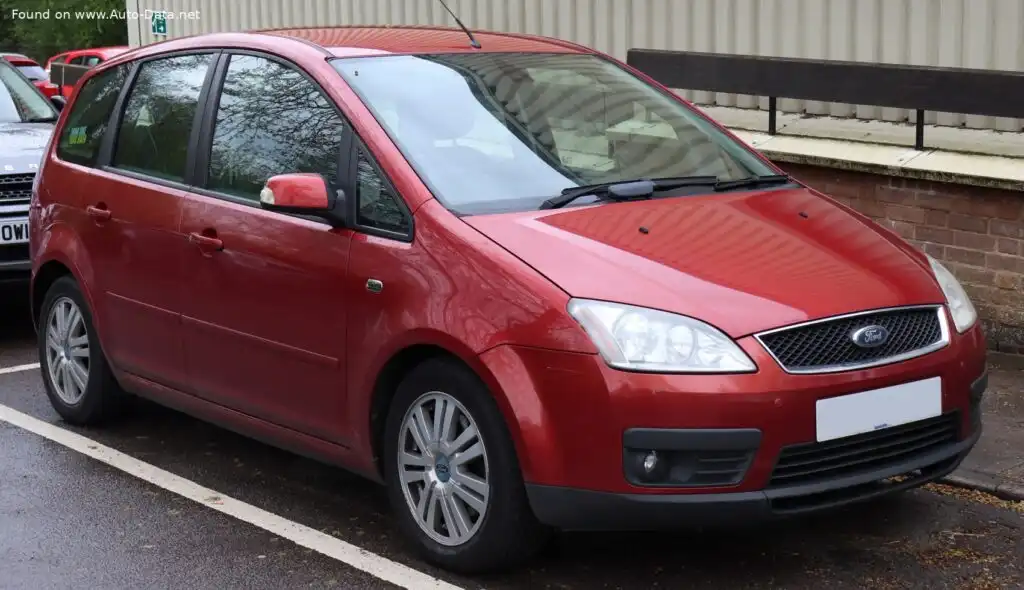
The Ford C-MAX 2.0 TDCi, producing 136 horsepower, was a key variant in the first generation of the C-MAX compact multi-purpose vehicle (MPV), manufactured between 2003 and 2007. Positioned as a mid-range offering, it aimed to balance fuel efficiency with respectable performance for family transport. This model was primarily sold in the European market, where compact MPVs were highly popular, offering a practical alternative to larger minivans and traditional station wagons. It was built on Ford’s C170 platform, shared with the first-generation Focus.
Technical Specifications
| Brand | Ford |
| Model | C-MAX |
| Generation | C-MAX (First Generation) |
| Type (Engine) | 2.0 TDCi (136 Hp) |
| Start of production | 2003 |
| End of production | 2007 |
| Powertrain Architecture | Internal Combustion Engine |
| Body type | MPV |
| Seats | 5 |
| Doors | 5 |
| Fuel consumption (urban) | 7.5 l/100 km (31.4 US mpg) |
| Fuel consumption (extra urban) | 4.5 l/100 km (52.3 US mpg) |
| Fuel consumption (combined) | 5.6 l/100 km (42 US mpg) |
| Fuel Type | Diesel |
| Acceleration 0 – 100 km/h | 9.6 sec |
| Acceleration 0 – 62 mph | 9.6 sec |
| Acceleration 0 – 60 mph | 9.1 sec |
| Maximum speed | 200 km/h (124.27 mph) |
| Weight-to-power ratio | 10.2 kg/Hp |
| Weight-to-torque ratio | 4.3 kg/Nm |
| Power | 136 Hp @ 4000 rpm |
| Torque | 320 Nm @ 2000 rpm (236.02 lb.-ft. @ 2000 rpm) |
| Engine layout | Front, Transverse |
| Engine Model/Code | G6DA |
| Engine displacement | 1997 cm3 (121.86 cu. in.) |
| Number of cylinders | 4 |
| Engine configuration | Inline |
| Cylinder Bore | 85 mm (3.35 in.) |
| Piston Stroke | 88 mm (3.46 in.) |
| Compression ratio | 18.5:1 |
| Number of valves per cylinder | 4 |
| Fuel injection system | Diesel Commonrail |
| Engine aspiration | Turbocharger, Intercooler |
| Valvetrain | DOHC |
| Engine oil capacity | 5.5 l (5.81 US qt | 4.84 UK qt) |
| Coolant capacity | 8.4 l (8.88 US qt | 7.39 UK qt) |
| Kerb Weight | 1391 kg (3066.63 lbs.) |
| Fuel tank capacity | 55 l (14.53 US gal | 12.1 UK gal) |
| Length | 4330 mm (170.47 in.) |
| Width | 1820 mm (71.65 in.) |
| Height | 1600 mm (62.99 in.) |
| Wheelbase | 2640 mm (103.94 in.) |
| Minimum turning circle | 10.7 m (35.1 ft.) |
| Drivetrain Architecture | Front Wheel Drive, Internal Combustion Engine |
| Drive wheel | Front wheel drive |
| Number of gears | 6 |
| Type of gearbox | Manual Transmission |
| Front brakes | Disc |
| Rear brakes | Disc |
| Assisting systems | ABS (Anti-lock braking system) |
| Steering type | Steering rack and pinion |
| Power steering | Hydraulic Steering |
| Tires size | 205/55 R16 |
| Wheel rims size | 16 |
Powertrain & Engine Architecture
The heart of the C-MAX 2.0 TDCi was the G6DA engine, a 1.997-liter inline-four cylinder diesel. This engine was part of Ford’s Duratorq family, known for its robust construction and relatively good fuel economy. It utilized a common rail direct injection system, delivering fuel at extremely high pressure for improved combustion efficiency and reduced emissions. The engine featured a double overhead camshaft (DOHC) design operating four valves per cylinder. A turbocharger with an intercooler was employed to boost power output and improve torque across the rev range. The 2.0 TDCi engine produced 136 horsepower at 4000 rpm and a substantial 320 Nm (236 lb-ft) of torque at just 2000 rpm. This torque figure was a key characteristic, providing strong pulling power for everyday driving and load carrying. The engine was paired with a six-speed manual transmission, offering a good balance between fuel efficiency and driver control.
Driving Characteristics
The 2.0 TDCi C-MAX offered a practical and comfortable driving experience. The engine’s strong low-end torque made it feel responsive in urban environments and provided ample power for overtaking on highways. While not a particularly sporty vehicle, the 0-60 mph time of around 9.1 seconds was respectable for a family MPV. The six-speed manual transmission allowed drivers to keep the engine in its optimal power band, maximizing efficiency and performance. Compared to the lower-powered 1.6 TDCi versions, the 2.0 TDCi offered a noticeable improvement in acceleration and overall refinement. It also felt less strained when fully loaded with passengers and luggage. Compared to petrol-powered C-MAX models, the 2.0 TDCi provided significantly better fuel economy, making it a more economical choice for long-distance travel.
Equipment & Trim Levels
The 2.0 TDCi C-MAX typically came equipped with a reasonable level of standard features. These included air conditioning, power windows, power door locks, and a basic audio system. Higher trim levels, such as the Ghia, added features like alloy wheels, upgraded upholstery, a multi-function steering wheel, and climate control. Optional extras included a sunroof, parking sensors, and a more advanced audio system with CD changer. Interior upholstery was typically cloth, with leather options available on higher-spec models. The dashboard layout was functional and straightforward, prioritizing ease of use over stylistic flair.
Chassis & Braking
The C-MAX featured a MacPherson strut front suspension and a multi-link rear suspension, providing a comfortable ride and decent handling characteristics. The suspension was tuned to prioritize comfort over outright sportiness. Braking was handled by disc brakes on all four wheels, providing adequate stopping power. Anti-lock Braking System (ABS) was standard, enhancing safety in emergency braking situations. The C-MAX’s weight distribution was relatively balanced, contributing to its stable handling. Stabilizer bars were fitted to both the front and rear axles to reduce body roll during cornering.
Market Reception & Comparison
The Ford C-MAX 2.0 TDCi was generally well-received by automotive critics. It was praised for its spacious interior, practical design, and fuel-efficient engine. The 2.0 TDCi engine was considered a good compromise between performance and economy. However, some critics noted that the interior materials were not as high quality as those found in some of its competitors. Compared to rivals like the Renault Scenic and Opel/Vauxhall Zafira, the C-MAX offered a competitive package in terms of price, features, and fuel economy. The 2.0 TDCi variant was often seen as a sweet spot in the C-MAX range, offering a good balance of performance and running costs.
Legacy
The Ford C-MAX 2.0 TDCi has proven to be a relatively reliable vehicle in the used car market. The Duratorq engine is known for its durability, although regular maintenance is essential to prevent issues. Common problems include injector failures and turbocharger wear, particularly on higher-mileage examples. The manual transmission is generally robust, but clutch wear is a potential concern. Overall, the C-MAX 2.0 TDCi remains a popular choice for buyers seeking a practical and economical family MPV. Its combination of space, fuel efficiency, and reasonable running costs continues to make it a viable option in the used car market today.
