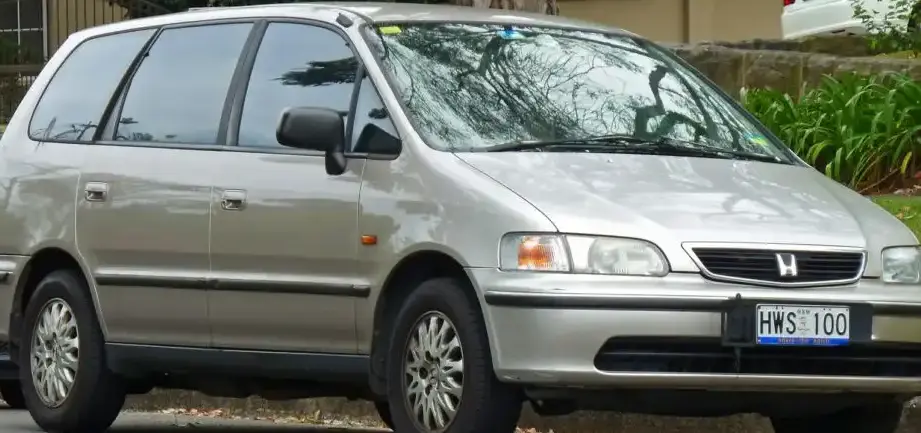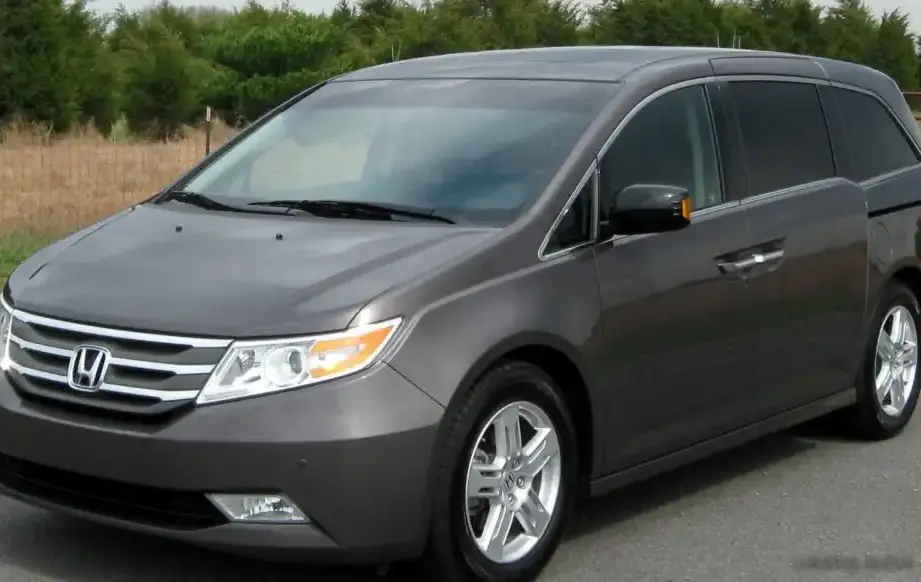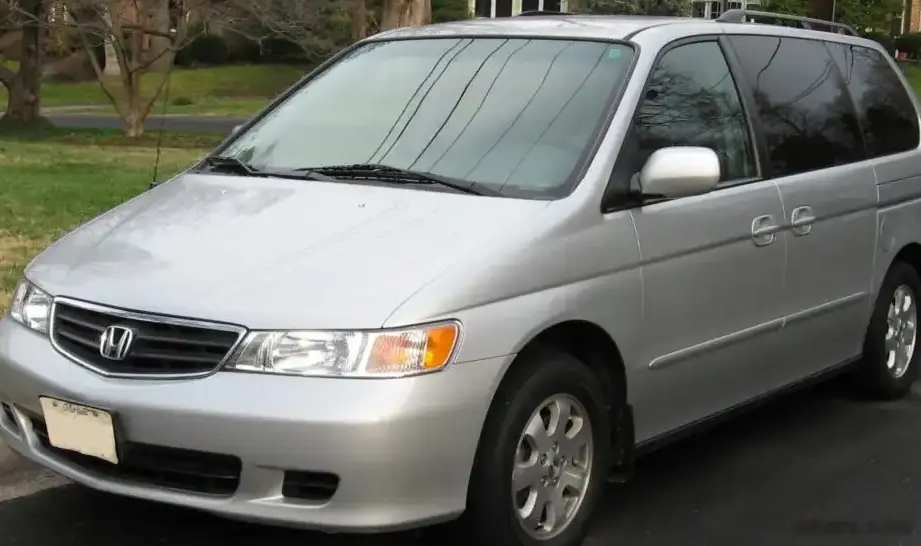
The Honda Odyssey II 2.3 16V, produced between 1999 and 2004, represented Honda’s second-generation entry into the highly competitive minivan segment. Specifically, the 2.3-liter, 16-valve engine paired with a four-speed automatic transmission was positioned as a mid-range offering within the Odyssey II lineup, slotting below the more powerful 3.5-liter V6 models and often above base trims with simpler equipment. This configuration aimed to balance affordability with acceptable performance and convenience for family transportation. The Odyssey II, built on the MDX platform, was primarily marketed in North America, Japan, and select Asian markets, offering a compelling alternative to established American minivans like the Dodge Caravan and Chrysler Town & Country.
Technical Specifications
| Brand | Honda |
| Model | Odyssey |
| Generation | Odyssey II |
| Type (Engine) | 2.3 16V (150 Hp) |
| Start of production | 1999 |
| End of production | 2004 |
| Powertrain Architecture | Internal Combustion engine |
| Body type | Minivan |
| Seats | 7 |
| Doors | 4 |
| Fuel consumption (urban) | 14.2 l/100 km (16.6 US mpg) |
| Fuel consumption (extra urban) | 8.8 l/100 km (26.7 US mpg) |
| Fuel consumption (combined) | 10.8 l/100 km (21.8 US mpg) |
| Fuel Type | Petrol (Gasoline) |
| Acceleration 0 – 100 km/h | 12 sec |
| Acceleration 0 – 62 mph | 12 sec |
| Acceleration 0 – 60 mph | 11.4 sec |
| Maximum speed | 185 km/h (114.95 mph) |
| Weight-to-power ratio | 9.9 kg/Hp |
| Weight-to-torque ratio | 7.5 kg/Nm |
| Power | 150 Hp @ 5700 rpm |
| Torque | 200 Nm @ 4700 rpm (147.51 lb.-ft. @ 4700 rpm) |
| Engine layout | Front, Transverse |
| Engine Model/Code | F23A7 |
| Engine displacement | 2254 cm3 (137.55 cu. in.) |
| Number of cylinders | 4 |
| Engine configuration | Inline |
| Cylinder Bore | 86 mm (3.39 in.) |
| Piston Stroke | 97 mm (3.82 in.) |
| Compression ratio | 9.3:1 |
| Number of valves per cylinder | 4 |
| Fuel injection system | Multi-port manifold injection |
| Engine aspiration | Naturally aspirated |
| Valvetrain | OHC |
| Engine oil capacity | 4.3 l (4.54 US qt | 3.78 UK qt) |
| Kerb Weight | 1490 kg (3284.89 lbs.) |
| Trunk (boot) space – minimum | 280 l (9.89 cu. ft.) |
| Trunk (boot) space – maximum | 1235 l (43.61 cu. ft.) |
| Fuel tank capacity | 65 l (17.17 US gal | 14.3 UK gal) |
| Length | 4770 mm (187.8 in.) |
| Width | 1795 mm (70.67 in.) |
| Height | 1630 mm (64.17 in.) |
| Wheelbase | 2830 mm (111.42 in.) |
| Front track | 1560 mm (61.42 in.) |
| Rear track | 1555 mm (61.22 in.) |
| Drive wheel | All wheel drive (4×4) |
| Number of gears | 4 |
| Gearbox type | Automatic transmission |
| Front suspension | Double wishbone |
| Rear suspension | Double wishbone |
| Front brakes | Ventilated discs |
| Rear brakes | Disc |
| Assisting systems | ABS (Anti-lock braking system) |
| Steering type | Steering rack and pinion |
| Power steering | Hydraulic |
| Tires size | 205/65 R15 |
Powertrain & Engine Architecture
The heart of this Odyssey variant is the F23A7 engine, a 2.3-liter inline-four cylinder powerplant. This engine utilizes a single overhead camshaft (SOHC) valvetrain operating 16 valves (four per cylinder). Fuel delivery is managed by a multi-point fuel injection system, providing precise fuel metering for improved efficiency and emissions control. The engine’s 9.3:1 compression ratio strikes a balance between performance and the ability to run on readily available gasoline grades. The four-speed automatic transmission, while not as sophisticated as some contemporary transmissions, was known for its reliability and smooth operation. It featured typical torque converter lock-up functionality to improve fuel economy at cruising speeds. The transmission’s gear ratios were tuned for everyday drivability rather than outright acceleration.
Driving Characteristics
The 150 horsepower and 200 Nm (147.5 lb-ft) of torque produced by the 2.3-liter engine provided adequate, but not exhilarating, performance for the Odyssey II. Acceleration from 0-60 mph took around 11.4 to 12 seconds, making it suitable for merging onto highways and navigating city streets. Compared to the 3.5-liter V6 models, the 2.3-liter felt noticeably less powerful, especially when fully loaded with passengers and cargo. The automatic transmission, while smooth, could sometimes feel hesitant during quick acceleration maneuvers. The gear ratios were optimized for fuel efficiency, resulting in a more relaxed driving experience but sacrificing some responsiveness. The all-wheel-drive system provided enhanced traction in inclement weather conditions, a significant benefit for drivers in regions with snow or rain.
Equipment & Trim Levels
The 2.3-liter Odyssey II typically came equipped with a respectable array of standard features. These generally included air conditioning, power windows and locks, a basic audio system, and cloth upholstery. Higher trim levels offered upgrades such as alloy wheels, a more advanced audio system with a CD player, and optional features like a sunroof and leather upholstery. Safety features such as anti-lock brakes (ABS) were standard across the range. The interior design was functional and family-oriented, with ample storage compartments and comfortable seating for seven passengers.
Chassis & Braking
The Odyssey II utilized a double wishbone suspension system both front and rear, providing a comfortable ride quality. The suspension was tuned to prioritize ride comfort over sporty handling. Braking duties were handled by ventilated discs at the front and solid discs at the rear. The ABS system helped to maintain steering control during hard braking situations. The steering system employed a hydraulic power steering rack and pinion, offering a reasonable level of assistance without feeling overly artificial.
Market Reception & Comparison
The Odyssey II 2.3 16V was generally well-received as a practical and affordable minivan option. Critics praised its spacious interior, comfortable ride, and available all-wheel-drive system. However, the 2.3-liter engine was often criticized for its lack of power, particularly when compared to the V6 alternatives. Fuel economy was considered average for its class, with combined figures around 21.8 US mpg. Compared to the V6 models, the 2.3-liter offered a lower purchase price and potentially lower maintenance costs, making it an attractive option for budget-conscious buyers. The 2.3L was often favored by those who prioritized fuel efficiency and didn’t require the extra power of the V6.
Legacy
The Honda Odyssey II 2.3 16V has proven to be a relatively reliable vehicle, with the F23A7 engine known for its durability. Common maintenance items include regular oil changes, timing belt replacements (typically every 100,000 miles), and occasional sensor replacements. In the used car market, these Odysseys are often found with relatively high mileage but remain popular due to their affordability and practicality. While not as sought-after as the V6 models, the 2.3-liter variant represents a solid value for buyers seeking a dependable and spacious minivan.