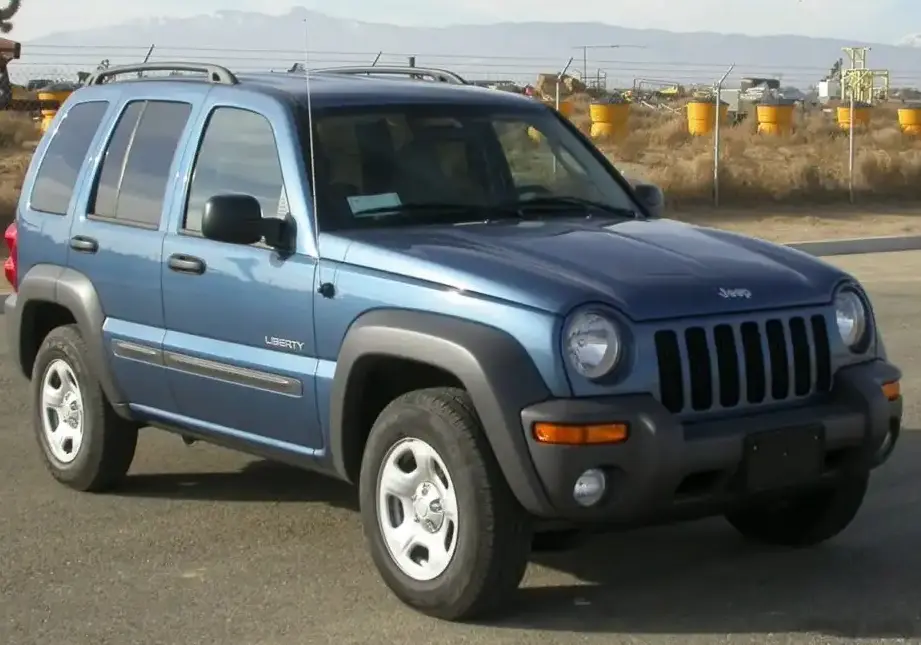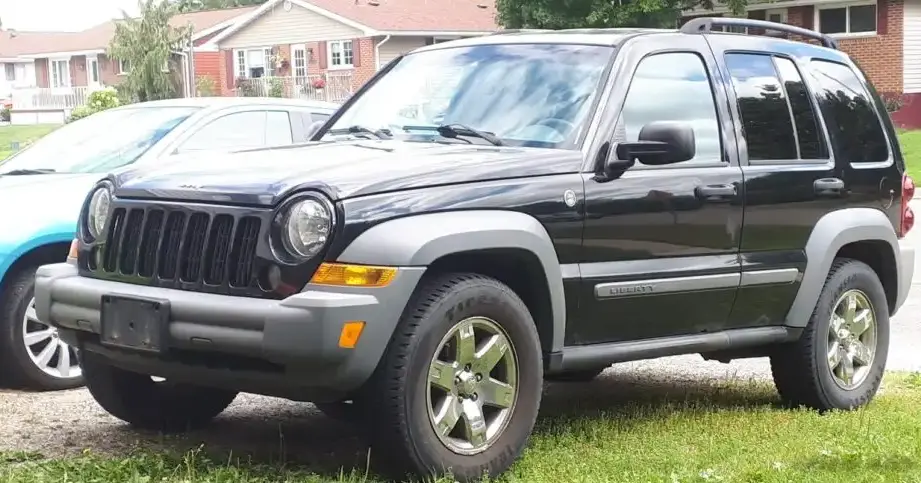
The Jeep Liberty, positioned as a mid-size SUV, underwent a significant facelift in 2004 for the 2005 model year. This refresh brought updated styling and, importantly, powertrain options aimed at broadening its appeal. The 3.7 i V6 12V (210 Hp) 4WD Automatic variant, produced from 2005 to 2007, represented a key configuration within the Liberty lineup, offering a balance between capability and affordability. It was built on the KJ platform, a body-on-frame design intended to provide robust off-road performance while maintaining on-road comfort. This particular trim level aimed to attract buyers seeking a versatile SUV with four-wheel drive without the higher price tag of the more powerful engine options.
Technical Specifications
| Brand | Jeep |
| Model | Liberty |
| Generation | Liberty I (facelift 2004) |
| Type (Engine) | 3.7 i V6 12V (210 Hp) 4WD Automatic |
| Start of production | 2005 |
| End of production | 2007 |
| Powertrain Architecture | Internal Combustion engine |
| Body type | SUV |
| Seats | 5 |
| Doors | 5 |
| Fuel Type | Petrol (Gasoline) |
| Weight-to-power ratio | 8.7 kg/Hp, 114.8 Hp/tonne |
| Weight-to-torque ratio | 5.8 kg/Nm, 173.9 Nm/tonne |
| Power | 210 Hp @ 5200 rpm |
| Power per litre | 56.7 Hp/l |
| Torque | 318 Nm @ 4000 rpm, 234.54 lb.-ft. @ 4000 rpm |
| Engine layout | Front, Longitudinal |
| Engine Model/Code | EKG |
| Engine displacement | 3701 cm3, 225.85 cu. in. |
| Number of cylinders | 6 |
| Engine configuration | V-engine |
| Cylinder Bore | 93 mm, 3.66 in. |
| Piston Stroke | 90.8 mm, 3.57 in. |
| Compression ratio | 9.1:1 |
| Number of valves per cylinder | 2 |
| Fuel injection system | Multi-port manifold injection |
| Engine aspiration | Naturally aspirated engine |
| Engine oil capacity | 4.7 l, 4.97 US qt | 4.14 UK qt |
| Coolant | 13.2 l, 13.95 US qt | 11.61 UK qt |
| Kerb Weight | 1829 kg, 4032.25 lbs |
| Max. weight | 2540 kg, 5599.74 lbs |
| Max load | 711 kg, 1567.49 lbs |
| Trunk (boot) space – minimum | 878 l, 31.01 cu. ft. |
| Trunk (boot) space – maximum | 1950 l, 68.86 cu. ft. |
| Fuel tank capacity | 78 l, 20.61 US gal | 17.16 UK gal |
| Permitted trailer load with brakes (12%) | 2268 kg, 5000.08 lbs |
| Length | 4437 mm, 174.69 in. |
| Width | 1824 mm, 71.81 in. |
| Height | 1824 mm, 71.81 in. |
| Wheelbase | 2647 mm, 104.21 in. |
| Front track | 1524 mm, 60 in. |
| Rear (Back) track | 1518 mm, 59.76 in. |
| Front overhang | 734 mm, 28.9 in. |
| Rear overhang | 1052 mm, 41.42 in. |
| Ride height (ground clearance) | 239 mm, 9.41 in. |
| Minimum turning circle (turning diameter) | 10.9 m, 35.76 ft. |
| Approach angle | 37.2° |
| Departure angle | 31.5° |
| Ramp-over (brakeover) angle | 21.8° |
| Drivetrain Architecture | The Internal combustion engine (ICE) drives the rear wheels permanently, and the front wheels are driven through an electrically or mechanically operated clutch if necessary. |
| Drive wheel | All wheel drive (4×4) |
| Number of gears and type of gearbox | 4 gears, automatic transmission |
| Front suspension | Independent, type McPherson with coil spring and anti-roll bar |
| Rear suspension | Rigid axle suspension, Transverse stabilizer, Coil spring |
| Front brakes | Ventilated discs, 287.02 mm |
| Rear brakes | Disc, 284.48×12.7 mm |
| Assisting systems | ABS (Anti-lock braking system) |
| Steering type | Steering rack and pinion |
| Tires size | 225/75 R16 |
| Wheel rims size | 7J x 16 |
Powertrain & Engine Architecture
The heart of this Liberty variant is the 3.7-liter EKG V6 engine. This engine, a member of Chrysler’s then-new “World Engine” family, featured a 60-degree V-angle and a single overhead camshaft (SOHC) design with two valves per cylinder. The multi-port fuel injection system delivered fuel directly to the intake ports, optimizing combustion. The 12-valve configuration, while simpler than dual overhead cam designs, prioritized reliability and low-end torque. The 42RE four-speed automatic transmission was the standard pairing for this engine. This transmission, known for its durability, featured electronic control for smoother shifting and optimized gear selection. While not the most technologically advanced transmission available at the time, it was well-suited to the engine’s power characteristics and the Liberty’s intended use as a capable, everyday SUV.
Driving Characteristics
The 210 horsepower and 234 lb-ft of torque provided by the 3.7L V6 and 42RE automatic combination resulted in adequate, but not exhilarating, performance. Acceleration from 0 to 60 mph typically took around 9-10 seconds. The automatic transmission’s gear ratios were geared towards providing sufficient power for everyday driving and towing, rather than outright speed. Compared to the optional 3.7L V6 with manual transmission, the automatic version felt slightly less responsive due to the inherent power loss in the torque converter. However, the automatic offered a more relaxed driving experience, particularly in city traffic. Compared to the more fuel-efficient, but lower-powered 2.4L four-cylinder option, the 3.7L provided a noticeable increase in performance and towing capacity.
Equipment & Trim Levels
The 3.7L 4WD Automatic Liberty typically came standard with features like air conditioning, power windows and locks, a CD player, and cloth upholstery. Optional extras included leather upholstery, a sunroof, upgraded audio systems, and alloy wheels. The Liberty offered a relatively basic interior compared to some competitors, but it was functional and durable. The trim level sat in the middle range of the Liberty lineup, offering a step up in performance and features from the base model, but without the premium price tag of the higher-end trims.
Chassis & Braking
The Liberty’s chassis featured an independent front suspension with McPherson struts and a solid rear axle with coil springs. This setup provided a reasonable balance between ride comfort and off-road capability. The four-wheel drive system, branded Selec-Trac, allowed the driver to select between 2WD, Auto, 4WD High, and 4WD Low modes. Braking duties were handled by ventilated discs up front and discs in the rear. ABS was standard, providing enhanced stopping power and control in emergency situations. The suspension was tuned for a comfortable ride, but it could feel somewhat bouncy when fully loaded.
Market Reception & Comparison
Critics generally viewed the 3.7L Liberty as a competent, if unremarkable, SUV. The engine was praised for its smooth operation and adequate power, but some reviewers noted that it could feel strained when accelerating hard or towing heavy loads. Fuel economy was average for the class, typically around 16 mpg city and 22 mpg highway. Compared to competitors like the Ford Escape and Honda CR-V, the Liberty offered more rugged styling and a more robust four-wheel drive system, but it lacked the refinement and fuel efficiency of some rivals. Reliability was generally considered to be average, with some reports of minor issues with the transmission and electrical system.
Legacy
The 3.7L V6 and 42RE automatic transmission pairing proved to be reasonably durable, with many examples still on the road today. However, like any vehicle of this age, regular maintenance is crucial to ensure long-term reliability. Common issues include oil leaks, corrosion, and wear and tear on suspension components. In the used car market, the 2005-2007 Jeep Liberty 3.7L 4WD Automatic represents an affordable option for buyers seeking a capable and versatile SUV. While it may not offer the latest technology or the highest levels of refinement, it remains a solid choice for those who prioritize practicality and off-road capability.