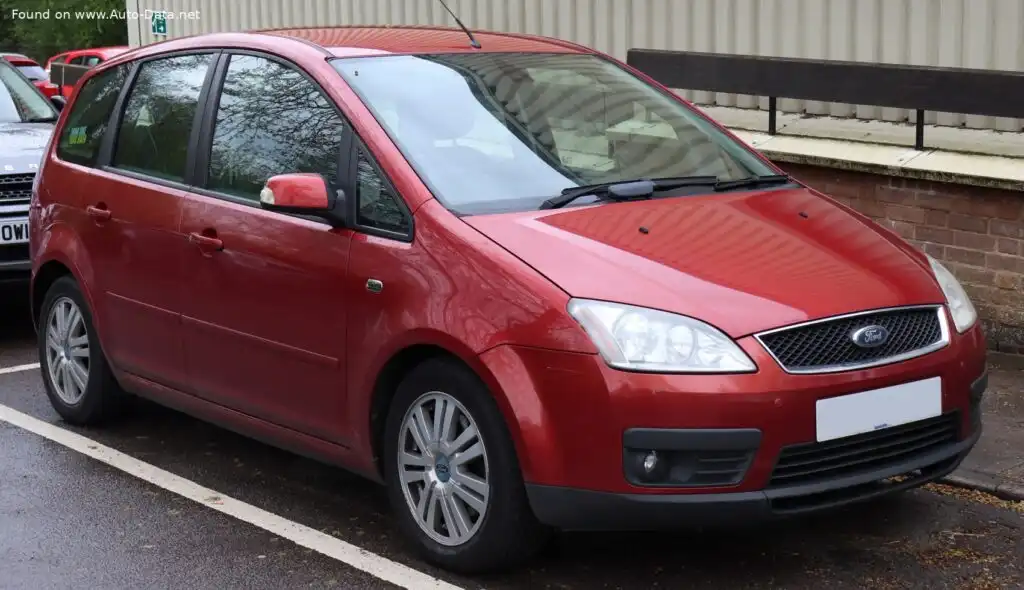
The Ford C-MAX 1.6 TDCi 90 hp, produced from 2007 to 2008, represents a key variant within the refreshed first generation (facelift) of Ford’s popular compact multi-purpose vehicle (MPV). Positioned as an entry-level diesel option, this model aimed to provide fuel efficiency and practicality for families and individuals seeking a versatile vehicle. It was a significant offering in the European market, where smaller, economical MPVs were in high demand. The facelift brought styling updates and minor mechanical revisions to the original C-MAX, enhancing its appeal. This particular engine and transmission combination was designed to balance affordability with acceptable performance for everyday driving.
Technical Specifications
| Brand | Ford |
| Model | C-MAX |
| Generation | C-MAX (Facelift 2007) |
| Type (Engine) | 1.6 TDCi (90 Hp) |
| Start of production | 2007 |
| End of production | 2008 |
| Powertrain Architecture | Internal Combustion engine |
| Body type | MPV |
| Seats | 5 |
| Doors | 5 |
| Fuel Type | Diesel |
| Power | 90 Hp @ 4000 rpm |
| Power per litre | 57.7 Hp/l |
| Torque | 215 Nm @ 1750 rpm (158.58 lb.-ft. @ 1750 rpm) |
| Engine layout | Front, Transverse |
| Engine Model/Code | HHDB |
| Engine displacement | 1560 cm3 (95.2 cu. in.) |
| Number of cylinders | 4 |
| Engine configuration | Inline |
| Fuel injection system | Diesel Commonrail |
| Engine aspiration | Turbocharger, Intercooler |
| Engine oil capacity | 3.8 l (4.02 US qt | 3.34 UK qt) |
| Coolant | 7.3 l (7.71 US qt | 6.42 UK qt) |
| Max. weight | 1920 kg (4232.88 lbs) |
| Trunk (boot) space – minimum | 460 l (16.24 cu. ft) |
| Trunk (boot) space – maximum | 1620 l (57.21 cu. ft) |
| Fuel tank capacity | 55 l (14.53 US gal | 12.1 UK gal) |
| Permitted trailer load with brakes (12%) | 1300 kg (2866.01 lbs) |
| Permitted trailer load without brakes | 695 kg (1532.21 lbs) |
| Width | 1825 mm (71.85 in) |
| Wheelbase | 2640 mm (103.94 in) |
| Front track | 1535 mm (60.43 in) |
| Rear (Back) track | 1531 mm (60.28 in) |
| Minimum turning circle | 10.7 m (35.1 ft) |
| Drivetrain Architecture | The Internal combustion engine (ICE) drives the front wheels of the vehicle. |
| Drive wheel | Front wheel drive |
| Front brakes | Disc |
| Rear brakes | Disc |
| Assisting systems | ABS (Anti-lock braking system) |
Powertrain & Engine Architecture
The heart of this C-MAX variant is the 1.6-liter HHDB turbodiesel engine. This engine belongs to Ford’s Duratorque family, known for its relatively robust design and fuel efficiency. The HHDB utilizes a common rail direct injection system, delivering fuel at extremely high pressure for optimized combustion. A turbocharger with an intercooler is employed to increase power output and improve torque across a wider rev range. The engine features four cylinders in an inline configuration and utilizes a single overhead camshaft (SOHC) valvetrain. The 90 hp output is achieved at 4000 rpm, while peak torque of 215 Nm (158.58 lb-ft) is available from just 1750 rpm, emphasizing its focus on low-end pulling power. This engine was typically paired with a four-speed automatic transmission, a choice that prioritized ease of use over outright performance. The automatic transmission was a conventional hydraulic unit, offering smooth but not particularly rapid gear changes.
Driving Characteristics
The 1.6 TDCi 90 hp automatic C-MAX delivers a driving experience geared towards practicality and economy. Acceleration is modest, with a 0-60 mph time estimated around 13-14 seconds. The four-speed automatic transmission, while comfortable, doesn’t allow the engine to rev freely, and gear changes can sometimes feel sluggish, especially during overtaking maneuvers. Compared to the more powerful 1.6 TDCi variants (110-115 hp) or the petrol-powered options, this version feels noticeably slower. However, the strong low-end torque makes it perfectly adequate for urban driving and cruising on highways. The gear ratios are optimized for fuel efficiency, and the engine is relatively quiet and refined for a diesel unit. The automatic transmission eliminates the need for clutch operation, making it a popular choice for drivers prioritizing convenience.
Equipment & Trim Levels
The 1.6 TDCi 90 hp C-MAX typically came equipped with a reasonable level of standard features. These generally included air conditioning, power steering, electric front windows, and a basic audio system with CD player. Safety features such as ABS, front airbags, and seatbelt pretensioners were also standard. Interior upholstery was typically cloth, with a functional but not luxurious design. Optional extras included alloy wheels, rear parking sensors, upgraded audio systems, and a panoramic sunroof. Trim levels varied slightly depending on the market, but generally, this engine was offered in base or mid-range trims, focusing on value for money. The dashboard layout was typical of Ford vehicles from that era, with a clear and straightforward design.
Chassis & Braking
The C-MAX utilizes a MacPherson strut front suspension and a multi-link rear suspension, providing a comfortable ride and decent handling characteristics. The suspension was tuned to prioritize comfort over sporty handling. Braking duties are handled by disc brakes on all four wheels, providing adequate stopping power for the vehicle’s weight and performance. ABS (Anti-lock Braking System) is standard, enhancing safety during emergency braking situations. Stabilizer bars are fitted to both the front and rear axles to reduce body roll during cornering. The C-MAX’s chassis was designed to accommodate a range of engine and transmission combinations, and the 1.6 TDCi variant benefits from a well-balanced setup.
Market Reception & Comparison
The Ford C-MAX 1.6 TDCi 90 hp was generally well-received by critics as a practical and economical MPV. It was praised for its fuel efficiency, spacious interior, and comfortable ride. However, some reviewers noted the engine’s lack of outright power and the somewhat sluggish performance of the four-speed automatic transmission. Compared to the higher-output diesel variants, this version offered lower running costs but sacrificed performance. Against petrol-powered rivals, it provided superior fuel economy but a similar level of performance. The C-MAX competed with other popular MPVs such as the Renault Scenic, Citroën C4 Picasso, and Opel/Vauxhall Zafira.
Legacy
The 1.6 TDCi engine, in its various iterations, proved to be a relatively reliable unit, although some early versions were prone to issues with the diesel particulate filter (DPF). The four-speed automatic transmission is generally durable but can require more frequent servicing than manual transmissions. Today, the C-MAX 1.6 TDCi 90 hp can be found on the used car market at affordable prices. It remains a practical and economical choice for those seeking a compact MPV, but potential buyers should be aware of the potential DPF issues and ensure the vehicle has been properly maintained. Its enduring appeal lies in its blend of practicality, fuel efficiency, and affordability, making it a popular choice for families and individuals alike.