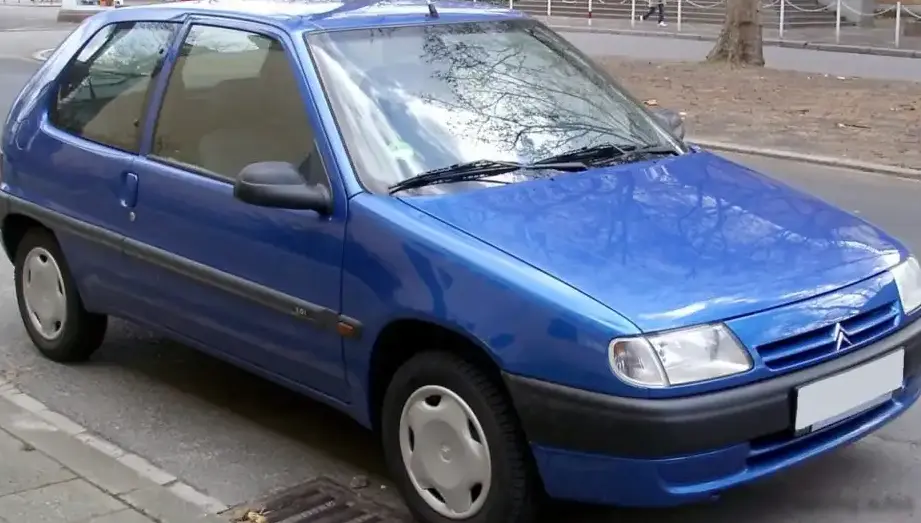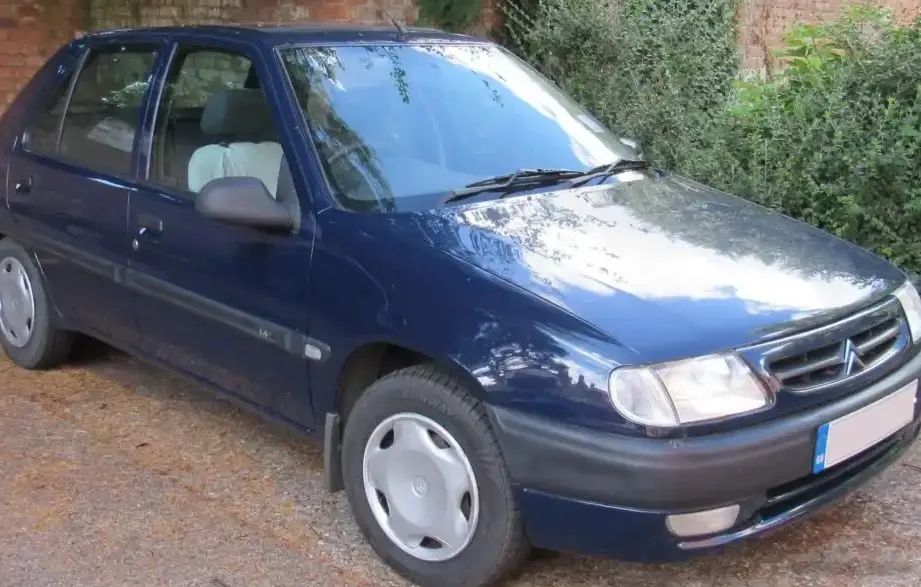
The Citroen Saxo 1.5D, specifically the five-door variant produced between 1996 and 1999, represents an entry-level offering within the broader Saxo range. Introduced as a replacement for the aging AX, the Saxo (designated as the X1 platform) aimed to provide affordable and practical transportation. This 1.5D model, powered by a naturally aspirated diesel engine, was positioned as the most economical option in the lineup, appealing to buyers prioritizing fuel efficiency over outright performance. It served as a crucial volume seller for Citroen, particularly in European markets where diesel engines were – and continue to be – highly favored for their economy.
Technical Specifications
| Brand | Citroen |
| Model | Saxo |
| Generation | Saxo (Phase I, 1996) 5-door |
| Type (Engine) | 1.5 D (58 Hp) |
| Start of production | 1996 |
| End of production | 1999 |
| Powertrain Architecture | Internal Combustion engine |
| Body type | Hatchback |
| Seats | 5 |
| Doors | 5 |
| Fuel consumption (urban) | 5.6 l/100 km (42 US mpg, 50.4 UK mpg, 17.9 km/l) |
| Fuel consumption (extra urban) | 3.8 l/100 km (61.9 US mpg, 74.3 UK mpg, 26.3 km/l) |
| Fuel consumption (combined) | 4.9 l/100 km (48 US mpg, 57.6 UK mpg, 20.4 km/l) |
| Fuel Type | Diesel |
| Acceleration 0 – 100 km/h | 15.7 sec |
| Acceleration 0 – 62 mph | 15.7 sec |
| Acceleration 0 – 60 mph | 14.9 sec |
| Maximum speed | 158 km/h (98.18 mph) |
| Weight-to-power ratio | 15.3 kg/Hp |
| Weight-to-torque ratio | 9.3 kg/Nm |
| Power | 58 Hp @ 5000 rpm |
| Power per litre | 38 Hp/l |
| Torque | 95 Nm @ 2250 rpm (70.07 lb.-ft. @ 2250 rpm) |
| Engine layout | Front, Transverse |
| Engine Model/Code | VJZ TUD5 |
| Engine displacement | 1527 cm3 (93.18 cu. in.) |
| Number of cylinders | 4 |
| Engine configuration | Inline |
| Cylinder Bore | 77 mm (3.03 in.) |
| Piston Stroke | 82 mm (3.23 in.) |
| Compression ratio | 23:1 |
| Number of valves per cylinder | 2 |
| Fuel injection system | Precombustion chamber injection |
| Engine aspiration | Naturally aspirated |
| Valvetrain | SOHC |
| Engine oil capacity | 4.5 l (4.76 US qt | 3.96 UK qt) |
| Coolant capacity | 7.1 l (7.5 US qt | 6.25 UK qt) |
| Kerb Weight | 885 kg (1951.09 lbs.) |
| Max. weight | 1390 kg (3064.43 lbs.) |
| Max load | 505 kg (1113.33 lbs.) |
| Trunk (boot) space – minimum | 280 l (9.89 cu. ft.) |
| Trunk (boot) space – maximum | 953 l (33.65 cu. ft.) |
| Fuel tank capacity | 45 l (11.89 US gal | 9.9 UK gal) |
| Max. roof load | 50 kg (110.23 lbs.) |
| Permitted trailer load with brakes (12%) | 700 kg (1543.24 lbs.) |
| Permitted trailer load without brakes | 445 kg (981.06 lbs.) |
| Permitted towbar download | 50 kg (110.23 lbs.) |
| Length | 3718 mm (146.38 in.) |
| Width | 1595 mm (62.8 in.) |
| Height | 1390 mm (54.72 in.) |
| Wheelbase | 2385 mm (93.9 in.) |
| Front track | 1401 mm (55.16 in.) |
| Rear track | 1321 mm (52.01 in.) |
| Front overhang | 748 mm (29.45 in.) |
| Rear overhang | 585 mm (23.03 in.) |
| Drivetrain Architecture | Front wheel drive |
| Number of gears | 5 |
| Gearbox type | Manual transmission |
| Front suspension | Independent type McPherson, Transverse stabilizer |
| Rear suspension | Trailing arm, Torsion |
| Front brakes | Disc |
| Rear brakes | Drum |
| Steering type | Steering rack and pinion |
| Power steering | Electric |
| Tires size | 165/70 R13 |
| Wheel rims size | 5J x 13 |
Powertrain & Engine Architecture
The heart of the Saxo 1.5D is the VJZ (or sometimes designated as TUD5) engine, a 1.5-liter inline-four cylinder diesel. This engine, a product of Peugeot-Citroen’s collaborative efforts, utilizes a precombustion chamber injection system. This older technology, while less refined than direct injection, contributed to the engine’s robustness and simplicity. The SOHC (Single Overhead Camshaft) valvetrain operates two valves per cylinder. The engine produces 58 horsepower at 5000 rpm and 95 Nm (70 lb-ft) of torque at 2250 rpm. The five-speed manual transmission was the only gearbox option available with this engine, prioritizing fuel economy over sporty driving. The engine’s transverse mounting and front-wheel-drive configuration were standard for vehicles in this class.
Driving Characteristics
The Saxo 1.5D was never intended to be a performance car. Acceleration was leisurely, taking approximately 15.7 seconds to reach 62 mph (100 km/h). The focus was on maximizing fuel economy and providing a comfortable, if uninspiring, driving experience. The gear ratios were optimized for efficiency, with taller gearing in higher gears to reduce engine speed at cruising speeds. Compared to the more powerful 1.6-liter gasoline variants, the 1.5D lacked responsiveness, particularly when overtaking. However, its low-end torque made it reasonably tractable around town. The manual transmission, while basic, was light and easy to use.
Equipment & Trim Levels
The 1.5D Saxo typically came with a basic level of equipment. Standard features included power steering, central locking, and a basic stereo system. Interior upholstery was typically cloth, and the dashboard was constructed from durable, hard-wearing plastics. Optional extras included power windows, upgraded audio systems, and metallic paint. The trim level was generally considered the entry-level offering, designed to appeal to budget-conscious buyers. The five-door configuration added practicality, making it suitable for small families.
Chassis & Braking
The Saxo 1.5D utilized a relatively simple chassis design. Front suspension consisted of independent MacPherson struts with a transverse stabilizer bar, while the rear employed a trailing arm torsion beam setup. This configuration provided a reasonable balance between ride comfort and handling. Braking was accomplished via front disc brakes and rear drum brakes. The braking system was adequate for the car’s performance, but lacked the stopping power of more expensive models. The electric power steering provided light and easy steering, making it maneuverable in urban environments.
Market Reception & Comparison
The Saxo 1.5D was well-received in markets where diesel cars were popular, such as France, Spain, and Italy. Critics praised its fuel economy and low running costs. However, it was often criticized for its lack of performance and basic interior. Compared to the gasoline-powered Saxo variants, the 1.5D offered significantly better fuel economy but considerably less power. Against competitors like the Renault Clio 1.9D and Peugeot 206 1.9D, the Saxo 1.5D held its own in terms of economy and price, but often lagged behind in terms of refinement and features.
Legacy
The Citroen Saxo 1.5D, while not a particularly exciting car, proved to be a reliable and economical workhorse. The TUD5 engine, despite its age, is known for its durability and relatively simple maintenance requirements. Today, these cars are relatively inexpensive to purchase and maintain, making them popular choices for first-time drivers or those seeking a cheap and cheerful runabout. However, potential buyers should be aware of the age-related issues common to older vehicles, such as rust and wear and tear on suspension components. The Saxo 1.5D remains a testament to Citroen’s ability to produce affordable and practical transportation.