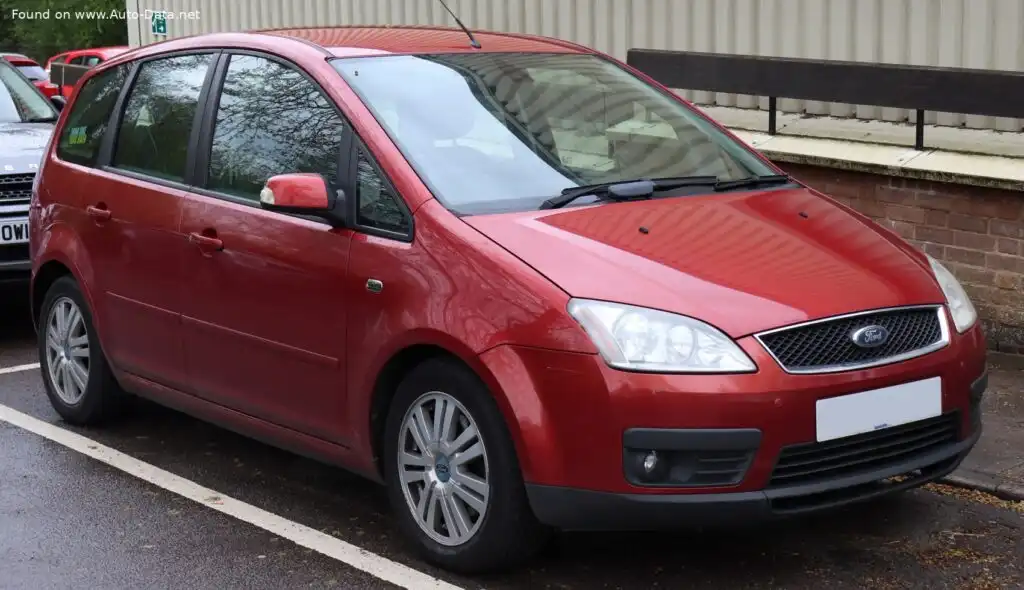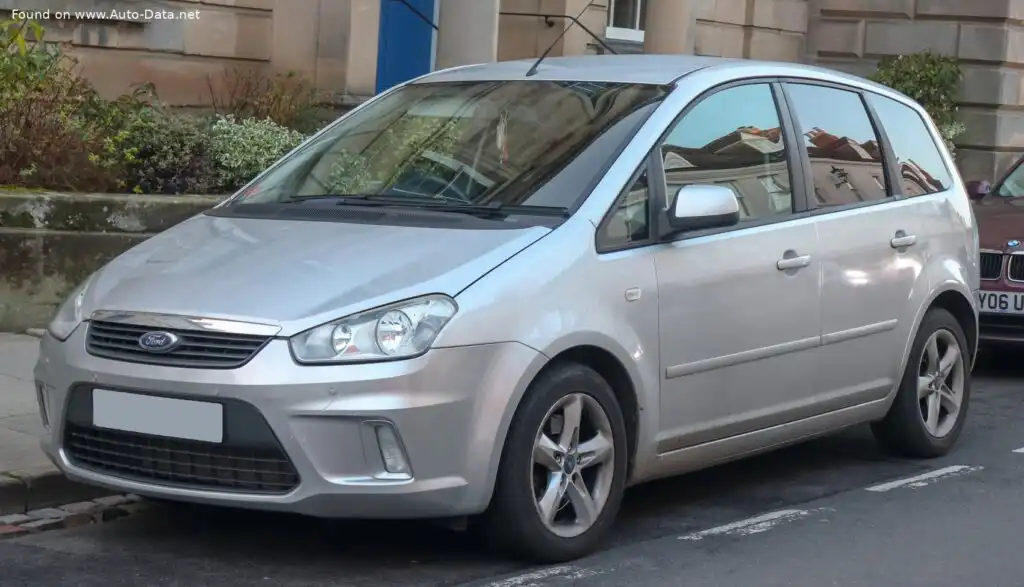
The Ford C-MAX, specifically the facelifted version produced from 2007 to 2010, represented Ford’s entry into the compact multi-purpose vehicle (MPV) segment in Europe. Positioned as a practical and versatile family car, the C-MAX aimed to offer a blend of space, comfort, and driving dynamics. The 2.0-liter 16V engine paired with a four-speed automatic transmission was a mid-range offering within the C-MAX lineup, slotting between the base 1.6-liter engine and the more powerful 2.5-liter variant. This configuration was designed to appeal to buyers seeking a balance between fuel efficiency and adequate performance for everyday driving.
Technical Specifications
| Brand | Ford |
| Model | C-MAX |
| Generation | C-MAX (Facelift 2007) |
| Type (Engine) | 2.0 16V (145 Hp) Automatic |
| Start of production | 2007 |
| End of production | 2010 |
| Powertrain Architecture | Internal Combustion engine |
| Body type | MPV |
| Seats | 5 |
| Doors | 5 |
| Fuel consumption (urban) | 11.3 l/100 km (20.8 US mpg) |
| Fuel consumption (extra urban) | 6.2 l/100 km (37.9 US mpg) |
| Fuel consumption (combined) | 8.1 l/100 km (29 US mpg) |
| Fuel Type | Petrol (Gasoline) |
| Acceleration 0 – 100 km/h | 11.2 sec |
| Acceleration 0 – 62 mph | 11.2 sec |
| Acceleration 0 – 60 mph | 10.6 sec |
| Maximum speed | 192 km/h (119.3 mph) |
| Emission standard | Euro 4 |
| Weight-to-power ratio | 9.9 kg/Hp |
| Weight-to-torque ratio | 7.8 kg/Nm |
| Power | 145 Hp @ 6000 rpm |
| Torque | 185 Nm @ 4500 rpm (136.45 lb.-ft. @ 4500 rpm) |
| Engine layout | Front, Transverse |
| Engine Model/Code | AODE |
| Engine displacement | 1999 cm3 (121.99 cu. in.) |
| Number of cylinders | 4 |
| Engine configuration | Inline |
| Number of valves per cylinder | 4 |
| Fuel injection system | Multi-port manifold injection |
| Engine aspiration | Naturally aspirated engine |
| Valvetrain | DOHC |
| Engine oil capacity | 4.3 l (4.54 US qt | 3.78 UK qt) |
| Coolant capacity | 6.3 l (6.66 US qt | 5.54 UK qt) |
| Kerb Weight | 1435 kg (3163.63 lbs.) |
| Max. weight | 1930 kg (4254.92 lbs.) |
| Max load | 495 kg (1091.29 lbs.) |
| Trunk (boot) space – minimum | 550 l (19.42 cu. ft.) |
| Trunk (boot) space – maximum | 1620 l (57.21 cu. ft.) |
| Fuel tank capacity | 55 l (14.53 US gal | 12.1 UK gal) |
| Length | 4372 mm (172.13 in.) |
| Width | 1825 mm (71.85 in.) |
| Height | 1595 mm (62.8 in.) |
| Wheelbase | 2640 mm (103.94 in.) |
| Drivetrain | Front wheel drive |
| Number of gears | 4 |
| Gearbox type | Automatic transmission |
| Front suspension | Independent, McPherson with coil spring and anti-roll bar |
| Rear suspension | Independent multi-link spring suspension with stabilizer |
| Front brakes | Ventilated discs |
| Rear brakes | Disc |
| Assisting systems | ABS (Anti-lock braking system) |
Powertrain & Engine Architecture
The heart of this C-MAX variant is the Duratec 2.0-liter inline-four cylinder engine. This engine, internally designated with various codes depending on specific calibration and market (though the AODE code refers to the transmission), features a double overhead camshaft (DOHC) valvetrain with four valves per cylinder. This configuration allows for efficient cylinder filling and exhaust scavenging, contributing to its power output. Fuel delivery is managed by a multi-port fuel injection system, providing precise fuel metering for optimal combustion. The engine’s 145 horsepower peak is achieved at 6000 rpm, while its 185 Nm (136 lb-ft) of torque is available at 4500 rpm. The four-speed automatic transmission, while not as sophisticated as modern multi-gear automatics, was a common choice for drivers prioritizing ease of use over ultimate performance. It provided smooth, if not particularly rapid, gear changes.
Driving Characteristics
The 2.0-liter automatic C-MAX offered a comfortable and predictable driving experience. Acceleration from 0-60 mph took around 10.6 seconds, which was adequate for everyday commuting and highway merging, but noticeably slower than the manual transmission or higher-powered versions. The automatic transmission’s gear ratios were tuned for fuel efficiency and smooth operation, rather than outright performance. This resulted in a less engaging driving experience compared to the manual, but it made the C-MAX easier to drive in congested urban environments. The engine provided sufficient power for most situations, but could feel strained when fully loaded or climbing steep hills.
Equipment & Trim Levels
The 2.0-liter automatic C-MAX typically came equipped with a reasonable level of standard features. These generally included air conditioning, power windows and mirrors, a basic audio system (often with CD player), and ABS brakes. Higher trim levels, such as the Ghia, added features like alloy wheels, upgraded interior trim, climate control, and a more advanced audio system. Optional extras could include a sunroof, parking sensors, and leather upholstery. Interior upholstery was typically cloth, with a functional and durable design. The dashboard layout was straightforward and user-friendly, prioritizing practicality over stylistic flair.
Chassis & Braking
The C-MAX utilized an independent suspension setup at all four wheels. The front suspension employed McPherson struts with coil springs and an anti-roll bar, while the rear featured a multi-link suspension with a stabilizer bar. This configuration provided a good balance between ride comfort and handling. Braking duties were handled by ventilated discs at the front and solid discs at the rear, providing adequate stopping power for the vehicle’s weight and performance. ABS (Anti-lock Braking System) was standard, enhancing safety during emergency braking situations.
Market Reception & Comparison
The 2.0-liter automatic C-MAX received generally positive reviews, particularly for its practicality, spacious interior, and comfortable ride. Critics noted that the automatic transmission dulled the engine’s performance somewhat, and that the manual transmission offered a more engaging driving experience. Compared to the 1.6-liter version, the 2.0-liter provided noticeably more power and torque, making it a better choice for drivers who frequently carried passengers or cargo. Fuel economy was reasonable for its class, averaging around 29 US mpg in combined driving. However, the 2.5-liter variant offered significantly more performance, albeit at the expense of fuel efficiency.
Legacy
The Ford C-MAX, and specifically the 2.0-liter automatic variant, has proven to be a relatively reliable vehicle in the used car market. The Duratec engine is known for its durability, and the four-speed automatic transmission, while not cutting-edge, is generally robust. Common issues include wear and tear on suspension components and occasional problems with the electronic power steering system. Today, these C-MAX models represent an affordable and practical option for buyers seeking a versatile family vehicle. Their relatively simple mechanical design makes them easier and less expensive to maintain compared to more modern vehicles with complex electronic systems. The C-MAX laid the groundwork for Ford’s continued success in the compact MPV segment, paving the way for future generations of the model.