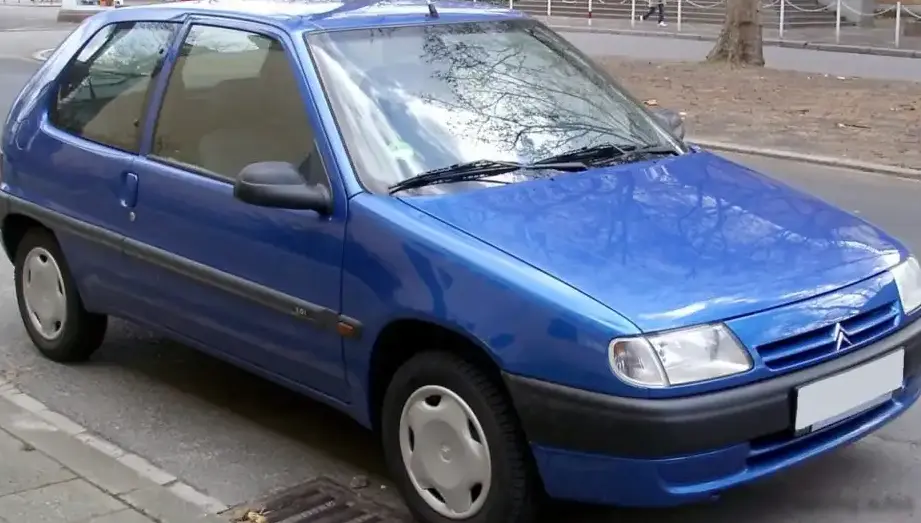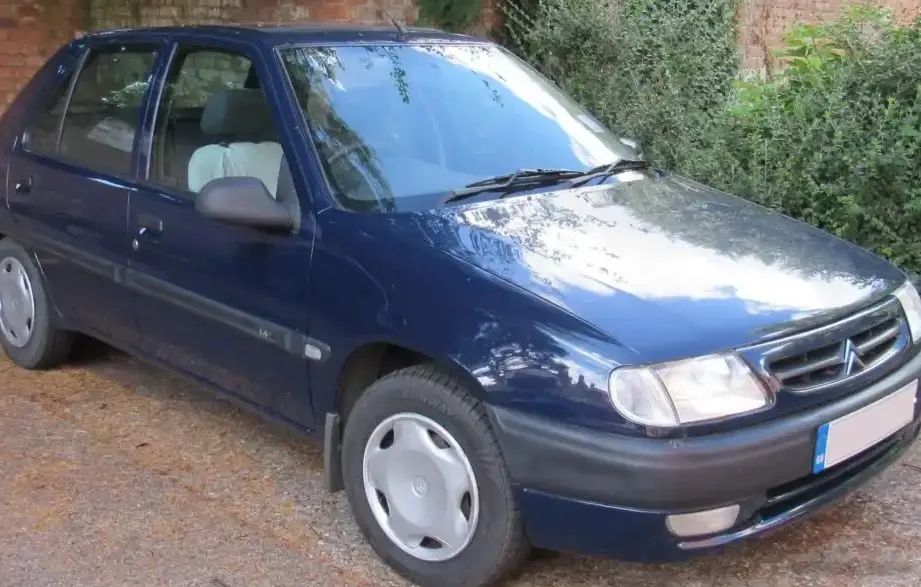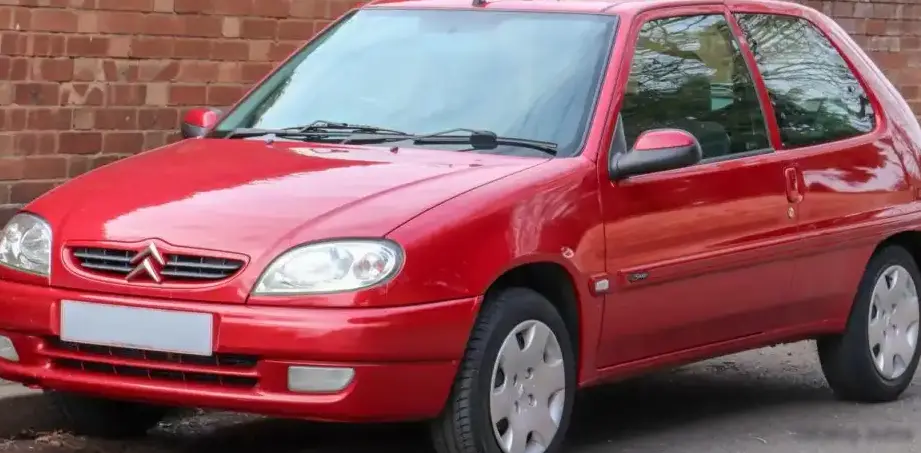
The Citroen Saxo 1.4 Automatic, produced between 1999 and 2002 as part of the Phase II refresh of the Saxo model, represented an entry-level offering within the popular supermini range. Positioned as a practical and affordable option, it catered to drivers prioritizing ease of use over outright performance. This 3-door hatchback variant, powered by the KFX (TU3JP) 1.4-liter engine paired with a 3-speed automatic transmission, was primarily sold in European markets, offering a convenient alternative to manual transmissions, particularly for urban driving. It sat below the more sporty 1.6i and diesel variants in the Saxo lineup.
Technical Specifications
| Brand | Citroen |
| Model | Saxo |
| Generation | Saxo (Phase II, 1999) 3-door |
| Type (Engine) | 1.4 (75 Hp) Automatic |
| Start of production | September, 1999 |
| End of production | 2002 |
| Powertrain Architecture | Internal Combustion engine |
| Body type | Hatchback |
| Seats | 5 |
| Doors | 3 |
| Fuel consumption (urban) | 9.8 l/100 km (24 US mpg, 28.8 UK mpg, 10.2 km/l) |
| Fuel consumption (extra urban) | 6.2 l/100 km (37.9 US mpg, 45.6 UK mpg, 16.1 km/l) |
| Fuel consumption (combined) | 7.5 l/100 km (31.4 US mpg, 37.7 UK mpg, 13.3 km/l) |
| CO2 emissions | 177 g/km |
| Fuel Type | Petrol (Gasoline) |
| Acceleration 0 – 100 km/h | 17 sec |
| Acceleration 0 – 62 mph | 17 sec |
| Acceleration 0 – 60 mph | 16.2 sec |
| Maximum speed | 166 km/h (103.15 mph) |
| Emission standard | Euro 3 |
| Weight-to-power ratio | 11.5 kg/Hp |
| Weight-to-torque ratio | 7.2 kg/Nm |
| Power | 75 Hp @ 5500 rpm |
| Torque | 120 Nm @ 3400 rpm (88.51 lb.-ft. @ 3400 rpm) |
| Engine layout | Front, Transverse |
| Engine Model/Code | KFX TU3JP |
| Engine displacement | 1360 cm3 (82.99 cu. in.) |
| Number of cylinders | 4 |
| Engine configuration | Inline |
| Cylinder Bore | 75 mm (2.95 in.) |
| Piston Stroke | 77 mm (3.03 in.) |
| Compression ratio | 10.2:1 |
| Number of valves per cylinder | 2 |
| Fuel injection system | Multi-port manifold injection |
| Engine aspiration | Naturally aspirated |
| Valvetrain | SOHC |
| Engine oil capacity | 3.2 l (3.38 US qt | 2.82 UK qt) |
| Coolant capacity | 6.1 l (6.45 US qt | 5.37 UK qt) |
| Kerb Weight | 860 kg (1895.98 lbs.) |
| Max. weight | 1340 kg (2954.19 lbs.) |
| Max load | 480 kg (1058.22 lbs.) |
| Trunk (boot) space – minimum | 280 l (9.89 cu. ft.) |
| Trunk (boot) space – maximum | 953 l (33.65 cu. ft.) |
| Fuel tank capacity | 45 l (11.89 US gal | 9.9 UK gal) |
| Max. roof load | 50 kg (110.23 lbs.) |
| Permitted trailer load (braked) | 500 kg (1102.31 lbs.) |
| Permitted trailer load (unbraked) | 465 kg (1025.15 lbs.) |
| Permitted towbar download | 50 kg (110.23 lbs.) |
| Length | 3718 mm (146.38 in.) |
| Width | 1595 mm (62.8 in.) |
| Height | 1370 mm (53.94 in.) |
| Wheelbase | 2385 mm (93.9 in.) |
| Front track | 1370 mm (53.94 in.) |
| Rear track | 1305 mm (51.38 in.) |
| Turning circle | 10.9 m (35.76 ft.) |
| Drivetrain | Front wheel drive |
| Number of gears | 3 |
| Gearbox type | Automatic transmission |
| Front suspension | Independent type McPherson, Transverse stabilizer |
| Rear suspension | Trailing arm, Torsion |
| Front brakes | Disc |
| Rear brakes | Drum |
| Assisting systems | ABS (Anti-lock braking system) |
| Steering type | Steering rack and pinion |
| Power steering | Electric |
| Tires size | 165/70 R13; 165/65 R14 |
| Wheel rims size | 5J x 13; 5.5J x 14 |
Powertrain & Engine Architecture
The heart of the Saxo 1.4 Automatic is the KFX (TU3JP) engine, a 1360cc inline-four cylinder petrol engine. This engine utilizes a single overhead camshaft (SOHC) valvetrain with two valves per cylinder. Fuel delivery is managed by a multi-port fuel injection system, providing adequate, though not exceptional, combustion efficiency for its time. The TU3JP engine is known for its relative simplicity and durability, making it a cost-effective choice for Citroen. The 3-speed automatic transmission, while providing convenience, is a relatively basic unit. It lacks the sophistication of more modern automatic gearboxes, featuring a traditional torque converter and limited electronic control. This transmission was chosen for its affordability and suitability for the engine’s modest power output.
Driving Characteristics
The 1.4 Automatic Saxo delivers a predictably relaxed driving experience. With 75 horsepower and 120 Nm of torque, acceleration is leisurely, taking approximately 17 seconds to reach 62 mph. The 3-speed automatic transmission contributes to this, with noticeable gaps between gears. Compared to the manual version of the 1.4, the automatic suffers a slight performance penalty due to the transmission’s inherent inefficiencies. It also feels noticeably slower than the more powerful 1.6i variants. However, the automatic transmission shines in urban environments, providing smooth and effortless progress in stop-and-go traffic. The gear ratios are optimized for fuel economy rather than outright speed, making it a reasonable choice for city commuting.
Equipment & Trim Levels
The Saxo 1.4 Automatic typically came with a basic level of equipment. Standard features generally included power steering, central locking, and an adjustable steering column. Interior upholstery was typically cloth, with a functional, if somewhat spartan, dashboard layout. Optional extras included air conditioning, electric windows, and a radio/cassette player. Higher trim levels, though rare on this specific engine/transmission combination, might have added features like alloy wheels and upgraded interior trim.
Chassis & Braking
The Saxo’s chassis features an independent McPherson strut suspension at the front and a trailing arm torsion beam suspension at the rear. This setup provides a reasonable balance between ride comfort and handling. The front brakes are discs, while the rear brakes are drums, a common configuration for vehicles in this price segment. ABS (Anti-lock Braking System) was often included as standard, enhancing safety. The suspension tuning is geared towards comfort, resulting in a slightly softer ride compared to the sportier Saxo variants.
Market Reception & Comparison
The Saxo 1.4 Automatic was generally well-received as a practical and affordable city car. Critics acknowledged its ease of use and fuel efficiency, but noted its lack of performance compared to other Saxo models. Compared to the 1.6i, the 1.4 Automatic offered significantly less power and a slower driving experience. However, it was more economical and appealed to drivers who prioritized convenience over performance. The 1.9 TDI diesel variant offered superior fuel economy and torque, but at a higher purchase price. The automatic transmission was a key selling point for drivers who preferred not to operate a manual gearbox.
Legacy
The Citroen Saxo 1.4 Automatic, while not a performance icon, has proven to be a relatively reliable and durable vehicle. The TU3JP engine is known for its longevity, and the automatic transmission, while simple, is generally robust. Today, these cars are increasingly rare and are often sought after by enthusiasts looking for affordable classic cars or practical city runabouts. Parts availability is generally good, and maintenance costs are relatively low. The Saxo 1.4 Automatic remains a testament to Citroen’s ability to produce practical and affordable vehicles that stand the test of time.