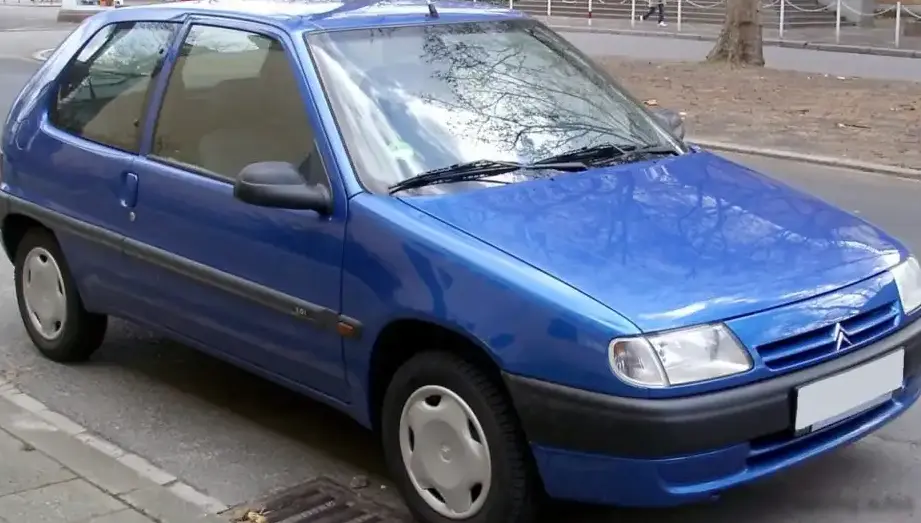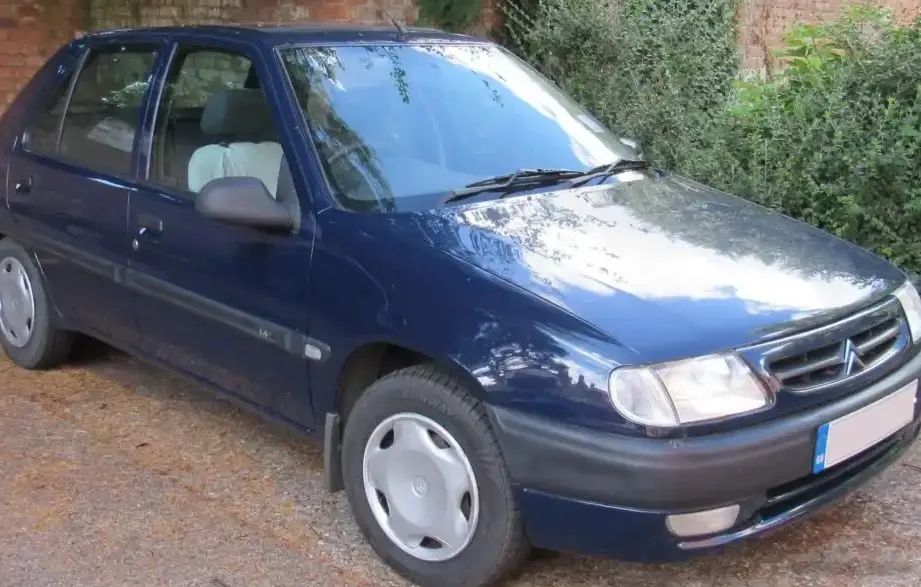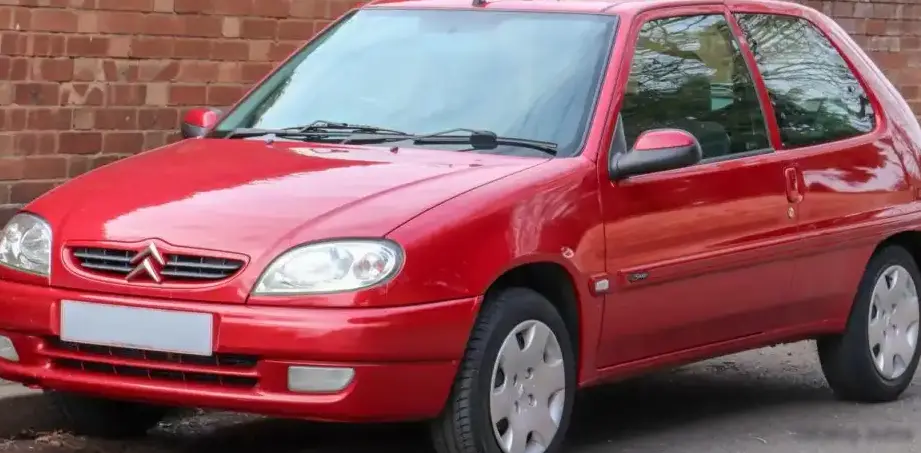
The Citroen Saxo 1.5D, produced between September 1999 and June 2003, represents an entry-level offering within the Phase II generation of the Saxo hatchback. Positioned as a budget-friendly and economical option, this 3-door variant was primarily aimed at buyers seeking low running costs and practicality. It played a significant role in the European small car market, particularly in countries where diesel fuel was favored due to its efficiency and lower taxation. The Saxo itself was a popular supermini, known for its affordability and ease of maintenance, and the 1.5D trim catered to a specific segment of the market prioritizing fuel economy over outright performance.
Technical Specifications
| Brand | Citroen |
| Model | Saxo |
| Generation | Saxo (Phase II, 1999) 3-door |
| Type (Engine) | 1.5 D (57 Hp) |
| Start of production | September, 1999 |
| End of production | June, 2003 |
| Powertrain Architecture | Internal Combustion engine |
| Body type | Hatchback |
| Seats | 5 |
| Doors | 3 |
| Fuel consumption (urban) | 6.8 l/100 km (34.6 US mpg, 41.5 UK mpg, 14.7 km/l) |
| Fuel consumption (extra urban) | 4.3 l/100 km (54.7 US mpg, 65.7 UK mpg, 23.3 km/l) |
| Fuel consumption (combined) | 5.2 l/100 km (45.2 US mpg, 54.3 UK mpg, 19.2 km/l) |
| CO2 emissions | 138 g/km |
| Fuel Type | Diesel |
| Acceleration 0 – 100 km/h | 18.3 sec |
| Acceleration 0 – 62 mph | 18.3 sec |
| Acceleration 0 – 60 mph | 17.4 sec |
| Maximum speed | 158 km/h (98.18 mph) |
| Emission standard | Euro 3 |
| Weight-to-power ratio | 15.4 kg/Hp |
| Weight-to-torque ratio | 9.3 kg/Nm |
| Power | 57 Hp @ 5000 rpm |
| Torque | 95 Nm @ 2250 rpm (70.07 lb.-ft. @ 2250 rpm) |
| Engine layout | Front, Transverse |
| Engine Model/Code | VJX TUD5 |
| Engine displacement | 1527 cm3 (93.18 cu. in.) |
| Number of cylinders | 4 |
| Engine configuration | Inline |
| Cylinder Bore | 77 mm (3.03 in.) |
| Piston Stroke | 82 mm (3.23 in.) |
| Compression ratio | 23:1 |
| Number of valves per cylinder | 2 |
| Fuel injection system | Precombustion chamber injection |
| Engine aspiration | Naturally aspirated |
| Valvetrain | SOHC |
| Engine oil capacity | 4.5 l (4.76 US qt | 3.96 UK qt) |
| Coolant capacity | 7.1 l (7.5 US qt | 6.25 UK qt) |
| Kerb Weight | 880 kg (1940.07 lbs.) |
| Max. weight | 1360 kg (2998.29 lbs.) |
| Max load | 480 kg (1058.22 lbs.) |
| Trunk (boot) space – minimum | 280 l (9.89 cu. ft.) |
| Trunk (boot) space – maximum | 953 l (33.65 cu. ft.) |
| Fuel tank capacity | 45 l (11.89 US gal | 9.9 UK gal) |
| Max. roof load | 50 kg (110.23 lbs.) |
| Permitted trailer load (braked) | 700 kg (1543.24 lbs.) |
| Permitted trailer load (unbraked) | 475 kg (1047.2 lbs.) |
| Permitted towbar download | 50 kg (110.23 lbs.) |
| Length | 3718 mm (146.38 in.) |
| Width | 1595 mm (62.8 in.) |
| Height | 1360 mm (53.54 in.) |
| Wheelbase | 2385 mm (93.9 in.) |
| Front track | 1370 mm (53.94 in.) |
| Rear track | 1305 mm (51.38 in.) |
| Minimum turning circle | 10.9 m (35.76 ft.) |
| Drivetrain | Front wheel drive |
| Number of gears | 5 |
| Gearbox type | Manual transmission |
| Front suspension | Independent type McPherson, Transverse stabilizer |
| Rear suspension | Trailing arm, Torsion |
| Front brakes | Disc |
| Rear brakes | Drum |
| Steering type | Steering rack and pinion |
| Power steering | Electric |
| Tires size | 165/70 R13; 165/65 R14 |
| Wheel rims size | 5J x 13; 5.5J x 14 |
Powertrain & Engine Architecture
The heart of the Saxo 1.5D is the VJX TUD5 engine, a 1.5-liter inline-four diesel engine. This engine, a mainstay of Citroen and Peugeot vehicles of the era, is characterized by its indirect injection system utilizing precombustion chambers. This design, while less efficient than direct injection, offered improved cold-starting performance and reduced engine noise – important considerations for the European market. The engine produces 57 horsepower at 5000 rpm and 95 Nm (70 lb-ft) of torque at 2250 rpm. The five-speed manual transmission was the only gearbox option available with this engine, prioritizing fuel efficiency over sporty driving. The SOHC valvetrain and naturally aspirated design contribute to the engine’s simplicity and reliability, but also limit its overall performance potential.
Driving Characteristics
The Saxo 1.5D, with its modest 57 horsepower, was never intended to be a performance car. Acceleration is leisurely, taking approximately 18.3 seconds to reach 62 mph. However, the engine’s torque delivery, peaking at 2250 rpm, provides adequate pulling power for everyday driving situations. The gear ratios in the five-speed manual transmission are well-spaced to maximize fuel economy, but require frequent shifting to maintain momentum, especially when climbing hills or overtaking. Compared to the more powerful petrol variants of the Saxo, the 1.5D offers a significantly more relaxed driving experience, prioritizing fuel efficiency and low-speed usability over outright speed.
Equipment & Trim Levels
The 1.5D trim level of the Saxo Phase II was typically quite basic, reflecting its position as the entry-level model. Standard equipment generally included power steering, central locking, and a basic audio system. Interior upholstery was typically cloth, and the dashboard featured a simple, functional design. Optional extras, such as air conditioning, electric windows, and alloy wheels, were available but added to the vehicle’s cost. The focus was on providing a practical and affordable vehicle, rather than luxury or advanced features.
Chassis & Braking
The Saxo 1.5D utilizes a McPherson strut front suspension and a trailing arm rear suspension. This setup provides a comfortable ride quality, although it’s not particularly sporty. The front brakes are discs, while the rear brakes are drums, a common configuration for vehicles in this price range. The electric power steering offers light and easy steering, making it ideal for urban driving. The relatively lightweight construction of the Saxo helps to compensate for the engine’s limited power, contributing to reasonable handling characteristics.
Market Reception & Comparison
The Citroen Saxo 1.5D was well-received in the European market as a practical and economical small car. Critics praised its fuel efficiency and low running costs, but noted its lack of performance. Compared to the petrol-powered Saxo variants, the 1.5D offered significantly better fuel economy, but at the expense of acceleration and overall driving enjoyment. It was often compared to other small diesel hatchbacks of the era, such as the Peugeot 206 HDi and the Renault Clio dCi, and generally held its own in terms of value for money.
Legacy
The Saxo 1.5D has proven to be a remarkably durable and reliable vehicle. The TUD5 engine, while not particularly sophisticated, is known for its robustness and longevity. Today, these cars are often found in the used car market at very affordable prices. While they may require some maintenance due to their age, they remain a popular choice for those seeking a cheap and economical mode of transportation. The Saxo 1.5D represents a practical and sensible approach to small car design, prioritizing fuel efficiency and reliability over performance and luxury.