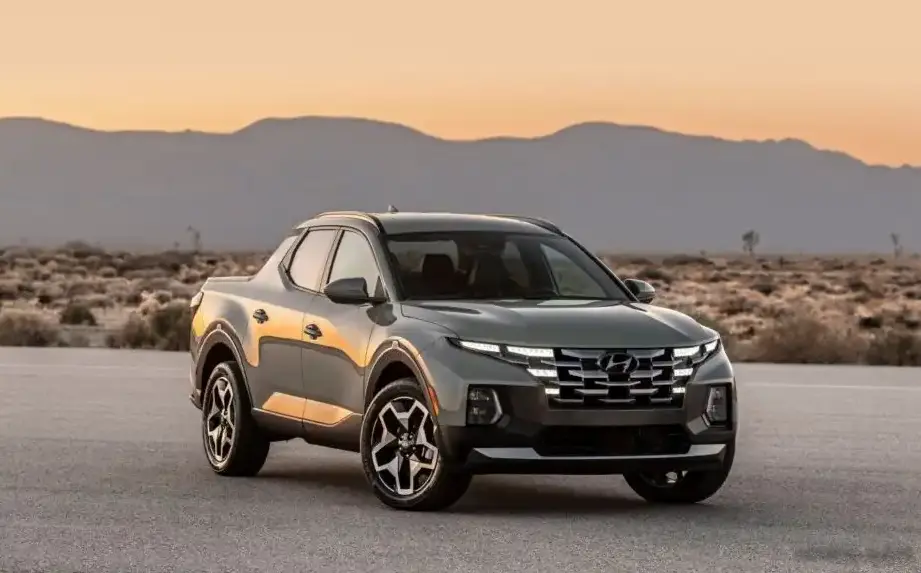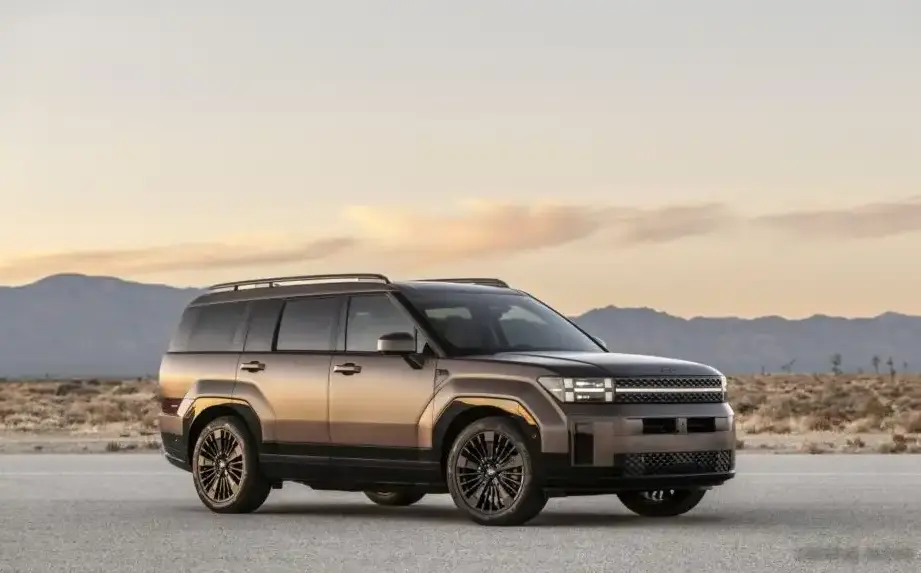
The Hyundai Santa Fe V (MX5), launched in August 2023, represents the fifth generation of Hyundai’s popular mid-size SUV. Positioned as a significant upgrade over its predecessor, the MX5 Santa Fe aims to deliver a more refined driving experience, enhanced technology, and increased space. The 2.5 Smartstream variant, producing 281 horsepower and equipped with an eight-speed Dual Clutch Transmission (DCT) and All-Wheel Drive (AWD), sits at the top of the powertrain offerings for the North American market, representing a performance-oriented option within the Santa Fe lineup. This generation marks a shift towards a more premium feel and a greater emphasis on passenger comfort and advanced driver-assistance systems.
Technical Specifications
| Brand | Hyundai |
| Model | Santa Fe |
| Generation | Santa Fe V (MX5) |
| Type (Engine) | 2.5 Smartstream (281 Hp) AWD DCT |
| Start of production | August, 2023 |
| Powertrain Architecture | Internal Combustion engine |
| Body type | SUV |
| Seats | 5-7 |
| Doors | 5 |
| Fuel consumption (urban) | 11.4-12.2 l/100 km (20.6 – 19.3 US mpg) |
| Fuel consumption (extra urban) | 8.2-8.8 l/100 km (28.7 – 26.7 US mpg) |
| Fuel consumption (combined) | 9.9-10.6 l/100 km (23.8 – 22.2 US mpg) |
| CO2 emissions | 168-181 g/km |
| Fuel Type | Petrol (Gasoline) |
| Weight-to-power ratio | 6.6 kg/Hp, 151.1 Hp/tonne |
| Weight-to-torque ratio | 4.4 kg/Nm, 226.3 Nm/tonne |
| Power | 281 Hp @ 5800 rpm |
| Power per litre | 112.5 Hp/l |
| Torque | 421 Nm @ 1700-4000 rpm (310.51 lb.-ft. @ 1700-4000 rpm) |
| Engine layout | Front, Transverse |
| Engine Model/Code | Smartstream |
| Engine displacement | 2497 cm3 (152.38 cu. in.) |
| Number of cylinders | 4 |
| Engine configuration | Inline |
| Number of valves per cylinder | 4 |
| Fuel injection system | Direct injection |
| Engine aspiration | Turbocharger, Intercooler |
| Engine systems | Start & Stop System |
| Kerb Weight | 1860-1985 kg (4100.6 – 4376.18 lbs.) |
| Fuel tank capacity | 67 l (17.7 US gal | 14.74 UK gal) |
| Length | 4830 mm (190.16 in.) |
| Width | 1900 mm (74.8 in.) |
| Height | 1720-1780 mm (67.72 – 70.08 in.) |
| Wheelbase | 2815 mm (110.83 in.) |
| Front track | 1637-1646 mm (64.45 – 64.8 in.) |
| Rear track | 1647-1656 mm (64.84 – 65.2 in.) |
| Drivetrain Architecture | All wheel drive (4×4). ICE drives front wheels, rear driven by clutch. |
| Number of gears and type of gearbox | 8 gears, automatic transmission DCT |
| Front brakes | Ventilated discs |
| Rear brakes | Disc |
| Assisting systems | ABS (Anti-lock braking system) |
| Steering type | Steering rack and pinion |
| Power steering | Electric Steering |
| Tires size | 235/60 R18; 255/45 R20; 245/45 R21 |
| Wheel rims size | 18; 20; 21 |
Powertrain & Engine Architecture
The heart of the Santa Fe V 2.5 Smartstream is Hyundai’s 2.5-liter turbocharged inline-four cylinder engine. This engine, internally designated as part of the Smartstream family, utilizes direct injection and a twin-scroll turbocharger to deliver a robust 281 horsepower and 310 lb-ft of torque. The Smartstream engines are designed for improved thermal efficiency and reduced emissions. The engine features a closed-cycle exhaust gas recirculation (EGR) system and optimized combustion chamber design. The eight-speed Dual Clutch Transmission (DCT) is a key component, offering quicker and smoother gear changes compared to a traditional automatic transmission. The DCT contributes to both performance and fuel efficiency. The AWD system operates by primarily driving the front wheels, engaging the rear wheels via an electronically controlled multi-plate clutch when traction is needed.
Driving Characteristics
The 2.5L Smartstream engine paired with the 8-speed DCT provides a noticeably more spirited driving experience than lower-trim Santa Fes. Acceleration is brisk, and the DCT delivers quick, precise shifts. The AWD system enhances stability and grip, particularly in inclement weather. While not a sports SUV, the 281 hp output provides ample power for highway merging and overtaking. The DCT is programmed for both comfort and performance, offering a balance between smooth shifts in normal driving and more aggressive shifts in Sport mode. Compared to a potential V6 offering (not currently available in the US market for this generation), the turbocharged four-cylinder provides comparable power with potentially better fuel economy.
Equipment & Trim Levels
The 2.5 Smartstream AWD DCT trim typically represents the highest level of equipment in the Santa Fe V lineup. Standard features generally include leather upholstery, heated and ventilated front seats, a panoramic sunroof, a premium sound system, and a comprehensive suite of advanced driver-assistance systems (ADAS) such as adaptive cruise control, lane keeping assist, and blind-spot monitoring. Available options often include a larger touchscreen infotainment system, a head-up display, and premium interior trim materials. The specific feature set can vary depending on package selections.
Chassis & Braking
The Santa Fe V utilizes a fully independent suspension system, featuring MacPherson struts at the front and a multi-link setup at the rear. This configuration provides a comfortable ride while maintaining good handling characteristics. The chassis is designed for rigidity, contributing to improved stability and reduced noise, vibration, and harshness (NVH). Braking duties are handled by ventilated discs at all four corners, providing ample stopping power. The ABS system, along with electronic brake-force distribution (EBD) and brake assist, enhances safety and control. Stabilizer bars are fitted front and rear to minimize body roll during cornering.
Market Reception & Comparison
The Hyundai Santa Fe V has been well-received by automotive critics, with praise directed towards its spacious interior, refined ride quality, and comprehensive technology features. The 2.5 Smartstream engine has been noted for its strong performance and relatively good fuel economy for its class. Compared to competitors like the Toyota Highlander, Honda Pilot, and Kia Telluride, the Santa Fe V offers a compelling value proposition, often undercutting its rivals in price while offering a comparable level of features and performance. Some reviewers have noted that the DCT, while generally smooth, can occasionally exhibit some hesitation at low speeds.
Legacy
The Smartstream engine family represents Hyundai’s commitment to developing efficient and powerful powertrains. While long-term reliability data for the MX5 generation is still emerging, Hyundai has a generally good reputation for reliability, and the Smartstream engines are expected to be durable. The 2.5L turbo engine and DCT combination is likely to remain a popular choice in the used car market, offering a balance of performance, fuel efficiency, and features. The Santa Fe V’s emphasis on technology and comfort positions it as a strong contender in the competitive mid-size SUV segment, and its continued success will depend on its ability to maintain its value proposition and deliver a satisfying ownership experience.