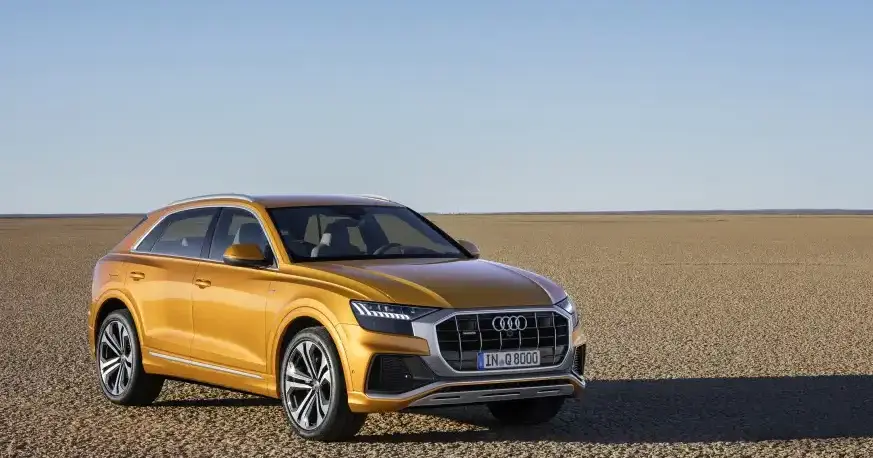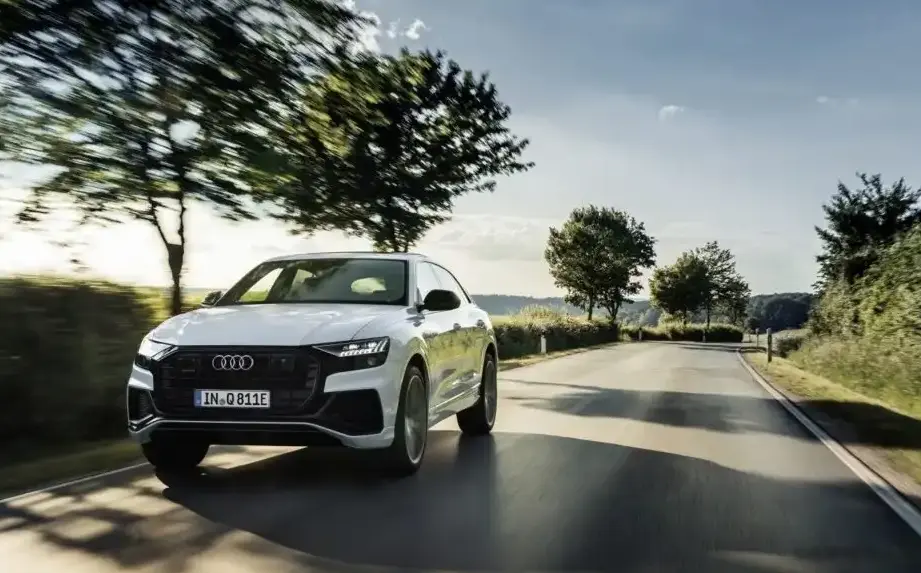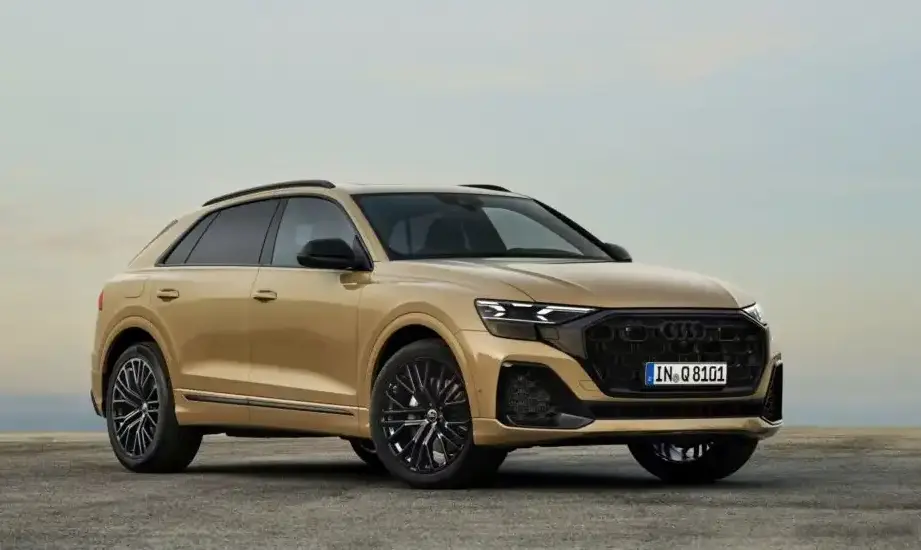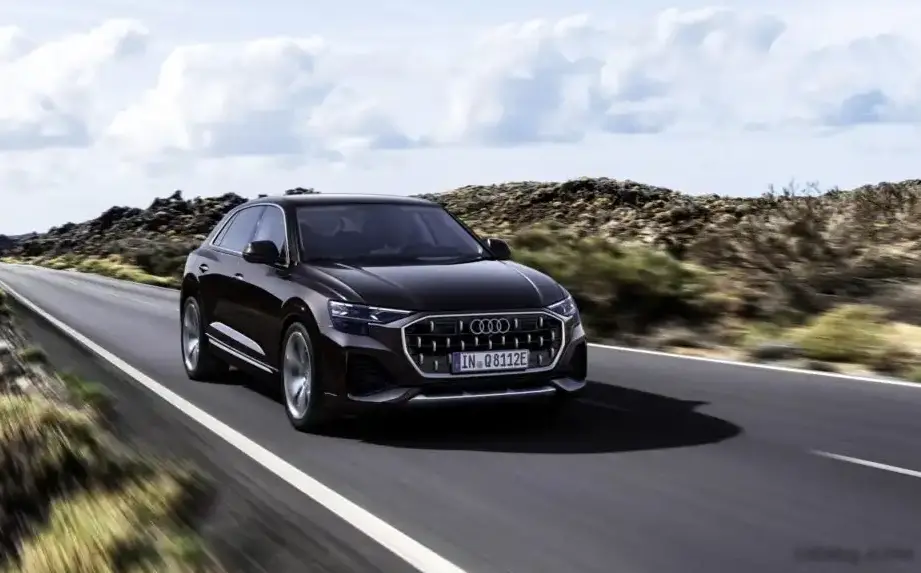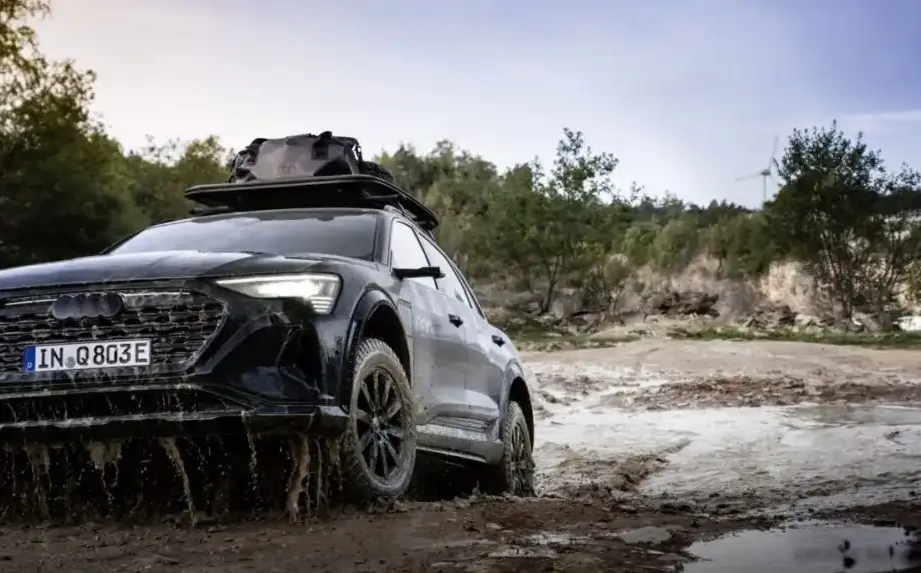
The Audi Q8 e-tron edition Dakar, introduced in February 2024, represents a unique variant within the Q8 e-tron family. Positioned as a high-performance, all-electric SUV, the edition Dakar is specifically designed to blend the luxury and technology of the Q8 e-tron with enhanced off-road capability, inspired by Audi’s successful Dakar rally heritage. This model, equipped with the 55 114 kWh battery pack and producing 408 horsepower, aims to appeal to buyers seeking a premium electric SUV with a distinct adventurous character. It builds upon the foundation of the Q8 e-tron (formerly the e-tron), which itself was a significant early entrant into the luxury electric SUV segment.
Technical Specifications
| Brand | Audi |
| Model | Q8 e-tron |
| Generation | Q8 e-tron |
| Type | edition Dakar 55 114 kWh (408 Hp) quattro |
| Start of production | February, 2024 |
| Powertrain Architecture | BEV (Electric Vehicle) |
| Body type | SUV |
| Seats | 5 |
| Doors | 5 |
| Fuel Type | Electricity |
| Acceleration 0 – 100 km/h | 5.8 sec |
| Acceleration 0 – 62 mph | 5.8 sec |
| Acceleration 0 – 60 mph | 5.5 sec |
| Maximum speed | 200 km/h (124.27 mph) |
| Weight-to-power ratio | 6.3 kg/Hp, 157.5 Hp/tonne |
| Weight-to-torque ratio | 3.9 kg/Nm, 256.4 Nm/tonne |
| Gross battery capacity | 114 kWh |
| Net (usable) battery capacity | 106 kWh |
| Battery voltage | 400 V |
| Battery technology | Lithium-ion (Li-Ion) |
| Battery location | Below the floor |
| All-electric range (WLTP) | 476-483 km (295.77 – 300.12 mi) |
| Average Energy consumption (WLTP) | 24.7-25.4 kWh/100 km (39.75 – 40.88 kWh/100 mi) |
| MPGe | 85 – 82 |
| km/kWh | 4 – 3.9 |
| mi/kWh | 2.5 – 2.4 |
| Electric motor 1 power | 224 Hp |
| Electric motor 1 Torque | 355 Nm (261.83 lb.-ft.) |
| Electric motor 1 location | Rear axle, Transverse |
| Electric motor 1 type | Synchronous |
| Electric motor 2 power | 184 Hp |
| Electric motor 2 Torque | 309 Nm (227.91 lb.-ft.) |
| Electric motor 2 location | Front axle, Transverse |
| Electric motor 2 type | Asynchronous |
| System power | 408 Hp |
| System torque | 664 Nm (489.74 lb.-ft.) |
| Kerb Weight | 2590 kg (5709.97 lbs.) |
| Max. weight | 3180 kg (7010.7 lbs.) |
| Max load | 590 kg (1300.73 lbs.) |
| Trunk (boot) space – minimum | 569 l (20.09 cu. ft.) |
| Trunk (boot) space – maximum | 1637 l (57.81 cu. ft.) |
| Max. roof load | 75 kg (165.35 lbs.) |
| Permitted trailer load with brakes (8%) | 1800 kg (3968.32 lbs.) |
| Permitted trailer load with brakes (12%) | 1800 kg (3968.32 lbs.) |
| Permitted trailer load without brakes | 750 kg (1653.47 lbs.) |
| Permitted towbar download | 80 kg (176.37 lbs.) |
| Length | 4915 mm (193.5 in.) |
| Width | 1994 mm (78.5 in.) |
| Width including mirrors | 2189 mm (86.18 in.) |
| Height | 1683-1706 mm (66.26 – 67.17 in.) |
| Wheelbase | 2923 mm (115.08 in.) |
| Front track | 1705 mm (67.13 in.) |
| Rear (Back) track | 1705 mm (67.13 in.) |
| Front overhang | 859 mm (33.82 in.) |
| Rear overhang | 1133 mm (44.61 in.) |
| Ride height (ground clearance) | 206 mm (8.11 in.) |
| Drag coefficient (Cd) | 0.35 |
| Minimum turning circle | 12.2 m (40.03 ft.) |
| Approach angle | 20° |
| Departure angle | 26° |
| Ramp-over angle | 19° |
| Wading depth | 300 mm (11.81 in.) |
| Drivetrain Architecture | One electric motor drives the front wheels, one electric motor drives the rear wheels. |
| Drive wheel | All wheel drive (4×4) |
| Number of gears | 1 |
| Gearbox type | automatic transmission |
| Front suspension | Independent multi-link suspension, Transverse stabilizer, Air suspension |
| Rear suspension | Independent multi-link suspension, Air suspension, Transverse stabilizer |
| Front brakes | Ventilated discs, 375 mm |
| Rear brakes | Ventilated discs, 350 mm |
| Steering type | Steering rack and pinion |
| Power steering | Electric |
| Tires size | 265/60 R18; 255/50 R20 |
| Wheel rims size | 8J x 18; 9.5J x 20 |
Powertrain & Engine Architecture
The Q8 e-tron edition Dakar utilizes a dual-motor, all-wheel-drive (quattro) powertrain. The front axle is driven by an asynchronous electric motor producing 184 hp and 309 Nm (227.91 lb-ft) of torque, while the rear axle features a synchronous electric motor generating 224 hp and 355 Nm (261.83 lb-ft) of torque. Combined, these motors deliver a system output of 408 hp and 664 Nm (489.74 lb-ft) of torque. The powertrain is powered by a 114 kWh (gross) / 106 kWh (net) lithium-ion battery pack located under the vehicle floor. The battery operates at 400V. The single-speed automatic transmission is inherent to electric vehicle design, providing seamless acceleration. Audi’s electric quattro system intelligently distributes torque between the front and rear axles for optimal traction and stability.
Driving Characteristics
The edition Dakar offers brisk acceleration, achieving 0-60 mph in approximately 5.5 seconds. While not the quickest variant of the Q8 e-tron family, the 408 hp output provides ample power for everyday driving and highway passing. The instant torque delivery characteristic of electric motors results in responsive acceleration. The air suspension, standard on this model, contributes to a comfortable ride quality, while also providing adjustable ride height for improved off-road capability. The single-speed transmission ensures smooth and linear power delivery, without the gear changes associated with internal combustion engines. Compared to the standard Q8 e-tron trims, the Dakar prioritizes capability over outright speed.
Equipment & Trim Levels
The edition Dakar comes standard with a comprehensive suite of features, including Audi’s virtual cockpit, a large touchscreen infotainment system with navigation, premium leather upholstery, heated and ventilated front seats, and a panoramic sunroof. Unique to the Dakar edition are exterior styling cues inspired by Audi’s rally cars, including flared wheel arches, rugged body cladding, and a roof rack. Optional extras include upgraded audio systems, driver-assistance packages (such as adaptive cruise control and lane-keeping assist), and various interior trim options.
Chassis & Braking
The Q8 e-tron edition Dakar features an independent multi-link suspension at both the front and rear axles, enhanced with adaptive air suspension. This allows for adjustable ride height and damping characteristics, optimizing comfort and handling. Ventilated disc brakes are used on all four wheels, providing strong stopping power. The electronic stability control (ESC) system is integrated with the electric quattro all-wheel-drive system to enhance stability and traction in various driving conditions. The increased ride height, compared to standard Q8 e-tron models, improves off-road clearance.
Market Reception & Comparison
The Q8 e-tron edition Dakar has been generally well-received by automotive critics, who praise its unique styling, enhanced off-road capability, and comfortable ride. Compared to other Q8 e-tron trims, the Dakar appeals to buyers seeking a more adventurous and rugged electric SUV. Its fuel economy, measured in MPGe, is comparable to other electric SUVs in its class, offering approximately 82-85 MPGe. Reliability data is still emerging, but Audi’s reputation for build quality and the relatively simple nature of electric powertrains suggest good long-term reliability.
Legacy
The Q8 e-tron edition Dakar represents a significant step in Audi’s exploration of electric SUVs with enhanced off-road capabilities. While it’s still relatively early in its lifecycle, the Dakar is expected to hold its value well in the used car market due to its unique styling and desirable features. The powertrain, based on Audi’s proven electric technology, is expected to be durable and reliable, making it a potentially attractive option for buyers seeking a premium electric SUV with a distinct personality. The success of the Dakar edition could pave the way for future Audi models that blend luxury, performance, and off-road capability.