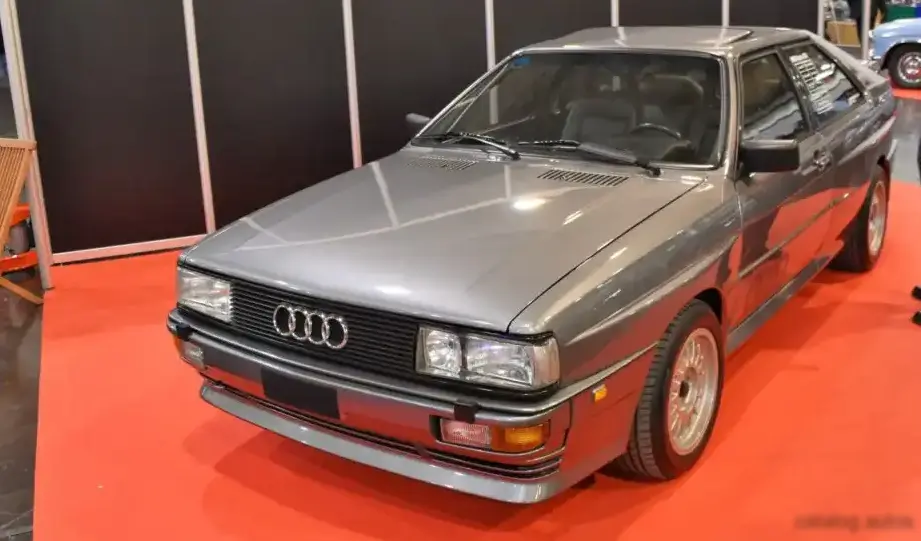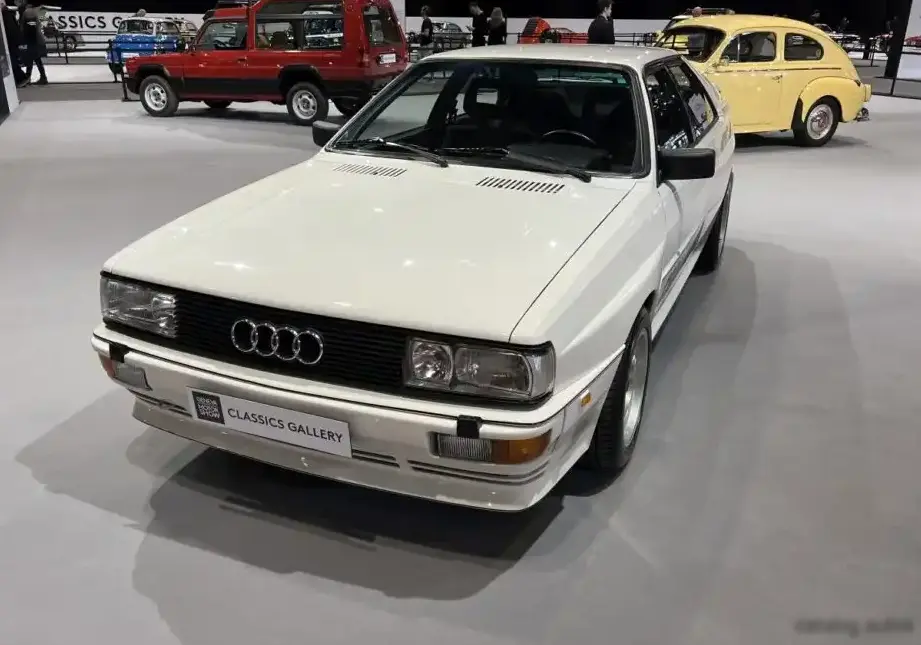
The Audi Quattro (Typ 85) 2.1 Turbo, produced between August 1984 and July 1989, represents a significant evolution of Audi’s groundbreaking all-wheel-drive coupe. Positioned as a performance-oriented variant within the Typ 85 range, the 2.1 Turbo offered a substantial power increase over the base models, solidifying the Quattro’s reputation as a capable grand tourer and rally homologation special. This model built upon the success of the original Quattro, refining its design and enhancing its performance credentials. It served as a bridge between the initial Quattro models and the later, more refined iterations of the platform.
Technical Specifications
| Brand | Audi |
| Model | Quattro |
| Generation | Quattro (Typ 85) |
| Type (Engine) | 2.1 Turbo (160 Hp) |
| Start of production | August, 1984 |
| End of production | July, 1989 |
| Powertrain Architecture | Internal Combustion engine |
| Body type | Coupe |
| Seats | 5 |
| Doors | 3 |
| Fuel consumption (urban) | 15.4 l/100 km (15.3 US mpg, 18.3 UK mpg, 6.5 km/l) |
| Fuel consumption (extra urban) | 7.7 l/100 km (30.5 US mpg, 36.7 UK mpg, 13 km/l) |
| Fuel Type | Petrol (Gasoline) |
| Acceleration 0 – 100 km/h | 7.8 sec |
| Acceleration 0 – 62 mph | 7.8 sec |
| Acceleration 0 – 60 mph | 7.4 sec |
| Maximum speed | 206 km/h (128 mph) |
| Weight-to-power ratio | 8.3 kg/Hp, 121 Hp/tonne |
| Weight-to-torque ratio | 4.6 kg/Nm, 215.6 Nm/tonne |
| Power | 160 Hp @ 5500 rpm |
| Power per litre | 74.6 Hp/l |
| Torque | 285 Nm @ 3500 rpm (210.21 lb.-ft. @ 3500 rpm) |
| Engine layout | Front, Longitudinal |
| Engine Model/Code | WX |
| Engine displacement | 2144 cm3 (130.83 cu. in.) |
| Number of cylinders | 5 |
| Engine configuration | Inline |
| Cylinder Bore | 79.5 mm (3.13 in.) |
| Piston Stroke | 86.4 mm (3.4 in.) |
| Compression ratio | 7:1 |
| Number of valves per cylinder | 2 |
| Fuel injection system | Multi-port manifold injection |
| Engine aspiration | Turbocharger |
| Valvetrain | SOHC |
| Engine oil capacity | 4 l (4.23 US qt | 3.52 UK qt) |
| Kerb Weight | 1322 kg (2914.51 lbs.) |
| Max. weight | 1760 kg (3880.14 lbs.) |
| Max load | 438 kg (965.62 lbs.) |
| Trunk (boot) space – minimum | 330 l (11.65 cu. ft.) |
| Fuel tank capacity | 90 l (23.78 US gal | 19.8 UK gal) |
| Length | 4404 mm (173.39 in.) |
| Width | 1723 mm (67.83 in.) |
| Height | 1344 mm (52.91 in.) |
| Wheelbase | 2524 mm (99.37 in.) |
| Front track | 1421 mm (55.94 in.) |
| Rear (Back) track | 1458 mm (57.4 in.) |
| Drag coefficient (Cd) | 0.39 |
| Minimum turning circle | 11.3 m (37.07 ft.) |
| Drive wheel | All wheel drive (4×4) |
| Number of gears | 5 gears, manual transmission |
| Front suspension | Independent, type McPherson with coil spring and anti-roll bar |
| Rear suspension | Independent on trapezoidal lever |
| Front brakes | Ventilated discs |
| Rear brakes | Disc |
| Assisting systems | ABS (Anti-lock braking system) |
| Steering type | Steering rack and pinion |
| Tires size | 205/60 R15 |
| Wheel rims size | 15 |
Powertrain & Engine Architecture
The heart of the 2.1 Turbo Quattro is its 2144cc inline-five cylinder engine, designated the WX code. This engine builds upon the foundation of Audi’s earlier five-cylinder designs, but incorporates a turbocharger and intercooler to significantly boost power output. The engine utilizes a single overhead camshaft (SOHC) valvetrain operating two valves per cylinder. Fuel delivery is managed by a multi-port fuel injection system, providing precise control over the air-fuel mixture. The turbocharger, a Garrett T25 unit, provides approximately 8.7 psi of boost. The engine’s longitudinal front-engine layout, coupled with Audi’s renowned quattro all-wheel-drive system, delivers excellent traction and balanced handling. The five-speed manual transmission was the only gearbox option available for this variant, chosen for its durability and ability to handle the increased torque.
Driving Characteristics
The 2.1 Turbo Quattro offered a noticeable performance upgrade over the naturally aspirated versions. The 160 horsepower and 285 Nm (210 lb-ft) of torque provided brisk acceleration, with a 0-60 mph time of around 7.4 seconds and a top speed of 128 mph. The turbocharger introduces a degree of turbo lag, meaning there’s a slight delay between pressing the accelerator and feeling the full power delivery. However, once the turbo spools up, the engine delivers a strong and linear powerband. The quattro all-wheel-drive system provides exceptional grip, particularly in adverse weather conditions, making the 2.1 Turbo a confident and capable performer year-round. The gear ratios in the five-speed manual transmission are well-matched to the engine’s characteristics, allowing for spirited driving on both winding roads and open highways.
Equipment & Trim Levels
The 2.1 Turbo Quattro typically came well-equipped, reflecting its position as a premium model. Standard features included power windows, central locking, and a high-quality stereo system. The interior featured comfortable sport seats upholstered in cloth or optional leather. Dashboard layout was typical of the Typ 85, with a functional and driver-focused design. Optional extras included a sunroof, air conditioning, and upgraded audio systems. The exterior was distinguished by subtle badging and, in some cases, a rear spoiler. The overall aesthetic aimed for a blend of sporty sophistication.
Chassis & Braking
The chassis of the 2.1 Turbo Quattro utilizes independent suspension all around. The front suspension employs a McPherson strut design with coil springs and an anti-roll bar, while the rear suspension features an independent trapezoidal lever setup. This configuration provides a good balance between ride comfort and handling precision. Braking duties are handled by ventilated discs at the front and solid discs at the rear, supplemented by an anti-lock braking system (ABS) which was becoming increasingly common during this period. The ABS system enhances braking performance and stability, particularly on slippery surfaces. The steering is a rack-and-pinion system, providing precise and responsive control.
Market Reception & Comparison
The Audi Quattro 2.1 Turbo was generally well-received by automotive critics. It was praised for its performance, handling, and all-weather capability. However, some reviewers noted the presence of turbo lag and the relatively high fuel consumption. Compared to the base Quattro models, the 2.1 Turbo offered a significant performance advantage. Compared to other performance coupes of the era, such as the BMW 3-Series and Porsche 944, the Quattro 2.1 Turbo offered a unique combination of all-wheel-drive traction and turbocharged power. The 2.1 Turbo was more expensive than the naturally aspirated Quattros, but its increased performance justified the price premium for many buyers.
Legacy
The Audi Quattro 2.1 Turbo remains a highly sought-after classic car today. The WX engine, while capable, can be prone to issues if not properly maintained, particularly regarding turbocharger health and oil leaks. However, parts availability is generally good, and a dedicated community of enthusiasts exists to support owners. The Typ 85 Quattro, and the 2.1 Turbo variant in particular, played a pivotal role in establishing Audi’s reputation for performance and innovation. Its all-wheel-drive system and turbocharged engine technology paved the way for future Audi models and influenced the design of performance cars across the industry. Well-maintained examples command high prices in the used car market, reflecting their rarity and historical significance.