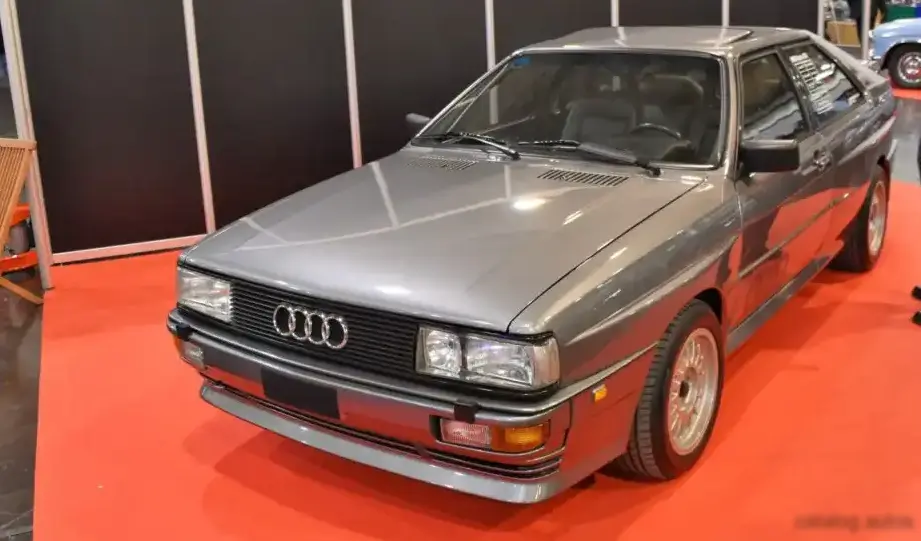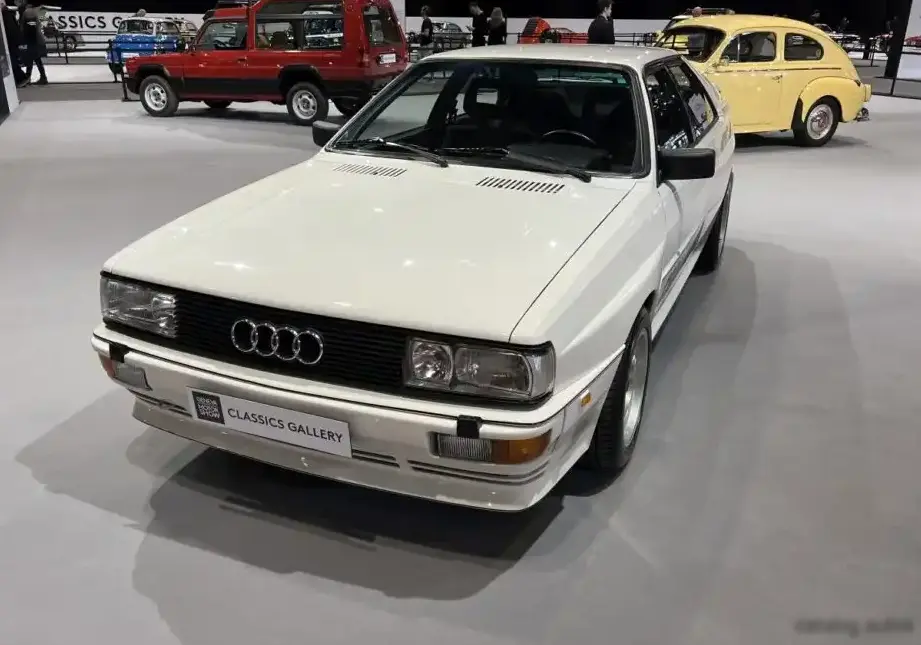
The Audi Quattro (Typ 85) 2.1 Turbo, produced from July 1980 to July 1987, represents a pivotal moment in automotive history. This coupe, built on the B2 platform (internally designated Typ 85), wasn’t merely a performance car; it was a technological showcase that popularized all-wheel drive in the realm of sports vehicles. The 2.1 Turbo variant, boasting 200 horsepower, sat at the top of the Quattro range, offering a significant performance upgrade over the base models and establishing Audi as a brand synonymous with quattro all-wheel drive technology. It was initially conceived to homologate the car for Group 4 rally racing, leading to a production run that captured the imagination of enthusiasts worldwide.
Technical Specifications
| Brand | Audi |
| Model | Quattro |
| Generation | Quattro (Typ 85) |
| Type (Engine) | 2.1 Turbo (200 Hp) |
| Start of production | July, 1980 |
| End of production | July, 1987 |
| Powertrain Architecture | Internal Combustion engine |
| Body type | Coupe |
| Seats | 5 |
| Doors | 3 |
| Fuel consumption (economy) – urban | 15.4 l/100 km (15.3 US mpg, 18.3 UK mpg, 6.5 km/l) |
| Fuel consumption (economy) – extra urban | 7.7 l/100 km (30.5 US mpg, 36.7 UK mpg, 13 km/l) |
| Fuel Type | Petrol (Gasoline) |
| Acceleration 0 – 100 km/h | 7.3 sec |
| Acceleration 0 – 62 mph | 7.3 sec |
| Acceleration 0 – 60 mph | 6.9 sec |
| Maximum speed | 221 km/h (137.32 mph) |
| Weight-to-power ratio | 6.5 kg/Hp, 155 Hp/tonne |
| Weight-to-torque ratio | 4.5 kg/Nm, 220.9 Nm/tonne |
| Power | 200 Hp @ 5500 rpm |
| Power per litre | 93.3 Hp/l |
| Torque | 285 Nm @ 3500 rpm (210.21 lb.-ft. @ 3500 rpm) |
| Engine layout | Front, Longitudinal |
| Engine Model/Code | WR |
| Engine displacement | 2144 cm3 (130.83 cu. in.) |
| Number of cylinders | 5 |
| Engine configuration | Inline |
| Cylinder Bore | 79.5 mm (3.13 in.) |
| Piston Stroke | 86.4 mm (3.4 in.) |
| Compression ratio | 7:1 |
| Number of valves per cylinder | 2 |
| Fuel injection system | Multi-port manifold injection |
| Engine aspiration | Turbocharger |
| Valvetrain | SOHC |
| Engine oil capacity | 4 l (4.23 US qt, 3.52 UK qt) |
| Coolant | 9.3 l (9.83 US qt, 8.18 UK qt) |
| Kerb Weight | 1290 kg (2843.96 lbs.) |
| Max. weight | 1760 kg (3880.14 lbs.) |
| Max load | 470 kg (1036.17 lbs.) |
| Trunk (boot) space – minimum | 330 l (11.65 cu. ft.) |
| Fuel tank capacity | 90 l (23.78 US gal, 19.8 UK gal) |
| Length | 4404 mm (173.39 in.) |
| Width | 1723 mm (67.83 in.) |
| Height | 1344 mm (52.91 in.) |
| Wheelbase | 2524 mm (99.37 in.) |
| Front track | 1416 mm (55.75 in.) |
| Rear (Back) track | 1494 mm (58.82 in.) |
| Ride height (ground clearance) | 115 mm (4.53 in.) |
| Drag coefficient (Cd) | 0.39 |
| Minimum turning circle (turning diameter) | 11.3 m (37.07 ft.) |
| Drive wheel | All wheel drive (4×4) |
| Number of gears and type of gearbox | 5 gears, manual transmission |
| Front suspension | Independent, type McPherson with coil spring and anti-roll bar |
| Rear suspension | Independent coil spring |
| Front brakes | Ventilated discs |
| Rear brakes | Disc |
| Steering type | Steering rack and pinion |
| Tires size | 205/60 R15 |
| Wheel rims size | 15 |
Powertrain & Engine Architecture
The heart of the Quattro 2.1 Turbo is the WR engine, a 2.1-liter, inline-five cylinder powerplant. This engine was a significant departure from the four-cylinder engines typically found in cars of this era. The five-cylinder configuration offered a unique balance of smoothness and power. The WR engine featured a single overhead camshaft (SOHC) valvetrain operating two valves per cylinder. Crucially, it employed a KKK turbocharger and Bosch K-Jetronic multi-port fuel injection, allowing for precise fuel delivery and boosting output to 200 horsepower. The 7:1 compression ratio was a compromise necessary for reliable turbocharging. The engine’s longitudinal mounting and the quattro all-wheel-drive system necessitated a robust five-speed manual transmission, designed to handle the increased torque.
Driving Characteristics
The 2.1 Turbo Quattro offered a driving experience that was markedly different from its contemporaries. The all-wheel-drive system provided exceptional grip, particularly in adverse weather conditions, and allowed for confident cornering at higher speeds. The turbocharger delivered a noticeable surge of power, but it wasn’t without some turbo lag. Power delivery was strong throughout the mid-range, making it a capable performer on both the road and the track. Compared to the naturally aspirated versions of the Quattro, the 2.1 Turbo offered significantly quicker acceleration – a 0-60 mph time of around 6.9 seconds was impressive for the early 1980s. The five-speed manual transmission was well-matched to the engine’s characteristics, providing precise shifts and allowing the driver to fully exploit the engine’s power band.
Equipment & Trim Levels
The 2.1 Turbo Quattro was positioned as the premium offering in the Quattro lineup. Standard equipment included power windows, central locking, and a high-quality interior with sport seats upholstered in cloth or leather (leather was an optional extra). The dashboard featured a comprehensive array of gauges, including a boost gauge to monitor turbocharger performance. Optional extras included a sunroof, upgraded audio system, and metallic paint finishes. The interior design was functional and driver-focused, reflecting the car’s performance aspirations.
Chassis & Braking
The Quattro’s chassis was designed to handle the increased power and grip of the all-wheel-drive system. It featured independent suspension all around, with McPherson struts at the front and a coil spring setup at the rear. Anti-roll bars were fitted to both axles to reduce body roll during cornering. Braking duties were handled by ventilated discs at the front and solid discs at the rear, providing ample stopping power. The car’s relatively short wheelbase and wide track contributed to its agile handling characteristics.
Market Reception & Comparison
The Audi Quattro 2.1 Turbo was widely praised by automotive journalists for its performance, handling, and all-weather capability. It was seen as a game-changer in the sports car market, demonstrating the benefits of all-wheel drive. Compared to other coupes of the era, such as the BMW 3-Series and Porsche 911, the Quattro offered a unique combination of performance and practicality. While the 2.1 Turbo was more expensive than the base Quattro models, its increased performance and luxurious features justified the price premium for many buyers. Fuel economy, however, was a notable drawback, with combined fuel consumption around 15.4 l/100km.
Legacy
The Audi Quattro 2.1 Turbo remains a highly sought-after classic car today. Its innovative technology, iconic design, and motorsport heritage have cemented its place in automotive history. The WR engine, while not without its quirks, proved to be relatively durable when properly maintained. However, turbocharger issues and potential oil leaks are common concerns for owners. Original, well-preserved examples command high prices in the collector car market. The Quattro’s influence can still be seen in Audi’s current lineup, particularly in its continued commitment to quattro all-wheel drive and high-performance models. It truly set the stage for Audi’s future success and solidified its reputation as a leader in automotive innovation.