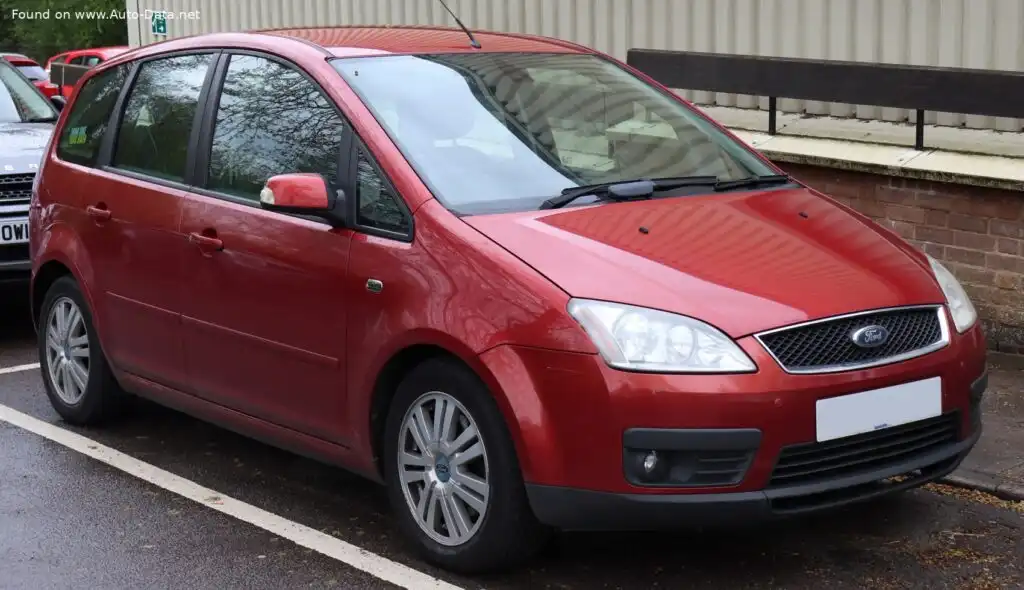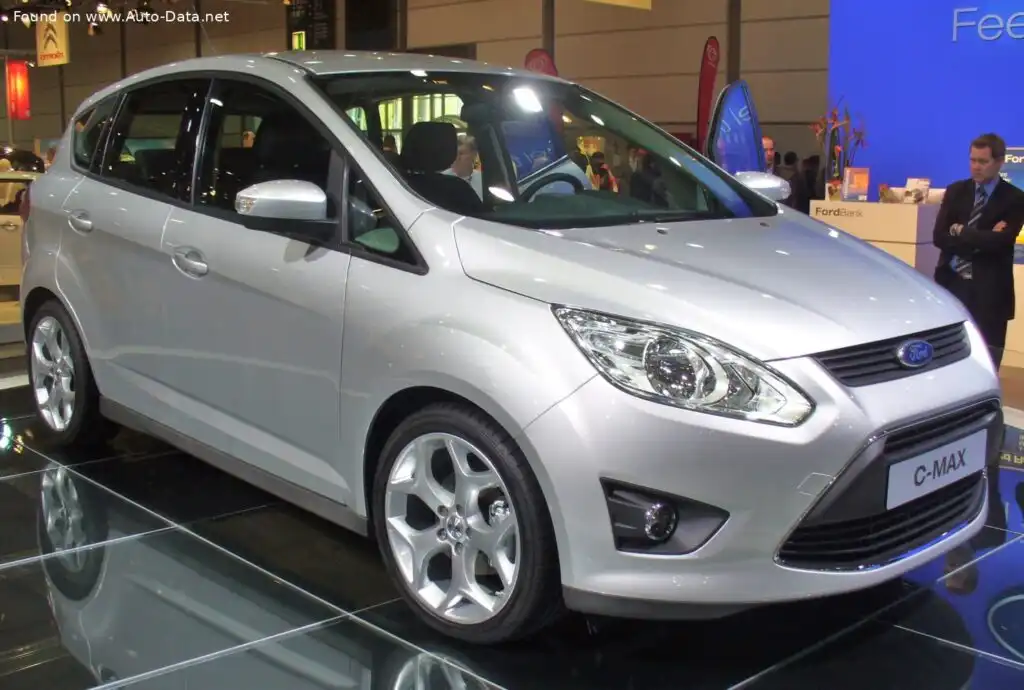
The Ford C-MAX II 1.6 Duratorq TDCi 95 hp variant, produced between 2010 and 2014, represented an entry-level offering within the second generation C-MAX lineup. Positioned as a fuel-efficient and practical compact multi-purpose vehicle (MPV), it aimed to provide affordable family transport in the European market. This model utilized Ford’s 1.6-liter Duratorq diesel engine paired with a six-speed manual transmission, offering a balance between economy and usability. It was part of the larger C-MAX II series, built on the Ford C-platform (also known as the 1HX0/A3 platform), shared with models like the Ford Focus.
Technical Specifications
| Brand | Ford |
| Model | C-MAX |
| Generation | C-MAX II |
| Type (Engine) | 1.6 Duratorq TDCi (95 Hp) DPF |
| Start of production | 2010 |
| End of production | 2014 |
| Powertrain Architecture | Internal Combustion engine |
| Body type | MPV |
| Seats | 5 |
| Doors | 5 |
| Fuel consumption (urban) | 5.4 l/100 km (43.6 US mpg, 52.3 UK mpg, 18.5 km/l) |
| Fuel consumption (extra urban) | 4.1 l/100 km (57.4 US mpg, 68.9 UK mpg, 24.4 km/l) |
| Fuel consumption (combined) | 4.6 l/100 km (51.1 US mpg, 61.4 UK mpg, 21.7 km/l) |
| CO2 emissions | 119 g/km |
| Fuel Type | Diesel |
| Acceleration 0 – 100 km/h | 13.3 sec |
| Acceleration 0 – 62 mph | 13.3 sec |
| Acceleration 0 – 60 mph | 12.6 sec |
| Maximum speed | 170 km/h (105.63 mph) |
| Emission standard | Euro 5 |
| Weight-to-power ratio | 13.8 kg/Hp, 72.2 Hp/tonne |
| Weight-to-torque ratio | 5.7 kg/Nm, 174.9 Nm/tonne |
| Power | 95 Hp @ 3600 rpm |
| Power per litre | 60.9 Hp/l |
| Torque | 230 Nm @ 1500 rpm (169.64 lb.-ft. @ 1500 rpm) |
| Engine layout | Front, Transverse |
| Engine Model/Code | T3DB |
| Engine displacement | 1560 cm3 (95.2 cu. in.) |
| Number of cylinders | 4 |
| Engine configuration | Inline |
| Cylinder Bore | 75 mm (2.95 in.) |
| Piston Stroke | 88.3 mm (3.48 in.) |
| Compression ratio | 16:1 |
| Number of valves per cylinder | 2 |
| Fuel injection system | Diesel Commonrail |
| Engine aspiration | Turbocharger, Intercooler |
| Valvetrain | SOHC |
| Engine oil capacity | 3.8 l (4.02 US qt | 3.34 UK qt) |
| Coolant | 7.3 l (7.71 US qt | 6.42 UK qt) |
| Kerb Weight | 1315 kg (2899.08 lbs.) |
| Max. weight | 1915 kg (4221.85 lbs.) |
| Max load | 600 kg (1322.77 lbs.) |
| Trunk (boot) space – minimum | 432 l (15.26 cu. ft.) |
| Trunk (boot) space – maximum | 1723 l (60.85 cu. ft.) |
| Fuel tank capacity | 53 l (14 US gal | 11.66 UK gal) |
| Max. roof load | 75 kg (165.35 lbs.) |
| Permitted trailer load with brakes (12%) | 1200 kg (2645.55 lbs.) |
| Permitted trailer load without brakes | 695 kg (1532.21 lbs.) |
| Permitted towbar download | 75 kg (165.35 lbs.) |
| Length | 4380 mm (172.44 in.) |
| Width | 1828 mm (71.97 in.) |
| Width with mirrors folded | 1858 mm (73.15 in.) |
| Width including mirrors | 2067 mm (81.38 in.) |
| Height | 1626 mm (64.02 in.) |
| Wheelbase | 2648 mm (104.25 in.) |
| Front track | 1544 mm (60.79 in.) |
| Rear (Back) track | 1554 mm (61.18 in.) |
| Minimum turning circle | 10.7 m (35.1 ft.) |
| Drivetrain Architecture | ICE, Front wheel drive |
| Number of gears and type of gearbox | 6 gears, manual transmission |
| Front suspension | Independent, McPherson with coil spring and anti-roll bar |
| Rear suspension | Independent multi-link spring suspension with stabilizer |
| Front brakes | Ventilated discs |
| Rear brakes | Disc |
| Assisting systems | ABS |
| Steering type | Steering rack and pinion |
| Power steering | Electric |
| Tires size | 205/55 R16; 215/55 R16 |
| Wheel rims size | 6.5 J x 16; 7.0 J x 16 |
INTRODUCTION
The Ford C-MAX II 1.6 Duratorq TDCi 95 hp, launched in 2010, was a key component of Ford’s strategy to offer a diverse range of compact MPVs in Europe. It was designed to appeal to families seeking a practical, economical, and relatively affordable vehicle. This variant sat at the lower end of the C-MAX II range, offering a more accessible price point compared to higher-powered engine options like the 1.6 EcoBoost or the 2.0-liter diesel. The C-MAX II itself was a significant update over the first-generation model, featuring a more refined interior, improved ride quality, and a greater emphasis on driving dynamics.
Powertrain & Engine Architecture
The heart of this C-MAX variant is Ford’s 1.6-liter Duratorq TDCi diesel engine, specifically the T3DB engine code. This engine is a four-cylinder, inline configuration, utilizing a turbocharger with intercooling to boost power and efficiency. It employs a common-rail direct fuel injection system, delivering fuel directly into the combustion chamber at high pressure for optimized combustion. The engine features a single overhead camshaft (SOHC) valvetrain with two valves per cylinder. The 95 horsepower output is achieved at 3600 rpm, while peak torque of 230 Nm (169.64 lb.-ft.) is available from just 1500 rpm, providing good low-end responsiveness. The engine is paired with a six-speed manual transmission, chosen for its fuel efficiency and driver engagement. This transmission’s gear ratios are tuned to maximize fuel economy and provide adequate acceleration for everyday driving.
Driving Characteristics
The 95 hp Duratorq TDCi-equipped C-MAX offers a comfortable, if not particularly exhilarating, driving experience. Acceleration from 0-100 km/h takes around 13.3 seconds, making it suitable for urban and suburban driving but less ideal for frequent highway overtaking. The engine’s strong low-end torque compensates for the relatively modest horsepower, providing sufficient pulling power for most situations. The six-speed manual transmission allows drivers to keep the engine in its optimal power band, enhancing responsiveness. Compared to the higher-output versions, this variant feels noticeably slower, especially when fully loaded with passengers and luggage. However, the trade-off is significantly improved fuel economy. The suspension setup provides a good balance between comfort and handling, absorbing bumps and imperfections in the road while maintaining reasonable body control.
Equipment & Trim Levels
The 1.6 Duratorq TDCi 95 hp C-MAX typically came with a reasonable level of standard equipment, though it was less lavish than the higher trim levels. Standard features generally included air conditioning, power steering, electric front windows, a basic audio system with CD player, and ABS brakes. Interior upholstery was typically cloth, with a functional and durable design. Optional extras included alloy wheels, upgraded audio systems, parking sensors, and climate control. Trim levels varied slightly depending on the specific market, but generally followed a progression from base models to more well-equipped versions with additional comfort and convenience features.
Chassis & Braking
The C-MAX II utilizes an independent front suspension with McPherson struts and a coil spring/anti-roll bar setup. The rear suspension is an independent multi-link system, also with a stabilizer bar, designed to provide a comfortable ride and good handling characteristics. Braking is handled by ventilated discs on the front wheels and solid discs on the rear. ABS (Anti-lock Braking System) is standard, enhancing safety during emergency braking situations. The chassis is designed to provide a stable and predictable driving experience, with a focus on minimizing body roll and maximizing grip.
Market Reception & Comparison
The Ford C-MAX II 1.6 Duratorq TDCi 95 hp was generally well-received by critics as a practical and economical family vehicle. Its fuel efficiency was a major selling point, particularly in Europe where diesel fuel is often more affordable than gasoline. However, some reviewers noted that the engine could feel underpowered, especially when the vehicle was fully loaded. Compared to the 1.6 EcoBoost petrol engine, the diesel offered superior fuel economy but less outright performance. Against the 2.0-liter TDCi diesel, it provided a more affordable entry point but lacked the higher power output and refined driving experience. Its main competitors included the Volkswagen Touran, Renault Scenic, and Citroën C4 Picasso.
Legacy
The 1.6 Duratorq TDCi engine, in general, has proven to be a relatively reliable powertrain, although like any diesel engine, it requires regular maintenance, including oil changes and filter replacements. The particulate filter (DPF) can be a potential source of issues if the vehicle is primarily used for short trips, as it may not have sufficient opportunity to regenerate. In the used car market, the C-MAX II 1.6 Duratorq TDCi 95 hp remains a popular choice for budget-conscious buyers seeking a practical and economical MPV. Its affordability, fuel efficiency, and relatively low running costs continue to make it an attractive option for families and individuals alike.