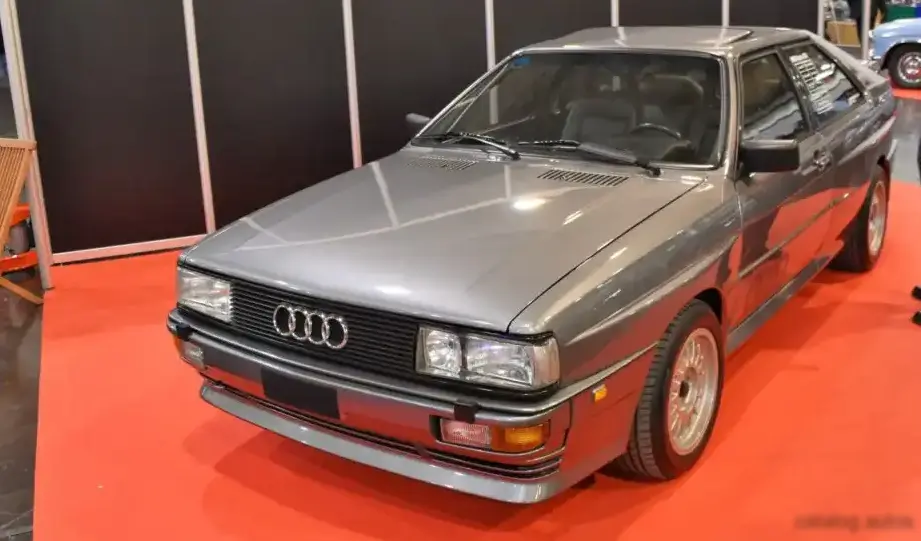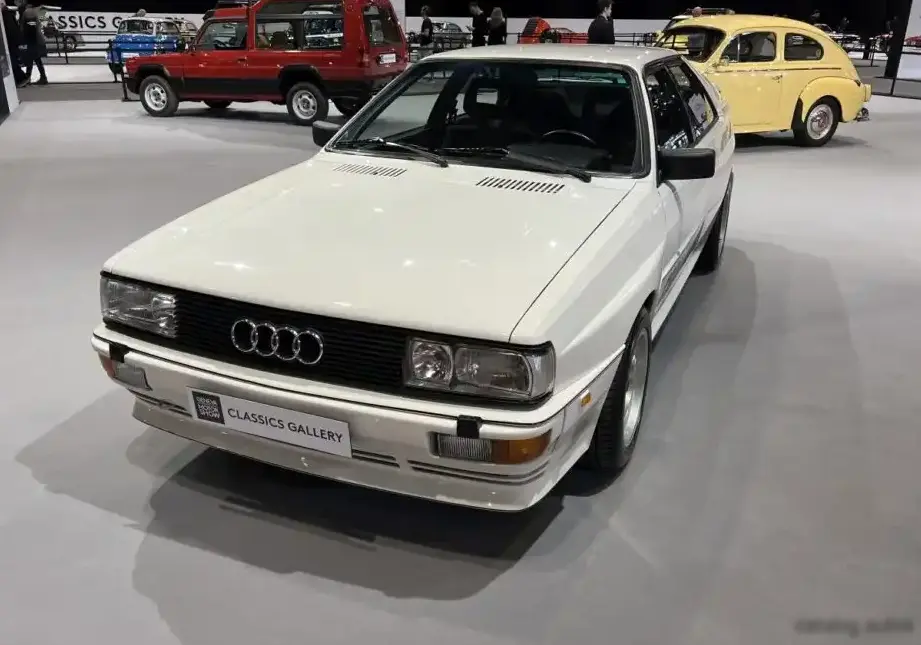
The Audi Quattro (Typ 85) Sport 2.1 20V Turbo, produced between May 1984 and July 1987, represents a high-performance iteration of the groundbreaking Quattro model line. Positioned as the flagship variant within the Typ 85 generation, it capitalized on the success of the original Quattro by offering significantly increased power and refinement. The Typ 85 Quattro was pivotal in establishing Audi’s reputation for all-wheel-drive technology and sporty handling, and the Sport 2.1 20V Turbo was the ultimate expression of that ambition during its production run. It was built on the Audi 80 (B2) platform, sharing many components but distinguished by its unique styling and all-wheel-drive system.
Technical Specifications
| Brand | Audi |
| Model | Quattro |
| Generation | Quattro (Typ 85) |
| Type (Engine) | Sport 2.1 20V Turbo (306 Hp) |
| Start of production | May, 1984 |
| End of production | July, 1987 |
| Powertrain Architecture | Internal Combustion engine |
| Body type | Coupe |
| Seats | 5 |
| Doors | 3 |
| Fuel Type | Petrol (Gasoline) |
| Acceleration 0 – 100 km/h | 4.8 sec |
| Acceleration 0 – 62 mph | 4.8 sec |
| Acceleration 0 – 60 mph | 4.6 sec |
| Maximum speed | 248 km/h (154.1 mph) |
| Weight-to-power ratio | 4.2 kg/Hp, 240.4 Hp/tonne |
| Weight-to-torque ratio | 3.6 kg/Nm, 274.9 Nm/tonne |
| Power | 306 Hp @ 6600 rpm |
| Power per litre | 143.5 Hp/l |
| Torque | 350 Nm @ 3700 rpm (258.15 lb.-ft. @ 3700 rpm) |
| Engine layout | Front, Longitudinal |
| Engine displacement | 2133 cm3 (130.16 cu. in.) |
| Number of cylinders | 5 |
| Engine configuration | Inline |
| Cylinder Bore | 79.3 mm (3.12 in.) |
| Piston Stroke | 86.4 mm (3.4 in.) |
| Compression ratio | 8.1:1 |
| Number of valves per cylinder | 2 |
| Fuel injection system | Multi-port manifold injection |
| Engine aspiration | Turbocharger |
| Valvetrain | DOHC |
| Engine oil capacity | 4 l (4.23 US qt | 3.52 UK qt) |
| Coolant | 9.3 l (9.83 US qt | 8.18 UK qt) |
| Kerb Weight | 1273 kg (2806.48 lbs.) |
| Trunk (boot) space – minimum | 307 l (10.84 cu. ft.) |
| Fuel tank capacity | 90 l (23.78 US gal | 19.8 UK gal) |
| Length | 4160 mm (163.78 in.) |
| Width | 1780 mm (70.08 in.) |
| Height | 1345 mm (52.95 in.) |
| Wheelbase | 2224 mm (87.56 in.) |
| Front track | 1487 mm (58.54 in.) |
| Rear (Back) track | 1485 mm (58.46 in.) |
| Drag coefficient (Cd) | 0.42 |
| Minimum turning circle | 10.3 m (33.79 ft.) |
| Drive wheel | All wheel drive (4×4) |
| Number of gears | 5 gears, manual transmission |
| Front suspension | Independent, type McPherson with coil spring and anti-roll bar |
| Rear suspension | Independent coil spring |
| Front brakes | Ventilated discs |
| Rear brakes | Disc |
| Assisting systems | ABS (Anti-lock braking system) |
| Steering type | Steering rack and pinion |
| Tires size | 235/45 R15 |
| Wheel rims size | 15 |
Powertrain & Engine Architecture
The heart of the Quattro Sport 2.1 20V Turbo is its inline-five cylinder engine, designated as the KW engine code. This engine represents a significant evolution of the original Quattro’s powerplant. Displacing 2133cc, it features a cast iron block and an aluminum cylinder head. The 20-valve configuration (four valves per cylinder) and the addition of a turbocharger, along with Bosch K-Jetronic fuel injection, allowed for a substantial increase in power output to 306 horsepower and 350 Nm (258 lb-ft) of torque. The turbocharger was a Garrett T25 unit, providing boost pressure optimized for both performance and reliability. The engine’s longitudinal front-engine layout contributed to the car’s balanced handling characteristics. The five-speed manual transmission was specifically reinforced to handle the increased power and torque, ensuring durability and precise gear changes.
Driving Characteristics
The Quattro Sport 2.1 20V Turbo delivered exhilarating performance for its time. Acceleration from 0 to 60 mph was achieved in approximately 4.6 seconds, and it could reach a top speed of 154 mph. The all-wheel-drive system provided exceptional traction, particularly in adverse weather conditions, making it a capable year-round performer. Compared to the standard Quattro or the later 2.2-liter versions, the Sport 2.1 offered a more responsive and powerful driving experience. The turbocharger did introduce a degree of turbo lag, but once spooled up, the engine delivered a strong surge of power throughout the rev range. The five-speed manual transmission provided precise control, allowing drivers to fully exploit the engine’s capabilities. The suspension, while firm, offered a good balance between comfort and handling, making it suitable for both spirited driving and long-distance cruising.
Equipment & Trim Levels
The Sport 2.1 20V Turbo was the most comprehensively equipped version of the Typ 85 Quattro. Standard features included power windows, central locking, a sunroof, and a premium sound system. The interior was typically trimmed with leather upholstery, and featured sport seats providing excellent support. Optional extras included air conditioning, a limited-slip differential, and upgraded audio systems. The dashboard layout was typical of Audi’s early 1980s designs, with a functional and straightforward arrangement of gauges and controls. The exterior was distinguished by its unique front and rear spoilers, fender flares, and larger alloy wheels.
Chassis & Braking
The Quattro’s chassis was designed to handle the increased power of the Sport 2.1. It featured independent suspension all around, with McPherson struts at the front and a semi-trailing arm setup at the rear. Anti-roll bars were fitted to both axles to reduce body roll during cornering. The braking system consisted of ventilated disc brakes at the front and solid discs at the rear. An anti-lock braking system (ABS) was standard, enhancing safety and control. The car’s relatively low weight (1273 kg or 2806 lbs) contributed to its agile handling characteristics. The all-wheel-drive system, with its Torsen center differential, automatically distributed torque between the front and rear axles, optimizing traction in all conditions.
Market Reception & Comparison
The Audi Quattro Sport 2.1 20V Turbo was widely praised by automotive journalists for its performance, handling, and all-weather capability. It was considered a benchmark for performance coupes of its era. Compared to other versions of the Quattro, the Sport 2.1 offered a significant performance advantage, but it also came with a higher price tag. Fuel economy was relatively poor, typical for a turbocharged engine of that period. Reliability was generally good, but the turbocharger and fuel injection system required regular maintenance. The Sport 2.1 was often compared to rivals such as the Porsche 944 Turbo and the BMW M635CSi, and it consistently held its own in performance tests.
Legacy
The Audi Quattro Sport 2.1 20V Turbo remains a highly sought-after classic car today. Its innovative all-wheel-drive system and powerful engine have cemented its place in automotive history. The KW engine, while requiring careful maintenance, is known for its durability and tunability. Original examples in good condition command high prices in the collector car market. The Typ 85 Quattro, and particularly the Sport 2.1 20V Turbo, laid the foundation for Audi’s continued success in the performance car segment, and its influence can still be seen in Audi’s current lineup of high-performance models. Finding parts can be challenging, but a dedicated community of enthusiasts ensures that these cars continue to be maintained and enjoyed for years to come.