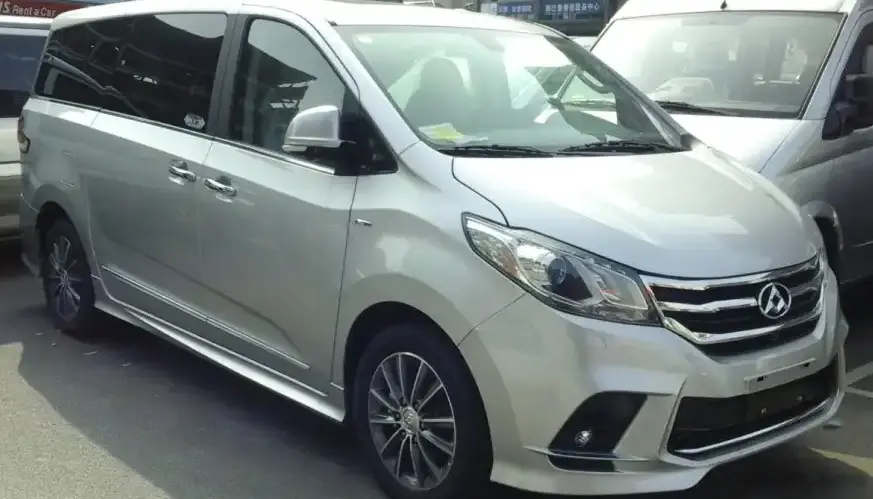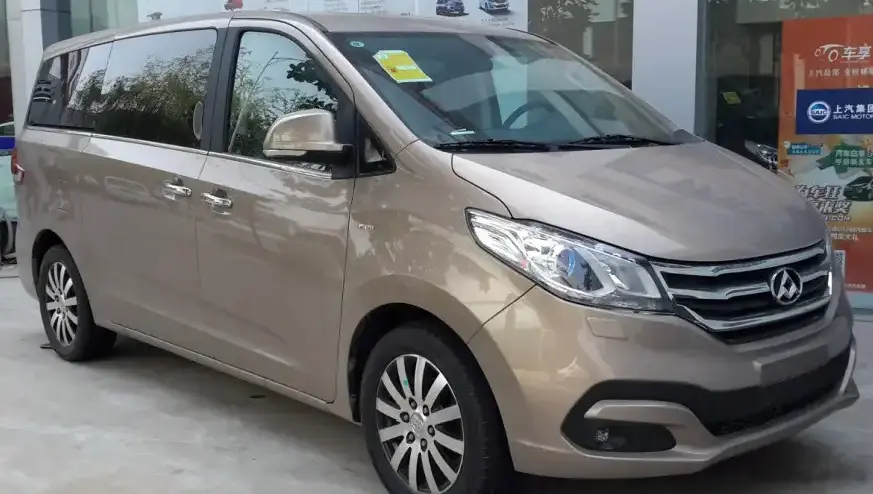
The Maxus G10 Passenger 2.0 TGI 16V Automatic, produced between 2014 and 2016, represents a significant entry for the SAIC Motor-owned Maxus brand into the competitive minivan segment. Primarily aimed at the commercial and family transport markets, particularly in Asia and emerging economies, the G10 offered a spacious, nine-seat configuration with a focus on practicality and value. This specific variant, equipped with the 2.0-liter turbocharged gasoline engine and a six-speed automatic transmission, positioned itself as a mid-range offering within the G10 lineup, balancing performance with fuel efficiency and ease of use. While not widely sold in North America, understanding its specifications and characteristics provides insight into the evolving global minivan market.
Technical Specifications
| Brand | Maxus |
| Model | G10 |
| Generation | G10 Passenger |
| Type (Engine) | 2.0 TGI 16V (224 Hp) Automatic |
| Start of production | 2014 |
| End of production | 2016 |
| Powertrain Architecture | Internal Combustion engine |
| Body type | Minivan |
| Seats | 9 |
| Doors | 5 |
| Fuel consumption (combined) | 10.3 l/100 km (22.8 US mpg, 27.4 UK mpg, 9.7 km/l) |
| Fuel Type | Petrol (Gasoline) |
| Maximum speed | 190 km/h (118.06 mph) |
| Emission standard | Euro 5 |
| Weight-to-power ratio | 9.2 kg/Hp, 108.9 Hp/tonne |
| Weight-to-torque ratio | 6.2 kg/Nm, 160.4 Nm/tonne |
| Power | 224 Hp |
| Power per litre | 112.3 Hp/l |
| Torque | 330 Nm (243.4 lb.-ft.) |
| Engine layout | Front, Transverse |
| Engine displacement | 1995 cm3 (121.74 cu. in.) |
| Number of cylinders | 4 |
| Engine configuration | Inline |
| Number of valves per cylinder | 4 |
| Fuel injection system | Direct injection |
| Engine aspiration | Turbocharger, Intercooler |
| Kerb Weight | 2057 kg (4534.91 lbs.) |
| Max. weight | 2800 kg (6172.94 lbs.) |
| Max load | 743 kg (1638.03 lbs.) |
| Fuel tank capacity | 75 l (19.81 US gal | 16.5 UK gal) |
| Permitted trailer load with brakes (12%) | 1500 kg (3306.93 lbs.) |
| Permitted trailer load without brakes | 750 kg (1653.47 lbs.) |
| Length | 5168 mm (203.46 in.) |
| Width | 1980 mm (77.95 in.) |
| Height | 1928 mm (75.91 in.) |
| Wheelbase | 3210 mm (126.38 in.) |
| Ride height (ground clearance) | 134 mm (5.28 in.) |
| Minimum turning circle | 11.8 m (38.71 ft.) |
| Drivetrain Architecture | Front wheel drive |
| Number of gears and type of gearbox | 6 gears, automatic transmission |
| Front suspension | Independent type McPherson |
| Rear suspension | Independent multi-link suspension |
| Front brakes | Disc |
| Rear brakes | Disc |
| Assisting systems | ABS (Anti-lock braking system) |
| Steering type | Steering rack and pinion |
| Power steering | Hydraulic Steering |
| Tires size | 215/70 R16 100H |
| Wheel rims size | 6.5J x 16 ET38 |
Powertrain & Engine Architecture
The heart of the G10 Passenger 2.0 TGI is the 1995cc inline-four cylinder engine. This engine utilizes direct fuel injection and is coupled with a turbocharger and intercooler to boost power output to 224 horsepower and 330 Nm (243.4 lb.-ft.) of torque. The engine code specifics can vary depending on the market, but it generally falls within the broader SAIC Motor gasoline engine family. The six-speed automatic transmission was a crucial component, offering smoother shifts compared to a manual gearbox, which was also available on some G10 models. This automatic was selected to appeal to a broader customer base prioritizing convenience and ease of driving, especially in urban environments. The transmission’s gear ratios were tuned for a balance between acceleration and fuel economy, though the G10’s substantial weight inevitably impacted both.
Driving Characteristics
The 2.0-liter turbo engine, paired with the automatic transmission, provided adequate performance for the G10 Passenger, but it wasn’t designed for sporty driving. Acceleration was reasonable, particularly when unladen, but fully loaded with passengers and cargo, the engine could feel strained, especially when attempting quick overtaking maneuvers. The automatic transmission generally shifted smoothly, but could sometimes exhibit a slight hesitation when downshifting. Compared to the available diesel engine options in some markets, the 2.0 TGI offered a quieter and more refined driving experience, but at the expense of fuel economy and low-end torque. The G10’s front-wheel-drive configuration contributed to predictable handling, but also limited traction in slippery conditions.
Equipment & Trim Levels
The G10 Passenger 2.0 TGI Automatic typically came equipped with a reasonable level of standard features, including air conditioning, power windows and locks, and a basic audio system. Higher trim levels added features such as alloy wheels, a more sophisticated infotainment system with a touchscreen display, and upgraded interior upholstery. Safety features generally included ABS, airbags for the driver and front passenger, and seatbelts for all occupants. The interior was designed with practicality in mind, featuring durable materials and a flexible seating arrangement that allowed for various configurations to maximize passenger and cargo space.
Chassis & Braking
The G10 Passenger utilized a McPherson strut independent suspension setup at the front and a multi-link independent suspension at the rear. This configuration aimed to provide a comfortable ride quality, absorbing bumps and irregularities in the road surface. Disc brakes were fitted on all four wheels, providing adequate stopping power for the vehicle’s weight. The hydraulic power steering offered a reasonable level of assistance, making it easy to maneuver the G10 in tight spaces. The suspension tuning was generally geared towards comfort rather than sporty handling, prioritizing a smooth and stable ride.
Market Reception & Comparison
The Maxus G10 Passenger was generally well-received in its target markets as a practical and affordable minivan option. Critics praised its spacious interior, comfortable ride, and reasonable price point. However, some reviewers noted that the 2.0-liter turbo engine could feel underpowered when fully loaded, and the fuel economy was not particularly impressive. Compared to other minivans available in the same segment, the G10 offered a competitive value proposition, but lacked the brand recognition and refinement of established players like Toyota or Honda. The diesel variants of the G10 were often favored by those prioritizing fuel efficiency and towing capacity.
Legacy
The Maxus G10 Passenger played a role in establishing the Maxus brand as a viable competitor in the global minivan market. While not a mainstream vehicle in North America, it gained a following in Asia and other regions where affordable and spacious people carriers are in high demand. The 2.0 TGI engine and six-speed automatic transmission combination proved to be reasonably reliable, with routine maintenance being key to long-term durability. In the used car market, the G10 Passenger continues to offer a practical and affordable transportation solution for families and businesses, though potential buyers should be aware of the potential for higher maintenance costs as the vehicles age.