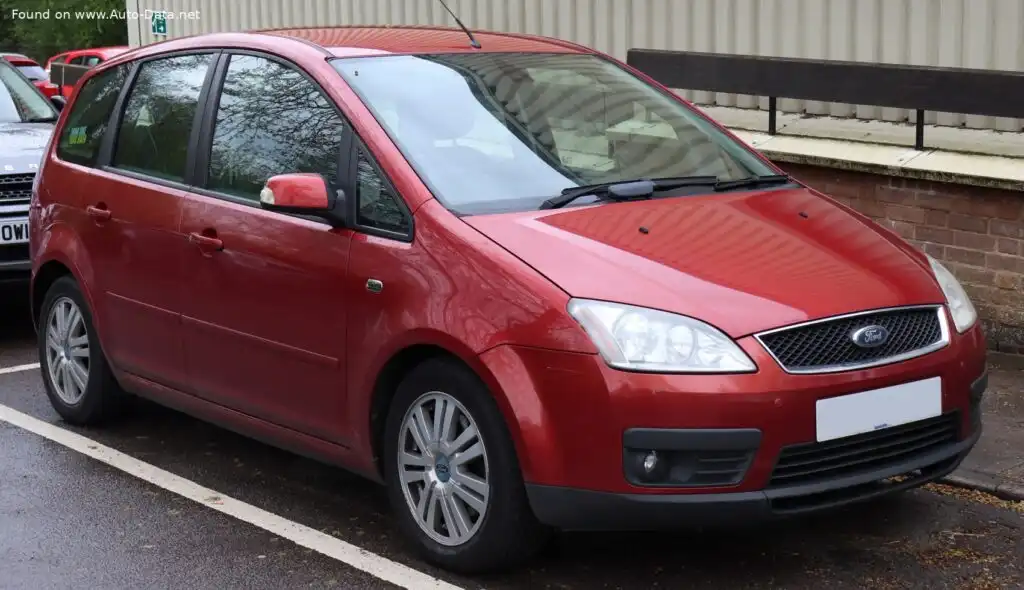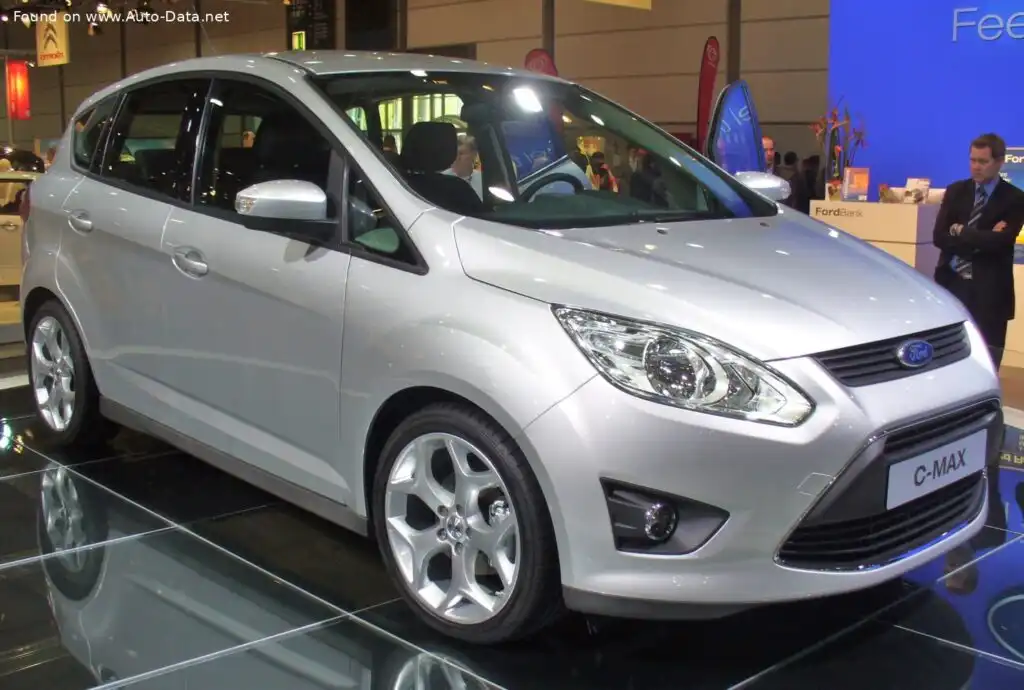
The Ford C-MAX II 1.6 Ti-VCT (85 hp) was a compact multi-purpose vehicle (MPV) produced by Ford between 2010 and 2015. Positioned as an entry-level offering within the second generation C-MAX range, it aimed to provide affordable family transport with a focus on fuel efficiency. This variant played a significant role in Ford’s European lineup, offering a practical and economical alternative to larger MPVs and small SUVs. While not sold in the US market, the C-MAX II was a popular choice for families in Europe seeking a versatile and space-efficient vehicle.
Technical Specifications
| Brand | Ford |
| Model | C-MAX |
| Generation | C-MAX II |
| Type (Engine) | 1.6 Ti-VCT (85 Hp) |
| Start of production | 2010 |
| End of production | 2015 |
| Powertrain Architecture | Internal Combustion engine |
| Body type | MPV |
| Seats | 5 |
| Doors | 5 |
| Fuel consumption (urban) | 8.4 l/100 km (28 US mpg, 33.6 UK mpg, 11.9 km/l) |
| Fuel consumption (extra urban) | 5.2 l/100 km (45.2 US mpg, 54.3 UK mpg, 19.2 km/l) |
| Fuel consumption (combined) | 6.4 l/100 km (36.8 US mpg, 44.1 UK mpg, 15.6 km/l) |
| CO2 emissions | 149 g/km |
| Fuel Type | Petrol (Gasoline) |
| Acceleration 0 – 100 km/h | 15.9 sec |
| Acceleration 0 – 62 mph | 15.9 sec |
| Acceleration 0 – 60 mph | 15.1 sec |
| Maximum speed | 165 km/h (102.53 mph) |
| Emission standard | Euro 5 |
| Weight-to-power ratio | 15.3 kg/Hp, 65.4 Hp/tonne |
| Weight-to-torque ratio | 9.2 kg/Nm, 108.5 Nm/tonne |
| Power | 85 Hp @ 6000 rpm |
| Power per litre | 53.3 Hp/l |
| Torque | 141 Nm @ 2500 rpm (104 lb.-ft. @ 2500 rpm) |
| Engine layout | Front, Transverse |
| Engine Model/Code | XTDB |
| Engine displacement | 1596 cm3 (97.39 cu. in.) |
| Number of cylinders | 4 |
| Engine configuration | Inline |
| Cylinder Bore | 79 mm (3.11 in.) |
| Piston Stroke | 81.4 mm (3.2 in.) |
| Compression ratio | 11:1 |
| Number of valves per cylinder | 4 |
| Fuel injection system | Multi-port manifold injection |
| Engine aspiration | Naturally aspirated engine |
| Valvetrain | DOHC |
| Engine oil capacity | 4.1 l (4.33 US qt | 3.61 UK qt) |
| Coolant | 5.5 l (5.81 US qt | 4.84 UK qt) |
| Kerb Weight | 1299 kg (2863.8 lbs.) |
| Max. weight | 1860 kg (4100.6 lbs.) |
| Max load | 561 kg (1236.79 lbs.) |
| Trunk (boot) space – minimum | 432 l (15.26 cu. ft.) |
| Trunk (boot) space – maximum | 1723 l (60.85 cu. ft.) |
| Fuel tank capacity | 55 l (14.53 US gal | 12.1 UK gal) |
| Permitted trailer load with brakes (12%) | 800 kg (1763.7 lbs.) |
| Permitted trailer load without brakes | 685 kg (1510.17 lbs.) |
| Length | 4380 mm (172.44 in.) |
| Width | 1828 mm (71.97 in.) |
| Width with mirrors folded | 1858 mm (73.15 in.) |
| Width including mirrors | 2067 mm (81.38 in.) |
| Height | 1626 mm (64.02 in.) |
| Wheelbase | 2648 mm (104.25 in.) |
| Front track | 1544 mm (60.79 in.) |
| Rear (Back) track | 1554 mm (61.18 in.) |
| Minimum turning circle | 10.7 m (35.1 ft.) |
| Drivetrain Architecture | The Internal combustion engine (ICE) drives the front wheels of the vehicle. |
| Drive wheel | Front wheel drive |
| Number of gears and type of gearbox | 5 gears, manual transmission |
| Front suspension | Independent, type McPherson with coil spring and anti-roll bar |
| Rear suspension | Independent multi-link spring suspension with stabilizer |
| Front brakes | Ventilated discs |
| Rear brakes | Disc |
| Assisting systems | ABS (Anti-lock braking system) |
| Steering type | Steering rack and pinion |
| Power steering | Electric Steering |
| Tires size | 205/55 R16 |
| Wheel rims size | 6.5 J x 16 |
INTRODUCTION
The Ford C-MAX II, launched in 2010, represented Ford’s second attempt at a compact MPV, building upon the success of the original C-MAX. The 1.6 Ti-VCT 85 hp variant served as the entry point to the range, targeting budget-conscious buyers and those prioritizing fuel economy. It was built on the Ford C-platform (also known as the 1HX0/A3 platform), shared with models like the Ford Focus. This platform allowed for a relatively lightweight and efficient vehicle, contributing to its fuel-saving characteristics. The C-MAX II aimed to compete with vehicles like the Opel/Vauxhall Meriva, Renault Scenic, and Volkswagen Touran, offering a more affordable and practical alternative to larger, more expensive MPVs.
Powertrain & Engine Architecture
The heart of the C-MAX II 1.6 Ti-VCT was the XTDB engine, a 1.6-liter inline-four cylinder petrol engine. This engine utilized a Ti-VCT (Twin Independent Variable Camshaft Timing) system, which optimized valve timing for improved performance and fuel efficiency across the rev range. The engine employed multi-point fuel injection, delivering fuel directly into the intake ports. The 85 hp output was achieved at 6000 rpm, with a torque figure of 141 Nm (104 lb-ft) available at 2500 rpm. The engine featured a compression ratio of 11:1. The engine was paired with a five-speed manual transmission, chosen for its simplicity and contribution to fuel economy. While an automatic transmission was offered on other C-MAX variants, it wasn’t available with the 85 hp engine.
Driving Characteristics
The 1.6 Ti-VCT 85 hp engine provided adequate, but not exhilarating, performance. Acceleration from 0-60 mph took around 15.1 seconds, and top speed was limited to 165 km/h (102.53 mph). The engine felt somewhat strained when fully loaded or tackling steep inclines. The five-speed manual transmission was well-matched to the engine’s characteristics, offering a reasonable spread of gears. Gear ratios were optimized for fuel efficiency rather than outright performance. Compared to the more powerful 1.6 EcoBoost or 1.8-liter petrol variants, the 85 hp engine lacked the punch for quick overtaking maneuvers. However, it offered a smoother and more predictable driving experience, particularly in urban environments. The manual transmission also gave the driver more control over engine speed and torque delivery.
Equipment & Trim Levels
The 1.6 Ti-VCT 85 hp C-MAX typically came with a relatively basic level of equipment, reflecting its position as the entry-level model. Standard features generally included air conditioning, power steering, electric front windows, and a basic audio system with CD player. Safety features such as ABS, front airbags, and seatbelt pretensioners were also standard. Higher trim levels, such as Zetec, offered additional features like alloy wheels, upgraded audio systems, cruise control, and rear electric windows. Optional extras included parking sensors, a panoramic sunroof, and leather upholstery. Interior upholstery was typically cloth, with a functional and durable design. The dashboard layout was straightforward and user-friendly.
Chassis & Braking
The C-MAX II utilized an independent front suspension with McPherson struts and a coil spring, coupled with an independent multi-link rear suspension. This setup provided a comfortable ride quality and decent handling characteristics. The front brakes were ventilated discs, while the rear brakes were solid discs. The suspension was tuned for comfort rather than sporty handling, prioritizing ride quality over sharp cornering. The steering was electrically assisted, providing light and easy steering feel. The C-MAX II’s weight of approximately 1299 kg (2863.8 lbs) contributed to its relatively modest performance, but also helped to maintain reasonable fuel economy.
Market Reception & Comparison
The Ford C-MAX II 1.6 Ti-VCT 85 hp received mixed reviews. Critics praised its fuel efficiency and practicality, but noted its lack of outright performance. It was generally considered a sensible and economical choice for families, but those seeking a more engaging driving experience were advised to consider the higher-powered variants. Compared to the 1.6 EcoBoost engine, the 1.6 Ti-VCT offered lower running costs but significantly less power. The 1.6 EcoBoost provided a more refined and responsive driving experience, but at a higher price point. The 1.6 Ti-VCT’s fuel economy of around 36.8 US mpg combined was competitive within its class.
Legacy
The Ford C-MAX II 1.6 Ti-VCT 85 hp has proven to be a relatively reliable vehicle, with the 1.6 Ti-VCT engine generally considered durable. Common issues are typically related to wear and tear on components such as the clutch, suspension bushings, and exhaust system. On the used car market, these models are often sought after by buyers looking for an affordable and practical MPV. While not a performance standout, the C-MAX II 1.6 Ti-VCT remains a viable option for those prioritizing fuel economy, practicality, and low running costs. Its simple engine design and readily available parts contribute to its continued appeal in the used car market.