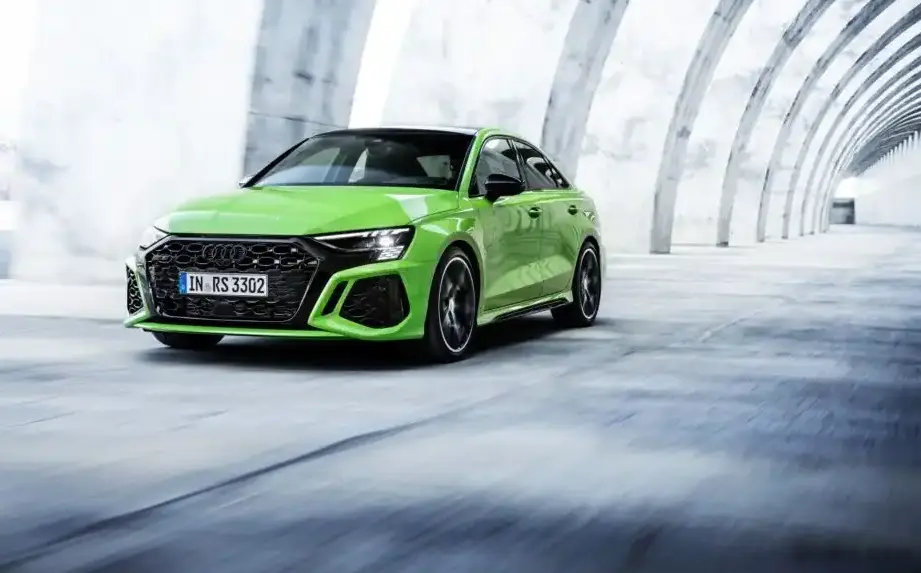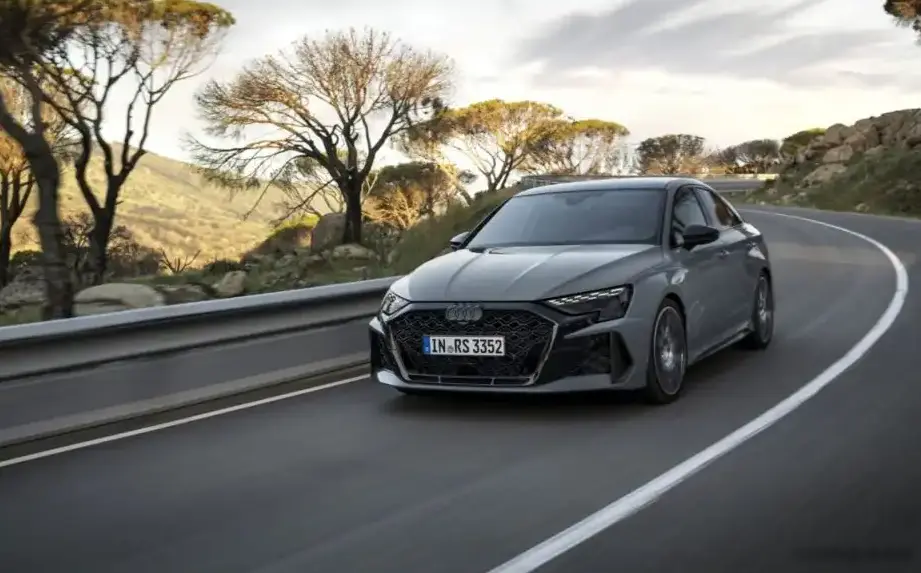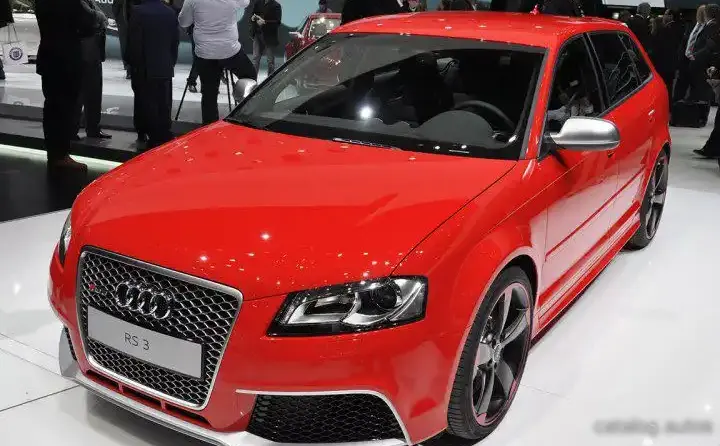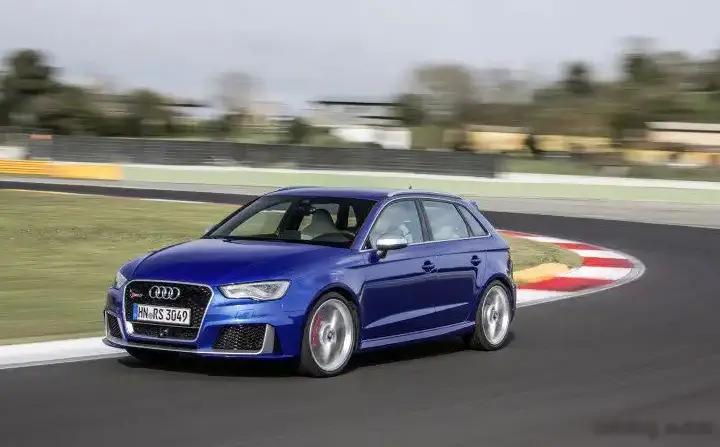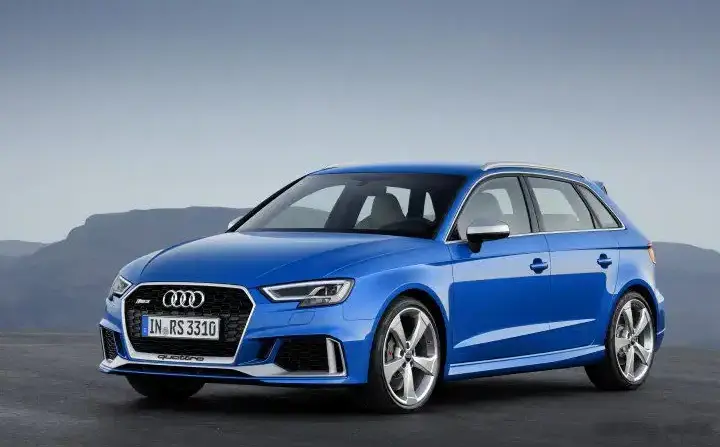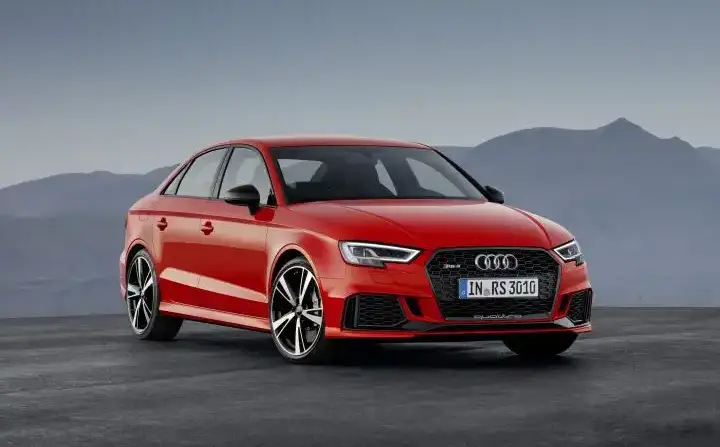
The Audi RS3 sedan (8V, facelift) with the 2.5 TFSI 400 horsepower engine and S tronic dual-clutch transmission represents the pinnacle of performance within the 8V RS3 lineup. Produced from 2017 to 2020, this variant solidified the RS3’s reputation as a compact performance sedan capable of challenging larger, more expensive sports cars. It was positioned as the top-tier offering, building upon the foundation laid by earlier RS3 models and offering a significant upgrade in power and technology compared to the base 1.8 TFSI and 2.0 TFSI variants.
Technical Specifications
| Brand | Audi |
| Model | RS3 |
| Generation | RS3 sedan (8V, facelift) |
| Type (Engine) | 2.5 TFSI (400 Hp) quattro S tronic |
| Start of production | 2017 |
| End of production | 2020 |
| Powertrain Architecture | Internal Combustion engine |
| Body type | Sedan |
| Seats | 5 |
| Doors | 4 |
| Fuel consumption (urban) | 11.3-11.4 l/100 km (20.8 – 20.6 US mpg) |
| Fuel consumption (extra urban) | 6.5-6.9 l/100 km (36.2 – 34.1 US mpg) |
| Fuel consumption (combined) | 8.3-8.5 l/100 km (28.3 – 27.7 US mpg) |
| CO2 emissions | 188-191 g/km |
| Fuel Type | Petrol (Gasoline) |
| Acceleration 0 – 100 km/h | 4.1 sec |
| Acceleration 0 – 62 mph | 4.1 sec |
| Acceleration 0 – 60 mph | 3.9 sec |
| Maximum speed | 250 km/h (155.34 mph), Electronically limited |
| Emission standard | Euro 6 |
| Weight-to-power ratio | 3.8 kg/Hp |
| Weight-to-torque ratio | 3.2 kg/Nm |
| Power | 400 Hp @ 5850-7000 rpm |
| Torque | 480 Nm @ 1700-5850 rpm (354.03 lb.-ft. @ 1700-5850 rpm) |
| Engine layout | Front, Transverse |
| Engine Model/Code | EA855 evo / DAZA |
| Engine displacement | 2480 cm3 (151.34 cu. in.) |
| Number of cylinders | 5 |
| Engine configuration | Inline |
| Cylinder Bore | 82.5 mm (3.25 in.) |
| Piston Stroke | 92.8 mm (3.65 in.) |
| Compression ratio | 10:1 |
| Number of valves per cylinder | 4 |
| Fuel injection system | Direct injection and Multi-port manifold injection |
| Engine aspiration | Turbocharger, Intercooler |
| Valvetrain | DOHC |
| Engine oil capacity | 7.1 l (7.5 US qt | 6.25 UK qt) |
| Coolant | 10 l (10.57 US qt | 8.8 UK qt) |
| Kerb Weight | 1515 kg (3340 lbs.) |
| Max. weight | 2005 kg (4420.27 lbs.) |
| Max load | 490 kg (1080.27 lbs.) |
| Trunk (boot) space – minimum | 315 l (11.12 cu. ft.) |
| Trunk (boot) space – maximum | 770 l (27.19 cu. ft.) |
| Fuel tank capacity | 55 l (14.53 US gal | 12.1 UK gal) |
| Length | 4479 mm (176.34 in.) |
| Width | 1802 mm (70.94 in.) |
| Width including mirrors | 1960 mm (77.17 in.) |
| Height | 1397 mm (55 in.) |
| Wheelbase | 2631 mm (103.58 in.) |
| Front track | 1559 mm (61.38 in.) |
| Rear (Back) track | 1528 mm (60.16 in.) |
| Front suspension | Independent, type McPherson with coil spring and anti-roll bar |
| Rear suspension | Independent multi-link spring suspension with stabilizer |
| Front brakes | Ventilated discs, 370×34 mm |
| Rear brakes | Disc, 310×22 mm |
| Gearbox | 7 gears, automatic transmission S tronic |
INTRODUCTION
The 2017-2020 Audi RS3 sedan, powered by the 2.5-liter turbocharged five-cylinder engine (designated DAZA engine code) and paired with the seven-speed S tronic dual-clutch transmission, represents a significant evolution of the RS3 lineage. Built on the Volkswagen Group’s MQB platform (specifically the 8V iteration), the RS3 aimed to deliver uncompromising performance in a practical, everyday package. This facelifted version brought styling updates and refinements to the already potent 8V RS3, further enhancing its appeal to enthusiasts. It directly competed with high-performance compact sedans like the BMW M3 and Mercedes-AMG C43, offering a unique engine character and a distinct driving experience.
Powertrain & Engine Architecture
The heart of the RS3 is the EA855 evo 2.5-liter inline-five cylinder engine. This engine is renowned for its distinctive sound and robust power delivery. It utilizes a combination of direct injection and multi-port fuel injection to optimize combustion efficiency and power output. A single twin-scroll turbocharger, with an electronically controlled wastegate, provides significant boost, contributing to the engine’s 400 horsepower and 354 lb-ft of torque. The engine’s aluminum block and head contribute to weight savings. The S tronic seven-speed dual-clutch transmission offers incredibly fast and precise shifts, enhancing both acceleration and driving engagement. This transmission features a multi-plate wet clutch and allows for both fully automatic operation and manual gear selection via steering wheel-mounted paddles. The quattro all-wheel-drive system is integral to the RS3’s performance, utilizing a multi-plate clutch to distribute torque between the front and rear axles, optimizing traction in all conditions.
Driving Characteristics
The RS3 2.5 TFSI with the S tronic transmission delivers exhilarating acceleration. The 0-60 mph sprint is achieved in around 3.9 seconds, and the car feels remarkably composed even at high speeds. The S tronic transmission’s quick shifts contribute to a seamless power delivery, minimizing any turbo lag. Compared to the six-speed manual transmission offered in some markets, the S tronic provides faster acceleration and a more refined driving experience, though some purists may prefer the engagement of a manual gearbox. The quattro all-wheel-drive system provides exceptional grip, allowing the RS3 to confidently navigate corners and maintain stability even in adverse weather conditions. The steering is precise and well-weighted, providing good feedback to the driver. The suspension is firm but not overly harsh, offering a good balance between performance and comfort.
Equipment & Trim Levels
The RS3 sedan came generously equipped as standard. Key features included sport seats upholstered in Nappa leather with diamond stitching, a flat-bottom steering wheel, Audi’s Virtual Cockpit digital instrument cluster, and a premium Bang & Olufsen sound system. Exterior features included a unique RS honeycomb grille, aggressive front and rear bumpers, and large exhaust outlets. Optional extras included carbon fiber trim, RS performance exhaust system, and dynamic suspension with magnetic ride control. The interior typically featured dark aluminum or carbon fiber accents, enhancing the sporty aesthetic. The RS3’s trim level was essentially a single, fully-equipped specification, with options allowing for personalization.
Chassis & Braking
The RS3’s chassis is specifically tuned for performance. It features a McPherson strut front suspension and a four-link independent rear suspension, both with stiffer springs and dampers compared to standard A3 models. A stabilizer bar is fitted to both the front and rear axles to reduce body roll during cornering. The braking system consists of ventilated discs at all four corners, with large calipers providing ample stopping power. The front brakes measure 370x34mm, while the rear brakes are 310x22mm. ABS (Anti-lock Braking System) is standard, ensuring safe and controlled braking in all conditions.
Market Reception & Comparison
The RS3 sedan was widely praised by automotive critics for its exceptional performance, refined interior, and engaging driving experience. It was often lauded as a benchmark in the compact performance sedan segment. Compared to the 2.0 TFSI variants, the RS3 offered a significant increase in power and performance, justifying its higher price tag. While the 2.0 TFSI models prioritized fuel efficiency and affordability, the RS3 focused on delivering an uncompromising driving experience. Fuel economy, while respectable for a high-performance car, was lower than that of the 2.0 TFSI models, averaging around 28.3 mpg combined. Reliability has generally been good, although the complexity of the engine and transmission requires diligent maintenance.
Legacy
The 2017-2020 Audi RS3 sedan has established itself as a highly desirable and collectible performance car. The 2.5 TFSI engine, with its unique sound and robust power output, has gained a loyal following among enthusiasts. The S tronic transmission, while requiring more specialized maintenance than a manual gearbox, offers exceptional performance and convenience. On the used car market, well-maintained RS3 models command a premium price, reflecting their performance capabilities and exclusivity. The RS3 continues to be a popular choice for drivers seeking a thrilling and engaging driving experience in a practical and stylish package.