
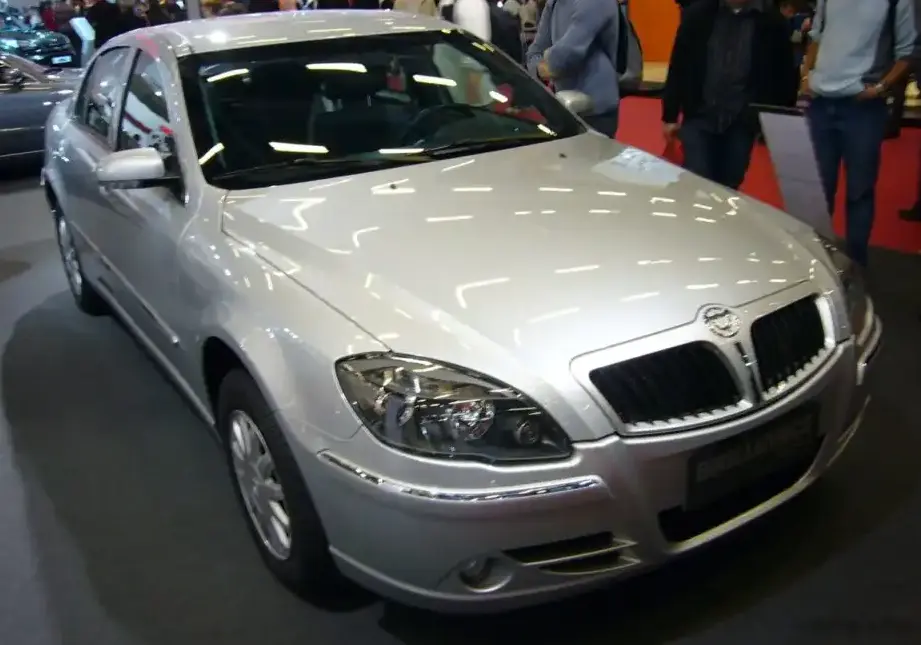
The Brilliance BS4 1.6, produced between 2008 and 2014, was a compact sedan aimed primarily at the Chinese domestic market. As part of the BS4 generation, this variant represented an entry-level offering, positioned below higher-trim models with larger engines and more extensive feature sets. The BS4 was Brilliance’s attempt to compete in the rapidly growing affordable sedan segment, leveraging a relatively simple and cost-effective design. While not exported in significant numbers, the BS4 played a role in establishing Brilliance as a mainstream automotive manufacturer within China. This specific 1.6-liter, 100 horsepower configuration was a mainstay of the lineup, offering a balance between affordability and acceptable performance for urban driving.
Technical Specifications
| Brand | Brilliance |
| Model | BS4 |
| Generation | BS4 |
| Type (Engine) | 1.6 (100 Hp) |
| Start of production | 2008 |
| End of production | 2014 |
| Powertrain Architecture | Internal Combustion engine |
| Body type | Sedan |
| Fuel consumption (urban) | 10.5 l/100 km (22.4 US mpg, 26.9 UK mpg, 9.5 km/l) |
| Fuel consumption (extra urban) | 6.6 l/100 km (35.6 US mpg, 42.8 UK mpg, 15.2 km/l) |
| Fuel consumption (combined) | 8.0 l/100 km (29.4 US mpg, 35.3 UK mpg, 12.5 km/l) |
| CO2 emissions | 190 g/km |
| Fuel Type | Petrol (Gasoline) |
| Power | 100 Hp @ 6000 rpm |
| Power per litre | 63.1 Hp/l |
| Torque | 134 Nm (98.83 lb.-ft.) |
| Engine Model/Code | 4G18 |
| Engine displacement | 1584 cm3 (96.66 cu. in.) |
| Number of cylinders | 4 |
| Engine configuration | Inline |
| Compression ratio | 9.5:1 |
| Number of valves per cylinder | 4 |
| Engine aspiration | Naturally aspirated engine |
| Engine oil capacity | 3 l (3.17 US qt, 2.64 UK qt) |
Powertrain & Engine Architecture
The Brilliance BS4 1.6 utilized the 4G18 engine, a 1.6-liter inline-four cylinder gasoline engine. This engine, developed by Mitsubishi (Brilliance had a joint venture with Mitsubishi Motors), was a relatively simple design featuring a single overhead camshaft (SOHC) valvetrain with four valves per cylinder. Fuel delivery was managed by a multi-point fuel injection system, a common setup for vehicles in this class during the late 2000s and early 2010s. The engine’s 9.5:1 compression ratio was a compromise between efficiency and performance. The 4G18 engine was known for its reliability, though it wasn’t particularly powerful or technologically advanced. The transmission paired with this engine was typically a four-speed automatic, chosen for its ease of use and appeal to a broader range of drivers. While a five-speed manual transmission was also available on other BS4 trims, the automatic was the predominant choice for this 1.6-liter variant.
Driving Characteristics
The BS4 1.6 with the four-speed automatic offered modest performance. With 100 horsepower and 134 Nm (98.83 lb.-ft) of torque, acceleration was adequate for city driving but felt strained when attempting highway overtaking maneuvers. The four-speed automatic transmission, while smooth, lacked the efficiency and responsiveness of more modern transmissions with greater gear counts. Gear ratios were tuned for fuel economy rather than outright performance. Compared to the BS4 models equipped with the larger 1.8-liter engine, the 1.6-liter version felt noticeably slower and less refined. The manual transmission variants of the 1.6 offered slightly improved acceleration and fuel economy, but the automatic was favored by buyers prioritizing convenience. The suspension was tuned for comfort, resulting in a relatively soft ride quality, but also some body roll during cornering.
Equipment & Trim Levels
The BS4 1.6 typically came with a basic level of standard equipment. This generally included power windows, central locking, and an AM/FM radio. Air conditioning was often standard, but could be optional on the most basic trims. Interior upholstery was typically cloth, and the dashboard featured a simple, functional design. Optional extras included power mirrors, a CD player, and upgraded interior trim. The BS4 1.6 was positioned as the entry-level model, so it lacked many of the features found on higher-trim levels, such as alloy wheels, fog lights, and a more sophisticated audio system. The focus was on providing affordable transportation with essential features.
Chassis & Braking
The BS4 utilized a conventional front-engine, front-wheel-drive layout. The suspension consisted of MacPherson struts at the front and a torsion beam axle at the rear. Braking was typically accomplished with disc brakes at the front and drum brakes at the rear, a cost-saving measure common in this segment. Stabilizer bars were present, but were relatively thin compared to those found on more performance-oriented vehicles. The chassis was designed for durability and affordability, rather than sporty handling. Steering was power-assisted, providing reasonable ease of use in urban environments.
Market Reception & Comparison
The Brilliance BS4 1.6 was generally well-received in the Chinese market as an affordable and reliable sedan. Critics noted its simple design and lack of advanced features, but acknowledged its value for money. Fuel economy was considered acceptable, though not class-leading. Compared to competitors like the Geely Emgrand and Chery QQ, the BS4 offered a similar level of equipment and performance at a comparable price point. The automatic transmission was a selling point for many buyers, despite its relatively dated technology. Reliability was generally good, with few reported issues with the 4G18 engine or the four-speed automatic transmission.
Legacy
The Brilliance BS4 1.6, while not a groundbreaking vehicle, served as an important stepping stone for Brilliance in establishing itself as a major automotive manufacturer in China. The 4G18 engine proved to be a durable and reliable powerplant, and many examples of the BS4 1.6 remain on the road today. In the used car market, these vehicles are typically valued for their affordability and simplicity. Maintenance costs are relatively low, and parts availability is generally good. While not a collector’s item, the BS4 1.6 represents a significant chapter in the history of the Chinese automotive industry, demonstrating the growing capabilities of domestic manufacturers.
