
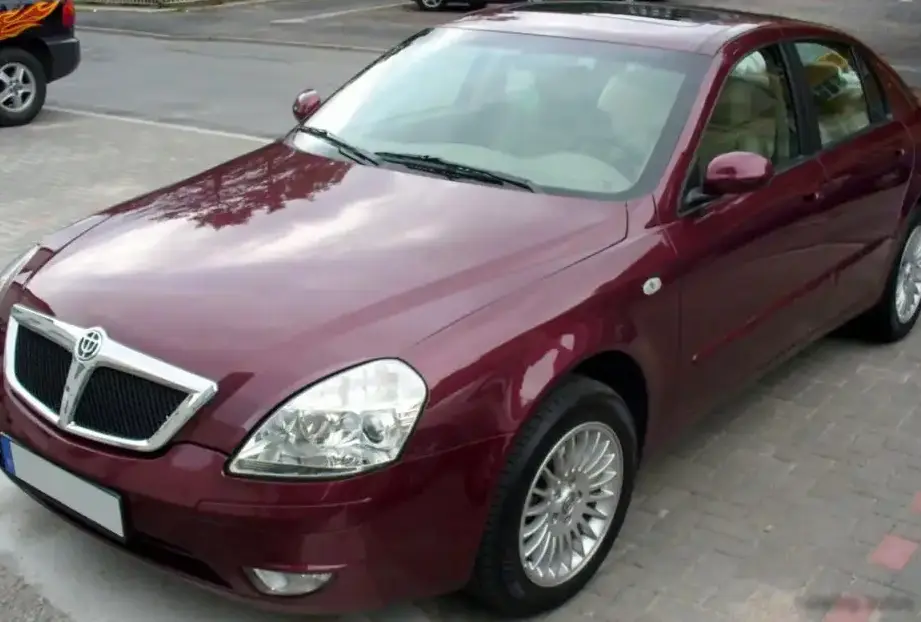
The Brilliance BS6 2.0 (122 hp) was a mid-size sedan produced by the Chinese automaker Brilliance Auto from 2004 to 2008. Positioned as a relatively affordable and spacious option within the burgeoning Chinese automotive market, the BS6 aimed to provide a comfortable and practical vehicle for families and business users. It represented Brilliance’s attempt to establish a foothold in the competitive sedan segment, leveraging a design influenced by established Japanese and European models. This particular 2.0-liter variant served as a step up from the base engine options, offering a balance between performance and fuel economy.
Technical Specifications
| Brand | Brilliance |
| Model | BS6 |
| Generation | BS6 |
| Type (Engine) | 2.0 (122 Hp) |
| Start of production | 2004 |
| End of production | 2008 |
| Powertrain Architecture | Internal Combustion engine |
| Body type | Sedan |
| Seats | 4 |
| Doors | 4 |
| Fuel consumption (urban) | 12.7 l/100 km (18.5 US mpg, 22.2 UK mpg, 7.9 km/l) |
| Fuel consumption (extra urban) | 7 l/100 km (33.6 US mpg, 40.4 UK mpg, 14.3 km/l) |
| Fuel consumption (combined) | 9.1 l/100 km (25.8 US mpg, 31 UK mpg, 11 km/l) |
| CO2 emissions | 217 g/km |
| Fuel Type | Petrol (Gasoline) |
| Acceleration 0 – 100 km/h | 13.8 sec |
| Acceleration 0 – 62 mph | 13.8 sec |
| Acceleration 0 – 60 mph | 13.1 sec |
| Maximum speed | 190 km/h (118.06 mph) |
| Emission standard | Euro 4 |
| Weight-to-power ratio | 11.8 kg/Hp, 84.4 Hp/tonne |
| Weight-to-torque ratio | 8.5 kg/Nm, 117.6 Nm/tonne |
| Power | 122 Hp |
| Power per litre | 61 Hp/l |
| Torque | 170 Nm (125.39 lb.-ft.) |
| Engine displacement | 1999 cm3 (121.99 cu. in.) |
| Number of cylinders | 4 |
| Engine configuration | Inline |
| Compression ratio | 9.5:1 |
| Number of valves per cylinder | 4 |
| Fuel injection system | Multi-port manifold injection |
| Engine aspiration | Naturally aspirated engine |
| Kerb Weight | 1445 kg (3185.68 lbs.) |
| Max. weight | 1835 kg (4045.48 lbs.) |
| Max load | 390 kg (859.8 lbs.) |
| Trunk (boot) space – minimum | 550 l (19.42 cu. ft.) |
| Fuel tank capacity | 74 l (19.55 US gal | 16.28 UK gal) |
| Length | 4880 mm (192.13 in.) |
| Width | 1800 mm (70.87 in.) |
| Height | 1430 mm (56.3 in.) |
| Wheelbase | 2790 mm (109.84 in.) |
| Drivetrain Architecture | The Internal combustion engine (ICE) drives the front wheels of the vehicle. |
| Drive wheel | Front wheel drive |
| Number of gears and type of gearbox | 5 gears, manual transmission |
| Front brakes | Disc |
| Rear brakes | Disc |
| Assisting systems | ABS (Anti-lock braking system) |
| Tires size | 205/55 R16 |
| Wheel rims size | 16 |
Powertrain & Engine Architecture
The BS6 2.0 utilized a 1.999-liter inline-four cylinder gasoline engine. This engine, while not particularly advanced, was a relatively common design featuring a multi-port fuel injection system and a single overhead camshaft (SOHC) valvetrain with four valves per cylinder. The engine produced 122 horsepower and 170 Nm (125 lb-ft) of torque. The engine was designed for reasonable reliability and ease of maintenance, reflecting the priorities of the Chinese automotive market at the time. The BS6 2.0 was paired with a five-speed manual transmission, which was the standard offering. An automatic transmission was not available for this specific engine configuration.
Driving Characteristics
The driving experience in the BS6 2.0 was characterized by adequate, but not exhilarating, performance. The 0-60 mph acceleration time of around 13.1 seconds and a top speed of 118 mph reflected the engine’s modest output and the car’s relatively heavy weight. The five-speed manual transmission offered a reasonable range of gear ratios, but the engine lacked the low-end torque found in some competing models. The BS6 2.0 was best suited for relaxed cruising and city driving, where its comfortable ride and spacious interior were more noticeable than its lack of outright speed. Compared to potential higher-output variants (which were not widely available), the 2.0-liter model prioritized fuel efficiency and affordability over performance.
Equipment & Trim Levels
The Brilliance BS6 2.0 typically came with a fairly basic level of standard equipment. This included power windows, central locking, and air conditioning. Interior upholstery was generally cloth, and the dashboard featured a functional, if somewhat uninspired, design. Optional extras could include a radio/CD player, alloy wheels, and upgraded interior trim. The BS6 was positioned as a value-oriented vehicle, so luxury features were generally limited. The trim levels were not extensively differentiated, with most variations focusing on the addition of optional equipment packages.
Chassis & Braking
The BS6 2.0 featured a conventional front-wheel-drive chassis with MacPherson strut suspension in the front and a multi-link suspension in the rear. The braking system consisted of disc brakes on all four wheels, along with an Anti-lock Braking System (ABS) as standard equipment. The suspension was tuned for comfort, providing a relatively smooth ride over uneven road surfaces. The steering was hydraulically assisted, offering reasonable precision and feedback. The tires were typically 205/55 R16, providing a good balance between grip and ride comfort.
Market Reception & Comparison
The Brilliance BS6 2.0 received mixed reviews from automotive critics. While praised for its spacious interior and competitive pricing, it was often criticized for its unremarkable performance and somewhat dated design. Compared to other sedans in its class, such as the Toyota Corolla or Honda Civic, the BS6 2.0 lacked the refinement and driving dynamics of its Japanese rivals. However, it offered a more affordable alternative, particularly for buyers who prioritized space and practicality over performance. Fuel economy was average for the segment, with combined fuel consumption around 25.8 US mpg.
Legacy
The Brilliance BS6 2.0, while not a groundbreaking vehicle, played a role in the early development of the Chinese automotive industry. It demonstrated Brilliance’s ambition to compete in the mainstream sedan market and provided a relatively affordable option for Chinese consumers. Today, the BS6 2.0 is rarely seen on the road, and parts availability can be limited. The engine itself, while generally reliable, is prone to the typical issues associated with older gasoline engines, such as oil leaks and sensor failures. The BS6 2.0 remains a relatively obscure vehicle outside of China, but it represents an interesting chapter in the history of the Chinese automotive industry.
