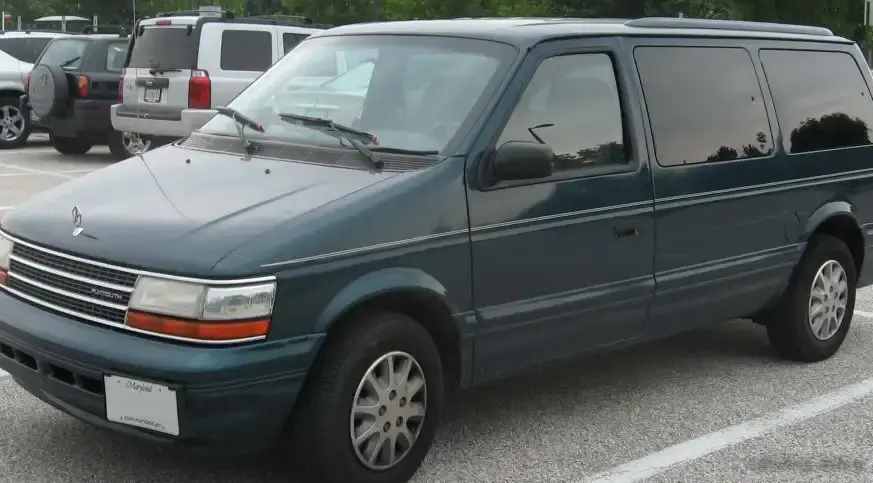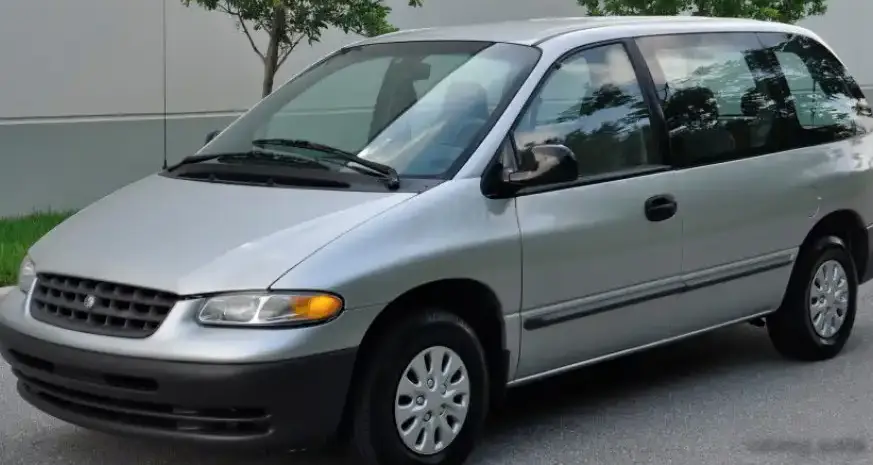
The Plymouth Voyager II 3.0 V6 SE, produced between 1996 and 2000, represented a significant iteration of the Voyager minivan, a mainstay of the American family vehicle market. Falling within the second generation of the Voyager (often referred to as the NS platform), this variant occupied a mid-range position in the lineup, offering a balance of features and affordability. It was designed to compete directly with other popular minivans like the Dodge Caravan, Ford Windstar, and Honda Odyssey. The Voyager II aimed to provide comfortable and reliable transportation for families, emphasizing practicality and space over outright performance.
Technical Specifications
| Brand | Plymouth |
| Model | Voyager |
| Generation | Voyager II |
| Type (Engine) | 3.0 V6 SE (152 Hp) |
| Start of production | 1996 |
| End of production | 2000 |
| Powertrain Architecture | Internal Combustion engine |
| Body type | Minivan |
| Seats | 5 |
| Doors | 4 |
| Fuel consumption (urban) | 12.4 l/100 km (19 US mpg, 22.8 UK mpg) |
| Fuel consumption (extra urban) | 9.8 l/100 km (24 US mpg, 28.8 UK mpg) |
| Fuel Type | Petrol (Gasoline) |
| Maximum speed | 175 km/h (108.74 mph) |
| Weight-to-power ratio | 10.6 kg/Hp, 94.7 Hp/tonne |
| Weight-to-torque ratio | 6.7 kg/Nm, 148.9 Nm/tonne |
| Power | 152 Hp @ 5200 rpm |
| Power per litre | 51.1 Hp/l |
| Torque | 239 Nm @ 4000 rpm (176.28 lb.-ft. @ 4000 rpm) |
| Engine layout | Front, Transverse |
| Engine Model/Code | 6G72 |
| Engine displacement | 2972 cm3 (181.36 cu. in.) |
| Number of cylinders | 6 |
| Engine configuration | V-engine |
| Cylinder Bore | 91.1 mm (3.59 in.) |
| Piston Stroke | 76 mm (2.99 in.) |
| Compression ratio | 8.9:1 |
| Number of valves per cylinder | 2 |
| Fuel injection system | Multi-port manifold injection |
| Engine aspiration | Naturally aspirated engine |
| Valvetrain | OHC |
| Engine oil capacity | 4.3 l (4.54 US qt | 3.78 UK qt) |
| Coolant | 12.5 l (13.21 US qt | 11 UK qt) |
| Kerb Weight | 1605 kg (3538.42 lbs.) |
| Trunk (boot) space – minimum | 450 l (15.89 cu. ft.) |
| Trunk (boot) space – maximum | 4140 l (146.2 cu. ft.) |
| Fuel tank capacity | 75 l (19.81 US gal | 16.5 UK gal) |
| Length | 4730 mm (186.22 in.) |
| Width | 1920 mm (75.59 in.) |
| Height | 1740 mm (68.5 in.) |
| Wheelbase | 2880 mm (113.39 in.) |
| Front track | 1600 mm (62.99 in.) |
| Rear (Back) track | 1630 mm (64.17 in.) |
| Drivetrain Architecture | The Internal combustion engine (ICE) drives the front wheels of the vehicle. |
| Drive wheel | Front wheel drive |
| Number of gears and type of gearbox | 3 gears, automatic transmission |
| Front suspension | Coil spring |
| Rear suspension | Leaf spring |
| Front brakes | Ventilated discs |
| Rear brakes | Drum |
| Assisting systems | ABS (Anti-lock braking system) |
| Steering type | Steering rack and pinion |
| Power steering | Hydraulic Steering |
| Tires size | 205/75 R14 |
Introduction
The Plymouth Voyager II 3.0 V6 SE, produced from 1996 to 2000, was a key model within the second-generation Voyager lineup. Built on the NS platform, shared with the Dodge Caravan and Chrysler Town & Country, it aimed to provide a comfortable and practical transportation solution for families. The “SE” designation indicated a step up in features and trim compared to the base Voyager, offering a more refined interior and additional convenience items. This variant was specifically tailored for the North American market, where minivans were – and continue to be – a popular choice for their versatility and spaciousness.
Powertrain & Engine Architecture
At the heart of the Voyager II 3.0 V6 SE lies the Mitsubishi-sourced 6G72 3.0-liter V6 engine. This engine, a staple in Chrysler’s lineup during the 1990s, is known for its relative reliability and smooth operation. It features a single overhead camshaft (OHC) design with two valves per cylinder. Fuel delivery is managed by a multi-port fuel injection system, contributing to reasonable fuel efficiency and responsive throttle control. The engine produces 152 horsepower at 5200 rpm and 239 Nm (176.28 lb-ft) of torque at 4000 rpm. This power is then routed through a 3-speed automatic transmission, chosen for its ease of use and suitability for family driving. The transmission’s gear ratios were optimized for everyday driving conditions, prioritizing smooth acceleration and comfortable cruising rather than sporty performance.
Driving Characteristics
The 3-speed automatic transmission, while providing convenience, did impact the overall driving experience. Compared to the available manual transmission or the higher-output engine options (like the 3.3L V6), the 3.0L V6 with the automatic felt somewhat underpowered, particularly when fully loaded with passengers and cargo. Acceleration was adequate for merging onto highways and passing slower vehicles, but it wasn’t particularly brisk. The automatic transmission’s shift points were tuned for fuel economy and smoothness, sometimes resulting in a slight delay in response. However, for the target audience – families prioritizing comfort and practicality – these characteristics were generally acceptable. The front-wheel-drive configuration provided predictable handling in most conditions, although it wasn’t designed for aggressive driving.
Equipment & Trim Levels
The “SE” trim level of the Voyager II offered a step up in features compared to the base model. Standard equipment typically included air conditioning, power windows and locks, an upgraded sound system, and cloth upholstery. Optional extras could include features like a rear entertainment system, leather upholstery, alloy wheels, and a sunroof. The interior design was functional and family-oriented, with ample storage compartments and comfortable seating. The dashboard layout was straightforward and easy to use, with clearly labeled controls. The Voyager II SE aimed to provide a comfortable and convenient interior environment for both driver and passengers.
Chassis & Braking
The Voyager II utilized a front-wheel-drive chassis with a coil spring suspension in the front and a leaf spring suspension in the rear. This suspension setup provided a comfortable ride quality, absorbing bumps and irregularities in the road surface effectively. However, the leaf spring rear suspension could sometimes feel less refined than a fully independent setup, particularly when encountering larger bumps. The braking system consisted of ventilated discs in the front and drum brakes in the rear. Anti-lock braking system (ABS) was standard, enhancing safety by preventing wheel lockup during hard braking. The steering was rack-and-pinion with hydraulic power assist, providing responsive and easy steering control.
Market Reception & Comparison
The Plymouth Voyager II 3.0 V6 SE received generally positive reviews from automotive critics. It was praised for its spacious interior, comfortable ride, and reasonable price. However, some critics noted the engine’s lack of power, particularly when paired with the automatic transmission. Compared to the higher-output 3.3L V6 version, the 3.0L offered lower performance but better fuel economy. The 3.0L automatic was often seen as a good choice for drivers who prioritized fuel efficiency and ease of use over outright performance. Reliability was generally considered good, although some owners reported minor issues with the automatic transmission over time.
Legacy
The Plymouth Voyager II 3.0 V6 SE remains a relatively common sight on used car lots today. The 6G72 engine is known for its durability and relatively low maintenance costs, making it a popular choice for budget-conscious buyers. While not a performance icon, the Voyager II 3.0 V6 SE served as a reliable and practical family vehicle for many years. Its spacious interior, comfortable ride, and reasonable fuel economy continue to appeal to buyers seeking an affordable and versatile minivan. Parts availability is generally good, and the relatively simple mechanical design makes it accessible for DIY repairs. The Voyager II, in its various configurations, helped solidify the minivan’s position as a dominant force in the American automotive landscape.