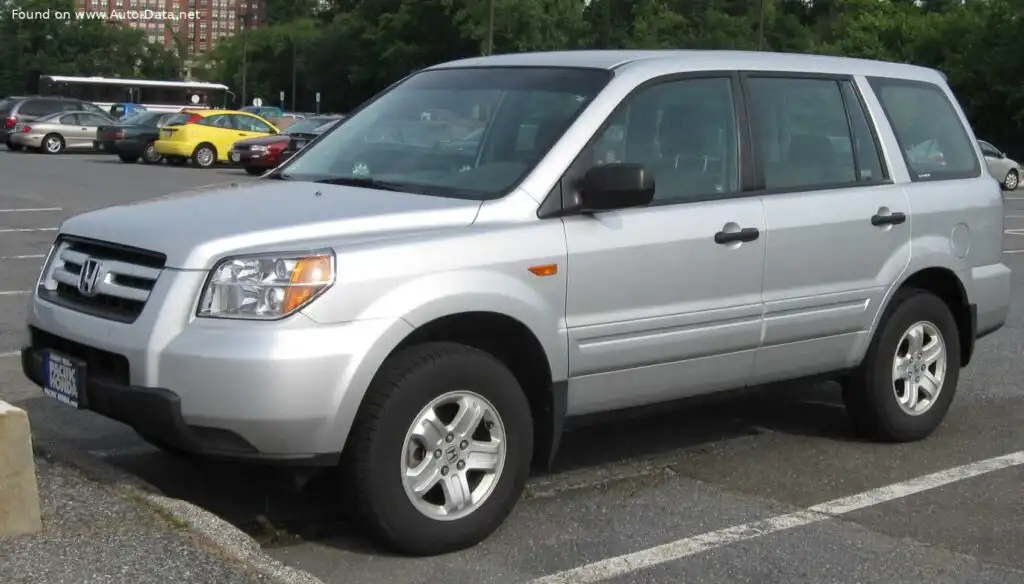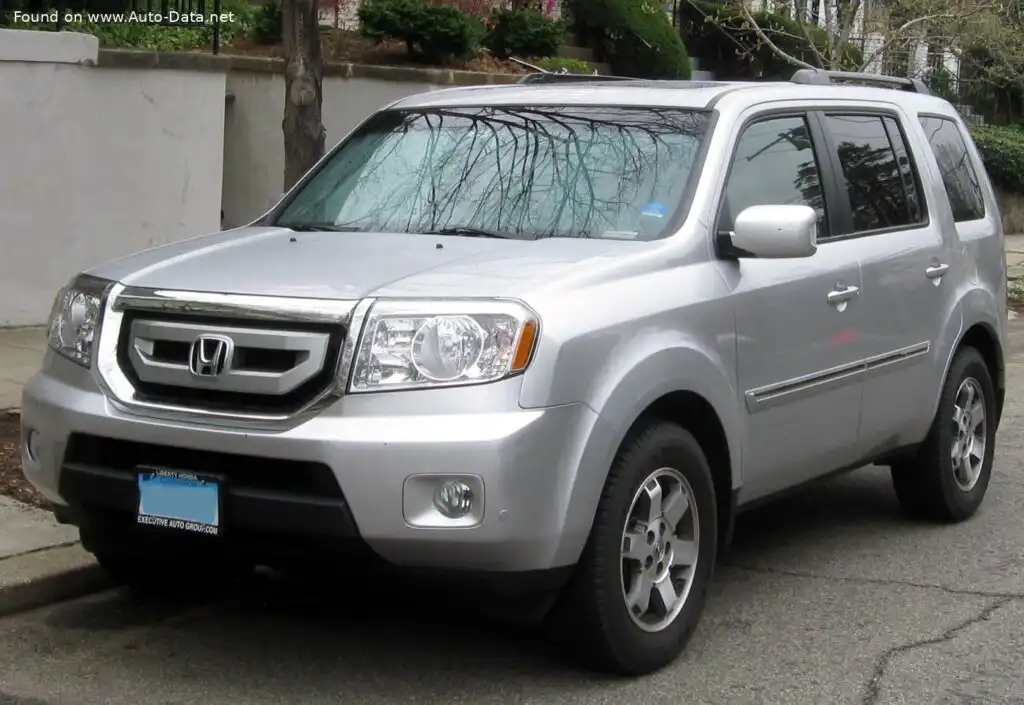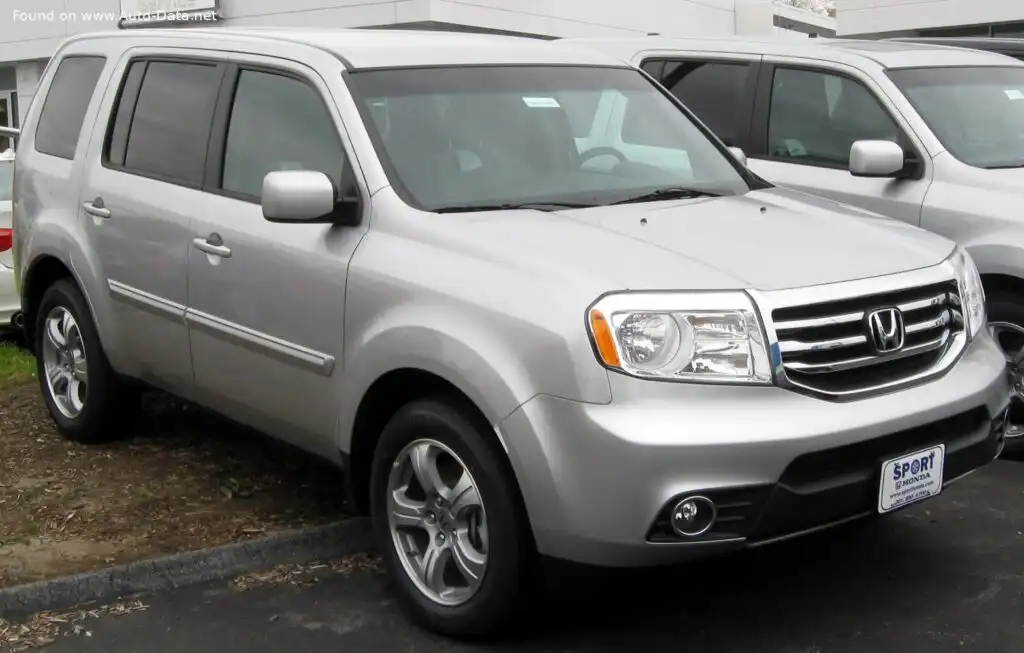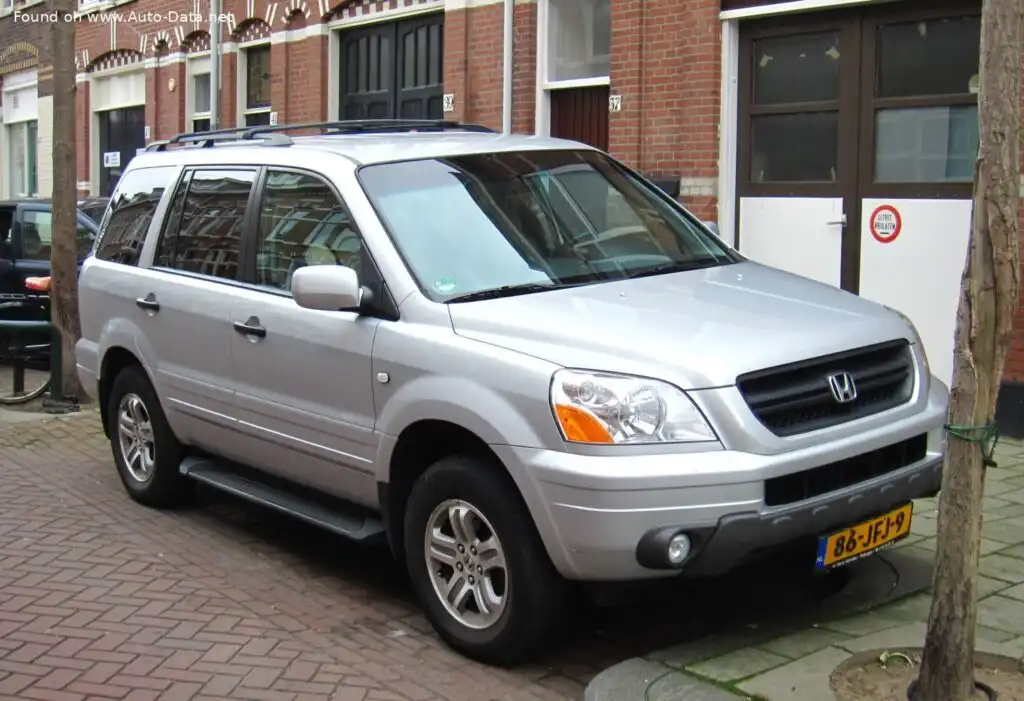
The Honda Pilot, launched in 2002 for the 2003 model year, represented Honda’s entry into the burgeoning mid-size SUV segment. Built on a dedicated light-truck platform, the first-generation Pilot (internally designated as the RD4) aimed to provide a comfortable, family-oriented vehicle with available all-wheel drive. The 3.5 V6 AWD Automatic variant, produced from 2002-2004, was a key offering within the Pilot lineup, positioned as a well-equipped, capable option for buyers needing space and all-weather traction. It served as a direct competitor to vehicles like the Toyota Highlander and Nissan Pathfinder.
Technical Specifications
| Brand | Honda |
| Model | Pilot |
| Generation | Pilot I |
| Type (Engine) | 3.5 V6 (243 Hp) AWD Automatic |
| Start of production | 2002 |
| End of production | 2004 |
| Powertrain Architecture | Internal Combustion engine |
| Body type | SUV, Crossover |
| Seats | 8 |
| Doors | 5 |
| Fuel consumption (urban) | 13.9 l/100 km (16.9 US mpg) |
| Fuel consumption (extra urban) | 10.7 l/100 km (22 US mpg) |
| Fuel Type | Petrol (Gasoline) |
| Acceleration 0 – 100 km/h | 8.2 sec |
| Acceleration 0 – 62 mph | 8.2 sec |
| Acceleration 0 – 60 mph | 7.8 sec |
| Maximum speed | 175 km/h (108.74 mph) |
| Weight-to-power ratio | 8.2 kg/Hp |
| Weight-to-torque ratio | 6.1 kg/Nm |
| Power | 243 Hp @ 5500 rpm |
| Torque | 328 Nm @ 4500 rpm (241.92 lb.-ft. @ 4500 rpm) |
| Maximum engine speed | 6200 rpm |
| Engine layout | Front, Transverse |
| Engine Model/Code | J35A4 |
| Engine displacement | 3471 cm3 (211.81 cu. in.) |
| Number of cylinders | 6 |
| Engine configuration | V-engine |
| Cylinder Bore | 89 mm (3.5 in.) |
| Piston Stroke | 93 mm (3.66 in.) |
| Compression ratio | 10:1 |
| Number of valves per cylinder | 4 |
| Fuel injection system | Multi-port manifold injection |
| Engine aspiration | Naturally aspirated engine |
| Valvetrain | SOHC VTEC |
| Engine oil capacity | 4.8 l (5.07 US qt | 4.22 UK qt) |
| Coolant capacity | 6.6 l (6.97 US qt | 5.81 UK qt) |
| Kerb Weight | 2000-2010 kg (4409.25 – 4431.29 lbs.) |
| Trunk (boot) space – minimum | 461 l (16.28 cu. ft.) |
| Trunk (boot) space – maximum | 2557 l (90.3 cu. ft.) |
| Fuel tank capacity | 73 l (19.28 US gal | 16.06 UK gal) |
| Permitted trailer load with brakes (12%) | 2039 kg (4495.23 lbs.) |
| Length | 4775 mm (187.99 in.) |
| Width | 1964 mm (77.32 in.) |
| Height | 1793 mm (70.59 in.) |
| Wheelbase | 2700 mm (106.3 in.) |
| Front track | 1684 mm (66.3 in.) |
| Rear (Back) track | 1689 mm (66.5 in.) |
| Ride height (ground clearance) | 203 mm (7.99 in.) |
| Minimum turning circle | 11.5 m (37.73 ft.) |
| Front brakes | Ventilated discs, 300 mm |
| Rear brakes | Disc, 312 mm |
| Number of gears | 5 |
| Type of gearbox | automatic transmission |
INTRODUCTION
The 2003-2004 Honda Pilot 3.5 V6 AWD Automatic was a significant vehicle for Honda, marking their serious intent in the mid-size SUV market. Built on a body-on-frame construction, unlike the unibody designs becoming more prevalent, the Pilot prioritized ruggedness and towing capacity. This particular variant, equipped with the 3.5-liter V6 engine and a five-speed automatic transmission, combined respectable performance with the added security of Honda’s Variable Torque Management (VTM-4) all-wheel-drive system. It was positioned as a mid-range trim, offering a balance between affordability and features, appealing to families and those needing a versatile vehicle.
Powertrain & Engine Architecture
At the heart of the Pilot 3.5 V6 AWD Automatic lies the J35A4 engine, a 3.5-liter, naturally aspirated V6. This engine, part of Honda’s J-series family, featured a single overhead camshaft (SOHC) cylinder head with Variable Valve Timing and Lift Electronic Control (VTEC) on the intake valves. This VTEC system allowed for optimized performance across a wider RPM range. The engine utilized multi-point fuel injection and boasted a compression ratio of 10:1. The J35A4 produced 243 horsepower at 5500 rpm and 328 lb-ft of torque at 4500 rpm. The five-speed automatic transmission, while not offering the sportiness of a manual, provided smooth shifts and was well-suited to the engine’s torque curve. The transmission was designed for durability and reliability, a hallmark of Honda engineering.
Driving Characteristics
The 3.5L V6 and automatic transmission combination in the Pilot delivered adequate, though not exhilarating, performance. Acceleration from 0-60 mph took around 7.8 seconds, making it competitive with other SUVs in its class. The automatic transmission’s gear ratios were tuned for everyday drivability and towing, prioritizing smooth acceleration and maintaining engine efficiency. Compared to a hypothetical manual transmission version, the automatic offered less driver engagement but greater convenience, particularly in stop-and-go traffic. The VTM-4 all-wheel-drive system automatically distributed torque between the front and rear axles, enhancing traction in slippery conditions. While not designed for serious off-roading, the Pilot could handle light trails and unpaved roads with confidence.
Equipment & Trim Levels
The 3.5 V6 AWD Automatic Pilot typically came standard with features like air conditioning, power windows and locks, a CD player, and cloth upholstery. Higher trim levels, such as the EX and LX, added features like alloy wheels, a sunroof, leather upholstery, and upgraded audio systems. Optional extras included a navigation system, rear entertainment system, and side airbags. The interior was designed with family use in mind, offering ample space for passengers and cargo. The third-row seats, while somewhat cramped for adults, were suitable for children.
Chassis & Braking
The Pilot’s chassis featured independent front suspension with McPherson struts and an independent multi-link rear suspension. This setup provided a comfortable ride, absorbing bumps and irregularities in the road surface effectively. The braking system consisted of ventilated discs on the front wheels and solid discs on the rear. Anti-lock brakes (ABS) were standard, enhancing safety and control during emergency braking situations. The Pilot’s relatively heavy weight (around 4,400 lbs) necessitated a robust braking system to ensure adequate stopping power.
Market Reception & Comparison
The Honda Pilot was generally well-received by automotive critics. It was praised for its spacious interior, comfortable ride, and reliable powertrain. However, some reviewers noted that the Pilot’s handling was not as sporty as some of its competitors. Compared to the 1.8L four-cylinder versions (not offered in the US market), the 3.5 V6 provided significantly more power and torque, making it a more capable vehicle for towing and hauling. The V6 also offered a smoother and more refined driving experience. Fuel economy, at around 16-22 mpg, was typical for a mid-size SUV of that era. Reliability was a strong point, with the J35A4 engine proving to be durable and long-lasting.
Legacy
The first-generation Honda Pilot, particularly the 3.5 V6 AWD Automatic variant, has proven to be a reliable and durable vehicle. Used examples are still relatively common on the road today, a testament to Honda’s build quality. The J35A4 engine is known for its longevity, and with proper maintenance, can exceed 200,000 miles. While not a performance icon, the Pilot established Honda as a serious contender in the mid-size SUV segment and laid the foundation for future generations of the vehicle. Its blend of practicality, reliability, and available all-wheel drive continues to make it a popular choice among used car buyers seeking a family-friendly SUV.