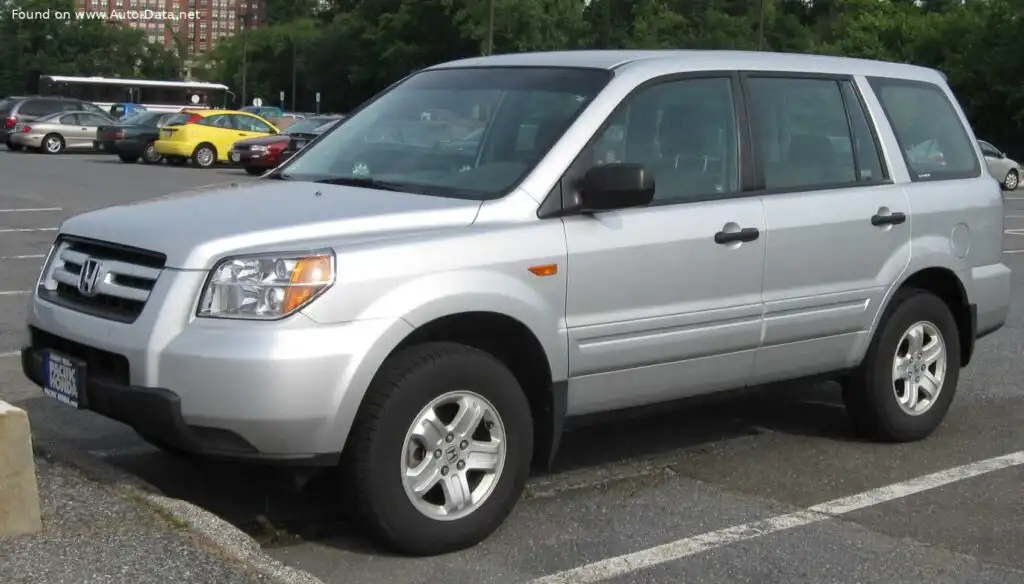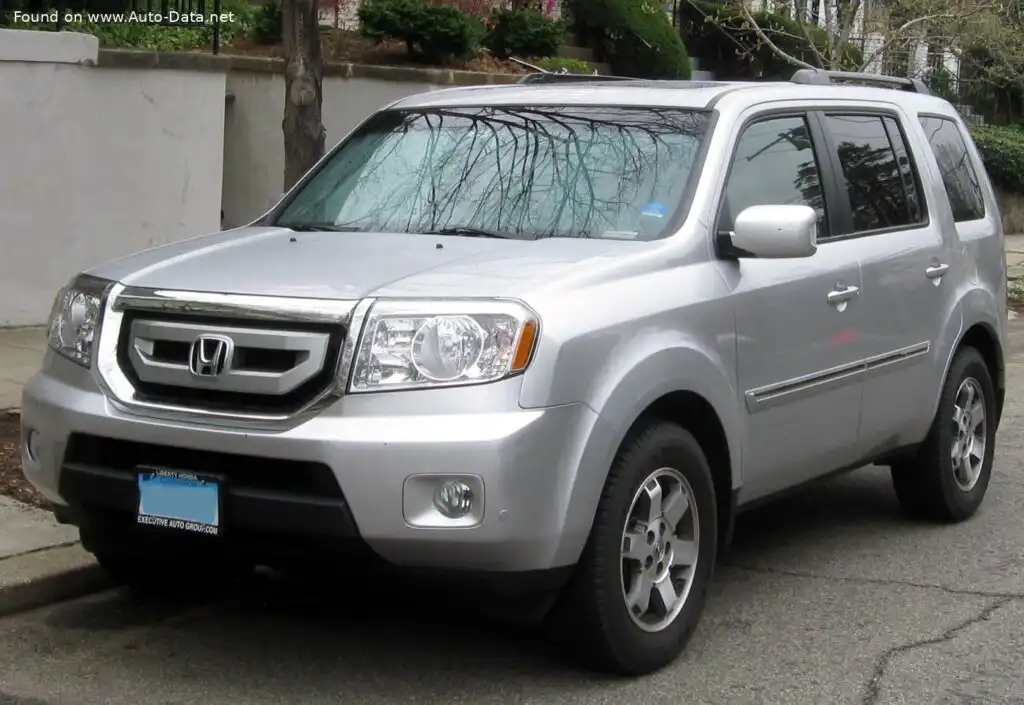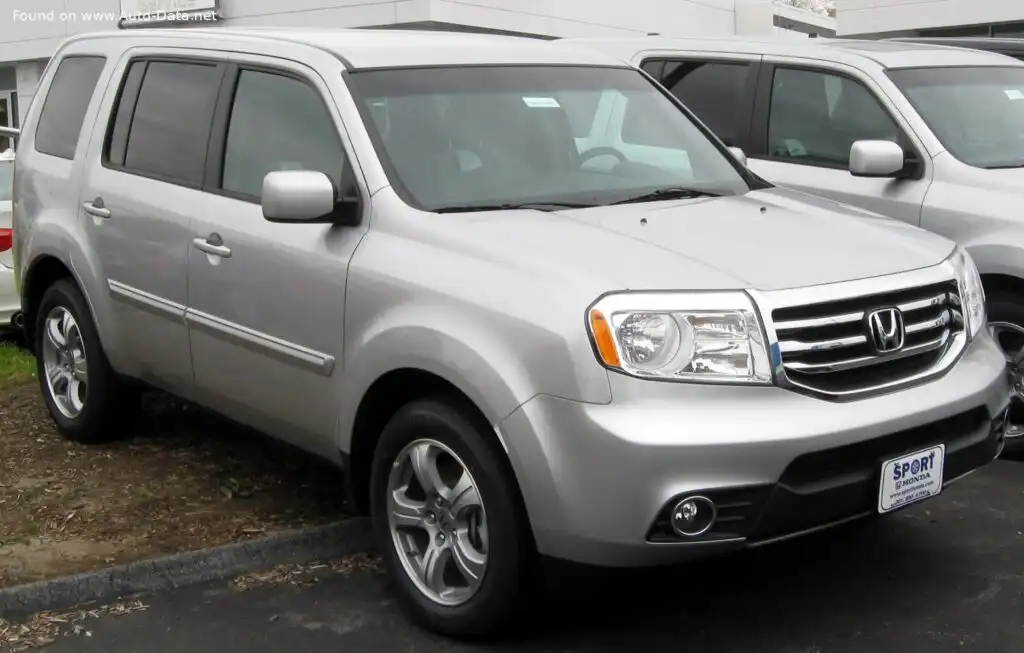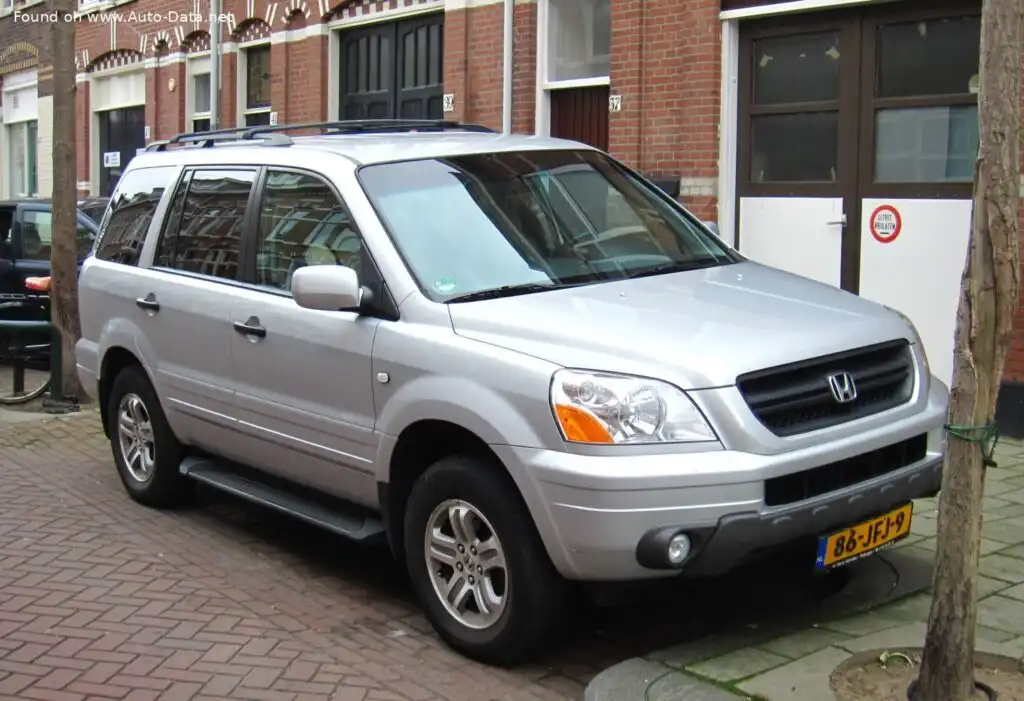
The Honda Pilot, launched in North America for the 2003 model year, represented Honda’s entry into the burgeoning mid-size SUV segment. The first generation, spanning from 2003 to 2005, was built on a dedicated light-truck platform and quickly gained popularity for its spacious interior, comfortable ride, and Honda’s reputation for reliability. The 3.5 V6 AWD Automatic variant, produced from 2004-2005, was a key offering within the Pilot lineup, positioned as a well-equipped, all-weather capable family vehicle. It aimed to provide a balance between performance, practicality, and affordability within the broader Pilot range.
Technical Specifications
| Brand | Honda |
| Model | Pilot |
| Generation | Pilot I |
| Type (Engine) | 3.5 V6 (258 Hp) AWD Automatic |
| Start of production | 2004 |
| End of production | 2005 |
| Powertrain Architecture | Internal Combustion engine |
| Body type | SUV, Crossover |
| Seats | 8 |
| Doors | 5 |
| Fuel consumption (urban) | 13.9 l/100 km (16.9 US mpg) |
| Fuel consumption (extra urban) | 10.7 l/100 km (22 US mpg) |
| Fuel Type | Petrol (Gasoline) |
| Maximum speed | 177 km/h (109.98 mph) |
| Weight-to-power ratio | 7.7 kg/Hp |
| Weight-to-torque ratio | 5.9 kg/Nm |
| Power | 258 Hp @ 5600 rpm |
| Power per litre | 74.3 Hp/l |
| Torque | 339 Nm @ 4500 rpm (250.03 lb.-ft. @ 4500 rpm) |
| Maximum engine speed | 6300 rpm |
| Engine layout | Front, Transverse |
| Engine Model/Code | J35A6 |
| Engine displacement | 3471 cm3 (211.81 cu. in.) |
| Number of cylinders | 6 |
| Engine configuration | V-engine |
| Cylinder Bore | 89 mm (3.5 in.) |
| Piston Stroke | 93 mm (3.66 in.) |
| Compression ratio | 10:1 |
| Number of valves per cylinder | 4 |
| Fuel injection system | Multi-port manifold injection |
| Engine aspiration | Naturally aspirated engine |
| Valvetrain | SOHC, VTEC |
| Engine oil capacity | 4.3 l (4.54 US qt | 3.78 UK qt) |
| Coolant | 7.2 l (7.61 US qt | 6.34 UK qt) |
| Kerb Weight | 1999 kg (4407.04 lbs.) |
| Trunk (boot) space – minimum | 461 l (16.28 cu. ft.) |
| Trunk (boot) space – maximum | 2557 l (90.3 cu. ft.) |
| Fuel tank capacity | 77 l (20.34 US gal | 16.94 UK gal) |
| Length | 4775 mm (187.99 in.) |
| Width | 1964 mm (77.32 in.) |
| Height | 1793 mm (70.59 in.) |
| Wheelbase | 2700 mm (106.3 in.) |
| Front track | 1684 mm (66.3 in.) |
| Rear (Back) track | 1689 mm (66.5 in.) |
| Ride height (ground clearance) | 203 mm (7.99 in.) |
| Minimum turning circle (turning diameter) | 11.5 m (37.73 ft.) |
| Front brakes | Ventilated discs, 300 mm |
| Rear brakes | Disc, 312 mm |
| Number of gears and type of gearbox | 5 gears, automatic transmission |
Powertrain & Engine Architecture
The heart of the 2004-2005 Honda Pilot 3.5 V6 AWD Automatic is the J35A6 engine, a 3.5-liter naturally aspirated V6. This engine is part of Honda’s J-series family, known for its durability and relatively smooth operation. The J35A6 features a single overhead camshaft (SOHC) cylinder head with Honda’s Variable Valve Timing and Lift Electronic Control (VTEC) system on the intake valves. This VTEC system allows for optimized valve timing at both low and high engine speeds, improving both fuel efficiency and power output. Fuel delivery is handled by a multi-point fuel injection system. The engine produces 258 horsepower at 5600 rpm and 250 lb-ft of torque at 4500 rpm. The engine is transversely mounted in the front of the vehicle. The engine is paired with a five-speed automatic transmission, designed to provide smooth shifts and adequate acceleration. This transmission was a standard feature for the 3.5L engine and was chosen for its balance of performance and fuel economy.
Driving Characteristics
The 3.5L V6 and five-speed automatic combination in the Pilot delivered adequate, though not particularly sporty, performance. Acceleration from 0-60 mph was typically in the 8-9 second range. The automatic transmission was tuned for comfort and smooth operation, prioritizing drivability over aggressive shifting. The gear ratios were optimized for highway cruising and towing, rather than quick acceleration. Compared to a hypothetical manual transmission version, the automatic offered less driver engagement but greater convenience, particularly in city driving. The all-wheel-drive system provided enhanced traction in inclement weather, making the Pilot a capable all-season vehicle. However, it wasn’t designed for serious off-road use.
Equipment & Trim Levels
The 3.5 V6 AWD Automatic Pilot typically came standard with features such as air conditioning, power windows and locks, a CD player, and alloy wheels. Higher trim levels, such as the EX and LX, added features like a sunroof, upgraded audio systems, leather upholstery, and heated front seats. The interior was generally well-appointed for its class, with a focus on practicality and durability. The third-row seating was a key selling point, offering seating for up to eight passengers. Optional extras included a navigation system and rear-seat entertainment system.
Chassis & Braking
The Pilot’s chassis featured an independent McPherson strut front suspension and an independent multi-link rear suspension. This setup provided a comfortable ride and reasonable handling characteristics. The suspension was tuned to prioritize ride comfort over sporty handling. The braking system consisted of ventilated disc brakes on the front wheels and solid disc brakes on the rear wheels. Anti-lock brakes (ABS) were standard. The Pilot’s weight, approximately 4407 lbs, contributed to its stable feel on the road. The all-wheel-drive system further enhanced stability, particularly in slippery conditions.
Market Reception & Comparison
The 2004-2005 Honda Pilot 3.5 V6 AWD Automatic was generally well-received by automotive critics. It was praised for its spacious interior, comfortable ride, and Honda’s reputation for reliability. However, some critics noted that the engine could feel strained when fully loaded or when climbing steep hills. Fuel economy was average for its class, with EPA estimates of around 16 mpg city and 22 mpg highway. Compared to other trims, the 3.5L V6 offered a significant performance upgrade over the base 3.2L engine, but at a higher price point. The 3.5L was the most popular engine choice for the Pilot, appealing to buyers who prioritized power and towing capacity.
Legacy
The J35A6 engine, in general, has proven to be a remarkably durable and reliable powerplant. The 2004-2005 Pilot 3.5 V6 AWD Automatic, when properly maintained, can provide many years of service. Common issues are relatively minor, often related to routine maintenance items such as timing belt replacement and sensor failures. On the used car market, these Pilots are often sought after for their practicality, reliability, and relatively affordable price. They remain a popular choice for families seeking a spacious and dependable SUV. The first-generation Pilot established Honda as a serious contender in the mid-size SUV segment, paving the way for subsequent generations of the vehicle.