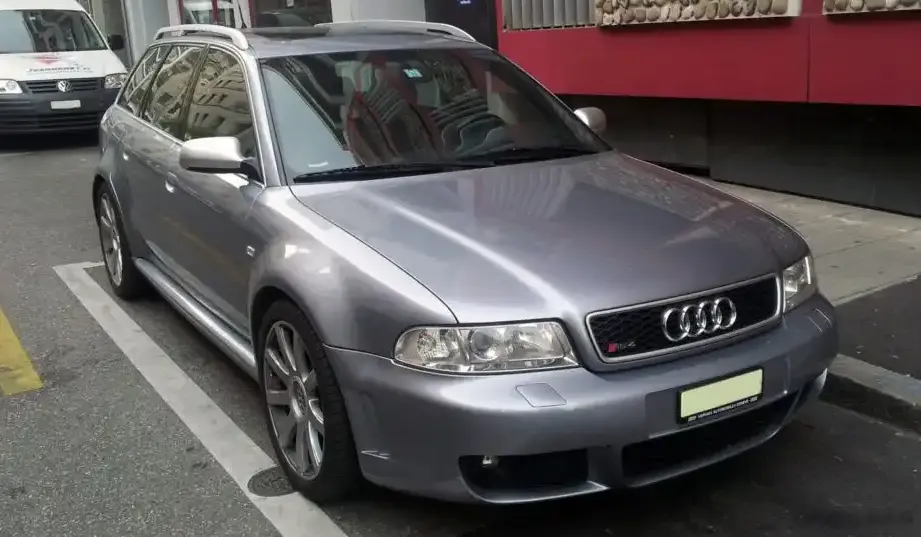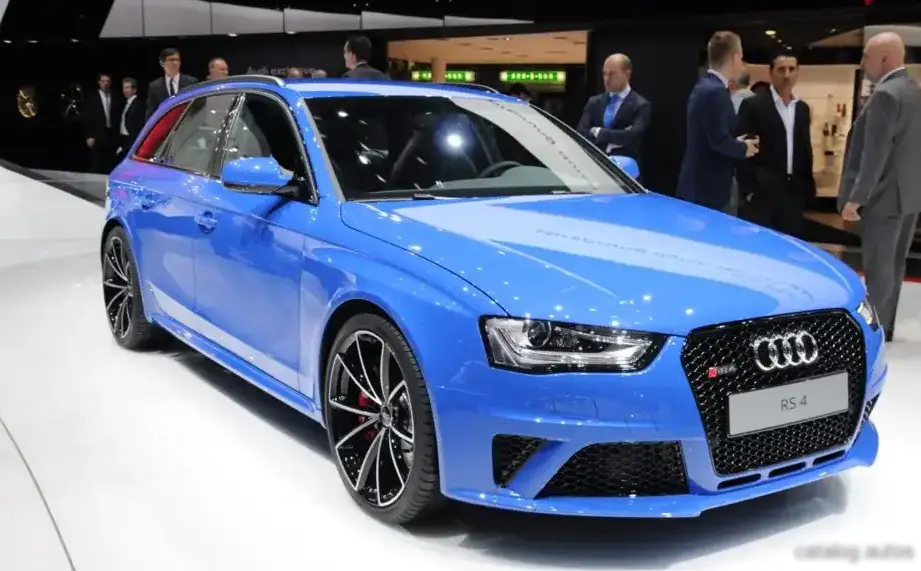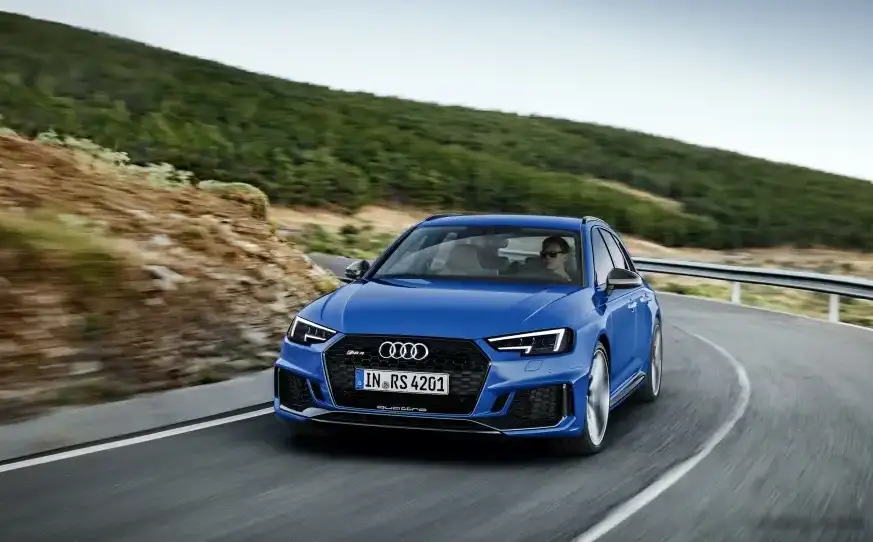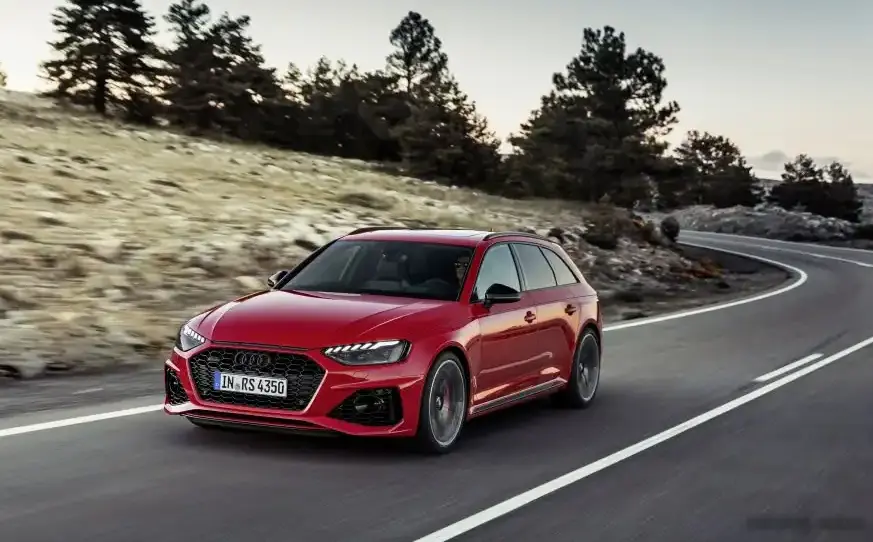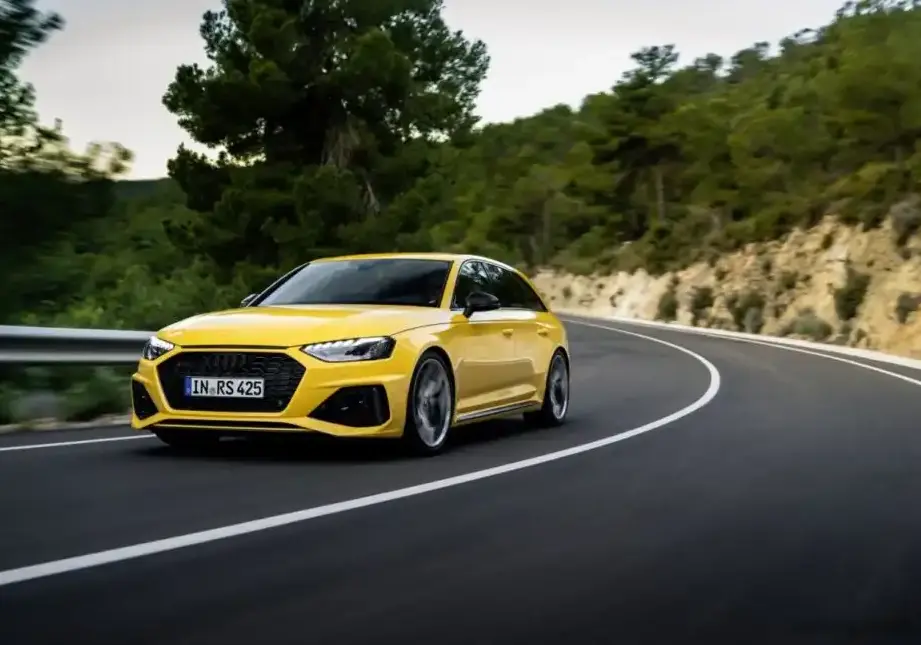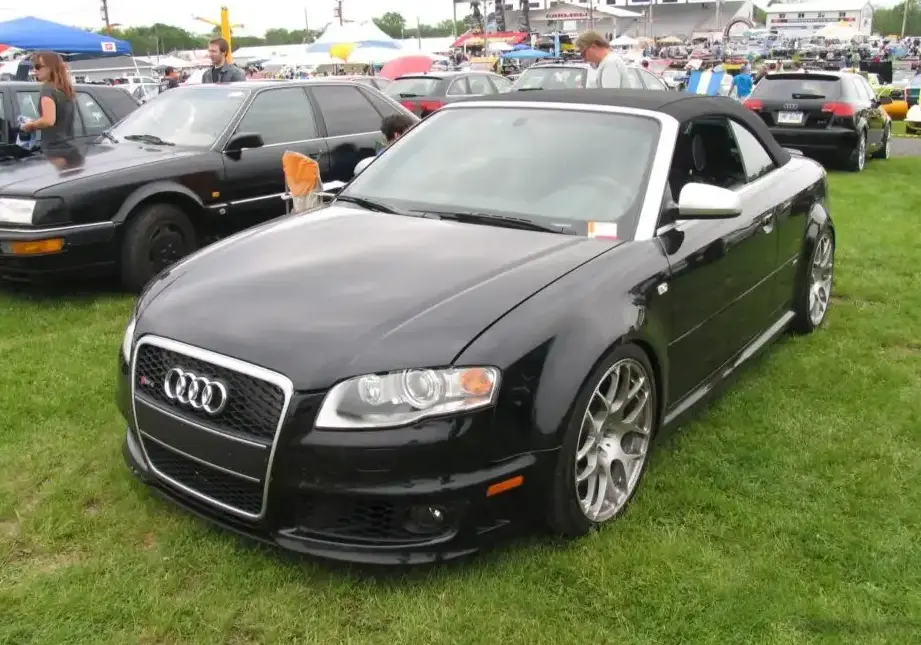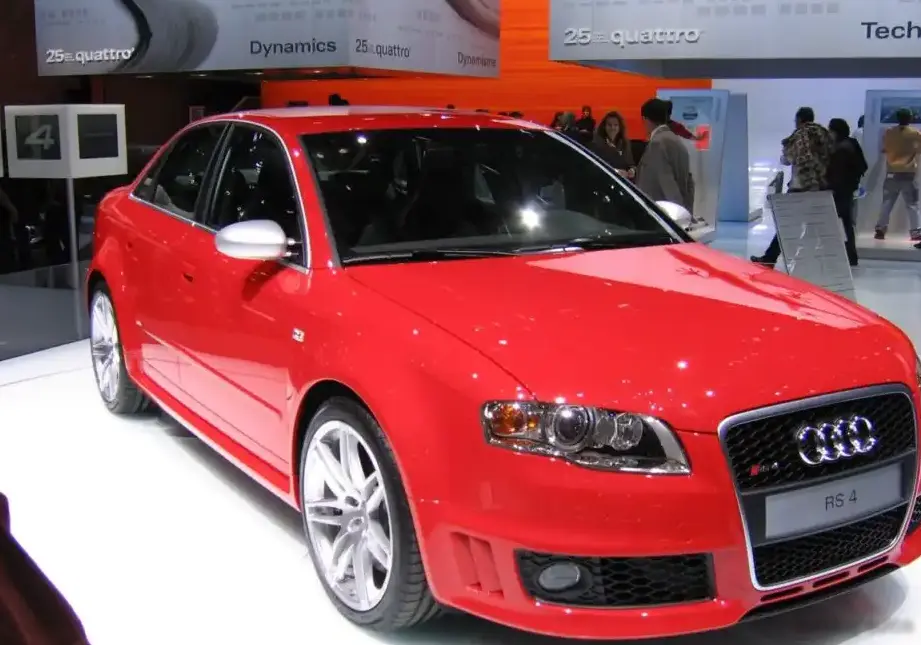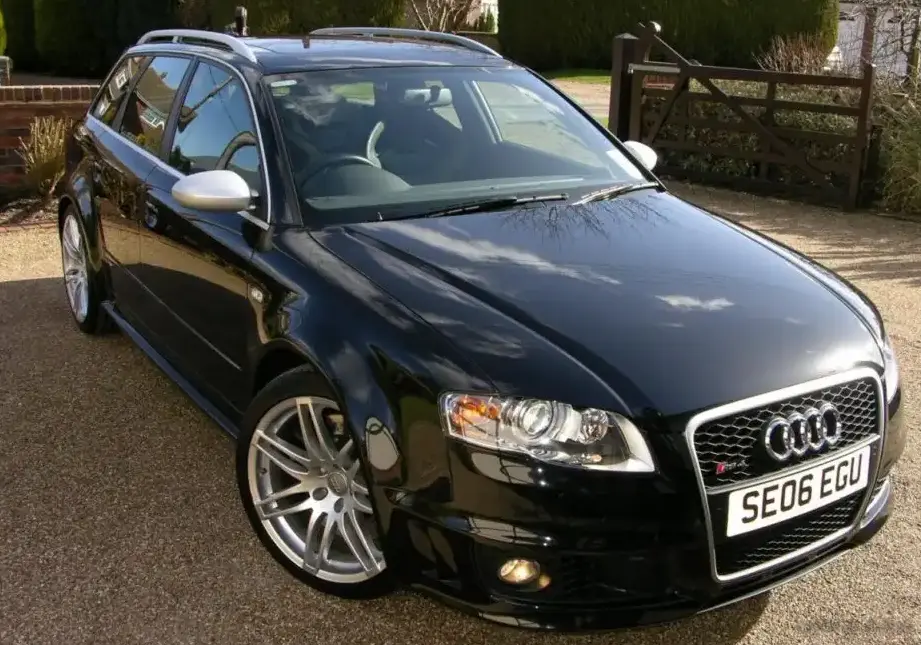
The Audi RS4 Avant (8E, B7) 4.2 FSI quattro, produced between 2006 and 2009, represents the pinnacle of performance within the B7 generation of the Audi A4 Avant. This high-performance estate car combined the practicality of a wagon with the power of a naturally aspirated 4.2-liter V8 engine, establishing itself as a desirable vehicle for enthusiasts seeking both speed and utility. It was positioned as the flagship model, offering a significant step up in performance and exclusivity compared to the standard A4 Avant and even the S4 variant.
Technical Specifications
| Brand | Audi |
| Model | RS4 |
| Generation | RS4 Avant (8E, B7) |
| Type (Engine) | 4.2 FSI V8 32V (420 Hp) quattro |
| Start of production | 2006 |
| End of production | 2009 |
| Powertrain Architecture | Internal Combustion engine |
| Body type | Station wagon (estate) |
| Seats | 5 |
| Doors | 5 |
| Fuel consumption (economy) – urban | 20.7- 20.8 l/100 km (11.4 – 11.3 US mpg, 13.6 – 13.6 UK mpg, 4.8 – 4.8 km/l) |
| Fuel consumption (economy) – extra urban | 9.4-9.5 l/100 km (25 – 24.8 US mpg, 30.1 – 29.7 UK mpg, 10.6 – 10.5 km/l) |
| Fuel consumption (economy) – combined | 13.5 – 13.6 l/100 km (17.4 – 17.3 US mpg, 20.9 – 20.8 UK mpg, 7.4 – 7.4 km/l) |
| CO2 emissions | 324-326 g/km |
| Fuel Type | Petrol (Gasoline) |
| Acceleration 0 – 100 km/h | 4.9 sec |
| Acceleration 0 – 62 mph | 4.9 sec |
| Acceleration 0 – 60 mph | 4.7 sec |
| Acceleration 0 – 200 km/h | 16.9 sec |
| Maximum speed | 250 km/h (155.34 mph) |
| Emission standard | Euro 4 |
| Weight-to-power ratio | 4.1 kg/Hp, 245.6 Hp/tonne |
| Weight-to-torque ratio | 4 kg/Nm, 251.5 Nm/tonne |
| Power | 420 Hp @ 7800 rpm |
| Power per litre | 100.9 Hp/l |
| Torque | 430 Nm @ 5500 rpm (317.15 lb.-ft. @ 5500 rpm) |
| Engine layout | Front, Longitudinal |
| Engine Model/Code | BNS |
| Engine displacement | 4163 cm3 (254.04 cu. in.) |
| Number of cylinders | 8 |
| Engine configuration | V-engine |
| Cylinder Bore | 84.5 mm (3.33 in.) |
| Piston Stroke | 92.8 mm (3.65 in.) |
| Compression ratio | 12.5:1 |
| Number of valves per cylinder | 4 |
| Fuel injection system | Direct injection |
| Engine aspiration | Naturally aspirated engine |
| Valvetrain | DOHC |
| Engine oil capacity | 9.6 l (10.14 US qt | 8.45 UK qt) |
| Coolant | 12 l (12.68 US qt | 10.56 UK qt) |
| Kerb Weight | 1710 kg (3769.9 lbs.) |
| Max. weight | 2260 kg (4982.45 lbs.) |
| Max load | 550 kg (1212.54 lbs.) |
| Trunk (boot) space – minimum | 442 l (15.61 cu. ft.) |
| Trunk (boot) space – maximum | 1354 l (47.82 cu. ft.) |
| Fuel tank capacity | 63 l (16.64 US gal | 13.86 UK gal) |
| Max. roof load | 75 kg (165.35 lbs.) |
| Length | 4586 mm (180.55 in.) |
| Width | 1816 mm (71.5 in.) |
| Height | 1415 mm (55.71 in.) |
| Wheelbase | 2651 mm (104.37 in.) |
| Front track | 1559 mm (61.38 in.) |
| Rear (Back) track | 1569 mm (61.77 in.) |
| Drag coefficient (Cd) | 0.31 |
| Minimum turning circle | 11.10 m (36.42 ft.) |
| Drive wheel | All wheel drive (4×4) |
| Number of gears and type of gearbox | 6 gears, manual transmission |
| Front suspension | Independent multi-link suspension |
| Rear suspension | Independent on trapezoidal lever |
| Front brakes | Ventilated discs |
| Rear brakes | Ventilated discs |
| Assisting systems | ABS (Anti-lock braking system) |
| Steering type | Steering rack and pinion |
| Tires size | 255/40 R18 |
| Wheel rims size | 8.5J X 18 |
INTRODUCTION
The Audi RS4 Avant (8E, B7) was built upon the Audi A4 (B7) platform, sharing its basic architecture with the A4 and S4 models. However, the RS4 distinguished itself through significant mechanical upgrades and a more aggressive aesthetic. Production ran from 2006 to 2009, and it was primarily sold in European markets, with limited availability in other regions. The “Avant” designation signifies the wagon body style, offering a practical alternative to traditional sports cars without sacrificing performance. The B7 generation RS4 was the last iteration to utilize a naturally aspirated V8 engine, making it particularly sought after by purists.
Powertrain & Engine Architecture
At the heart of the RS4 Avant lies the 4.2-liter BNS V8 engine. This engine is a naturally aspirated powerplant featuring direct fuel injection (FSI) and a double overhead camshaft (DOHC) valvetrain with four valves per cylinder. The high 12.5:1 compression ratio contributes to its impressive power output. The engine produces 420 horsepower at 7800 rpm and 430 Nm (317 lb-ft) of torque at 5500 rpm. The FSI system delivers fuel directly into the combustion chamber, improving efficiency and allowing for precise control of the air-fuel mixture. The engine’s longitudinal layout and the quattro all-wheel-drive system contribute to balanced handling and optimal traction. The RS4 exclusively came with a six-speed manual transmission, providing drivers with complete control over the engine’s power.
Driving Characteristics
The RS4 Avant delivers a thrilling driving experience. The naturally aspirated V8 provides a linear power delivery, building to a crescendo at higher RPMs. The six-speed manual transmission allows for precise gear changes, enhancing driver engagement. The quattro all-wheel-drive system ensures excellent grip in all weather conditions, enabling confident cornering and acceleration. While not as fuel-efficient as some of its turbocharged competitors, the RS4’s raw power and responsive handling more than compensate. Compared to the standard A4 Avant or even the S4, the RS4 offers a significantly more visceral and engaging driving experience. The gear ratios are tuned for performance, prioritizing acceleration over outright fuel economy.
Equipment & Trim Levels
The RS4 Avant came generously equipped as standard. Interior features included sport seats upholstered in a combination of leather and Alcantara, a flat-bottomed steering wheel, and unique RS4 badging throughout the cabin. Exterior features included a distinctive RS4 body kit, including aggressive front and rear bumpers, side skirts, and a roof-mounted spoiler. Optional extras included carbon fiber trim, a premium sound system, and advanced navigation systems. The interior was focused on providing a sporty and luxurious environment, befitting the car’s high-performance status.
Chassis & Braking
The RS4 Avant features a sport-tuned suspension with stiffer springs and dampers compared to the standard A4 Avant. The suspension geometry was optimized for handling and stability. The car is equipped with ventilated disc brakes on all four wheels, providing ample stopping power. The ABS (Anti-lock Braking System) further enhances braking performance and safety. The RS4’s chassis was designed to handle the increased power and stresses associated with high-performance driving. The front suspension utilizes a multi-link setup, while the rear employs a trapezoidal lever design, both contributing to precise handling and ride comfort.
Market Reception & Comparison
The RS4 Avant was widely praised by automotive critics for its exceptional performance, handling, and practicality. It was often compared favorably to other high-performance wagons, such as the BMW M5 Touring (though the M5 was in a higher price bracket). While its fuel economy was a common criticism, reviewers acknowledged that it was a reasonable trade-off for the level of performance offered. Compared to the A4 and S4 Avants, the RS4 represented a significant upgrade in terms of power, handling, and overall driving experience. The manual transmission was also a point of praise for enthusiasts, offering a more engaging driving experience than an automatic.
Legacy
The Audi RS4 Avant (8E, B7) has become a highly sought-after vehicle in the used car market. Its combination of performance, practicality, and exclusivity has made it a favorite among enthusiasts. The naturally aspirated V8 engine is particularly valued for its reliability and distinctive sound. While maintenance costs can be higher than those of more mainstream vehicles, the RS4’s robust construction and readily available parts ensure that it can be kept on the road for many years to come. The B7 RS4 represents a high point in Audi’s performance heritage, and it continues to be celebrated as a benchmark for high-performance wagons.