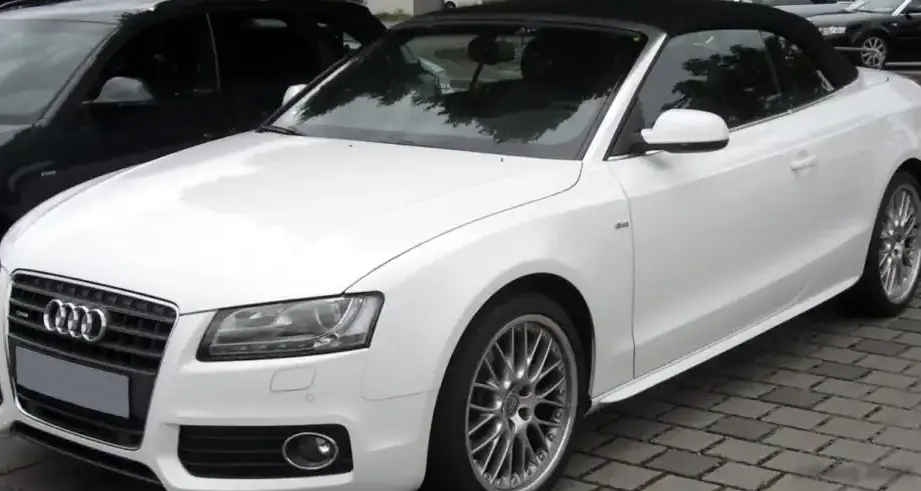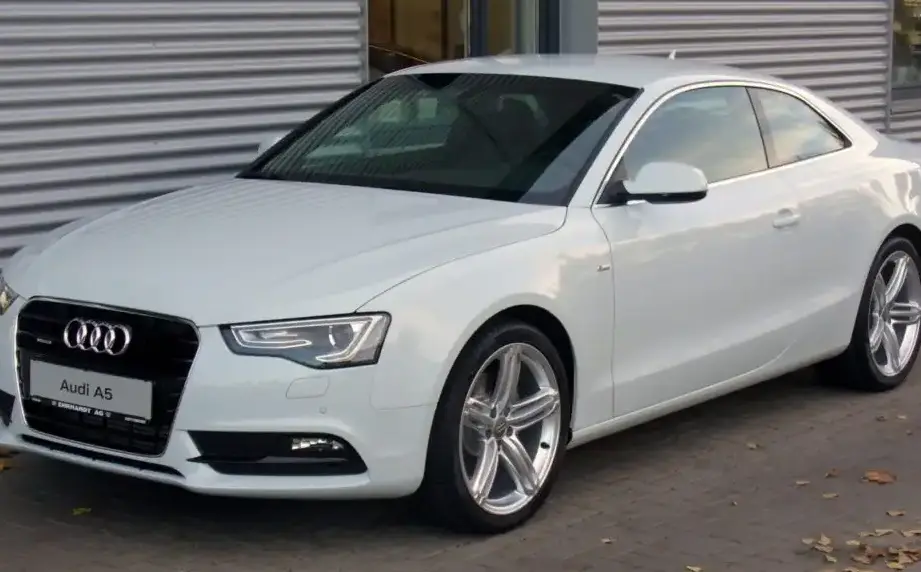
The Audi A5 Coupe (8T3), particularly the facelifted version introduced in 2011, represented a significant evolution in Audi’s design language and a compelling offering in the luxury coupe segment. Production of the 2.0 TDI clean diesel quattro variant, producing 190 horsepower, spanned from 2014 to 2016. This model occupied a middle ground within the A5 lineup, balancing performance, fuel efficiency, and all-weather capability thanks to Audi’s renowned quattro all-wheel-drive system. It was positioned as a more practical and economical alternative to the higher-performance S5 models, while offering more power and refinement than the entry-level 1.8 TFSI versions.
Technical Specifications
| Brand | Audi |
| Model | A5 |
| Generation | A5 Coupe (8T3, facelift 2011) |
| Type (Engine) | 2.0 TDI clean diesel (190 Hp) quattro |
| Start of production | 2014 |
| End of production | 2016 |
| Powertrain Architecture | Internal Combustion engine |
| Body type | Coupe |
| Seats | 4 |
| Doors | 2 |
| Fuel consumption (urban) | 5.9 l/100 km (39.9 US mpg, 47.9 UK mpg, 16.9 km/l) |
| Fuel consumption (extra urban) | 4.4 l/100 km (53.5 US mpg, 64.2 UK mpg, 22.7 km/l) |
| Fuel consumption (combined) | 4.9 l/100 km (48 US mpg, 57.6 UK mpg, 20.4 km/l) |
| CO2 emissions | 128 g/km |
| Fuel Type | Diesel |
| Acceleration 0 – 100 km/h | 7.4 sec |
| Acceleration 0 – 62 mph | 7.4 sec |
| Acceleration 0 – 60 mph | 7 sec |
| Maximum speed | 235 km/h (146.02 mph) |
| Emission standard | Euro 6 |
| Weight-to-power ratio | 8.4 kg/Hp, 119.5 Hp/tonne |
| Weight-to-torque ratio | 4 kg/Nm, 251.6 Nm/tonne |
| Power | 190 Hp @ 3800-4200 rpm |
| Power per litre | 96.5 Hp/l |
| Torque | 400 Nm @ 1750-3000 rpm (295.02 lb.-ft. @ 1750-3000 rpm) |
| Engine layout | Front, Longitudinal |
| Engine Model/Code | CDDA, CNHA |
| Engine displacement | 1968 cm3 (120.09 cu. in.) |
| Number of cylinders | 4 |
| Engine configuration | Inline |
| Cylinder Bore | 81 mm (3.19 in.) |
| Piston Stroke | 95.5 mm (3.76 in.) |
| Compression ratio | 18:1 |
| Number of valves per cylinder | 4 |
| Fuel injection system | Diesel Commonrail |
| Engine aspiration | Turbocharger, Intercooler |
| Valvetrain | DOHC |
| Engine oil capacity | 4.7 l (4.97 US qt | 4.14 UK qt) |
| Kerb Weight | 1590 kg (3505.35 lbs.) |
| Max. weight | 2090 kg (4607.66 lbs.) |
| Max load | 500 kg (1102.31 lbs.) |
| Trunk (boot) space – minimum | 455 l (16.07 cu. ft.) |
| Trunk (boot) space – maximum | 829 l (29.28 cu. ft.) |
| Fuel tank capacity | 61 l (16.11 US gal | 13.42 UK gal) |
| AdBlue tank | 20 l (5.28 US gal | 4.4 UK gal) |
| Max. roof load | 75 kg (165.35 lbs.) |
| Permitted trailer load with brakes (8%) | 1800 kg (3968.32 lbs.) |
| Permitted trailer load with brakes (12%) | 1600 kg (3527.4 lbs.) |
| Permitted trailer load without brakes | 750 kg (1653.47 lbs.) |
| Permitted towbar download | 80 kg (176.37 lbs.) |
| Length | 4626 mm (182.13 in.) |
| Width | 1854 mm (72.99 in.) |
| Width including mirrors | 2020 mm (79.53 in.) |
| Height | 1372 mm (54.02 in.) |
| Wheelbase | 2751 mm (108.31 in.) |
| Front track | 1590 mm (62.6 in.) |
| Rear (Back) track | 1577 mm (62.09 in.) |
| Front overhang | 861 mm (33.9 in.) |
| Rear overhang | 1014 mm (39.92 in.) |
| Minimum turning circle (turning diameter) | 11.4 m (37.4 ft.) |
| Drivetrain Architecture | The Internal combustion engine (ICE) drives permanently the four wheels of the vehicle. |
| Drive wheel | All wheel drive (4×4) |
| Number of gears and type of gearbox | 6 gears, manual transmission |
| Front suspension | Independent multi-link suspension |
| Rear suspension | Independent on trapezoidal lever |
| Front brakes | Ventilated discs |
| Rear brakes | Disc |
| Assisting systems | ABS (Anti-lock braking system) |
| Steering type | Steering rack and pinion |
| Power steering | Electric Steering |
| Tires size | 225/50 R17 |
| Wheel rims size | 7.5J x 17 |
Powertrain & Engine Architecture
The heart of this A5 variant is the 2.0-liter four-cylinder diesel engine, identified by engine codes CDDA or CNHA. This engine is a member of the Volkswagen Group’s modular engine family, known for its compact dimensions and efficiency. It utilizes a common rail direct injection system, delivering fuel at extremely high pressures for optimized combustion. The engine features a single turbocharger with an intercooler, boosting power and torque. The valvetrain employs a dual overhead camshaft (DOHC) design with four valves per cylinder, enhancing breathing and overall performance. The 6-speed manual transmission was standard, providing a balance between fuel economy and driver engagement. The quattro all-wheel-drive system distributes power between the front and rear axles as needed, enhancing traction and stability, particularly in adverse weather conditions.
Driving Characteristics
The 190 horsepower and 400 Nm (295 lb-ft) of torque provided by the 2.0 TDI engine delivered respectable performance for a coupe. Acceleration from 0 to 60 mph took approximately 7 seconds, and the car could reach a top speed of 146 mph. While not as exhilarating as the S5 models, the 2.0 TDI offered ample power for everyday driving and comfortable highway cruising. The manual transmission allowed for precise gear selection, but the gear ratios were tuned for fuel efficiency rather than outright acceleration. Compared to the 1.8 TFSI, the 2.0 TDI offered significantly more torque, resulting in stronger mid-range acceleration and better overtaking capability. The quattro system provided a secure and planted feel, inspiring confidence in all conditions.
Equipment & Trim Levels
The 2.0 TDI quattro typically came well-equipped, reflecting Audi’s reputation for interior quality and technology. Standard features included leather upholstery, automatic climate control, a multi-function steering wheel, and an Audi Concert audio system. Optional extras included navigation, parking sensors, xenon headlights, and a panoramic sunroof. Trim levels varied by market, but generally offered progressively more luxurious appointments and technology features. The A5 Coupe prioritized a driver-focused cockpit with intuitive controls and high-quality materials.
Chassis & Braking
The A5 Coupe’s chassis was designed to provide a balance between comfort and handling. The front suspension utilized an independent multi-link setup, while the rear employed an independent trapezoidal link design. This configuration minimized body roll and provided a smooth ride. The braking system featured ventilated discs at the front and solid discs at the rear, providing adequate stopping power. ABS (Anti-lock Braking System) was standard, enhancing safety and control during emergency braking situations.
Market Reception & Comparison
The Audi A5 Coupe 2.0 TDI quattro was generally well-received by automotive critics. It was praised for its stylish design, refined interior, and efficient engine. The combination of diesel power and all-wheel drive was particularly appealing to buyers in Europe, where fuel costs are high and winter weather is common. Compared to the 1.8 TFSI, the 2.0 TDI offered better fuel economy and more torque, making it a more practical choice for long-distance driving. However, some critics noted that the engine could be somewhat noisy compared to its gasoline counterpart. The S5 models offered significantly more performance, but at a higher price point.
Legacy
The 2.0 TDI engine proved to be a reliable and durable powerplant, and many examples are still on the road today. While diesel engines have faced increased scrutiny in recent years due to emissions concerns, the A5 Coupe 2.0 TDI remains a popular choice in the used car market. Regular maintenance, including timely oil changes and filter replacements, is crucial for ensuring the longevity of this engine. The quattro all-wheel-drive system continues to be a valuable asset, providing enhanced traction and safety in all weather conditions. The A5 Coupe, in general, is considered a well-built and stylish vehicle that has aged gracefully.