Technical Specifications
| Brand | Jeep |
| Model | Renegade |
| Generation | Renegade (facelift 2018) |
| Type (Engine) | 1.6 Multijet (120 Hp) DDCT |
| Start of production | August, 2018 |
| End of production | July, 2020 |
| Powertrain Architecture | Internal Combustion engine |
| Body type | SUV, Crossover |
| Seats | 5 |
| Doors | 5 |
| Fuel consumption (urban) | 5.3 l/100 km (44.4 US mpg, 53.3 UK mpg, 18.9 km/l) |
| Fuel consumption (extra urban) | 4.5 l/100 km (52.3 US mpg, 62.8 UK mpg, 22.2 km/l) |
| Fuel consumption (combined) | 4.8-4.9 l/100 km (49-48 US mpg, 58.9-57.6 UK mpg, 20.8-20.4 km/l) |
| CO2 emissions | 127-131 g/km |
| Fuel Type | Diesel |
| Acceleration 0 – 100 km/h | 10.2 sec |
| Acceleration 0 – 62 mph | 10.2 sec |
| Acceleration 0 – 60 mph | 9.7 sec |
| Maximum speed | 178 km/h (110.6 mph) |
| Emission standard | Euro 6 d |
| Weight-to-power ratio | 11.9 kg/Hp, 83.9 Hp/tonne |
| Weight-to-torque ratio | 4.5 kg/Nm, 223.8 Nm/tonne |
| Power | 120 Hp @ 3750 rpm |
| Torque | 320 Nm @ 1750 rpm (236.02 lb.-ft. @ 1750 rpm) |
| Engine layout | Front, Transverse |
| Engine Model/Code | 55263113 |
| Engine displacement | 1598 cm3 (97.52 cu. in.) |
| Number of cylinders | 4 |
| Engine configuration | Inline |
| Cylinder Bore | 79.5 mm (3.13 in.) |
| Piston Stroke | 80.5 mm (3.17 in.) |
| Compression ratio | 16.5:1 |
| Number of valves per cylinder | 4 |
| Fuel injection system | Diesel Commonrail |
| Engine aspiration | Turbocharger, Intercooler |
| Engine oil capacity | 4.8 l (5.07 US qt | 4.22 UK qt) |
| Coolant capacity | 6.1 l (6.45 US qt | 5.37 UK qt) |
| Kerb Weight | 1430 kg (3152.61 lbs.) |
| Trunk (boot) space – minimum | 351 l (12.4 cu. ft.) |
| Trunk (boot) space – maximum | 1297 l (45.8 cu. ft.) |
| Fuel tank capacity | 55 l (14.53 US gal | 12.1 UK gal) |
| Length | 4236 mm (166.77 in.) |
| Width | 1805 mm (71.06 in.) |
| Height | 1667 mm (65.63 in.) |
| Wheelbase | 2570 mm (101.18 in.) |
| Ride height (ground clearance) | 175 mm (6.89 in.) |
| Minimum turning circle | 11.0 m (36.09 ft.) |
| Drivetrain Architecture | Front wheel drive |
| Number of gears and type of gearbox | 6 gears, automatic transmission DDCT |
| Front brakes | Ventilated discs |
| Rear brakes | Ventilated discs |
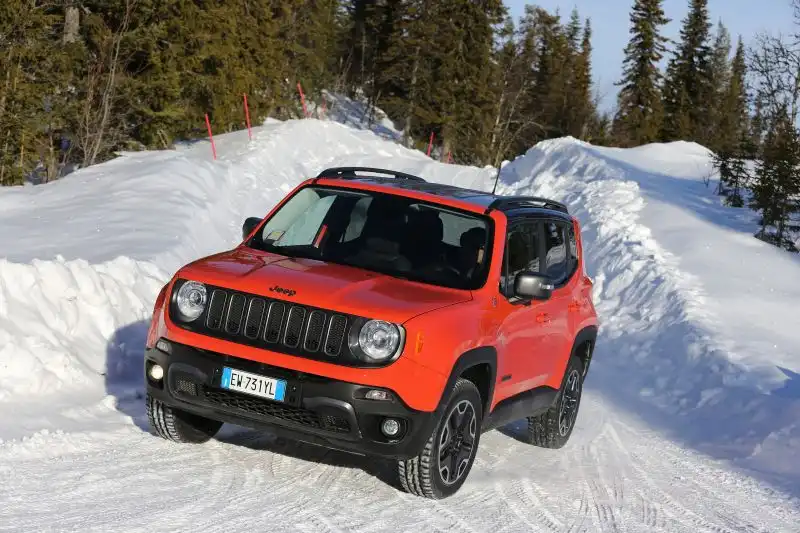
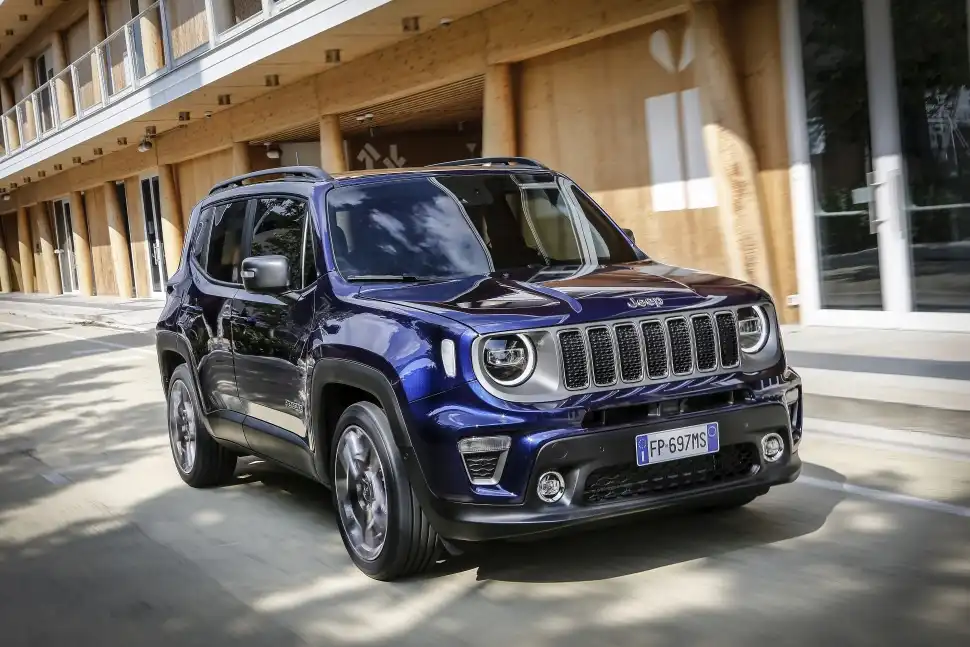
The Jeep Renegade 1.6 Multijet 120 hp DDCT, introduced with the 2018 facelift, was a significant offering in the compact SUV segment, particularly in Europe. Built on the Small Wide architecture (1HX0/A3 platform) shared with the Fiat 500X, the Renegade aimed to blend Jeep’s off-road heritage with a more accessible and fuel-efficient package. The 1.6 Multijet variant served as a core model, providing a balance between affordability, running costs, and acceptable performance for everyday driving. It slotted in below the more powerful 2.0-liter diesel and petrol options, targeting buyers prioritizing economy and practicality.
Powertrain & Engine Architecture
At the heart of this Renegade variant lies the 1.6-liter Multijet diesel engine, identified by engine code 55263113. This engine is a four-cylinder, inline configuration, utilizing a turbocharger with an intercooler to boost power and efficiency. The engine employs a common rail direct injection system, delivering fuel directly into the combustion chamber at extremely high pressure for optimized combustion. The 16.5:1 compression ratio is typical for a diesel engine, contributing to its thermal efficiency. The engine produces 120 horsepower at 3750 rpm and 320 Nm (236 lb-ft) of torque at a low 1750 rpm, providing good low-end grunt. Paired with this engine is a six-speed Dual Dry Clutch Transmission (DDCT), a type of automated manual transmission. This transmission offers quicker shifts compared to a traditional torque converter automatic, but can sometimes exhibit less smoothness at low speeds.
Driving Characteristics
The 1.6 Multijet DDCT Renegade delivers a driving experience geared towards efficiency and ease of use. While not a performance-oriented model, the 320 Nm of torque provides adequate acceleration for merging onto highways and navigating urban traffic. The DDCT transmission, while generally responsive, can feel slightly jerky during low-speed maneuvers or when transitioning between gears. Compared to the manual transmission versions of the same engine, the DDCT offers convenience but sacrifices some driver engagement. Against the more powerful 2.0-liter diesel, the 1.6 Multijet feels noticeably slower, particularly during overtaking maneuvers. However, the lower engine weight contributes to slightly improved handling and agility. The gear ratios are tuned for fuel economy, meaning the engine doesn’t rev as high as it could, prioritizing efficiency over outright speed.
Equipment & Trim Levels
The Renegade 1.6 Multijet 120 hp DDCT was typically offered in several trim levels, varying by market. Standard equipment generally included air conditioning, a touchscreen infotainment system with Bluetooth connectivity, power windows, and basic safety features like ABS and multiple airbags. Higher trim levels added features such as alloy wheels, a rearview camera, parking sensors, cruise control, and more advanced infotainment options. Interior upholstery was typically cloth, with options for leather upgrades on higher trims. Optional extras included a panoramic sunroof, upgraded sound system, and various driver-assistance systems like lane departure warning and automatic emergency braking.
Chassis & Braking
The Renegade’s chassis is designed to provide a comfortable ride and reasonable handling. The front suspension utilizes MacPherson struts, while the rear suspension employs a twist-beam setup. This configuration balances cost-effectiveness with acceptable ride quality. Braking duties are handled by ventilated discs on all four wheels, providing adequate stopping power for the vehicle’s weight. ABS (Anti-lock Braking System) is standard, enhancing safety during emergency braking situations. The Renegade’s weight of approximately 1430 kg (3153 lbs) influences its handling characteristics, making it feel slightly heavier than some of its competitors.
Market Reception & Comparison
The Jeep Renegade 1.6 Multijet DDCT received mixed reviews. Critics praised its fuel efficiency and practicality, but some found the DDCT transmission to be less refined than traditional automatics. Compared to competitors like the Nissan Juke, Peugeot 2008, and Renault Captur, the Renegade offered a more rugged aesthetic and a stronger brand image. However, its fuel economy was generally comparable to, or slightly lower than, some of its rivals. Reliability reports suggest that the 1.6 Multijet engine is generally robust, but the DDCT transmission has been known to experience occasional issues.
Legacy
The Jeep Renegade 1.6 Multijet 120 hp DDCT remains a relatively common sight on the used car market. Its fuel efficiency and practicality continue to appeal to buyers seeking a compact SUV. While the DDCT transmission may require more diligent maintenance than a traditional automatic, the 1.6 Multijet engine is generally considered reliable. The Renegade, as a whole, helped Jeep broaden its appeal beyond its traditional customer base, and the 1.6 Multijet variant played a key role in that success, particularly in European markets where diesel engines were prevalent.