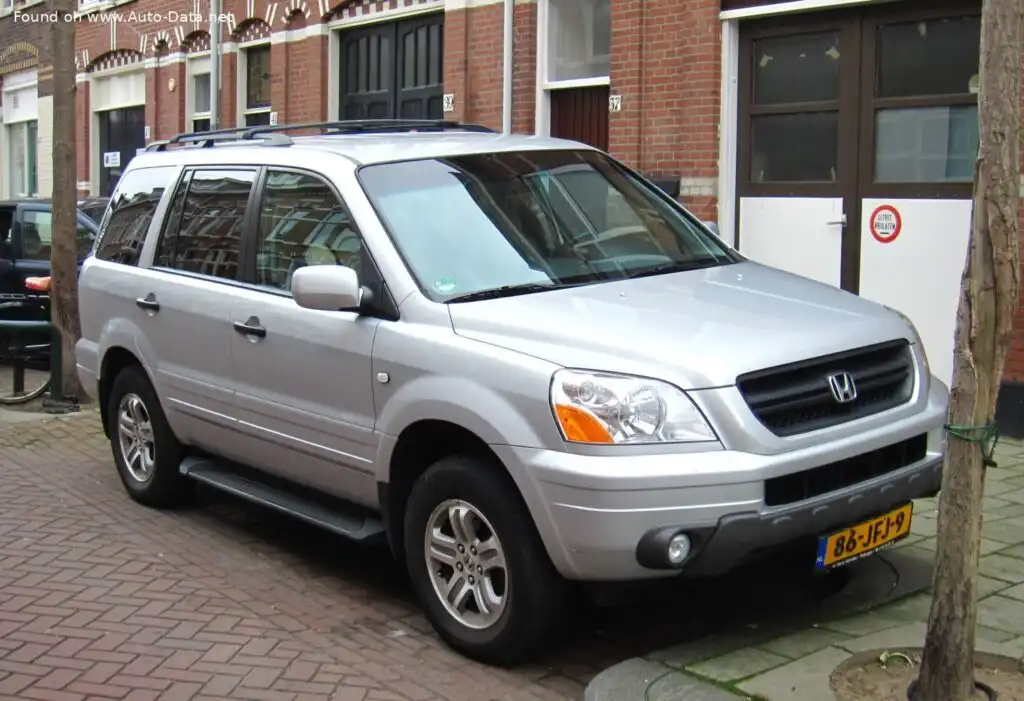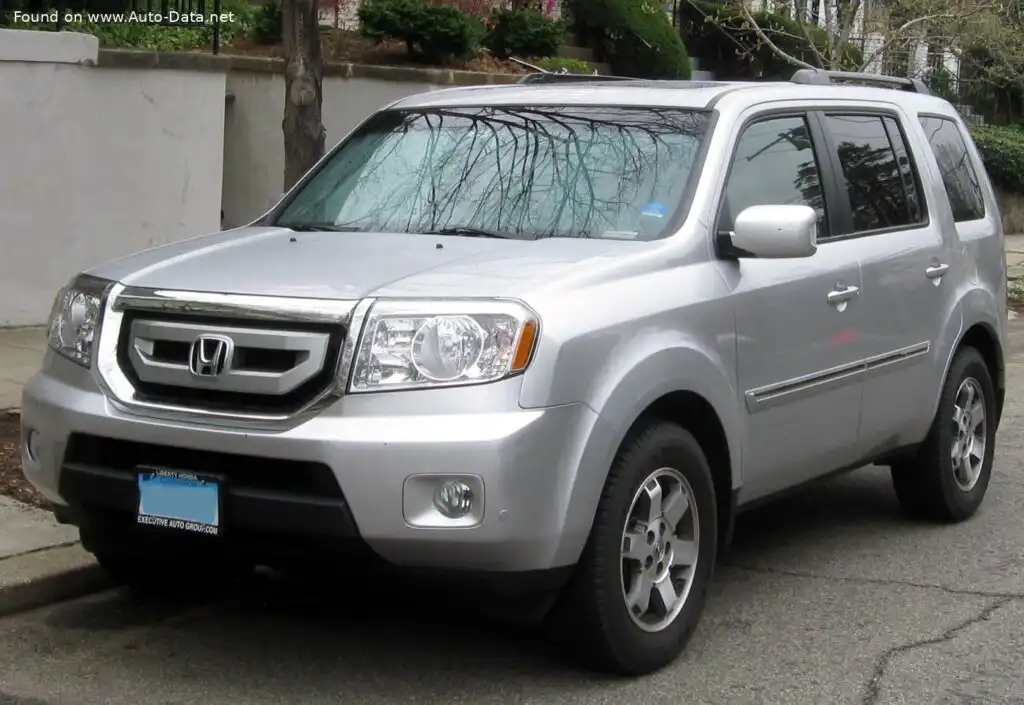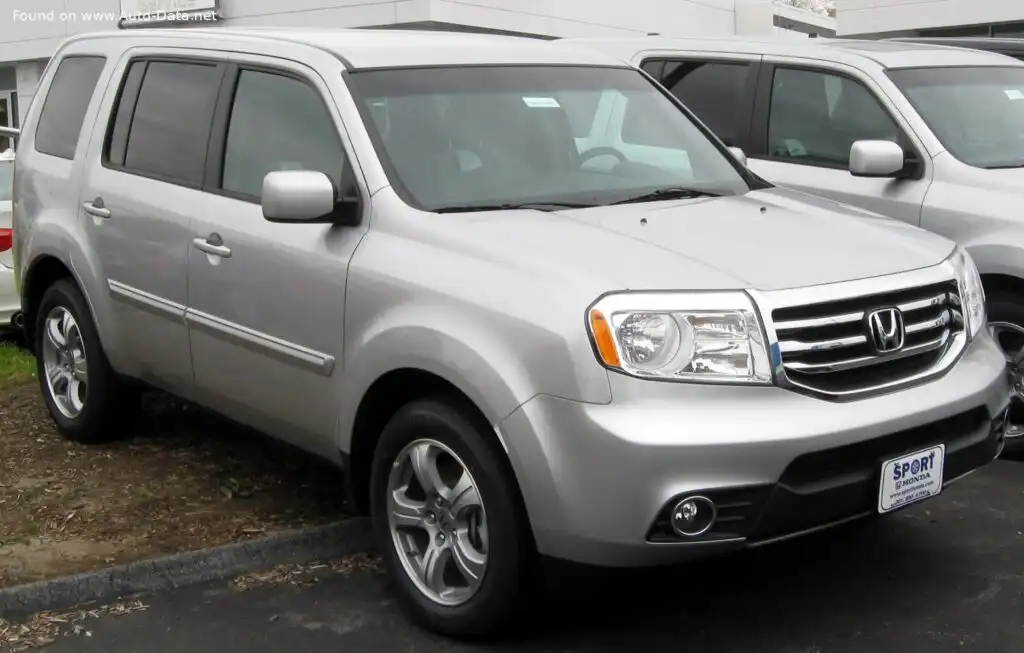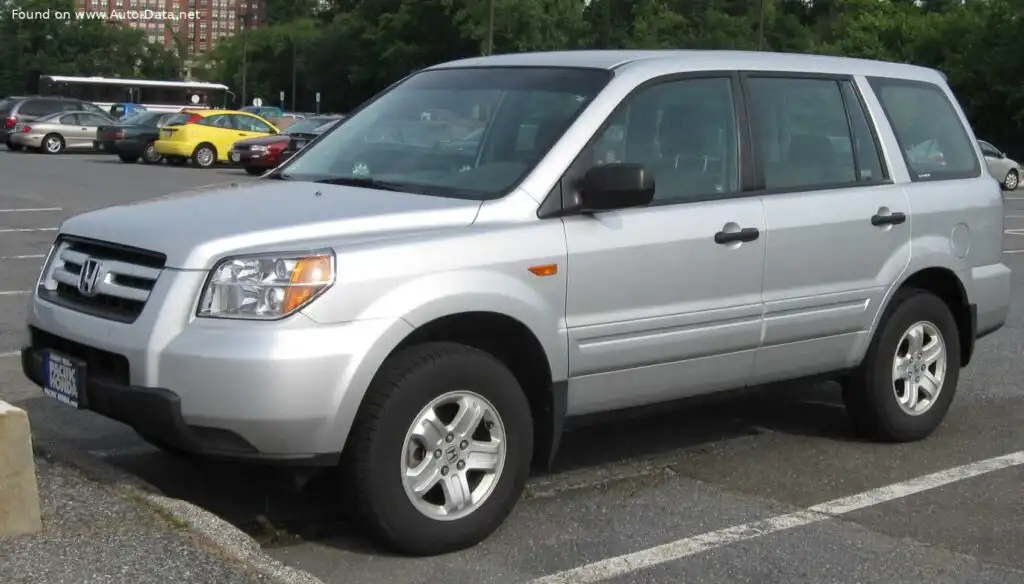
The Honda Pilot, introduced for the 2003 model year, quickly became a popular choice in the mid-size SUV segment, offering three-row seating and Honda’s reputation for reliability. The facelifted first generation, produced from 2006 to 2008, brought subtle styling updates and refinements to the original design. Among the available powertrains, the 3.5-liter V6 paired with a five-speed automatic transmission represents a significant portion of the vehicles sold during these years, offering a balance of power and convenience for families. This configuration positioned itself as the mainstream offering within the Pilot lineup, bridging the gap between the base models and any potential higher-trim, feature-rich options.
Technical Specifications
| Brand | Honda |
| Model | Pilot |
| Generation | Pilot I (facelift 2006) |
| Type (Engine) | 3.5 V6 (248 Hp) Automatic |
| Start of production | 2006 |
| End of production | 2008 |
| Powertrain Architecture | Internal Combustion engine |
| Body type | SUV, Crossover |
| Seats | 8 |
| Doors | 5 |
| Fuel consumption (urban) | 13.1 l/100 km (18 US mpg, 21.6 UK mpg) |
| Fuel consumption (extra urban) | 9.8 l/100 km (24 US mpg, 28.8 UK mpg) |
| Fuel Type | Petrol (Gasoline) |
| Emission standard | ULEV-2 |
| Weight-to-power ratio | 7.8 kg/Hp, 128.2 Hp/tonne |
| Weight-to-torque ratio | 6 kg/Nm, 168 Nm/tonne |
| Power | 248 Hp @ 5750 rpm |
| Power per litre | 71.4 Hp/l |
| Torque | 325 Nm @ 4500 rpm (239.71 lb.-ft. @ 4500 rpm) |
| Maximum engine speed | 6300 rpm |
| Engine layout | Front, Transverse |
| Engine Model/Code | J35A9 |
| Engine displacement | 3471 cm3 (211.81 cu. in.) |
| Number of cylinders | 6 |
| Engine configuration | V-engine |
| Cylinder Bore | 89 mm (3.5 in.) |
| Piston Stroke | 93 mm (3.66 in.) |
| Compression ratio | 10:1 |
| Number of valves per cylinder | 4 |
| Fuel injection system | Multi-port manifold injection |
| Engine aspiration | Naturally aspirated engine |
| Valvetrain | SOHC i-VTEC |
| Engine oil capacity | 4.3 l (4.54 US qt | 3.78 UK qt) |
| Coolant capacity | 7.3 l (7.71 US qt | 6.42 UK qt) |
| Kerb Weight | 1934-1976 kg (4263.74 – 4356.33 lbs.) |
| Trunk (boot) space – minimum | 450 l (15.89 cu. ft.) |
| Trunk (boot) space – maximum | 2480 l (87.58 cu. ft.) |
| Fuel tank capacity | 77 l (20.34 US gal | 16.94 UK gal) |
| Permitted trailer load with brakes (12%) | 1585 kg (3494.33 lbs.) |
| Length | 4775 mm (187.99 in.) |
| Width | 1968 mm (77.48 in.) |
| Height | 1811 mm (71.3 in.) |
| Wheelbase | 2700 mm (106.3 in.) |
| Front track | 1689 mm (66.5 in.) |
| Rear (Back) track | 1694 mm (66.69 in.) |
| Ride height (ground clearance) | 198 mm (7.8 in.) |
| Minimum turning circle (turning diameter) | 11.5 m (37.73 ft.) |
| Front brakes | Ventilated discs, 300 mm |
| Rear brakes | Disc, 312 mm |
| Number of gears and type of gearbox | 5 gears, automatic transmission |
| Front suspension | Independent type McPherson |
| Rear suspension | Independent multi-link suspension |
| Tires size | 235/70 R16 |
| Wheel rims size | 16 |
Introduction
The 2006-2008 Honda Pilot facelift represented a mid-cycle refresh for the first-generation Pilot (introduced in 2003). Built on the Honda 1HX0/A3 platform, this iteration of the Pilot aimed to refine the original’s strengths – spaciousness, reliability, and family-friendly features. The 3.5-liter V6 engine paired with a five-speed automatic transmission was the most commonly equipped powertrain, offering a balance of performance and fuel efficiency that appealed to a broad range of buyers. This combination was positioned as the sweet spot in the Pilot lineup, offering more power than the base four-cylinder options (available in some markets) without the added cost and complexity of potential higher-trim level features.
Powertrain & Engine Architecture
At the heart of this Pilot variant lies the Honda J35A9 engine, a 3.5-liter, naturally aspirated V6. This engine is a member of Honda’s J-series family, known for its durability and smooth operation. The J35A9 utilizes a single overhead camshaft (SOHC) cylinder head with Honda’s Variable Valve Timing and Lift Electronic Control (i-VTEC) system. This technology optimizes valve timing and lift based on engine speed and load, improving both performance and fuel efficiency. Fuel delivery is managed by a multi-port fuel injection system. The engine produces 248 horsepower at 5750 rpm and 239.71 lb-ft of torque at 4500 rpm. The five-speed automatic transmission, while not as advanced as some contemporary offerings, provides smooth and reliable shifting. Gear ratios are tuned for everyday driving, prioritizing acceleration from a stop and comfortable highway cruising.
Driving Characteristics
The 3.5-liter V6 and five-speed automatic combination in the 2006-2008 Honda Pilot delivers adequate performance for most driving situations. Acceleration is brisk enough for merging onto highways and passing other vehicles, though it doesn’t offer the sporty feel of some competitors. The automatic transmission shifts smoothly, but can sometimes feel hesitant during quick acceleration. Compared to a manual transmission-equipped Pilot, the automatic sacrifices some responsiveness, but gains in ease of use, particularly in stop-and-go traffic. The gear ratios are optimized for fuel economy and comfortable cruising, rather than outright performance. The Pilot’s weight, ranging from 4264 to 4356 pounds, does impact acceleration, but the V6 provides sufficient power to overcome this.
Equipment & Trim Levels
The 2006-2008 Honda Pilot 3.5 V6 Automatic typically came standard with features such as air conditioning, power windows and locks, a CD player, and cloth upholstery. Higher trim levels, such as the EX and EX-L, added features like leather upholstery, a sunroof, alloy wheels, and a premium audio system. Optional extras included a navigation system, rear-seat entertainment system, and power liftgate. The interior design was functional and family-oriented, with ample storage space and comfortable seating for up to eight passengers. The dashboard layout was straightforward and easy to use, with clearly labeled controls.
Chassis & Braking
The 2006-2008 Honda Pilot utilizes an independent McPherson strut suspension in the front and an independent multi-link suspension in the rear. This suspension setup provides a comfortable ride, absorbing bumps and irregularities in the road surface effectively. The Pilot’s braking system consists of ventilated discs in the front and solid discs in the rear. Anti-lock brakes (ABS) were standard equipment, enhancing safety and control during emergency braking situations. The steering is rack-and-pinion with electric power steering, providing a responsive and precise feel. The standard tire size was 235/70R16, offering a good balance of ride comfort and handling.
Market Reception & Comparison
The 2006-2008 Honda Pilot 3.5 V6 Automatic was generally well-received by critics and consumers alike. It was praised for its spacious interior, comfortable ride, and Honda’s reputation for reliability. Fuel economy was considered average for its class, with EPA estimates of 18 mpg city and 24 mpg highway. Compared to other trims in the Pilot lineup, the 3.5 V6 Automatic offered a compelling balance of performance and value. It was more powerful and refined than the base four-cylinder models, but less expensive and complex than the higher-trim level options. Competitors such as the Toyota Highlander and Ford Explorer offered similar features and performance, but the Pilot stood out with its spacious interior and Honda’s strong brand reputation.
Legacy
The Honda J35 engine family, including the J35A9 found in the 2006-2008 Pilot, has proven to be remarkably durable and reliable over the long term. With proper maintenance, these engines can easily exceed 200,000 miles. The five-speed automatic transmission is also generally reliable, although some owners have reported issues with torque converter failure. In the used car market today, these Pilots represent a good value for families seeking a spacious and reliable SUV. However, potential buyers should be aware of the vehicle’s age and mileage, and should have a pre-purchase inspection performed by a qualified mechanic. The 2006-2008 Honda Pilot 3.5 V6 Automatic remains a popular choice for those seeking a dependable and practical family vehicle.