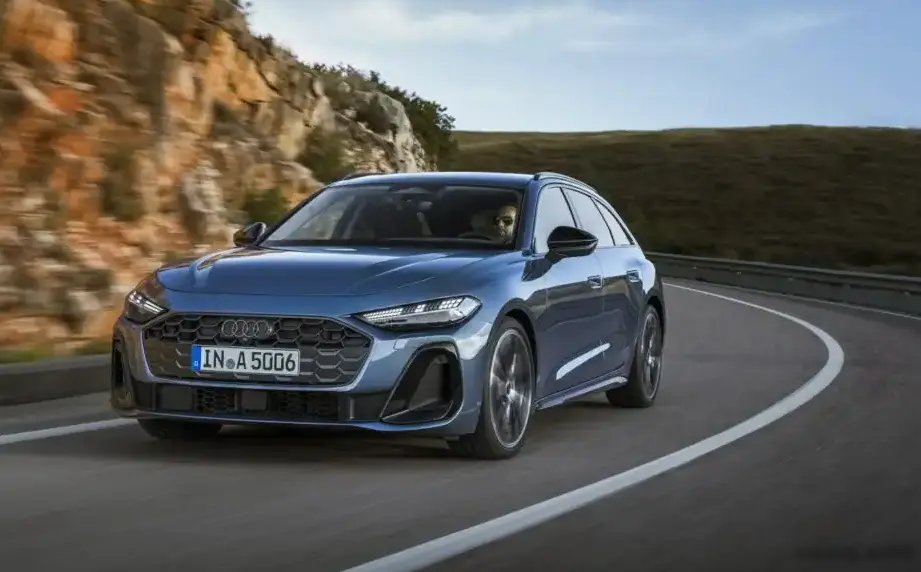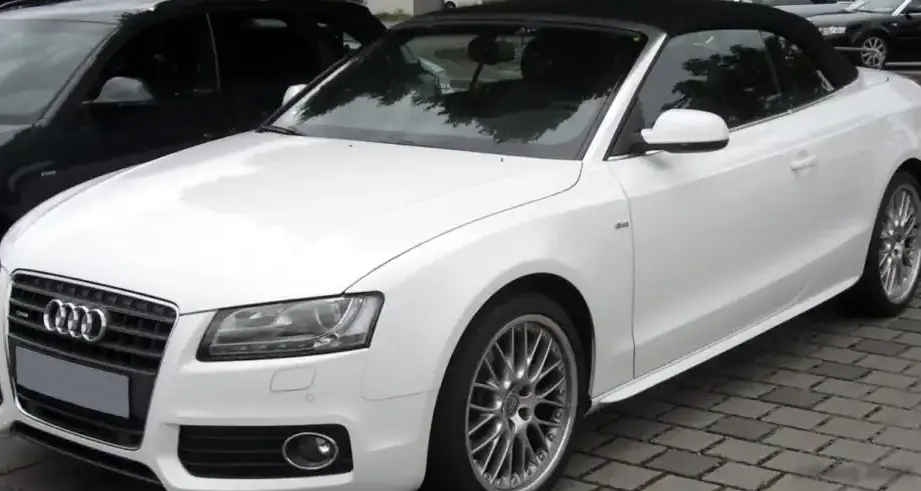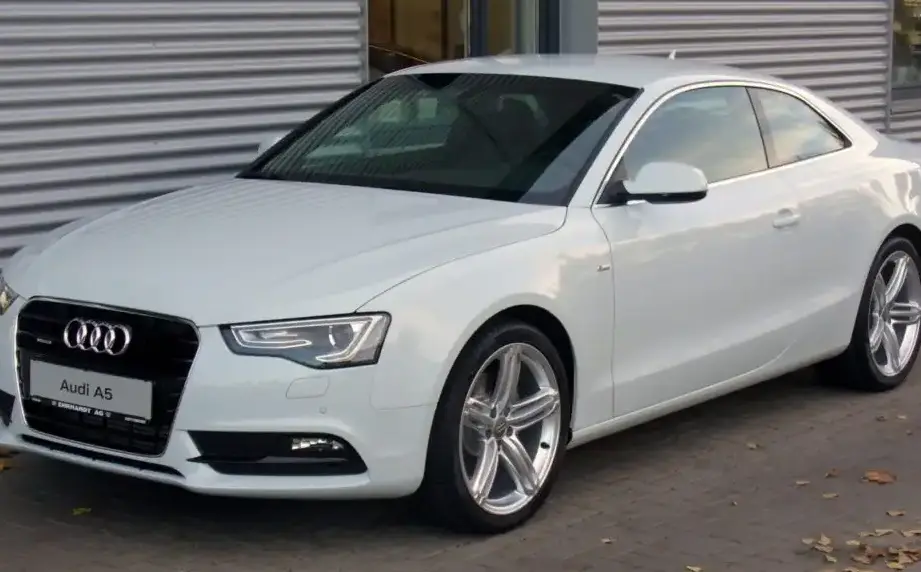
The Audi A5 Coupe (8T3), particularly the 2.0 TDI ultra variant producing 163 horsepower, represented a significant offering in the European market from 2014 to 2016. Positioned as a fuel-efficient and relatively affordable entry point into the A5 Coupe range, it catered to buyers seeking a stylish and comfortable grand tourer with lower running costs. This model sat below the more powerful 3.0 TDI and petrol-powered variants, offering a balance between performance and economy. The “ultra” designation signified Audi’s efforts to maximize efficiency through weight reduction and optimized engine tuning.
Technical Specifications
| Brand | Audi |
| Model | A5 |
| Generation | A5 Coupe (8T3, facelift 2011) |
| Type (Engine) | 2.0 TDI ultra (163 Hp) |
| Start of production | 2014 |
| End of production | 2016 |
| Powertrain Architecture | Internal Combustion engine |
| Body type | Coupe |
| Seats | 4 |
| Doors | 2 |
| Fuel consumption (urban) | 5 l/100 km (47 US mpg, 56.5 UK mpg, 20 km/l) |
| Fuel consumption (extra urban) | 3.8 l/100 km (61.9 US mpg, 74.3 UK mpg, 26.3 km/l) |
| Fuel consumption (combined) | 4.2 l/100 km (56 US mpg, 67.3 UK mpg, 23.8 km/l) |
| CO2 emissions | 109 g/km |
| Fuel Type | Diesel |
| Acceleration 0 – 100 km/h | 8.3 sec |
| Acceleration 0 – 62 mph | 8.3 sec |
| Acceleration 0 – 60 mph | 7.9 sec |
| Maximum speed | 225 km/h (139.81 mph) |
| Emission standard | Euro 6 |
| Weight-to-power ratio | 9.4 kg/Hp, 106.5 Hp/tonne |
| Weight-to-torque ratio | 3.8 kg/Nm, 261.4 Nm/tonne |
| Power | 163 Hp @ 3000-4200 rpm |
| Power per litre | 82.8 Hp/l |
| Torque | 400 Nm @ 1750-2750 rpm (295.02 lb.-ft. @ 1750-2750 rpm) |
| Engine layout | Front, Longitudinal |
| Engine Model/Code | CGLD, CNHC |
| Engine displacement | 1968 cm3 (120.09 cu. in.) |
| Number of cylinders | 4 |
| Engine configuration | Inline |
| Cylinder Bore | 81 mm (3.19 in.) |
| Piston Stroke | 95.5 mm (3.76 in.) |
| Compression ratio | 18:1 |
| Number of valves per cylinder | 4 |
| Fuel injection system | Diesel Commonrail |
| Engine aspiration | Turbocharger, Intercooler |
| Valvetrain | DOHC |
| Engine oil capacity | 4.7 l (4.97 US qt | 4.14 UK qt) |
| Kerb Weight | 1530 kg (3373.07 lbs.) |
| Max. weight | 2135 kg (4706.87 lbs.) |
| Max load | 605 kg (1333.8 lbs.) |
| Trunk (boot) space – minimum | 480 l (16.95 cu. ft.) |
| Trunk (boot) space – maximum | 829 l (29.28 cu. ft.) |
| Fuel tank capacity | 63 l (16.64 US gal | 13.86 UK gal) |
| AdBlue tank | 20 l (5.28 US gal | 4.4 UK gal) |
| Max. roof load | 75 kg (165.35 lbs.) |
| Permitted trailer load with brakes (8%) | 1500 kg (3306.93 lbs.) |
| Permitted trailer load with brakes (12%) | 1300 kg (2866.01 lbs.) |
| Permitted trailer load without brakes | 750 kg (1653.47 lbs.) |
| Permitted towbar download | 80 kg (176.37 lbs.) |
| Length | 4626 mm (182.13 in.) |
| Width | 1854 mm (72.99 in.) |
| Width including mirrors | 2020 mm (79.53 in.) |
| Height | 1372 mm (54.02 in.) |
| Wheelbase | 2751 mm (108.31 in.) |
| Front track | 1590 mm (62.6 in.) |
| Rear (Back) track | 1577 mm (62.09 in.) |
| Front overhang | 861 mm (33.9 in.) |
| Rear overhang | 1014 mm (39.92 in.) |
| Minimum turning circle (turning diameter) | 11.5 m (37.73 ft.) |
| Drivetrain Architecture | The Internal combustion engine (ICE) drives the front wheels of the vehicle. |
| Drive wheel | Front wheel drive |
| Number of gears and type of gearbox | 6 gears, manual transmission |
| Front suspension | Independent multi-link suspension |
| Rear suspension | Independent on trapezoidal lever |
| Front brakes | Ventilated discs |
| Rear brakes | Disc |
| Assisting systems | ABS (Anti-lock braking system) |
| Steering type | Steering rack and pinion |
| Power steering | Electric Steering |
| Tires size | 225/50 R17 |
| Wheel rims size | 7.5J x 17 |
INTRODUCTION
The Audi A5 Coupe (8T3) facelift, launched in 2011, brought revised styling and updated technology to the A5 range. The 2.0 TDI ultra variant, introduced in 2014, was a key component of Audi’s strategy to offer more fuel-efficient models. Built on the Volkswagen Group’s PL46 platform (also known as the B8 platform), shared with the Volkswagen Passat and Skoda Superb, the A5 Coupe aimed to blend sporty aesthetics with everyday practicality. The 163 hp TDI ultra model specifically targeted buyers prioritizing economy and lower emissions without sacrificing the A5’s premium feel.
Powertrain & Engine Architecture
The heart of the A5 2.0 TDI ultra is the Volkswagen Group’s 2.0-liter four-cylinder diesel engine, specifically the CGLD or CNHC engine code depending on the market and specific year. This engine utilizes a common rail direct injection system, delivering fuel at extremely high pressure for optimized combustion. The engine features a single turbocharger with an intercooler to increase air density and boost power output. The valvetrain employs a dual overhead camshaft (DOHC) design with four valves per cylinder, enhancing breathing and efficiency. The 163 hp output is achieved through careful calibration of the engine management system, prioritizing fuel economy over outright performance. The engine is longitudinally mounted, driving the front wheels. The standard transmission for this variant was a 6-speed manual gearbox, although a S tronic dual-clutch transmission was often available as an option.
Driving Characteristics
The 2.0 TDI ultra 163 hp A5 Coupe offered a comfortable and refined driving experience, but wasn’t designed for outright speed. Acceleration from 0-60 mph took around 7.9 to 8.3 seconds, making it competitive within its class but noticeably slower than the more powerful A5 variants. The engine delivers a respectable 400 Nm (295 lb-ft) of torque, providing adequate pulling power for everyday driving and overtaking maneuvers. The manual gearbox, while precise, had relatively long gearing, further emphasizing fuel efficiency over rapid acceleration. The steering was light and accurate, contributing to a relaxed driving experience. The suspension, tuned for comfort, absorbed bumps and imperfections in the road well, although it didn’t offer the same level of dynamic engagement as the sport suspension options available on other A5 models.
Equipment & Trim Levels
The A5 2.0 TDI ultra typically came equipped with a generous level of standard features. These included Audi’s Multi Media Interface (MMI) infotainment system with a central display screen, automatic climate control, alloy wheels (typically 17-inch), and a leather-wrapped steering wheel. Interior upholstery was usually cloth, with leather options available at extra cost. Common optional extras included a sunroof, upgraded sound system, parking sensors, and navigation system. The “ultra” trim often featured unique interior trim elements and badging to distinguish it from other A5 models. Safety features such as ABS, electronic stability control, and multiple airbags were standard.
Chassis & Braking
The A5 Coupe’s chassis featured an independent multi-link suspension at the front and an independent trapezoidal link suspension at the rear, providing a good balance between comfort and handling. The front brakes were ventilated discs, offering strong stopping power, while the rear brakes were solid discs. The steering system utilized an electric power steering rack and pinion, providing precise and responsive steering feel. The weight distribution was relatively balanced, contributing to stable handling characteristics. The standard tire size was 225/50 R17, providing good grip in various weather conditions.
Market Reception & Comparison
The Audi A5 2.0 TDI ultra was generally well-received by automotive critics for its fuel efficiency and comfortable ride. However, some reviewers noted that the 163 hp engine felt underpowered for a coupe of its size and weight. Compared to the more powerful 3.0 TDI and petrol variants, the 2.0 TDI ultra offered significantly better fuel economy but lacked the same level of performance. Against competitors like the BMW 3 Series Coupe and Mercedes-Benz C-Class Coupe, the A5 2.0 TDI ultra held its own in terms of refinement and build quality, but often lagged behind in terms of driving dynamics. Its fuel economy figures of around 56 US mpg combined were a major selling point, appealing to buyers prioritizing running costs.
Legacy
The 2.0 TDI ultra powertrain has proven to be relatively reliable, although, like all modern diesel engines, it’s susceptible to issues with the diesel particulate filter (DPF) if not driven on longer journeys regularly. The A5 Coupe (8T3) remains a popular choice in the used car market, offering a stylish and well-built alternative to its competitors. The 163 hp TDI ultra variant represents a good value proposition for buyers seeking a fuel-efficient and comfortable coupe, but potential buyers should be aware of the potential maintenance costs associated with diesel engines, particularly the DPF and turbocharger. Its blend of practicality, style, and economy has ensured its continued appeal in the second-hand market.