Technical Specifications
| Brand | Honda |
| Model | Pilot |
| Generation | Pilot II |
| Type (Engine) | 3.5 V6 (253 Hp) 4WD Automatic |
| Start of production | 2008 |
| End of production | 2012 |
| Powertrain Architecture | Internal Combustion engine |
| Body type | SUV, Crossover |
| Seats | 8 |
| Doors | 5 |
| Fuel consumption (urban) | 14.7 l/100 km (16 US mpg, 19.2 UK mpg, 6.8 km/l) |
| Fuel consumption (extra urban) | 10.7 l/100 km (22 US mpg, 26.4 UK mpg, 9.3 km/l) |
| Fuel consumption (combined) | 13.1 l/100 km (18 US mpg, 21.6 UK mpg, 7.6 km/l) |
| Fuel Type | Petrol (Gasoline) |
| Emission standard | ULEV-2 |
| Weight-to-power ratio | 8.1 kg/Hp, 123.8 Hp/tonne |
| Weight-to-torque ratio | 6 kg/Nm, 167.8 Nm/tonne |
| Power | 253 Hp @ 5700 rpm |
| Power per litre | 72.9 Hp/l |
| Torque | 343 Nm @ 4800 rpm (252.98 lb.-ft. @ 4800 rpm) |
| Engine layout | Front, Transverse |
| Engine Model/Code | J35Z4 |
| Engine displacement | 3471 cm3 (211.81 cu. in.) |
| Number of cylinders | 6 |
| Engine configuration | V-engine |
| Cylinder Bore | 89 mm (3.5 in.) |
| Piston Stroke | 93 mm (3.66 in.) |
| Compression ratio | 10.5:1 |
| Number of valves per cylinder | 4 |
| Fuel injection system | Multi-port manifold injection |
| Engine aspiration | Naturally aspirated engine |
| Valvetrain | SOHC i-VTEC |
| Engine oil capacity | 4.3 l (4.54 US qt | 3.78 UK qt) |
| Coolant capacity | 7.5 l (7.93 US qt | 6.6 UK qt) |
| Kerb Weight | 2044-2082 kg (4506.25 – 4590.02 lbs.) |
| Trunk (boot) space – minimum | 509 l (17.98 cu. ft.) |
| Trunk (boot) space – maximum | 2463 l (86.98 cu. ft.) |
| Fuel tank capacity | 79 l (20.87 US gal | 17.38 UK gal) |
| Permitted trailer load with brakes (12%) | 2041 kg (4499.63 lbs.) |
| Length | 4849 mm (190.91 in.) |
| Width | 1994 mm (78.5 in.) |
| Height | 1803-1846 mm (70.98 – 72.68 in.) |
| Wheelbase | 2774 mm (109.21 in.) |
| Front track | 1719 mm (67.68 in.) |
| Rear (Back) track | 1715 mm (67.52 in.) |
| Ride height (ground clearance) | 203 mm (7.99 in.) |
| Minimum turning circle (turning diameter) | 11.5 m (37.73 ft.) |
| Approach angle | 27.8° |
| Departure angle | 24.5° |
| Drivetrain Architecture | All wheel drive (4×4). ICE drives front wheels, rear wheels engaged via clutch. |
| Number of gears and type of gearbox | 5 gears, automatic transmission |
| Front suspension | Independent type McPherson |
| Rear suspension | Independent multi-link suspension |
| Front brakes | Ventilated discs, 330 mm |
| Rear brakes | Disc, 333 mm |
| Assisting systems | ABS (Anti-lock braking system) |
| Steering type | Steering rack and pinion |
| Power steering | Electric Steering |
| Tires size | 245/65 R17 |
| Wheel rims size | 7.5J x 17 |
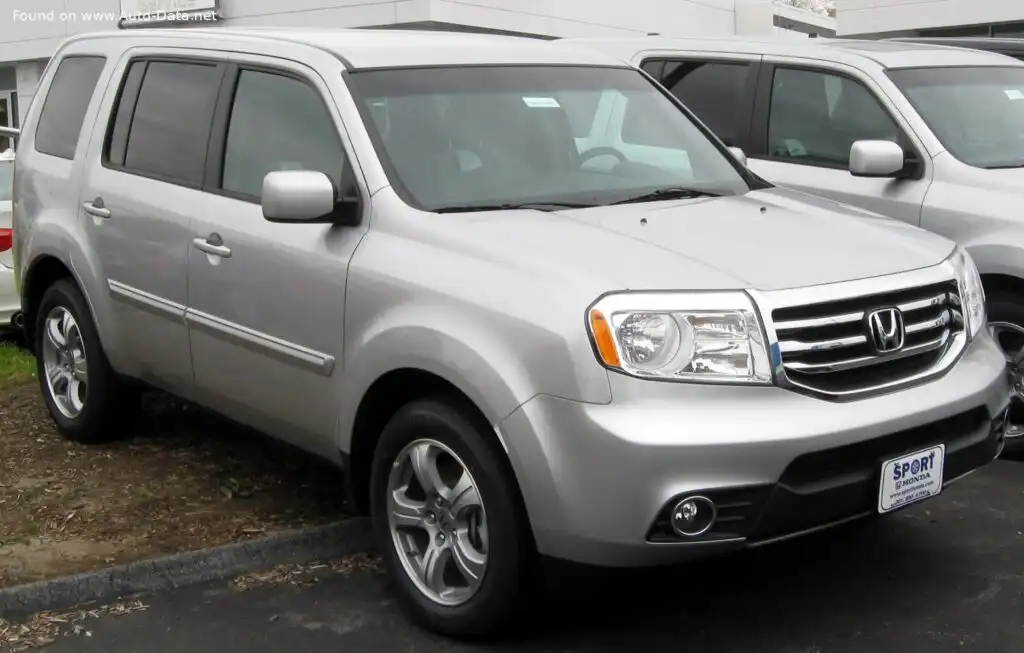
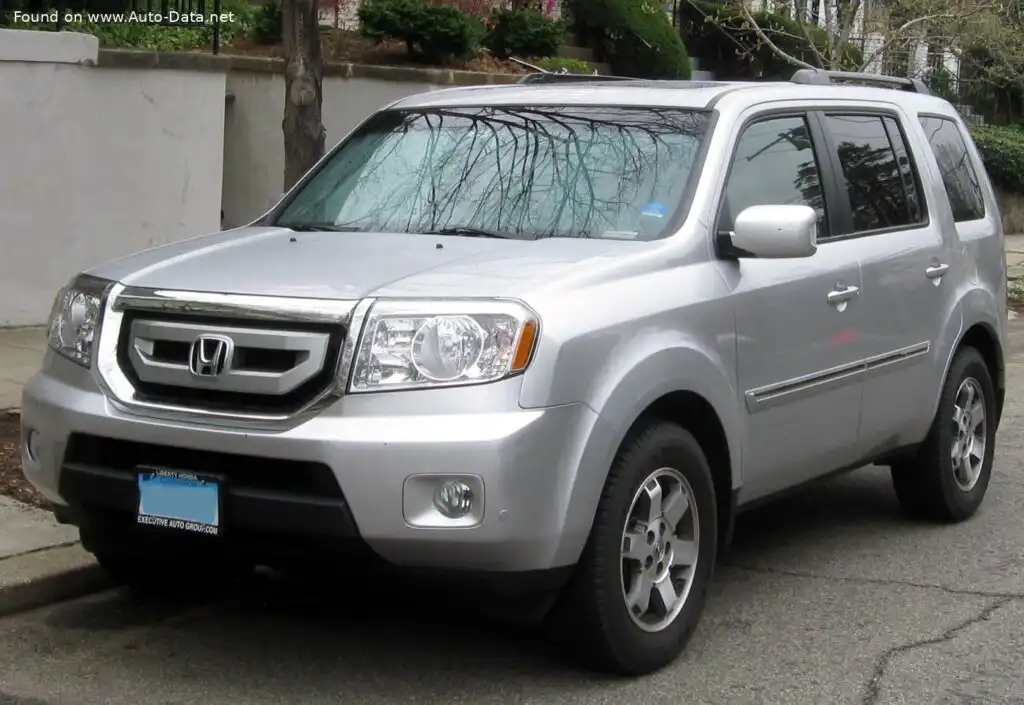
The Honda Pilot II, produced from 2008 to 2012, marked the second generation of Honda’s popular mid-size SUV. Built on the Honda MDX platform, it offered three-row seating for up to eight passengers and was designed to be a comfortable and practical family vehicle. The 3.5 V6 4WD Automatic variant held a significant position in the lineup, striking a balance between capability, comfort, and price. It was positioned as an upgrade from the base LX model, offering the added security of all-wheel drive and a more refined driving experience, while remaining more accessible than the top-tier Elite trim. This generation of the Pilot experienced increased sales compared to its predecessor, solidifying Honda’s presence in the highly competitive SUV market.
Powertrain & Engine Architecture
The 2008-2012 Honda Pilot II 3.5 V6 4WD Automatic is powered by the J35Z4 engine, a 3.5-liter naturally aspirated V6. This engine belongs to Honda’s respected J-series family, renowned for its reliability and smooth operation. The J35Z4 features a single overhead camshaft (SOHC) cylinder head and incorporates Honda’s Variable Valve Timing and Lift Electronic Control (VTEC) system. This technology optimizes valve timing to improve both performance and fuel efficiency throughout the engine’s operating range. Fuel delivery is managed by a multi-point fuel injection system. The engine generates 253 horsepower at 5700 rpm and 253 lb-ft of torque at 4800 rpm. The engine is mounted transversely in the front of the vehicle. It’s paired with a five-speed automatic transmission, engineered to deliver smooth and responsive shifting. This transmission was standard equipment for the 4WD models, offering a compromise between fuel economy and performance.
Driving Characteristics
The combination of the 3.5L V6 engine and the five-speed automatic transmission in the Pilot II provides sufficient performance for everyday driving and family transportation. While not designed for sporty driving, the engine delivers enough power for merging onto highways and overtaking other vehicles. The automatic transmission is tuned for comfort, offering relatively smooth gear changes. Compared to the base 4-cylinder engine option (which wasn’t available with 4WD), the V6 provides a noticeably more refined and effortless driving experience. The 4WD system enhances traction in challenging weather conditions, making it a suitable choice for drivers in areas prone to snow or rain. However, the Pilot II isn’t particularly fuel-efficient, with combined fuel economy figures around 18 US mpg. The automatic transmission’s gear ratios are optimized for cruising and towing, rather than maximizing acceleration.
Equipment & Trim Levels
The 3.5 V6 4WD Automatic trim typically included features such as alloy wheels, a power driver’s seat, keyless entry, and a basic audio system with a CD player. Higher trim levels added features like leather upholstery, a sunroof, a navigation system, and a premium audio system. Standard safety features included anti-lock brakes (ABS), stability control, and multiple airbags. Optional extras included a rear-seat entertainment system and upgraded audio options. Interior upholstery was generally cloth, with leather available as an upgrade. The dashboard layout was functional and straightforward, prioritizing ease of use over elaborate styling.
Chassis & Braking
The Honda Pilot II utilizes an independent McPherson strut suspension in the front and an independent multi-link suspension in the rear. This suspension setup provides a comfortable ride quality, effectively absorbing bumps and road imperfections. The 4WD system employs a viscous coupling to distribute torque between the front and rear axles as needed. Braking is handled by ventilated discs on all four wheels, providing adequate stopping power. ABS is standard, improving braking performance in emergency situations. The Pilot II’s chassis is designed to prioritize stability and comfort, rather than sporty handling. Stabilizer bars are fitted to both axles to minimize body roll during cornering.
Market Reception & Comparison
The Honda Pilot II 3.5 V6 4WD Automatic was generally well-received by automotive reviewers. It was praised for its spacious interior, comfortable ride, and strong V6 engine. However, some critics noted its somewhat unremarkable styling and average fuel economy. Compared to competitors like the Toyota Highlander and Ford Explorer, the Pilot II offered a compelling combination of features and value. The Highlander was often considered more refined, while the Explorer offered more rugged styling and greater towing capacity. The Pilot II’s reliability was also a significant selling point, with Honda consistently achieving high rankings in consumer reports.
Legacy
The J35Z4 engine and the five-speed automatic transmission used in the 2008-2012 Honda Pilot II have proven to be relatively reliable over the long term. While some owners have reported minor issues such as oil leaks and sensor failures, major engine or transmission problems are relatively infrequent. Today, these Pilots can be found on the used car market at affordable prices, making them a popular choice for families seeking a spacious and dependable SUV. Regular maintenance, including oil changes and transmission fluid flushes, is essential for ensuring the longevity of this powertrain. The Pilot II remains a testament to Honda’s commitment to building durable and practical vehicles.