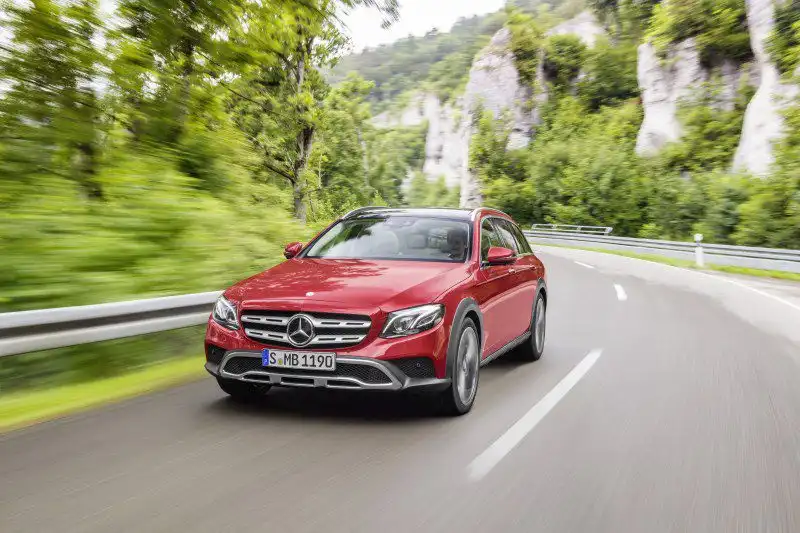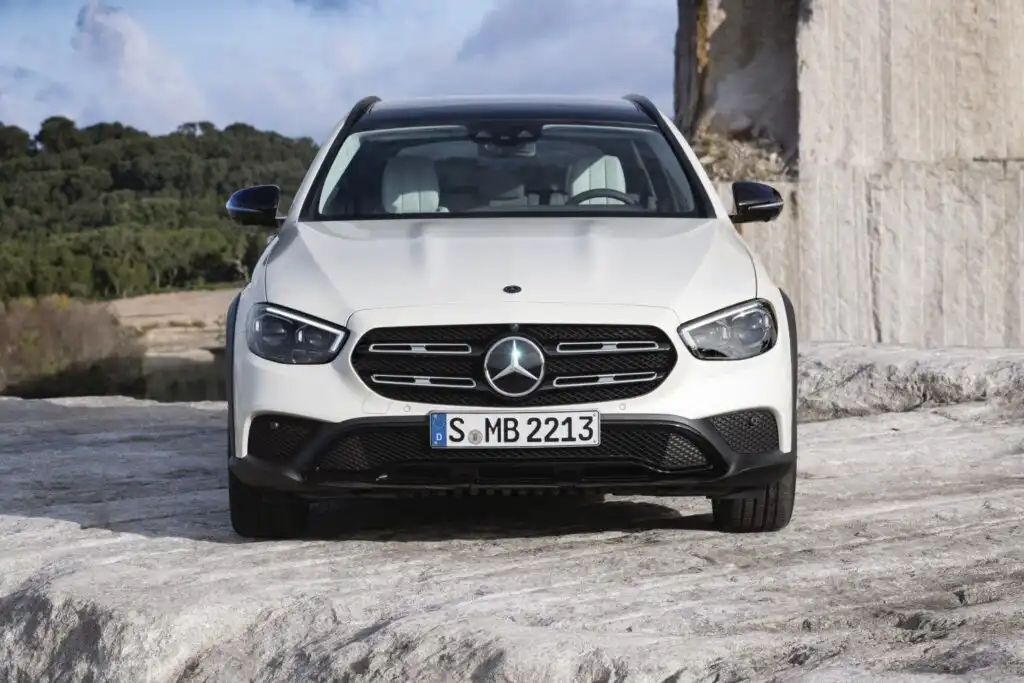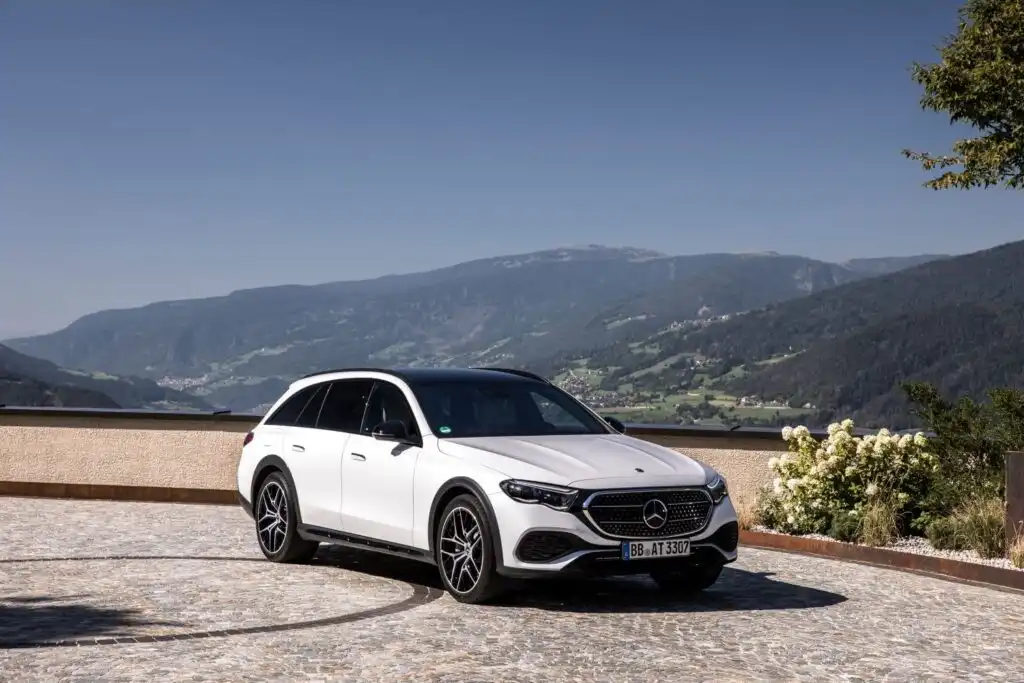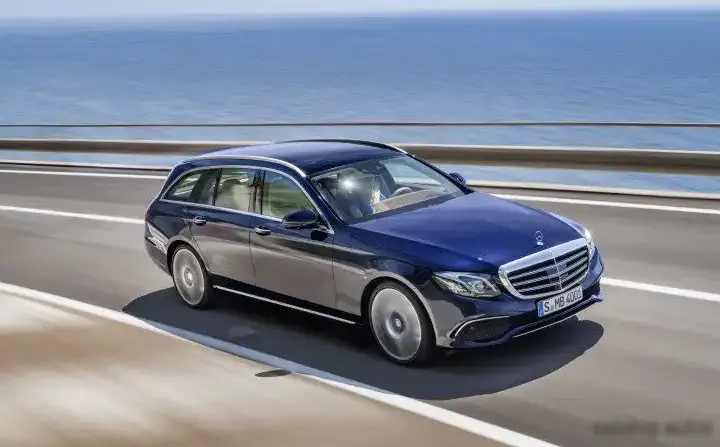
The Mercedes-Benz E 43 4MATIC Estate (S213) was a performance-oriented variant of the E-Class wagon, produced from July 2016 to April 2018. Positioned between the standard E-Class models and the full-fledged AMG E 63, the E 43 aimed to deliver a blend of practicality, luxury, and enhanced driving dynamics. It represented Mercedes-AMG’s entry point into the high-performance wagon segment, offering a compelling alternative to traditional sports sedans and SUVs. The S213 generation E-Class, launched in 2016, brought a significant leap forward in technology and design compared to its predecessor, and the E 43 capitalized on these advancements.
Technical Specifications
| Brand | Mercedes-Benz |
| Model | E-class |
| Generation | E-class T-modell (S213) |
| Type | AMG E 43 (401 Hp) 4MATIC 9G-TRONIC |
| Start of production | July, 2016 |
| End of production | April, 2018 |
| Powertrain Architecture | Internal Combustion engine |
| Body type | Station wagon (estate) |
| Seats | 5 |
| Doors | 5 |
| Fuel consumption (urban) | 11.1 l/100 km (21.2 US mpg) |
| Fuel consumption (extra urban) | 7.1 l/100 km (33.1 US mpg) |
| Fuel consumption (combined) | 8.6 l/100 km (27.4 US mpg) |
| CO2 emissions | 197 g/km |
| Fuel Type | Petrol (Gasoline) |
| Acceleration 0 – 100 km/h | 4.7 sec |
| Acceleration 0 – 62 mph | 4.7 sec |
| Acceleration 0 – 60 mph | 4.5 sec |
| Maximum speed | 250 km/h (155.34 mph) |
| Emission standard | Euro 6 |
| Weight-to-power ratio | 4.6 kg/Hp |
| Weight-to-torque ratio | 3.6 kg/Nm |
| Power | 401 Hp @ 6100 rpm |
| Torque | 520 Nm @ 2500-5000 rpm (383.53 lb.-ft.) |
| Engine layout | Front, Longitudinal |
| Engine Model/Code | M 276.823 |
| Engine displacement | 2996 cm3 (182.83 cu. in.) |
| Number of cylinders | 6 |
| Engine configuration | V-engine |
| Compression ratio | 10.7:1 |
| Fuel injection system | Direct injection |
| Engine aspiration | BiTurbo, Intercooler |
| Engine oil capacity | 6.5 l (6.87 US qt | 5.72 UK qt) |
| Coolant | 12 l (12.68 US qt | 10.56 UK qt) |
| Kerb Weight | 1855 kg (4089.57 lbs.) |
| Max. weight | 2505 kg (5522.58 lbs.) |
| Max load | 650 kg (1433 lbs.) |
| Trunk (boot) space – minimum | 640 l (22.6 cu. ft.) |
| Trunk (boot) space – maximum | 1820 l (64.27 cu. ft.) |
| Fuel tank capacity | 66 l (17.44 US gal | 14.52 UK gal) |
| Max. roof load | 100 kg (220.46 lbs.) |
| Permitted trailer load with brakes (12%) | 2100 kg (4629.71 lbs.) |
| Permitted trailer load without brakes | 750 kg (1653.47 lbs.) |
| Length | 4933 mm (194.21 in.) |
| Width | 1852 mm (72.91 in.) |
| Width including mirrors | 2065 mm (81.3 in.) |
| Height | 1475 mm (58.07 in.) |
| Wheelbase | 2939 mm (115.71 in.) |
| Front track | 1600 mm (62.99 in.) |
| Rear (Back) track | 1609 mm (63.35 in.) |
| Front overhang | 841 mm (33.11 in.) |
| Rear overhang | 1153 mm (45.39 in.) |
| Minimum turning circle | 12.50 m (41.01 ft.) |
| Drive wheel | All wheel drive (4×4) |
| Number of gears | 9 |
| Gearbox type | automatic transmission G-TRONIC |
| Front suspension | Independent multi-link suspension |
| Rear suspension | Independent multi-link suspension |
| Front brakes | Ventilated discs |
| Rear brakes | Ventilated discs |
| Assisting systems | ABS (Anti-lock braking system) |
| Steering type | Steering rack and pinion |
| Power steering | Electric Steering |
| Tires size | 245/40 ZR19; 275/35 ZR19 |
| Wheel rims size | 19 |
INTRODUCTION
The Mercedes-AMG E 43 4MATIC Estate, launched in 2016, filled a niche in the market for a performance wagon that didn’t quite reach the extremes of the E 63. Built on the W213 E-Class platform, it offered a compelling combination of practicality, luxury, and sporty driving dynamics. The “43” designation signified its position within the AMG lineup, indicating a mid-range performance model. It was designed to appeal to buyers who wanted a more engaging driving experience than the standard E-Class wagon, but didn’t require the outright power and aggressive styling of the E 63. Production continued until April 2018, when it was superseded by updated models within the AMG range.
Powertrain & Engine Architecture
The heart of the E 43 was the M276.823 3.0-liter V6 engine, featuring twin-scroll turbochargers and direct fuel injection. This engine produced 401 horsepower at 6,100 rpm and 383 lb-ft of torque available from 2,500 to 5,000 rpm. The engine utilized a nano-slide coating on the cylinder walls, reducing friction and improving efficiency. Power was delivered to all four wheels via Mercedes-Benz’s 4MATIC all-wheel-drive system, which featured a rear-biased torque distribution (30/70 split) for a more dynamic driving experience. The engine was paired with the 9G-TRONIC nine-speed automatic transmission, specifically tuned by AMG for faster shift times and more responsive performance. This transmission offered paddle shifters for manual control, allowing drivers to select gears at will.
Driving Characteristics
The E 43 Estate offered a noticeably more engaging driving experience than the standard E-Class wagon. The twin-turbo V6 provided strong acceleration, with a 0-60 mph time of around 4.5 seconds. The 9G-TRONIC transmission shifted quickly and smoothly, and the rear-biased all-wheel-drive system enhanced handling and stability. While not as brutally fast as the E 63, the E 43 offered a more accessible and refined performance character. The suspension was tuned for a balance between comfort and control, providing a compliant ride on most road surfaces while still offering good body control in corners. The steering was precise and well-weighted, providing good feedback to the driver. Compared to the standard E-Class, the E 43 felt more responsive and agile, making it a more enjoyable car to drive on winding roads.
Equipment & Trim Levels
The E 43 Estate came standard with a comprehensive list of features, including leather upholstery, heated and ventilated front seats, a panoramic sunroof, and a premium sound system. Standard safety features included automatic emergency braking, lane-keeping assist, and blind-spot monitoring. Optional extras included a head-up display, a 360-degree camera system, and advanced driver-assistance features. Interior trim options included various wood and aluminum finishes. The dashboard layout was similar to other E-Class models, but with AMG-specific accents and instrumentation. The E 43 also featured AMG sport seats with increased bolstering for improved support during spirited driving.
Chassis & Braking
The E 43 Estate featured a sport-tuned suspension with stiffer springs and dampers compared to the standard E-Class wagon. It also included a larger stabilizer bar to reduce body roll. The braking system consisted of ventilated discs on all four wheels, with larger front rotors and calipers compared to the standard E-Class. The AMG-tuned braking system provided strong stopping power and good pedal feel. The car’s chassis was reinforced to handle the increased power and torque, improving rigidity and handling precision. The standard tire size was 245/40 ZR19 at the front and 275/35 ZR19 at the rear, providing ample grip.
Market Reception & Comparison
The Mercedes-AMG E 43 Estate was generally well-received by automotive critics. It was praised for its blend of performance, luxury, and practicality. Reviewers noted that it offered a compelling alternative to traditional sports sedans and SUVs, providing a more versatile and engaging driving experience. Compared to the standard E-Class wagon, the E 43 was seen as a significant upgrade in terms of performance and handling. However, some critics felt that it didn’t quite live up to the expectations of a full-fledged AMG model. Compared to the E 63, the E 43 offered less power and a less aggressive driving experience, but it was also more affordable and easier to live with on a daily basis. Fuel economy was reasonable for a performance wagon, averaging around 27.4 mpg in combined driving.
Legacy
The Mercedes-AMG E 43 Estate, while a relatively short-lived model, has gained a following among enthusiasts. The M276 engine, while not without its complexities, has proven to be reasonably reliable with proper maintenance. The 9G-TRONIC transmission is also generally considered to be a durable and reliable unit. On the used car market, the E 43 Estate represents a good value for buyers seeking a performance wagon with a premium badge. Its combination of practicality, luxury, and sporty driving dynamics continues to appeal to a wide range of buyers. The E 43 paved the way for future AMG models, demonstrating the demand for performance variants within the broader Mercedes-Benz lineup.