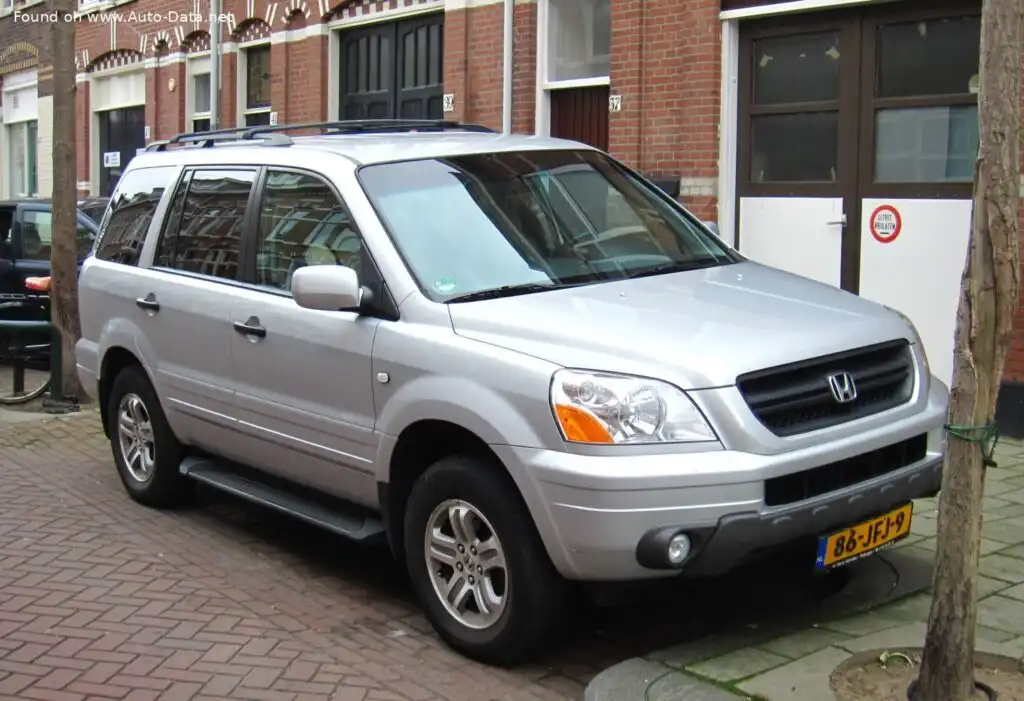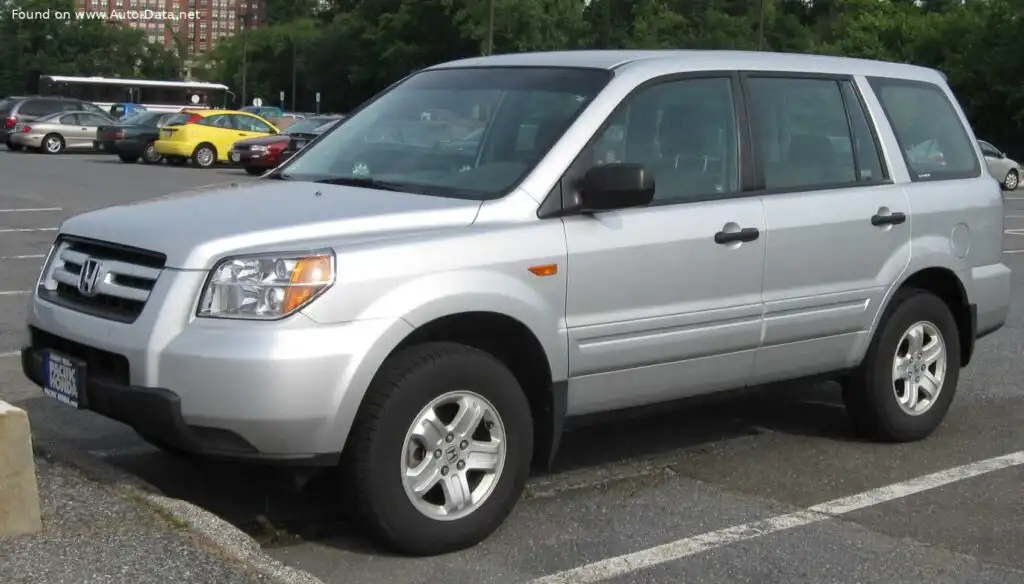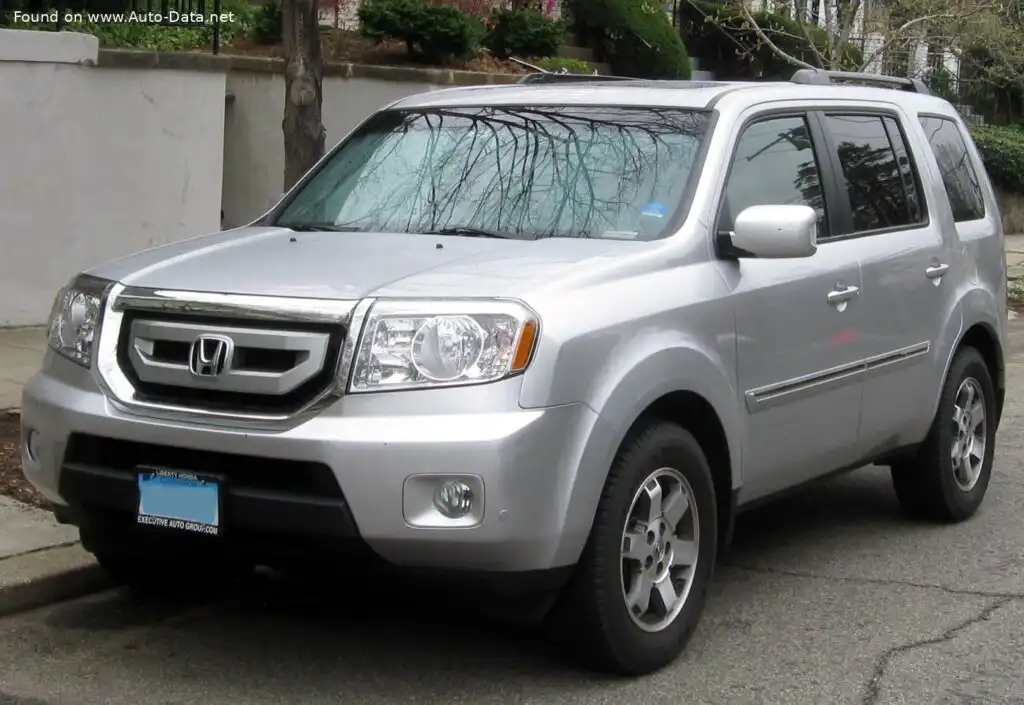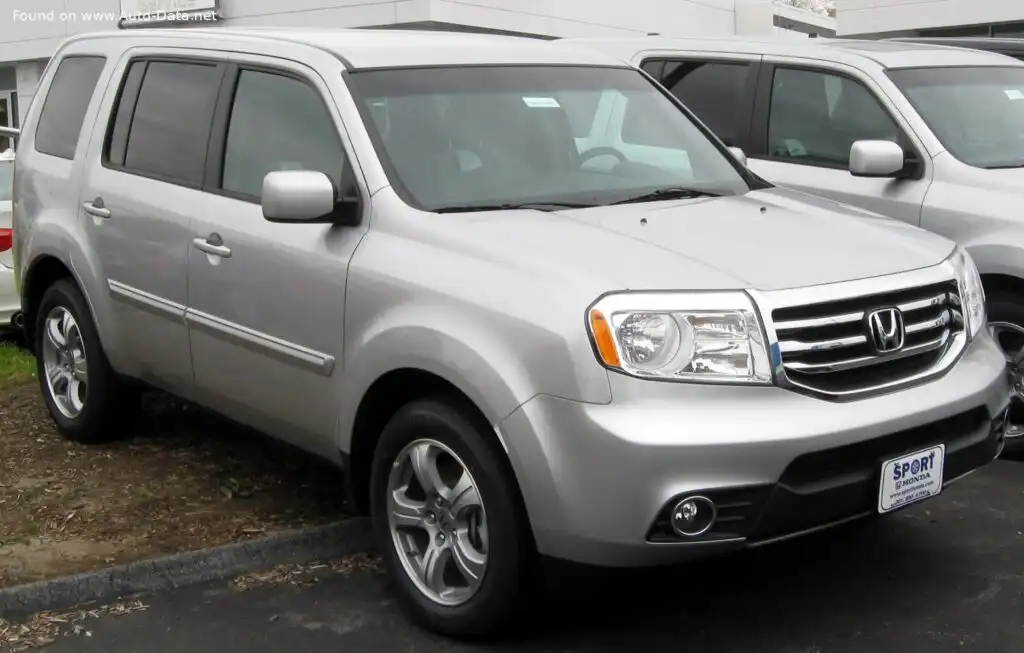
The Honda Pilot II, specifically the facelifted version produced from 2012 to 2015, represented a significant update to Honda’s popular three-row mid-size SUV. This iteration of the Pilot, built on the Honda MDX platform (though subtly differentiated in suspension tuning and features), aimed to refine the original’s practicality with improved styling, enhanced interior appointments, and continued focus on family-oriented functionality. The 3.5-liter V6 engine paired with a five-speed automatic transmission and four-wheel drive configuration was a popular choice, representing a balance between capability and everyday usability within the Pilot lineup. This variant occupied a mid-to-upper trim level, offering a substantial step up in performance from the base four-cylinder models available in some markets, but positioned below the potential for more specialized or luxury-focused trims.
Technical Specifications
| Brand | Honda |
| Model | Pilot |
| Generation | Pilot II (facelift 2012) |
| Type (Engine) | 3.5 V6 (253 Hp) 4WD Automatic |
| Start of production | 2012 |
| End of production | 2015 |
| Powertrain Architecture | Internal Combustion engine |
| Body type | SUV, Crossover |
| Seats | 8 |
| Doors | 5 |
| Fuel consumption (urban) | 13.8 l/100 km (17 US mpg, 20.5 UK mpg, 7.2 km/l) |
| Fuel consumption (extra urban) | 9.8 l/100 km (24 US mpg, 28.8 UK mpg, 10.2 km/l) |
| Fuel consumption (combined) | 11.7 l/100 km (20.1 US mpg, 24.1 UK mpg, 8.5 km/l) |
| Fuel Type | Petrol (Gasoline) |
| Emission standard | ULEV-2 |
| Weight-to-power ratio | 8 kg/Hp, 124.3 Hp/tonne |
| Weight-to-torque ratio | 5.9 kg/Nm, 168.5 Nm/tonne |
| Power | 253 Hp @ 5700 rpm |
| Power per litre | 72.9 Hp/l |
| Torque | 343 Nm @ 4800 rpm (252.98 lb.-ft. @ 4800 rpm) |
| Maximum engine speed | 6300 rpm |
| Engine layout | Front, Transverse |
| Engine Model/Code | J35Z4 |
| Engine displacement | 3471 cm3 (211.81 cu. in.) |
| Number of cylinders | 6 |
| Engine configuration | V-engine |
| Cylinder Bore | 89 mm (3.5 in.) |
| Piston Stroke | 93 mm (3.66 in.) |
| Compression ratio | 10.5:1 |
| Number of valves per cylinder | 4 |
| Fuel injection system | Multi-port manifold injection |
| Engine aspiration | Naturally aspirated engine |
| Valvetrain | SOHC i-VTEC |
| Engine oil capacity | 4.3 l (4.54 US qt | 3.78 UK qt) |
| Coolant | 7.5 l (7.93 US qt | 6.6 UK qt) |
| Kerb Weight | 2036-2090 kg (4488.61 – 4607.66 lbs.) |
| Trunk (boot) space – minimum | 510 l (18.01 cu. ft.) |
| Trunk (boot) space – maximum | 2463 l (86.98 cu. ft.) |
| Permitted trailer load with brakes (12%) | 2038 kg (4493.02 lbs.) |
| Length | 4862 mm (191.42 in.) |
| Width | 1994 mm (78.5 in.) |
| Height | 1839 mm (72.4 in.) |
| Wheelbase | 2774 mm (109.21 in.) |
| Front track | 1720 mm (67.72 in.) |
| Rear (Back) track | 1715 mm (67.52 in.) |
| Minimum turning circle (turning diameter) | 11.37 m (37.3 ft.) |
| Approach angle | 24.4° |
| Departure angle | 22.1° |
| Drivetrain Architecture | The Internal combustion engine (ICE) drives the front wheels permanently, and the rear wheels are driven through an electrically or mechanically operated clutch if necessary. |
| Drive wheel | All wheel drive (4×4) |
| Number of gears and type of gearbox | 5 gears, automatic transmission |
| Front suspension | Independent type McPherson |
| Rear suspension | Independent multi-link suspension |
| Front brakes | Ventilated discs, 330 mm |
| Rear brakes | Disc, 333 mm |
| Assisting systems | ABS (Anti-lock braking system) |
| Steering type | Steering rack and pinion |
| Power steering | Electric Steering |
| Tires size | 235/60 R18 |
| Wheel rims size | 18 |
INTRODUCTION
The 2012-2015 Honda Pilot facelift represented a mid-cycle refresh of the second-generation Pilot (introduced in 2009). Designed to address some criticisms of the original, the update included revised front and rear styling, a more refined interior, and improvements to the vehicle’s technology offerings. The 3.5-liter V6 engine with 253 horsepower, coupled with a five-speed automatic transmission and Honda’s Variable Torque Management (VTM-4) all-wheel-drive system, was a cornerstone of the Pilot’s appeal. This configuration provided a balance of power, fuel efficiency, and all-weather capability, making it a popular choice for families seeking a versatile and reliable SUV. The Pilot competed directly with vehicles like the Toyota Highlander, Ford Explorer, and Nissan Pathfinder.
Powertrain & Engine Architecture
At the heart of this Pilot variant lies the J35Z4 engine, a 3.5-liter, naturally aspirated V6. This engine is a member of Honda’s well-regarded J-series family, known for its durability and smooth operation. The J35Z4 utilizes a single overhead camshaft (SOHC) cylinder head with Honda’s i-VTEC (intelligent Variable Valve Timing and Lift Electronic Control) system. This technology optimizes valve timing and lift based on engine speed and load, improving both performance and fuel efficiency. Fuel delivery is managed by a multi-point fuel injection system. The engine produces 253 horsepower at 5700 rpm and 252.98 lb-ft of torque at 4800 rpm. The five-speed automatic transmission, while not the most modern unit by the time of the facelift, was known for its reliability and smooth shifts. The VTM-4 all-wheel-drive system is primarily front-wheel drive, but can automatically engage the rear wheels via an electromagnetic clutch when slip is detected, providing enhanced traction in adverse conditions.
Driving Characteristics
The 3.5-liter V6 and five-speed automatic combination in the Pilot offered adequate, though not particularly sporty, performance. Acceleration from 0 to 60 mph typically took around 8-9 seconds. The transmission’s gear ratios were tuned for everyday drivability and fuel economy rather than outright speed. Compared to the available four-cylinder engine, the V6 provided significantly more power for merging onto highways and climbing hills. However, it wasn’t as responsive as some competitors equipped with six or eight-speed automatics. The VTM-4 system provided confident handling in slippery conditions, but the Pilot wasn’t designed for serious off-roading. The ride quality was generally comfortable, prioritizing passenger comfort over sharp handling.
Equipment & Trim Levels
The 3.5L V6 4WD Automatic Pilot typically came standard with features such as tri-zone automatic climate control, a rearview camera, Bluetooth connectivity, a USB audio interface, and a premium audio system. Higher trim levels added features like leather upholstery, heated front seats, a power moonroof, and a navigation system. Optional extras included rear-seat entertainment systems and advanced safety features like lane departure warning and forward collision warning. Interior upholstery was typically cloth on lower trims and leather on higher trims. Dashboard configurations were relatively consistent across trims, with a focus on user-friendliness and practicality.
Chassis & Braking
The Pilot utilized an independent McPherson strut front suspension and an independent multi-link rear suspension. This setup provided a comfortable ride and reasonable handling characteristics. Braking duties were handled by ventilated discs at the front and solid discs at the rear. Anti-lock brakes (ABS) were standard. The Pilot’s weight, ranging from 4488.61 to 4607.66 lbs, contributed to its stable feel on the road. Stabilizer bars were fitted to both the front and rear suspensions to reduce body roll during cornering.
Market Reception & Comparison
The 2012-2015 Honda Pilot facelift was generally well-received by critics and consumers. It was praised for its spacious interior, comfortable ride, and strong resale value. The 3.5-liter V6 engine was considered a good balance of power and fuel efficiency, although some reviewers noted that the five-speed automatic transmission felt dated compared to newer transmissions with more gears. Fuel economy was rated at 20.1 US mpg combined, which was competitive for its class. Compared to the four-cylinder Pilot, the V6 offered a significant performance upgrade, but at a higher price point. Compared to rivals like the Toyota Highlander, the Pilot often offered more cargo space but slightly less refined driving dynamics.
Legacy
The Honda Pilot II (2012-2015) with the 3.5-liter V6 and automatic transmission has proven to be a reliable and durable vehicle. The J35 engine family is known for its longevity, and the transmission, while not cutting-edge, has a good track record for dependability. On the used car market, these Pilots are often sought after for their practicality, spaciousness, and reputation for reliability. Common maintenance items include routine oil changes, transmission fluid flushes, and brake service. While not without its flaws, the 2012-2015 Honda Pilot remains a popular choice for families seeking a dependable and versatile SUV.