
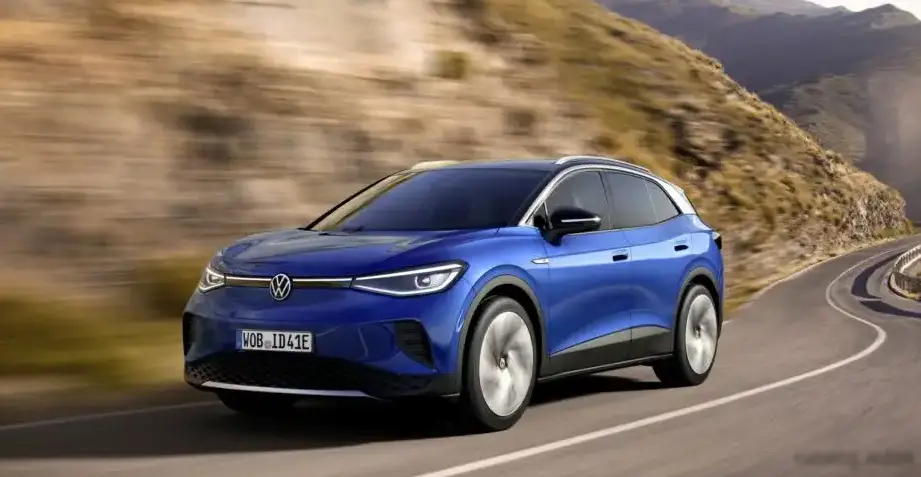
The Volkswagen ID.4 55 kWh, producing 149 horsepower, represents the entry point into Volkswagen’s all-electric crossover SUV lineup, launched in 2021. Positioned as a key model in VW’s push towards electrification, the ID.4 is built on the modular electric drive matrix (MEB) platform, shared with other VW Group EVs like the Audi Q4 e-tron and Skoda Enyaq iV. This variant was specifically designed to offer a more accessible price point within the ID.4 range, prioritizing efficiency and affordability over outright performance. It quickly became a significant player in the burgeoning US EV market, appealing to buyers seeking a practical and environmentally conscious family vehicle.
Technical Specifications
| Brand | Volkswagen |
| Model | ID.4 |
| Generation | ID.4 |
| Type (Engine) | 55 kWh (149 Hp) |
| Start of production | 2021 |
| Powertrain Architecture | BEV (Electric Vehicle) |
| Body type | SUV |
| Seats | 5 |
| Doors | 5 |
| Fuel Type | Electricity |
| Acceleration 0 – 100 km/h | 10.9 sec |
| Acceleration 0 – 62 mph | 10.9 sec |
| Acceleration 0 – 60 mph | 10.4 sec |
| Maximum speed | 160 km/h (99.42 mph) |
| Weight-to-power ratio | 12.7 kg/Hp |
| Weight-to-torque ratio | 8.6 kg/Nm |
| Gross battery capacity | 55 kWh |
| Net (usable) battery capacity | 52 kWh |
| Battery technology | Lithium-ion (Li-Ion) |
| Battery location | Below the floor |
| All-electric range | 340 km (211.27 mi) |
| Average Energy consumption (WLTP) | 16.7 kWh/100 km (26.88 kWh/100 mi) |
| Average Energy consumption | 15.5 kWh/100 km (24.94 kWh/100 mi) |
| Electric motor power | 149 Hp |
| Electric motor Torque | 220 Nm (162.26 lb.-ft.) |
| Electric motor model/code | EBJA |
| Electric motor location | Rear axle, Transverse |
| Electric motor type | Synchronous |
| System power | 149 Hp |
| System torque | 220 Nm (162.26 lb.-ft.) |
| Kerb Weight | 1891 kg (4168.94 lbs.) |
| Max. weight | 2480 kg (5467.46 lbs.) |
| Max load | 589 kg (1298.52 lbs.) |
| Trunk (boot) space – minimum | 543 l (19.18 cu. ft.) |
| Trunk (boot) space – maximum | 1575 l (55.62 cu. ft.) |
| Max. roof load | 75 kg (165.35 lbs.) |
| Permitted trailer load with brakes (8%) | 1200 kg (2645.55 lbs.) |
| Permitted trailer load with brakes (12%) | 1000 kg (2204.62 lbs.) |
| Permitted trailer load without brakes | 750 kg (1653.47 lbs.) |
| Permitted towbar download | 75 kg (165.35 lbs.) |
| Length | 4584 mm (180.47 in.) |
| Width | 1852 mm (72.91 in.) |
| Width including mirrors | 2108 mm (82.99 in.) |
| Height | 1640 mm (64.57 in.) |
| Wheelbase | 2771 mm (109.09 in.) |
| Front track | 1587-1597 mm (62.48 – 62.87 in.) |
| Rear (Back) track | 1562-1572 mm (61.5 – 61.89 in.) |
| Ride height (ground clearance) | 163 mm (6.42 in.) |
| Drag coefficient (Cd) | 0.28 |
| Minimum turning circle | 10.2 m (33.46 ft.) |
| Front suspension | Independent type McPherson, Transverse stabilizer |
| Rear suspension | Independent multi-link suspension, Transverse stabilizer |
| Front brakes | Ventilated discs |
| Rear brakes | Drum |
| Drive wheel | Rear wheel drive |
| Number of gears | 1 |
| Gearbox type | Automatic transmission |
Powertrain & Engine Architecture
The ID.4 55 kWh utilizes a permanently magnetized synchronous motor (PSM) located on the rear axle. This motor, designated EBJA, delivers 149 horsepower and 220 Nm (162 lb-ft) of torque. The motor is powered by a 55 kWh lithium-ion battery pack situated under the vehicle floor, contributing to a low center of gravity and improved handling. The battery pack is comprised of 216 cells arranged in 12 modules. The ID.4 employs a single-speed automatic transmission, simplifying the drivetrain and maximizing efficiency. Unlike traditional internal combustion engine vehicles, the ID.4 does not have a multi-gear transmission as electric motors deliver peak torque across a wide RPM range. The car features a sophisticated thermal management system for both the battery and the motor, ensuring optimal operating temperatures and extending battery life. The onboard charger supports AC charging up to 7.2 kW and DC fast charging up to 50 kW.
Driving Characteristics
The ID.4 55 kWh offers a comfortable and refined driving experience, prioritizing smoothness and efficiency over sporty performance. Acceleration from 0 to 60 mph takes approximately 10.4 seconds, which is adequate for everyday driving but noticeably slower than higher-powered ID.4 variants. The single-speed transmission provides seamless acceleration, and the instant torque delivery characteristic of electric motors offers brisk response in urban environments. The rear-wheel-drive configuration contributes to balanced handling, although it may require some adjustment for drivers accustomed to front-wheel-drive vehicles. The regenerative braking system allows for one-pedal driving in certain modes, enhancing efficiency and reducing brake wear. Compared to the ID.4 1st Edition or the Pro S models, the 55 kWh version feels less energetic, particularly when fully loaded or climbing hills.
Equipment & Trim Levels
The ID.4 55 kWh typically came standard with a generous array of features, including a 10-inch touchscreen infotainment system with Apple CarPlay and Android Auto compatibility, a digital instrument cluster, LED headlights, and a suite of advanced driver-assistance systems (ADAS) such as forward collision warning, automatic emergency braking, and lane keeping assist. Interior upholstery was typically cloth, with optional upgrades to leatherette available. Common optional extras included a panoramic sunroof, adaptive cruise control, and premium audio systems. Trim levels varied slightly depending on the model year and region, but generally offered increasing levels of luxury and technology.
Chassis & Braking
The ID.4 55 kWh features an independent suspension system with McPherson struts at the front and a multi-link setup at the rear. Stabilizer bars are included on both axles to reduce body roll during cornering. The braking system consists of ventilated disc brakes at the front and drum brakes at the rear. The use of drum brakes on the rear axle was a cost-saving measure for the base model, and is a key difference compared to higher-trim ID.4s which feature disc brakes all around. The electric power steering system provides precise and responsive steering feel.
Market Reception & Comparison
The ID.4 55 kWh was generally well-received by critics, who praised its spacious interior, comfortable ride, and competitive pricing. However, some reviewers noted the relatively slow acceleration and the use of drum brakes on the rear axle as drawbacks. Compared to other EVs in its class, such as the Hyundai Kona Electric and the Nissan LEAF, the ID.4 offered a more spacious interior and a more refined driving experience. In terms of fuel economy, the ID.4 55 kWh achieves an EPA-estimated range of 211 miles, which is competitive with other EVs in its segment. Reliability reports have been generally positive, with few major issues reported.
Legacy
The Volkswagen ID.4 55 kWh played a crucial role in establishing Volkswagen as a major player in the electric vehicle market. Its affordability and practicality made it an attractive option for a wide range of buyers, helping to accelerate the adoption of electric vehicles. While newer versions of the ID.4 with larger battery packs and more powerful motors have since been introduced, the 55 kWh variant remains a popular choice on the used car market, offering a compelling combination of value, efficiency, and practicality. The powertrain has proven to be relatively reliable, with the primary concerns revolving around battery degradation over time, a common issue with all electric vehicles.
