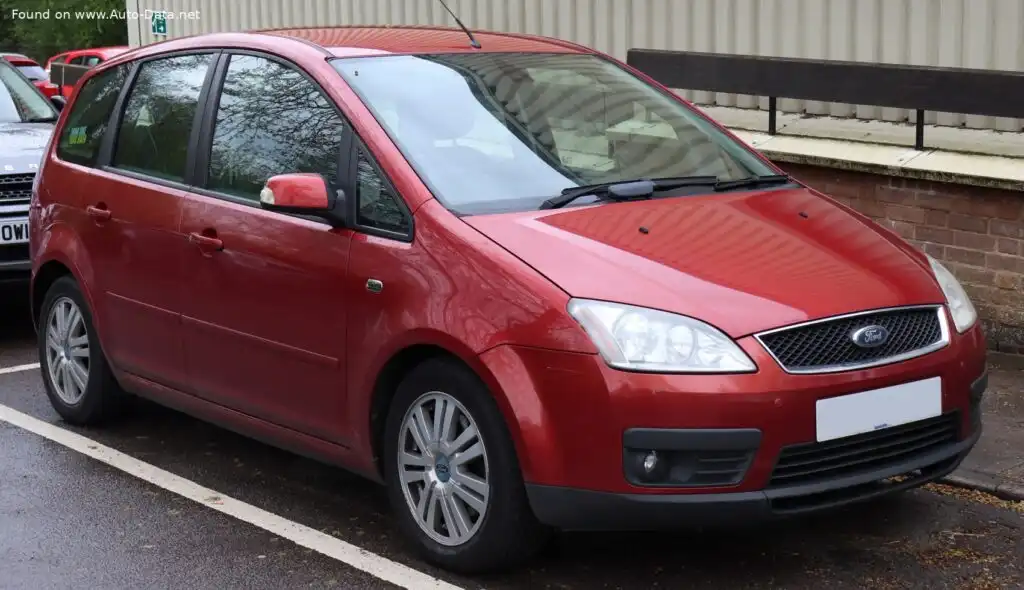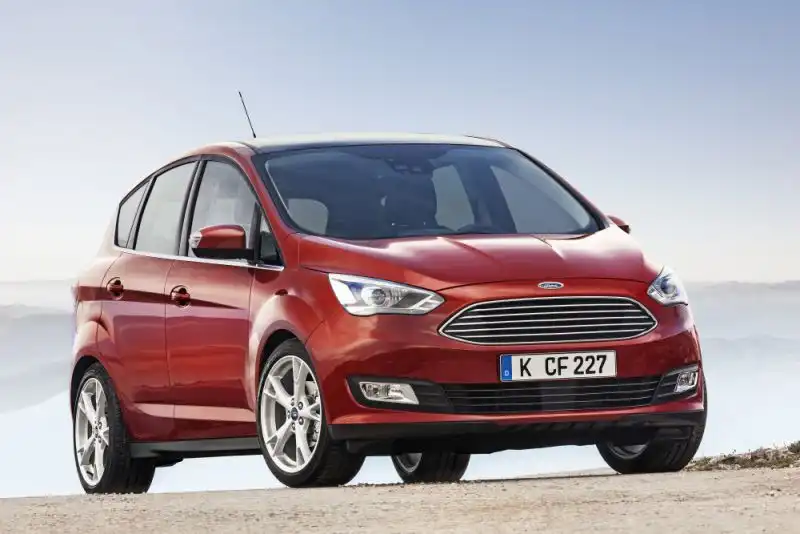
The Ford C-MAX II, particularly the 1.5 TDCi 95 horsepower variant with Start/Stop technology (S&S), represented a key offering in Ford’s European compact multi-purpose vehicle (MPV) lineup from 2015 to 2019. This version, introduced with the facelift of the second-generation C-MAX, aimed to provide an economical and practical option for families and individuals seeking a versatile vehicle. It occupied the entry-level to mid-range position within the C-MAX range, slotting below the more powerful 1.5 EcoBoost petrol and 2.0 TDCi diesel models. The C-MAX II itself was built upon the Ford C-platform, shared with models like the Ford Focus, and was designed to compete with vehicles like the Volkswagen Touran, Opel/Vauxhall Meriva, and Citroën C4 Picasso.
Technical Specifications
| Brand | Ford |
| Model | C-MAX |
| Generation | C-MAX II (facelift 2015) |
| Type (Engine) | 1.5 TDCi (95 Hp) S&S |
| Start of production | 2015 |
| End of production | 2019 |
| Powertrain Architecture | Internal Combustion engine |
| Body type | MPV |
| Seats | 5 |
| Doors | 5 |
| Fuel consumption (urban) | 4.7 l/100 km (50 US mpg, 60.1 UK mpg) |
| Fuel consumption (extra urban) | 3.7 l/100 km (63.6 US mpg, 76.3 UK mpg) |
| Fuel consumption (combined) | 4.1 l/100 km (57.4 US mpg, 68.9 UK mpg) |
| CO2 emissions | 105 g/km |
| Fuel Type | Diesel |
| Acceleration 0 – 100 km/h | 13.4 sec |
| Acceleration 0 – 62 mph | 13.4 sec |
| Acceleration 0 – 60 mph | 12.7 sec |
| Maximum speed | 170 km/h (105.63 mph) |
| Emission standard | Euro 6 |
| Weight-to-power ratio | 14 kg/Hp |
| Weight-to-torque ratio | 4.9 kg/Nm |
| Power | 95 Hp @ 3600 rpm |
| Torque | 270 Nm @ 1500-2000 rpm (199.14 lb.-ft.) |
| Engine layout | Front, Transverse |
| Engine Model/Code | XXDA, XXDC, XXDD |
| Engine displacement | 1499 cm3 (91.47 cu. in.) |
| Number of cylinders | 4 |
| Engine configuration | Inline |
| Cylinder Bore | 73.5 mm (2.89 in.) |
| Piston Stroke | 88.3 mm (3.48 in.) |
| Compression ratio | 16:1 |
| Number of valves per cylinder | 2 |
| Fuel injection system | Diesel Commonrail |
| Engine aspiration | Turbocharger, Intercooler |
| Valvetrain | SOHC |
| Engine oil capacity | 3.85 l (4.07 US qt, 3.39 UK qt) |
| Coolant capacity | 7.3 l (7.71 US qt, 6.42 UK qt) |
| Kerb Weight | 1328 kg (2927.74 lbs.) |
| Max. weight | 1915 kg (4221.85 lbs.) |
| Max load | 587 kg (1294.11 lbs.) |
| Trunk (boot) space – minimum | 432 l (15.26 cu. ft.) |
| Trunk (boot) space – maximum | 1684 l (59.47 cu. ft.) |
| Fuel tank capacity | 55 l (14.53 US gal, 12.1 UK gal) |
| Max. roof load | 75 kg (165.35 lbs.) |
| Permitted trailer load (braked) | 1200 kg (2645.55 lbs.) |
| Permitted trailer load (unbraked) | 700 kg (1543.24 lbs.) |
| Length | 4379 mm (172.4 in.) |
| Width | 1828 mm (71.97 in.) |
| Width with mirrors folded | 1858 mm (73.15 in.) |
| Width including mirrors | 2067 mm (81.38 in.) |
| Height | 1610 mm (63.39 in.) |
| Wheelbase | 2648 mm (104.25 in.) |
| Front track | 1543-1557 mm (60.75 – 61.3 in.) |
| Rear track | 1554-1569 mm (61.18 – 61.77 in.) |
| Minimum turning circle | 11.1 m (36.42 ft.) |
| Drivetrain | Front wheel drive |
| Number of gears | 6 |
| Gearbox type | Manual |
Powertrain & Engine Architecture
The heart of this C-MAX variant is the 1.5-liter TDCi diesel engine, specifically utilizing engine codes XXDA, XXDC, or XXDD depending on the specific market and production date. This engine is a four-cylinder, inline configuration, featuring a turbocharger with intercooling to enhance power and efficiency. The engine employs a common-rail direct fuel injection system, delivering fuel directly into the combustion chamber at high pressure for optimized combustion. The valvetrain utilizes a single overhead camshaft (SOHC) design with two valves per cylinder. The Start/Stop system, denoted by the “S&S” designation, automatically shuts off the engine when the vehicle is stationary (e.g., at traffic lights) to reduce fuel consumption and emissions. The engine produces 95 horsepower at 3600 rpm and 270 Nm (199 lb-ft) of torque between 1500 and 2000 rpm. This torque band provides reasonable pulling power for everyday driving. The engine is transversely mounted at the front of the vehicle.
Driving Characteristics
The 1.5 TDCi 95 hp engine, paired with a six-speed manual transmission, delivers adequate performance for typical urban and highway driving. Acceleration is not brisk, with a 0-60 mph time of around 12.7 seconds, but the engine’s strong low-end torque makes it feel more responsive in everyday situations. The six-speed gearbox helps to keep engine speeds reasonable at highway speeds, contributing to improved fuel economy. Compared to the higher-output 1.5 EcoBoost petrol or 2.0 TDCi diesel variants, this engine prioritizes fuel efficiency over outright performance. The manual transmission provides more driver engagement than an automatic, but also requires more effort in stop-and-go traffic. The gear ratios are tuned for economy, meaning the engine doesn’t rev as freely as some performance-oriented engines.
Equipment & Trim Levels
The 1.5 TDCi 95 hp S&S typically came equipped with a reasonable level of standard features. These generally included air conditioning, power windows, power door mirrors, a basic audio system with USB connectivity, and alloy wheels. Safety features such as ABS, Electronic Stability Control (ESC), and multiple airbags were standard. Higher trim levels, such as Titanium, added features like automatic climate control, rear parking sensors, a larger touchscreen infotainment system, and upgraded interior trim. Optional extras included navigation, a panoramic sunroof, and leather upholstery.
Chassis & Braking
The C-MAX II utilizes an independent front suspension with McPherson struts and a coil spring and anti-roll bar. The rear suspension is an independent multi-link setup, also with a stabilizer bar. This suspension configuration provides a comfortable ride and decent handling characteristics. Braking is handled by ventilated discs on the front wheels (278x25mm) and solid discs on the rear wheels (280x11mm). ABS (Anti-lock Braking System) is standard. The chassis is designed to balance comfort and handling, prioritizing ride quality over sporty driving dynamics.
Market Reception & Comparison
The 1.5 TDCi 95 hp S&S variant of the Ford C-MAX II was generally well-received by critics as a practical and economical choice. It was praised for its fuel efficiency and low running costs, making it an attractive option for budget-conscious buyers. However, some reviewers noted that the engine lacked the punch of the more powerful alternatives. Compared to the 1.5 EcoBoost, the diesel offered superior fuel economy but less overall performance. Against the 2.0 TDCi, it provided a more affordable entry point but with a noticeable reduction in power and refinement. Its fuel economy figures of around 57.4 US mpg combined were competitive within its class.
Legacy
The 1.5 TDCi engine, while generally reliable, has been known to exhibit issues with the diesel particulate filter (DPF) if not driven on longer journeys regularly. The Start/Stop system can also experience occasional failures. However, with proper maintenance, this powertrain is capable of providing many years of reliable service. On the used car market, the 1.5 TDCi 95 hp C-MAX II represents a good value proposition for buyers seeking an economical and practical MPV. Its relatively low purchase price and good fuel economy make it an appealing option, but potential buyers should be aware of the potential DPF issues and ensure the vehicle has been well-maintained.