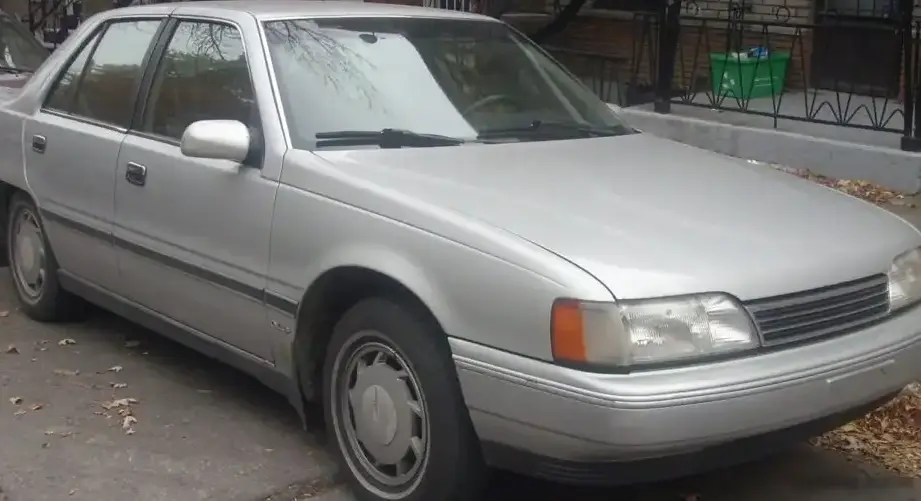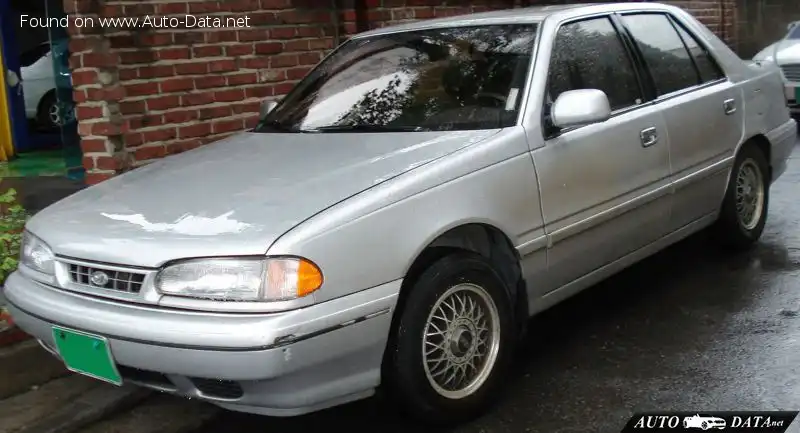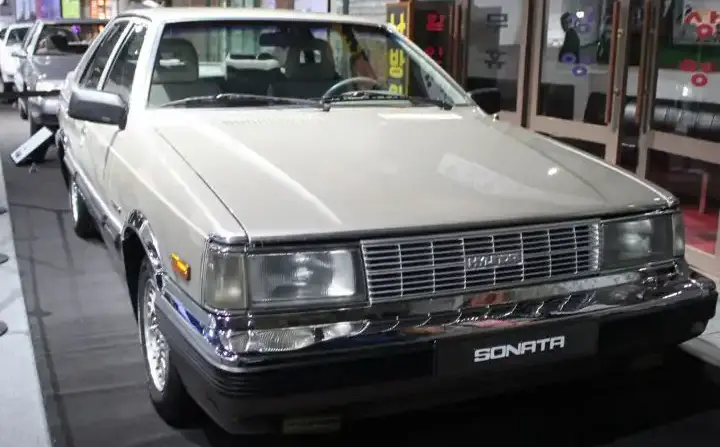
The Hyundai Sonata I (Y), produced between 1985 and 1987, represented a pivotal moment for the South Korean automaker. It was Hyundai’s first significant foray into the mid-size sedan market, designed to compete with established Japanese and American offerings. The 2.0i variant, powered by the G4BT engine producing 110 horsepower, served as a key model within the initial Sonata lineup, aiming to provide a balance of affordability and practicality for Korean consumers and, increasingly, export markets. This generation Sonata, built on a rear-wheel drive platform, was a crucial step in Hyundai’s ambition to become a global automotive brand.
Technical Specifications
| Brand | Hyundai |
| Model | Sonata |
| Generation | Sonata I (Y) |
| Type (Engine) | 2.0i (110 Hp) |
| Start of production | 1985 |
| End of production | 1987 |
| Powertrain Architecture | Internal Combustion engine |
| Body type | Sedan |
| Seats | 5 |
| Doors | 4 |
| Fuel Type | Petrol (Gasoline) |
| Power | 110 Hp @ 5500 rpm |
| Power per litre | 55.1 Hp/l |
| Torque | 164 Nm @ 3500 rpm / 120.96 lb.-ft. @ 3500 rpm |
| Engine Model/Code | G4BT |
| Engine displacement | 1997 cm3 / 121.86 cu. in. |
| Number of cylinders | 4 |
| Engine configuration | Inline |
| Number of valves per cylinder | 2 |
| Fuel injection system | Multi-port manifold injection |
| Engine aspiration | Naturally aspirated engine |
| Valvetrain | SOHC |
| Fuel tank capacity | 60 l / 15.85 US gal | 13.2 UK gal |
| Length | 4578 mm / 180.24 in. |
| Width | 1755 mm / 69.09 in. |
| Height | 1381 mm / 54.37 in. |
| Wheelbase | 2579 mm / 101.54 in. |
| Front track | 1445 mm / 56.89 in. |
| Rear (Back) track | 1425 mm / 56.1 in. |
| Drivetrain Architecture | The Internal combustion engine (ICE) drives the rear wheels of the vehicle. |
| Drive wheel | Rear wheel drive |
| Number of gears and type of gearbox | 5 gears, manual transmission |
| Tires size | 185/70 R14 |
| Wheel rims size | 14 |
Powertrain & Engine Architecture
The heart of the Sonata 2.0i was the G4BT engine, a 1.997-liter inline-four cylinder gasoline engine. This engine utilized a single overhead camshaft (SOHC) valvetrain with two valves per cylinder. The G4BT featured multi-port fuel injection, a relatively modern technology for the mid-1980s, which improved fuel efficiency and engine responsiveness compared to carbureted engines. While not a particularly high-performance engine, the G4BT was designed for reliability and ease of maintenance. The engine’s 110 horsepower output at 5500 rpm and 164 Nm (120.96 lb-ft) of torque at 3500 rpm provided adequate, if not exhilarating, performance for typical daily driving. The engine was paired exclusively with a 5-speed manual transmission in most markets, contributing to its fuel efficiency.
Driving Characteristics
The Sonata 2.0i, with its 110 hp engine and manual transmission, offered a driving experience that prioritized practicality over sportiness. Acceleration was modest, but sufficient for merging onto highways and navigating city streets. The 5-speed manual transmission allowed drivers to keep the engine in its optimal power band, maximizing performance. The rear-wheel drive configuration provided a balanced feel, although handling was not as sharp as some contemporary front-wheel drive competitors. The gear ratios were tuned for fuel economy and everyday usability, rather than outright speed. Compared to potential future upgrades or larger engine options, the 2.0i offered a more economical and accessible entry point into the Sonata range.
Equipment & Trim Levels
The Sonata 2.0i was typically offered with a relatively basic level of standard equipment, reflecting its position as the entry-level model. Standard features generally included cloth upholstery, a basic AM/FM radio, and manual windows and locks. Air conditioning was often an optional extra. Interior trim was functional and durable, prioritizing practicality over luxury. The dashboard layout was straightforward and easy to use. Optional extras could include upgraded audio systems, power windows, and a sunroof, depending on the market and availability. The trim level was designed to appeal to budget-conscious buyers seeking a reliable and affordable family sedan.
Chassis & Braking
The Sonata I (Y) utilized a traditional body-on-frame construction, common for sedans of that era. The suspension consisted of independent front suspension with MacPherson struts and a live rear axle with leaf springs. This setup provided a comfortable ride, but handling was not particularly precise. Braking was accomplished with disc brakes on the front wheels and drum brakes on the rear. The braking system was adequate for normal driving conditions, but lacked the stopping power of more modern systems. Stabilizer bars were typically absent or minimal, further contributing to the car’s focus on comfort rather than sporty handling.
Market Reception & Comparison
The Hyundai Sonata I (Y) 2.0i was generally well-received as a value-oriented option in the mid-size sedan segment. Critics praised its affordability and reliability, but noted its lack of refinement compared to established Japanese competitors like the Toyota Camry and Honda Accord. The 2.0i engine was considered adequate for most drivers, but some reviewers desired more power. Fuel economy was a strong point, particularly compared to larger American sedans. Compared to other trims within the Sonata lineup (if any were available in specific markets), the 2.0i represented the most accessible entry point, prioritizing affordability and fuel efficiency over performance and luxury features.
Legacy
The Hyundai Sonata I (Y) 2.0i played a significant role in establishing Hyundai as a viable automotive manufacturer. While not a groundbreaking vehicle in terms of technology or performance, it demonstrated Hyundai’s commitment to building reliable and affordable cars. The G4BT engine proved to be a durable and relatively trouble-free powerplant, contributing to the Sonata’s reputation for reliability. Today, the Sonata I (Y) is a relatively rare sight on the roads, but it remains a collectible vehicle for enthusiasts interested in the early history of the Hyundai brand. The 2.0i variant, with its simple and robust powertrain, is often considered a particularly desirable example of this first-generation Sonata, offering a glimpse into Hyundai’s early ambitions and its journey towards becoming a global automotive force.