
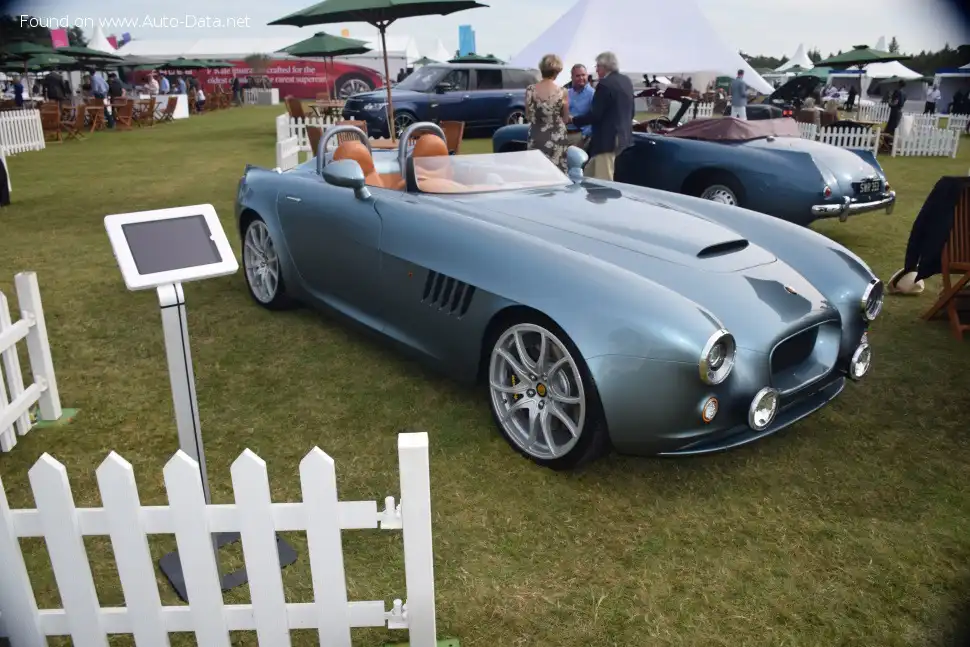
The Bristol Bullet 4.8 V8 Automatic, launched in 2017, represents a modern interpretation of the classic British sports car. Produced by Bristol Manufacturing Company, a firm known for its low-volume, hand-built automobiles, the Bullet aimed to revive the brand with a focus on bespoke craftsmanship and a powerful, naturally aspirated V8 engine. It’s positioned as a luxury roadster, intended to offer a unique driving experience distinct from more mainstream sports cars. The Bullet marked a significant departure for Bristol, being the first all-new model in over a decade, and represented a substantial investment in the company’s future. Production numbers were intentionally limited, adding to its exclusivity.
Technical Specifications
| Brand | Bristol |
| Model | Bullet |
| Generation | Bullet |
| Type (Engine) | 4.8 V8 (374 Hp) Automatic |
| Start of production | 2017 |
| Powertrain Architecture | Internal Combustion engine |
| Body type | Roadster |
| Seats | 2 |
| Doors | 2 |
| Fuel Type | Petrol (Gasoline) |
| Acceleration 0 – 100 km/h | 3.8 sec |
| Acceleration 0 – 62 mph | 3.8 sec |
| Acceleration 0 – 60 mph | 3.6 sec |
| Maximum speed | 249 km/h (154.72 mph) |
| Weight-to-power ratio | 2.9 kg/Hp, 340 Hp/tonne |
| Weight-to-torque ratio | 2.2 kg/Nm, 456.4 Nm/tonne |
| Power | 374 Hp @ 6300 rpm |
| Power per litre | 77.9 Hp/l |
| Torque | 502 Nm @ 3400 rpm (370.26 lb.-ft. @ 3400 rpm) |
| Engine layout | Front, Longitudinal |
| Engine displacement | 4799 cm3 (292.85 cu. in.) |
| Number of cylinders | 8 |
| Engine configuration | V-engine |
| Cylinder Bore | 93 mm (3.66 in.) |
| Piston Stroke | 88.3 mm (3.48 in.) |
| Compression ratio | 10.5:1 |
| Number of valves per cylinder | 4 |
| Fuel injection system | Multi-port manifold injection |
| Engine aspiration | Naturally aspirated engine |
| Valvetrain | DOHC |
| Engine oil capacity | 8 l (8.45 US qt | 7.04 UK qt) |
| Kerb Weight | 1100 kg (2425.08 lbs.) |
| Max. weight | 1250 kg (2755.78 lbs.) |
| Max load | 150 kg (330.69 lbs.) |
| Fuel tank capacity | 55 l (14.53 US gal | 12.1 UK gal) |
| Length | 4200 mm (165.35 in.) |
| Width | 1860 mm (73.23 in.) |
| Height | 1200 mm (47.24 in.) |
| Wheelbase | 2553 mm (100.51 in.) |
| Drivetrain Architecture | The Internal combustion engine (ICE) drives the rear wheels of the vehicle. |
| Drive wheel | Rear wheel drive |
| Number of gears and type of gearbox | 6 gears, automatic transmission |
| Front brakes | Ventilated discs |
| Rear brakes | Ventilated discs |
| Assisting systems | ABS (Anti-lock braking system) |
| Steering type | Steering rack and pinion |
| Power steering | Electric Steering |
| Tires size | 225/35 R19; 245/35 R19 |
| Wheel rims size | 8.5J x 19 |
Powertrain & Engine Architecture
The heart of the Bristol Bullet is a 4.8-liter naturally aspirated V8 engine, producing 374 horsepower at 6300 rpm and 502 Nm (370.26 lb-ft) of torque at 3400 rpm. This engine, while not a completely new design, is based on a Chrysler-sourced V8 that Bristol has extensively modified and refined over the years. The engine features a dual overhead camshaft (DOHC) valvetrain and multi-port fuel injection. The engine is longitudinally mounted at the front of the vehicle, driving the rear wheels. The six-speed automatic transmission is sourced from ZF, known for its smooth shifting and reliability. Bristol specifically tuned the transmission to complement the V8’s power delivery, prioritizing both performance and comfort.
Driving Characteristics
The Bristol Bullet 4.8 V8 Automatic delivers a classic grand touring experience. The naturally aspirated V8 provides a linear power delivery, with strong torque available throughout the rev range. The ZF automatic transmission shifts smoothly and responsively, although it isn’t geared for outright acceleration like some dual-clutch transmissions. The 0-60 mph time of around 3.6 seconds is respectable, but the focus is more on effortless cruising and driver engagement. Compared to a hypothetical manual version (which was not offered), the automatic provides greater ease of use, particularly in urban environments. The weight distribution, combined with the rear-wheel drive layout, contributes to balanced handling, though the car’s weight (around 2425 lbs) is noticeable in tighter corners.
Equipment & Trim Levels
The Bristol Bullet is characterized by its high level of customization. While not offering traditional “trim levels,” customers could specify a wide range of interior and exterior options. Standard features included leather upholstery, a premium audio system, climate control, and power-adjustable seats. Optional extras included bespoke paint colors, unique interior trim materials (such as wood veneer or carbon fiber), and upgraded audio systems. The interior design is minimalist and driver-focused, with a clear instrument cluster and a comfortable driving position. The emphasis is on handcrafted quality and attention to detail.
Chassis & Braking
The Bullet utilizes a steel spaceframe chassis, providing a rigid and lightweight foundation. The suspension consists of double wishbones at the front and a multi-link setup at the rear. Ventilated disc brakes are fitted to all four wheels, providing ample stopping power. An anti-lock braking system (ABS) is standard. The steering is rack and pinion with electric power assistance. The car rides on 19-inch alloy wheels, with tire sizes of 225/35 R19 at the front and 245/35 R19 at the rear. The suspension is tuned for a balance between comfort and handling, offering a relatively compliant ride without sacrificing cornering stability.
Market Reception & Comparison
The Bristol Bullet received generally positive reviews from automotive journalists, who praised its distinctive styling, luxurious interior, and engaging driving experience. However, its high price tag (around $300,000) and limited production run restricted its appeal to a niche market. Compared to other luxury roadsters, such as the Porsche 911 or Aston Martin Vantage, the Bullet offered a more unique and bespoke experience, but lacked the brand recognition and established performance credentials of its rivals. Fuel economy was not a primary concern for buyers in this segment, but the Bullet’s naturally aspirated V8 is less fuel-efficient than some of its turbocharged competitors. Reliability was also a question mark, given Bristol’s limited production volume and history of financial difficulties.
Legacy
The Bristol Bullet represents a bold attempt to revive a historic British marque. While production numbers were low, the car has garnered a dedicated following among enthusiasts who appreciate its unique character and handcrafted quality. The long-term reliability of the Bullet remains to be seen, but the robust Chrysler-based V8 engine and ZF transmission are generally considered to be durable components. On the used car market, the Bullet commands a premium price, reflecting its exclusivity and the Bristol brand’s heritage. It stands as a testament to a commitment to traditional automotive craftsmanship in an era of increasingly standardized production methods.
