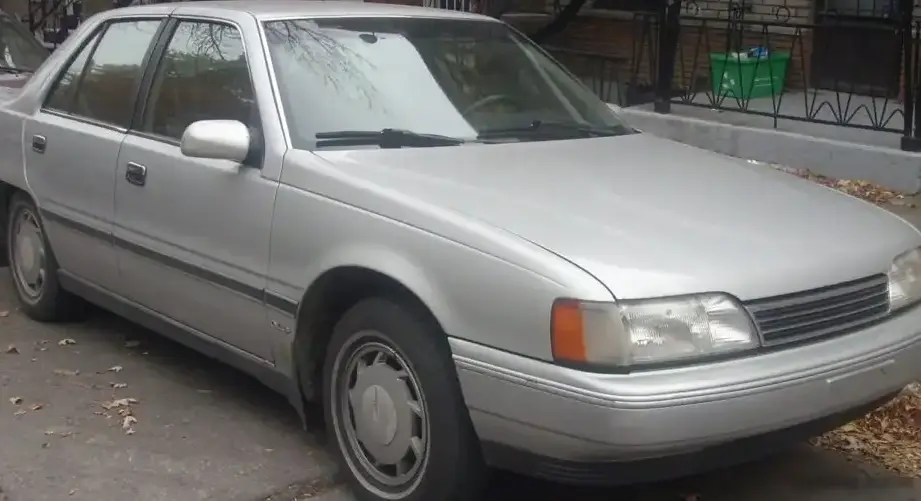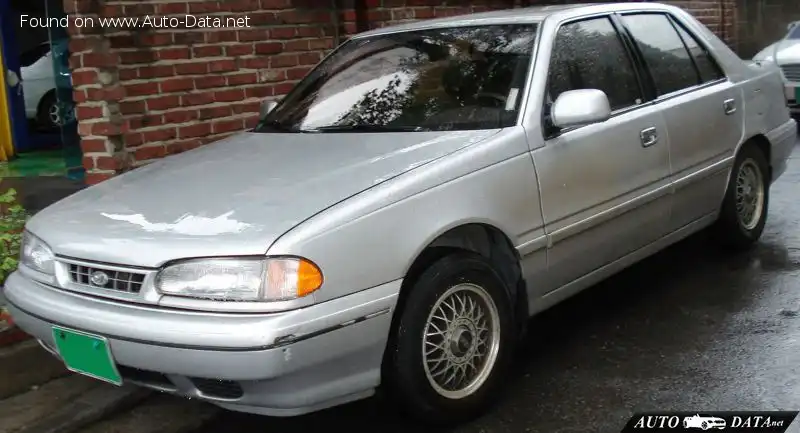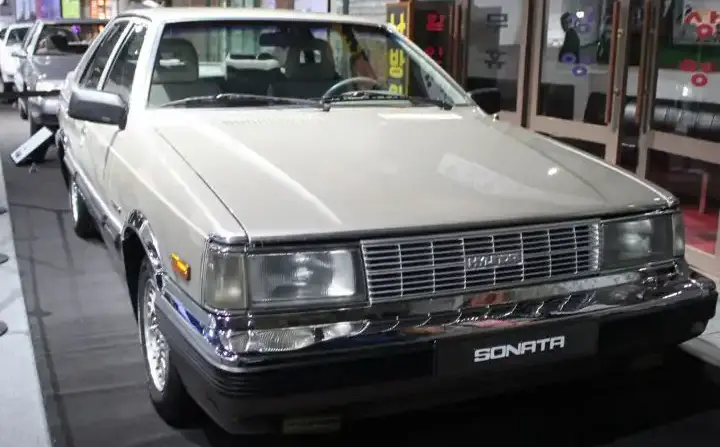
The Hyundai Sonata I (Y) 2.0i Automatic, produced between 1985 and 1987, represents a pivotal moment for the South Korean automaker. This variant, powered by the G4BT engine and paired with a four-speed automatic transmission, was a key component of Hyundai’s initial foray into the mid-size sedan market, primarily aimed at establishing a presence beyond its domestic market. The Sonata I, built upon the Y platform, was designed to offer a more modern and comfortable alternative to existing offerings, particularly in emerging markets where Hyundai sought to gain a foothold. This 2.0i Automatic trim occupied a middle ground within the Sonata I lineup, offering a balance between affordability and convenience, appealing to buyers seeking a comfortable and easy-to-drive family sedan.
Technical Specifications
| Brand | Hyundai |
| Model | Sonata |
| Generation | Sonata I (Y) |
| Type (Engine) | 2.0i (110 Hp) Automatic |
| Start of production | 1985 |
| End of production | 1987 |
| Powertrain Architecture | Internal Combustion engine |
| Body type | Sedan |
| Seats | 5 |
| Doors | 4 |
| Fuel Type | Petrol (Gasoline) |
| Power | 110 Hp @ 5500 rpm |
| Power per litre | 55.1 Hp/l |
| Torque | 164 Nm @ 3500 rpm / 120.96 lb.-ft. @ 3500 rpm |
| Engine Model/Code | G4BT |
| Engine displacement | 1997 cm3 / 121.86 cu. in. |
| Number of cylinders | 4 |
| Engine configuration | Inline |
| Number of valves per cylinder | 2 |
| Fuel injection system | Multi-port manifold injection |
| Engine aspiration | Naturally aspirated engine |
| Valvetrain | SOHC |
| Fuel tank capacity | 60 l / 15.85 US gal | 13.2 UK gal |
| Length | 4578 mm / 180.24 in. |
| Width | 1755 mm / 69.09 in. |
| Height | 1381 mm / 54.37 in. |
| Wheelbase | 2579 mm / 101.54 in. |
| Front track | 1445 mm / 56.89 in. |
| Rear (Back) track | 1425 mm / 56.1 in. |
| Drivetrain Architecture | The Internal combustion engine (ICE) drives the rear wheels of the vehicle. |
| Drive wheel | Rear wheel drive |
| Number of gears and type of gearbox | 4 gears, automatic transmission |
| Tires size | 185/70 R14 |
| Wheel rims size | 14 |
Powertrain & Engine Architecture
The heart of the Sonata I 2.0i Automatic is the G4BT engine, a 1.997-liter inline-four cylinder gasoline engine. This engine utilized a single overhead camshaft (SOHC) valvetrain with two valves per cylinder. The G4BT employed multi-port fuel injection, a relatively modern feature for the mid-1980s, contributing to improved fuel efficiency and smoother operation compared to carbureted engines. While not a particularly high-performance engine, the G4BT was designed for reliability and ease of maintenance. The four-speed automatic transmission, while providing convenience, was a relatively simple design, prioritizing durability over outright performance. It featured a traditional torque converter and planetary gearsets. The transmission’s gear ratios were tuned for comfortable cruising and adequate acceleration, but it wasn’t designed for aggressive driving.
Driving Characteristics
The Sonata I 2.0i Automatic offered a comfortable, albeit uninspiring, driving experience. With 110 horsepower and 164 Nm (120.96 lb-ft) of torque, acceleration was adequate for everyday driving, but it wasn’t a particularly quick car. The automatic transmission contributed to a smooth, if somewhat sluggish, shift quality. Compared to the manual transmission versions of the Sonata I, the automatic suffered a noticeable performance deficit. The manual transmission allowed for better control and more responsive acceleration. The rear-wheel-drive configuration provided a balanced feel, but the suspension was tuned for comfort rather than sporty handling. The steering was light and easy, making it suitable for urban driving, but lacked feedback at higher speeds. The automatic transmission’s gear ratios were spaced to prioritize fuel economy and smooth cruising, resulting in a less engaging driving experience than the manual counterpart.
Equipment & Trim Levels
The 2.0i Automatic trim of the Sonata I typically included features considered standard for a mid-size sedan of the era. These included cloth upholstery, a basic AM/FM radio, and manual windows and door locks. Air conditioning was often an optional extra. The dashboard layout was functional and straightforward, with clearly labeled controls. Higher trim levels, if available in certain markets, might have included features such as power windows, upgraded audio systems, and more luxurious interior materials. However, the 2.0i Automatic was generally positioned as a value-oriented trim, focusing on providing essential features at an affordable price point.
Chassis & Braking
The Sonata I utilized a traditional body-on-frame construction, which was common for vehicles of that era. The suspension consisted of independent front suspension with MacPherson struts and a live rear axle with leaf springs. This setup prioritized ride comfort over handling precision. The braking system featured disc brakes at the front and drum brakes at the rear. While adequate for normal driving conditions, the braking performance wasn’t particularly strong by modern standards. Stabilizer bars were typically included to reduce body roll during cornering, but the overall handling characteristics were geared towards comfort and stability rather than sporty performance.
Market Reception & Comparison
The Hyundai Sonata I was generally well-received as a reasonably priced and reliable family sedan. Critics noted its comfortable ride and spacious interior. However, the 2.0i Automatic variant was sometimes criticized for its lack of performance compared to competitors and even to the manual transmission versions of the Sonata. Fuel economy was considered average for the time. Compared to other sedans in its class, such as the Toyota Corolla or Honda Accord, the Sonata I offered a more affordable price point, but lacked the same level of refinement and performance. The automatic transmission, while convenient, contributed to lower fuel economy figures compared to the manual transmission.
Legacy
The Hyundai Sonata I, and specifically the 2.0i Automatic variant, played a crucial role in establishing Hyundai as a viable automaker in international markets. While not a groundbreaking vehicle in terms of technology or performance, it demonstrated Hyundai’s commitment to building reliable and affordable cars. The G4BT engine proved to be a durable and relatively trouble-free unit, contributing to the Sonata I’s reputation for reliability. Today, the Sonata I is considered a classic car, and well-maintained examples are sought after by collectors and enthusiasts. The 2.0i Automatic, while not the most desirable trim, remains a representative example of Hyundai’s early efforts to compete in the global automotive market. Parts availability can be a challenge, but the relatively simple mechanical design makes it a manageable vehicle for enthusiasts willing to invest the time and effort in restoration and maintenance.