
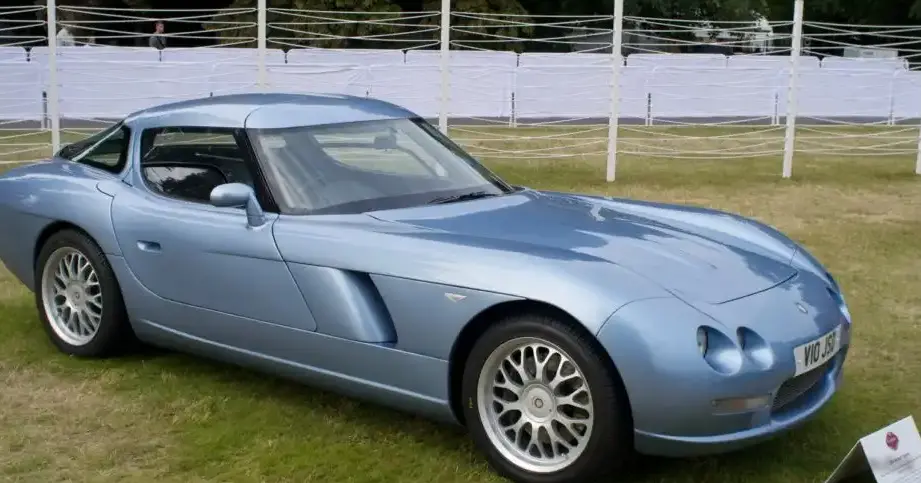
The Bristol Fighter 8.0i V10, produced from 2004 to 2011, represents a unique and audacious chapter in British automotive history. A hand-built, ultra-exclusive grand tourer, the Fighter was Bristol’s attempt to create a modern supercar, blending traditional craftsmanship with a massive, naturally aspirated V10 engine. It was positioned as a direct competitor to vehicles like the Porsche 911 Turbo and Ferrari 550 Maranello, though its bespoke nature and limited production run set it distinctly apart. The Fighter was built on a modified version of the Bristol 405 platform, extensively reworked to accommodate the larger engine and revised suspension geometry. Only a handful of these cars were ever produced, making it a highly sought-after collector’s item today.
Technical Specifications
| Brand | Bristol |
| Model | Fighter |
| Generation | Fighter |
| Type (Engine) | 8.0 i V10 (532 Hp) |
| Start of production | 2004 |
| End of production | 2011 |
| Powertrain Architecture | Internal Combustion engine |
| Body type | Coupe |
| Seats | 2 |
| Doors | 2 |
| Fuel consumption (urban) | 25 l/100 km (9.4 US mpg, 11.3 UK mpg, 4 km/l) |
| Fuel consumption (extra urban) | 12 l/100 km (19.6 US mpg, 23.5 UK mpg, 8.3 km/l) |
| Fuel Type | Petrol (Gasoline) |
| Acceleration 0 – 100 km/h | 4 sec |
| Acceleration 0 – 62 mph | 4 sec |
| Acceleration 0 – 60 mph | 3.8 sec |
| Maximum speed | 340 km/h (211.27 mph) |
| Weight-to-power ratio | 2.8 kg/Hp, 360.7 Hp/tonne |
| Weight-to-torque ratio | 2.1 kg/Nm, 482.7 Nm/tonne |
| Power | 532 Hp @ 5600 rpm |
| Power per litre | 66.5 Hp/l |
| Torque | 712 Nm @ 4200 rpm (525.14 lb.-ft. @ 4200 rpm) |
| Engine layout | Front, Longitudinal |
| Engine displacement | 7996 cm3 (487.95 cu. in.) |
| Number of cylinders | 10 |
| Engine configuration | V-engine |
| Cylinder Bore | 101.6 mm (4 in.) |
| Piston Stroke | 98.6 mm (3.88 in.) |
| Compression ratio | 9.25:1 |
| Number of valves per cylinder | 4 |
| Fuel injection system | Multi-port manifold injection |
| Engine aspiration | Naturally aspirated engine |
| Engine oil capacity | 8 l (8.45 US qt | 7.04 UK qt) |
| Kerb Weight | 1475 kg (3251.82 lbs.) |
| Fuel tank capacity | 105 l (27.74 US gal | 23.1 UK gal) |
| Length | 4420 mm (174.02 in.) |
| Width | 1795 mm (70.67 in.) |
| Height | 1345 mm (52.95 in.) |
| Wheelbase | 2750 mm (108.27 in.) |
| Front track | 1470 mm (57.87 in.) |
| Rear track | 1470 mm (57.87 in.) |
| Drivetrain Architecture | Rear wheel drive |
| Drive wheel | Rear wheel drive |
| Number of gears and type of gearbox | 6 gears, manual transmission |
| Front suspension | Double wishbone |
| Rear suspension | Double wishbone |
| Front brakes | Ventilated discs |
| Rear brakes | Ventilated discs |
| Assisting systems | ABS (Anti-lock braking system) |
| Steering type | Steering rack and pinion |
| Tires size | 285/40 R18 |
| Wheel rims size | 10J x18 |
Powertrain & Engine Architecture
The heart of the Bristol Fighter is its colossal 8.0-liter V10 engine. This engine, derived from a Chrysler design but heavily modified by Bristol, is naturally aspirated and produces 532 horsepower at 5,600 rpm and a substantial 525 lb-ft of torque at 4,200 rpm. The engine utilizes multi-port fuel injection and a relatively conservative 9.25:1 compression ratio. The V10’s architecture is a 60-degree design, contributing to its smooth operation and relatively compact size for its displacement. Paired with the engine is a six-speed manual transmission, the only gearbox option available. This transmission was chosen to provide a direct connection between driver and engine, maximizing the driving experience. The engine is longitudinally mounted, driving the rear wheels.
Driving Characteristics
The Bristol Fighter’s driving experience is defined by its immense power and torque. Acceleration is brutal, with 0-60 mph achievable in around 3.8 seconds and a top speed exceeding 211 mph. However, the Fighter isn’t simply about straight-line speed. The double wishbone suspension, combined with the car’s relatively low weight (for its size), provides surprisingly agile handling. The manual transmission requires a skilled driver to fully exploit the engine’s potential, but offers a rewarding and engaging experience. Compared to other supercars of the era, the Fighter felt more like a refined grand tourer than a razor-sharp track weapon. The gear ratios are tuned for strong acceleration in the mid-range, making it a potent performer on public roads.
Equipment & Trim Levels
Given its limited production and bespoke nature, the Bristol Fighter wasn’t offered with traditional trim levels. Each car was largely customized to the buyer’s specifications. However, standard features included a luxurious leather interior, handcrafted wood trim, and a high-end audio system. Customers could choose from a wide range of leather colors and wood veneers. Optional extras included bespoke paint finishes, upgraded audio systems, and personalized interior detailing. The interior layout was driver-focused, with a classic analog instrument cluster and a comfortable, supportive driving position. Air conditioning and power windows were standard, but many other features considered commonplace in modern supercars were omitted to maintain the car’s focus on driving purity.
Chassis & Braking
The Fighter’s chassis is a modified version of the Bristol 405 platform, constructed from a steel space frame. This space frame was extensively reinforced to handle the increased power and torque of the V10 engine. The suspension utilizes double wishbones at both the front and rear, with adjustable dampers and anti-roll bars. Braking is provided by ventilated discs at all four corners, assisted by an anti-lock braking system (ABS). The braking system is powerful and effective, but requires significant effort due to the car’s weight and performance capabilities. The Fighter’s tires are high-performance 285/40 R18 radials, providing ample grip in both dry and wet conditions.
Market Reception & Comparison
The Bristol Fighter received mixed reviews upon its release. Critics praised its stunning design, luxurious interior, and exhilarating performance. However, the car’s high price tag (over $300,000) and relatively crude refinement compared to established supercar brands limited its appeal. Fuel economy was predictably poor, with figures of around 9.4 mpg in the city and 19.6 mpg on the highway. Reliability was also a concern, given the car’s hand-built nature and complex engine. Compared to the Porsche 911 Turbo, the Fighter offered more raw power and a more unique driving experience, but lacked the Porsche’s everyday usability and build quality. Against the Ferrari 550 Maranello, the Fighter provided a more modern and technologically advanced package, but lacked the Ferrari’s brand cachet and established reputation.
Legacy
The Bristol Fighter remains a fascinating and rare example of British automotive engineering. Its limited production run and unique character have made it a highly collectible car. The V10 engine, while thirsty and complex, is considered a masterpiece of engineering. The Fighter’s long-term reliability is still being assessed, but early reports suggest that well-maintained examples are proving to be surprisingly durable. Today, the Bristol Fighter represents a bold and uncompromising vision of a British supercar, a testament to a time when craftsmanship and individuality were valued above all else. The car continues to turn heads and inspire admiration among automotive enthusiasts worldwide.
