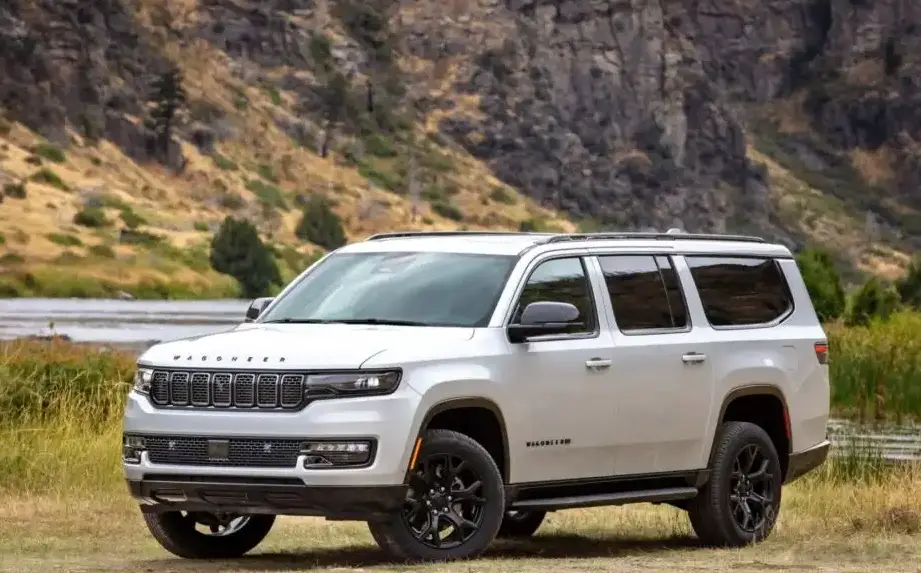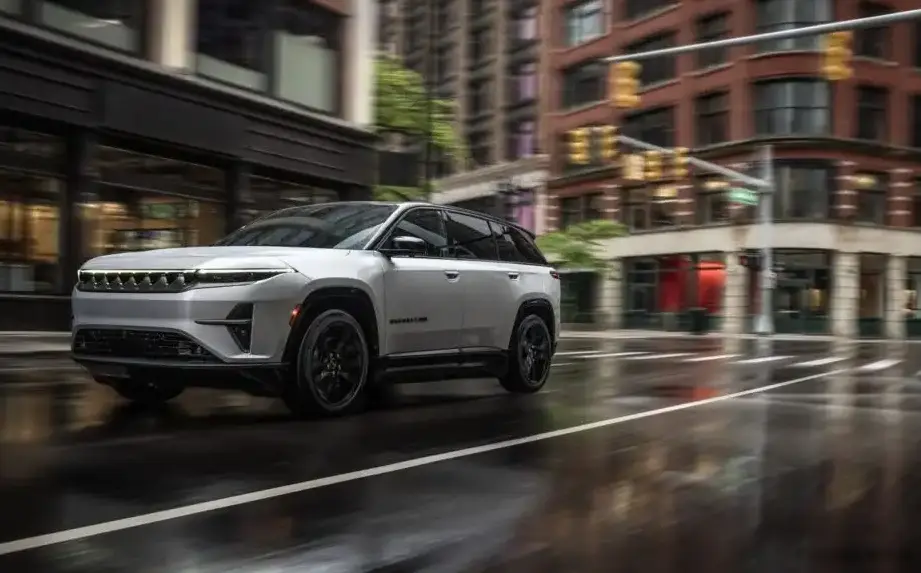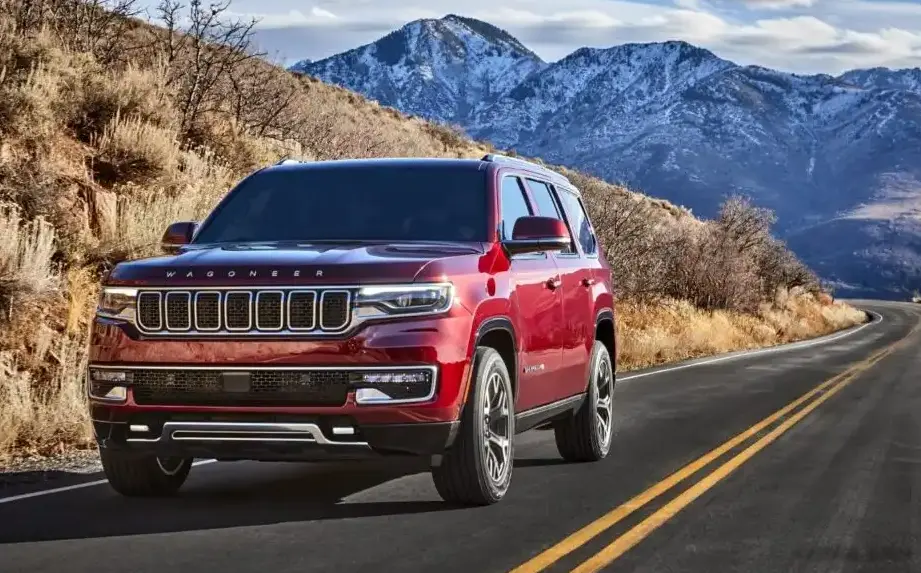
The Jeep Wagoneer (WS) 3.0, introduced in September 2022, represents a significant return to form for the Wagoneer nameplate, a historically important vehicle in the American automotive landscape. This iteration of the Wagoneer, built on a body-on-frame platform, aims to deliver a blend of premium comfort, substantial towing capacity, and modern technology within the full-size SUV segment. The 3.0 variant, powered by the Hurricane engine, occupies a key position in the Wagoneer lineup, offering a balance between performance and efficiency for buyers seeking a capable and luxurious family vehicle. It’s positioned as the standard engine offering, slotting below the higher-output Hurricane engine option.
Technical Specifications
| Brand | Jeep |
| Model | Wagoneer |
| Generation | Wagoneer (WS) |
| Type (Engine) | 3.0 (420 Hp) 4WD TorqueFlite |
| Start of production | September, 2022 |
| Powertrain Architecture | Internal Combustion engine |
| Body type | SUV |
| Seats | 7-8 |
| Doors | 5 |
| Fuel consumption (economy) – urban (EPA) | 14.7 l/100 km (16 US mpg, 19.2 UK mpg, 6.8 km/l) |
| Fuel consumption (economy) – extra urban (EPA) | 10.2 l/100 km (23.1 US mpg, 27.7 UK mpg, 9.8 km/l) |
| Fuel consumption (economy) – combined (EPA) | 12.4 l/100 km (19 US mpg, 22.8 UK mpg, 8.1 km/l) |
| Fuel Type | Petrol (Gasoline) |
| Weight-to-power ratio | 6.5 kg/Hp, 154.8 Hp/tonne |
| Weight-to-torque ratio | 4.3 kg/Nm, 234.1 Nm/tonne |
| Power | 420 Hp @ 5200 rpm |
| Power per litre | 140.3 Hp/l |
| Torque | 635 Nm @ 3500 rpm (468.35 lb.-ft. @ 3500 rpm) |
| Maximum engine speed | 5800 rpm |
| Engine layout | Front, Longitudinal |
| Engine Model/Code | Hurricane |
| Engine displacement | 2993 cm3 (182.64 cu. in.) |
| Number of cylinders | 6 |
| Engine configuration | Inline |
| Cylinder Bore | 84 mm (3.31 in.) |
| Piston Stroke | 90 mm (3.54 in.) |
| Compression ratio | 10.4:1 |
| Number of valves per cylinder | 4 |
| Fuel injection system | Direct injection |
| Engine aspiration | Twin-Turbo, Intercooler |
| Valvetrain | DOHC |
| Engine oil capacity | 7.1 l (7.5 US qt | 6.25 UK qt) |
| Coolant | 15.7 l (16.59 US qt | 13.81 UK qt) |
| Kerb Weight | 2713-2808 kg (5981.14 – 6190.58 lbs.) |
| Max. weight | 3357-3470 kg (7400.92 – 7650.04 lbs.) |
| Max load | 644-662 kg (1419.78 – 1459.46 lbs.) |
| Trunk (boot) space – minimum | 776 l (27.4 cu. ft.) |
| Trunk (boot) space – maximum | 3305 l (116.71 cu. ft.) |
| Fuel tank capacity | 100.3 l (26.5 US gal | 22.06 UK gal) |
| Permitted trailer load with brakes (12%) | 4536 kg (10000.17 lbs.) |
| Length | 5453 mm (214.69 in.) |
| Width | 2124 mm (83.62 in.) |
| Width including mirrors | 2388 mm (94.02 in.) |
| Height | 1964 mm (77.32 in.) |
| Wheelbase | 3124 mm (122.99 in.) |
| Front track | 1738 mm (68.43 in.) |
| Rear (Back) track | 1734 mm (68.27 in.) |
| Ride height (ground clearance) | 211-254 mm (8.31 – 10 in.) |
| Drag coefficient (Cd) | 0.352 |
| Minimum turning circle (turning diameter) | 12.3 m (40.35 ft.) |
| Approach angle | 21.5-25° |
| Departure angle | 21.1-24° |
| Ramp-over (brakeover) angle | 18.5-22° |
| Drivetrain Architecture | The Internal combustion engine (ICE) drives permanently the four wheels of the vehicle. |
| Drive wheel | All wheel drive (4×4) |
| Number of gears and type of gearbox | 8 gears, automatic transmission TorqueFlite |
| Front suspension | Coil spring, Double wishbone, Transverse stabilizer, Air Suspension – Optional |
| Rear suspension | Independent multi-link spring suspension with stabilizer, Air Suspension – Optional |
| Front brakes | Ventilated discs, 378×30 mm |
| Rear brakes | Disc, 375×22 mm |
| Assisting systems | ABS (Anti-lock braking system) |
| Steering type | Steering rack and pinion |
| Power steering | Electric Steering |
| Tires size | 275/65 R18; 275/55 R20; 285/45 R22 |
| Wheel rims size | 8J x 18; 9J x 20; 9J x 22 |
INTRODUCTION
The 2022 Jeep Wagoneer (WS) 3.0 4WD, equipped with the TorqueFlite automatic transmission, marks a revival of the iconic Wagoneer name. The WS designation refers to the first generation of the modern Wagoneer, built from 2022 onwards. This full-size SUV is designed to compete with offerings from Chevrolet, GMC, and Ford, offering three rows of seating and a focus on luxury and capability. The 3.0-liter Hurricane engine is the base engine option, providing a substantial 420 horsepower and 468 lb-ft of torque. It’s built on a robust body-on-frame construction, emphasizing durability and towing capacity. The Wagoneer aims to recapture the spirit of the original, offering a premium experience with modern amenities.
Powertrain & Engine Architecture
At the heart of the Wagoneer 3.0 lies the 3.0-liter Hurricane inline-six engine. This engine, part of Stellantis’s new Hurricane engine family, utilizes a direct injection fuel system and twin-turbocharging to deliver impressive power and torque. The engine code is internally designated as part of the Hurricane family, but specific sub-codes aren’t widely publicized. The engine features a double overhead camshaft (DOHC) valvetrain with four valves per cylinder, optimizing airflow for enhanced performance. The TorqueFlite 8-speed automatic transmission is standard, chosen for its smooth shifting and ability to handle the engine’s substantial output. This transmission is known for its durability and responsiveness, providing adequate gear ratios for both on-road cruising and off-road crawling. The engine’s twin-turbo setup provides minimal turbo lag, delivering a broad torque curve that’s readily available across the rev range.
Driving Characteristics
The Wagoneer 3.0 Automatic offers a comfortable and capable driving experience. While not as overtly sporty as some of its competitors, the 420 horsepower and 468 lb-ft of torque provide ample power for accelerating and merging onto highways. The 8-speed TorqueFlite transmission shifts smoothly and efficiently, contributing to a relaxed driving experience. Compared to a potential higher-output Hurricane engine variant, the 3.0 feels less aggressively tuned, prioritizing refinement and fuel economy. The gear ratios are optimized for towing and hauling, providing strong low-end torque. The all-wheel-drive system provides confident traction in various weather conditions, and the optional air suspension further enhances ride comfort and allows for adjustable ride height for off-road situations. The substantial weight of the Wagoneer is noticeable, but the engine’s torque output mitigates this, providing a feeling of effortless power.
Equipment & Trim Levels
The Wagoneer 3.0 typically comes standard with a generous array of features. Interior upholstery generally consists of premium cloth or leather, depending on the specific package. Standard features include a large touchscreen infotainment system with Apple CarPlay and Android Auto compatibility, a premium sound system, and a suite of advanced driver-assistance systems (ADAS) such as adaptive cruise control, lane departure warning, and automatic emergency braking. Optional extras include a panoramic sunroof, upgraded leather upholstery, rear-seat entertainment systems, and a more sophisticated air suspension system. Trim levels build upon the base model, adding features like power-adjustable seats, heated and ventilated seats, and more luxurious interior trim.
Chassis & Braking
The Wagoneer’s chassis is a traditional body-on-frame construction, providing a robust foundation for its size and weight. The front suspension utilizes a coil spring, double wishbone setup, while the rear suspension employs an independent multi-link design. An optional air suspension system is available, offering adjustable ride height and improved ride comfort. Braking duties are handled by ventilated discs at all four corners, providing ample stopping power. The front brakes measure 378×30 mm, while the rear brakes are 375×22 mm. An anti-lock braking system (ABS) is standard, enhancing safety and control during emergency braking situations.
Market Reception & Comparison
The Jeep Wagoneer 3.0 has been generally well-received by critics, praised for its spacious interior, comfortable ride, and strong towing capacity. However, its fuel economy has been a point of criticism, as expected for a vehicle of its size and weight. Compared to other trims in the Wagoneer lineup, the 3.0 offers a more accessible price point while still delivering a premium experience. Against competitors like the Chevrolet Tahoe and GMC Yukon, the Wagoneer 3.0 offers a unique blend of American heritage and modern technology. Some reviewers have noted that the interior materials, while generally high-quality, don’t quite match the level of luxury found in some European competitors.
Legacy
The long-term reliability of the Hurricane engine and TorqueFlite transmission remains to be fully established, as the Wagoneer is a relatively new model. However, both components have a strong reputation for durability based on their use in other Stellantis vehicles. In the used car market, the Wagoneer 3.0 is expected to hold its value reasonably well, given its desirable features and strong brand recognition. The combination of a powerful engine, comfortable interior, and capable all-wheel-drive system should make it a popular choice for families and those seeking a versatile full-size SUV. The revival of the Wagoneer nameplate itself contributes to its potential collectibility in the future.