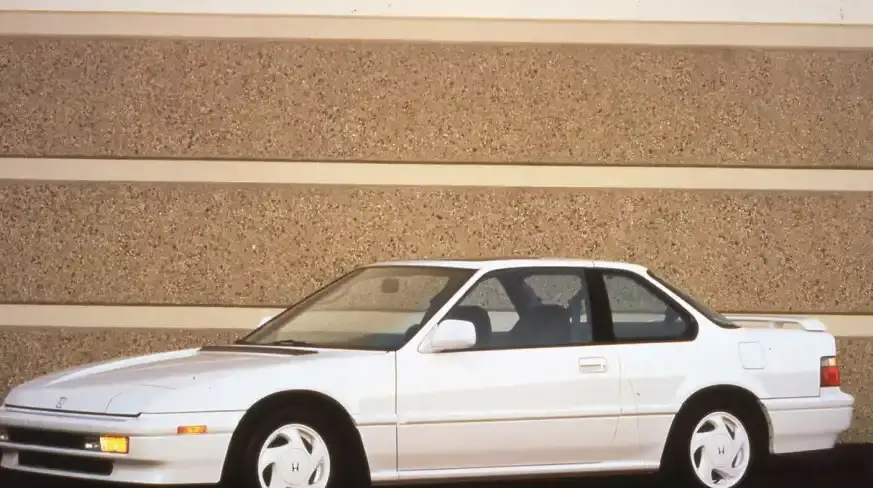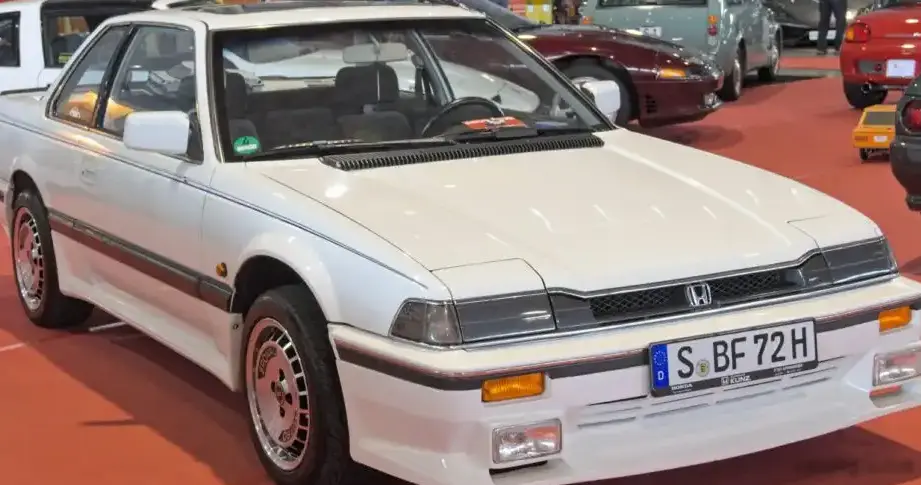
The Honda Prelude II (AB) 1.8 EX with Hondamatic transmission, produced between April 1983 and September 1987, represented a key entry point into the second generation of Honda’s sporty coupe. Positioned as a more accessible variant within the AB platform – which also included more powerful fuel-injected models – the 1.8 EX offered a blend of style, comfort, and reasonable performance. It served as a popular choice for buyers seeking a sophisticated and reliable personal vehicle, particularly in markets where manual transmissions weren’t as widely preferred. This model played a significant role in establishing the Prelude’s reputation as a technologically advanced and driver-focused car.
Technical Specifications
| Brand | Honda |
| Model | Prelude |
| Generation | Prelude II (AB) |
| Type (Engine) | 1.8 EX (99 Hp) Hondamatic |
| Start of production | April, 1983 |
| End of production | September, 1987 |
| Powertrain Architecture | Internal Combustion engine |
| Body type | Coupe |
| Seats | 4 |
| Doors | 2 |
| Fuel consumption (urban) | 11 l/100 km (21.4 US mpg, 25.7 UK mpg, 9.1 km/l) |
| Fuel consumption (extra urban) | 6.2 l/100 km (37.9 US mpg, 45.6 UK mpg, 16.1 km/l) |
| Fuel Type | Petrol (Gasoline) |
| Acceleration 0 – 100 km/h | 10.9 sec |
| Acceleration 0 – 62 mph | 10.9 sec |
| Acceleration 0 – 60 mph | 10.4 sec |
| Maximum speed | 175 km/h (108.74 mph) |
| Weight-to-power ratio | 10.2 kg/Hp, 98.5 Hp/tonne |
| Weight-to-torque ratio | 6.7 kg/Nm, 150.2 Nm/tonne |
| Power | 99 Hp @ 5500 rpm |
| Power per litre | 54.1 Hp/l |
| Torque | 151 Nm @ 3500 rpm (111.37 lb.-ft. @ 3500 rpm) |
| Engine layout | Front, Transverse |
| Engine Model/Code | ET |
| Engine displacement | 1829 cm3 (111.61 cu. in.) |
| Number of cylinders | 4 |
| Engine configuration | Inline |
| Cylinder Bore | 80 mm (3.15 in.) |
| Piston Stroke | 91 mm (3.58 in.) |
| Compression ratio | 9.1:1 |
| Number of valves per cylinder | 3 |
| Fuel injection system | Carburettor |
| Engine aspiration | Naturally aspirated engine |
| Valvetrain | SOHC |
| Engine oil capacity | 3.5 l (3.7 US qt | 3.08 UK qt) |
| Coolant | 6 l (6.34 US qt | 5.28 UK qt) |
| Kerb Weight | 1005 kg (2215.65 lbs.) |
| Max. weight | 1490 kg (3284.89 lbs.) |
| Max load | 485 kg (1069.24 lbs.) |
| Trunk (boot) space – minimum | 315 l (11.12 cu. ft.) |
| Fuel tank capacity | 60 l (15.85 US gal | 13.2 UK gal) |
| Max. roof load | 40 kg (88.18 lbs.) |
| Permitted trailer load with brakes (12%) | 1000 kg (2204.62 lbs.) |
| Permitted trailer load without brakes | 460 kg (1014.13 lbs.) |
| Permitted towbar download | 50 kg (110.23 lbs.) |
| Length | 4295 mm (169.09 in.) |
| Width | 1690 mm (66.54 in.) |
| Height | 1295 mm (50.98 in.) |
| Wheelbase | 2450 mm (96.46 in.) |
| Front track | 1470 mm (57.87 in.) |
| Rear (Back) track | 1470 mm (57.87 in.) |
| Front overhang | 890 mm (35.04 in.) |
| Rear overhang | 955 mm (37.6 in.) |
| Drag coefficient (Cd) | 0.36 |
| Minimum turning circle (turning diameter) | 11.2 m (36.75 ft.) |
| Drivetrain Architecture | The Internal combustion engine (ICE) drives the front wheels of the vehicle. |
| Drive wheel | Front wheel drive |
| Number of gears and type of gearbox | 4 gears, automatic transmission Hondamatic |
| Front suspension | Double wishbone |
| Rear suspension | McPherson |
| Front brakes | Ventilated discs, 228.6 mm |
| Rear brakes | Disc |
| Steering type | Steering rack and pinion |
| Power steering | Hydraulic Steering |
| Tires size | 185/70 R13 |
| Wheel rims size | 13 |
Powertrain & Engine Architecture
The 1.8 EX utilized Honda’s ET engine code, a 1829cc inline-four cylinder engine. Unlike the later fuel-injected versions of the Prelude, this variant employed a carburetor for fuel delivery, a cost-saving measure that positioned it as the entry-level model. The engine featured a single overhead camshaft (SOHC) valvetrain with three valves per cylinder – two intake and one exhaust – a design that contributed to improved breathing and efficiency for its time. The Hondamatic transmission was a two-speed continuously variable transmission (CVT), a relatively advanced feature for the early 1980s. It offered smooth, stepless acceleration, but lacked the direct feel and efficiency of a traditional automatic or manual gearbox. The Hondamatic was known for its rubber-band like feel during acceleration.
Driving Characteristics
The 99 horsepower and 151 Nm (111 lb-ft) of torque produced by the 1.8 EX Hondamatic resulted in a 0-60 mph time of around 10.4 seconds and a top speed of 108.74 mph. While not particularly quick, the car offered adequate performance for everyday driving. The Hondamatic transmission prioritized smoothness over outright acceleration, and the engine felt somewhat strained when pushed hard. Compared to the five-speed manual version, the automatic suffered from noticeable power loss due to the transmission’s inefficiencies. The gear ratios were optimized for fuel economy and comfortable cruising rather than sporty driving. The car felt most at home during relaxed highway driving, where the CVT’s smoothness was most appreciated.
Equipment & Trim Levels
The 1.8 EX trim level offered a reasonable level of standard equipment. Interior features typically included cloth upholstery, a basic AM/FM radio, and manual windows and locks. Power steering was standard, a welcome addition for ease of maneuverability. Optional extras included a sunroof, upgraded audio systems, and alloy wheels. The dashboard layout was functional and straightforward, with clearly marked gauges and controls. The interior materials were durable but not luxurious, reflecting the car’s price point.
Chassis & Braking
The Prelude II featured a front-engine, front-wheel-drive layout. The suspension consisted of double wishbones at the front and a McPherson strut setup at the rear, providing a comfortable ride and decent handling. Brakes were ventilated discs at the front and discs at the rear, offering adequate stopping power for the car’s weight and performance. The 1.8 EX typically rode on 185/70 R13 tires, which provided a good balance of grip and ride comfort. The car’s relatively light weight (1005 kg or 2215.65 lbs) helped to mitigate the performance limitations of the engine and transmission.
Market Reception & Comparison
The 1.8 EX Hondamatic was generally well-received as a practical and reliable coupe. Critics praised its comfortable ride, smooth transmission, and fuel efficiency. However, the lack of outright performance and the somewhat unusual feel of the Hondamatic transmission were common criticisms. Compared to the more powerful and sporty fuel-injected models, the 1.8 EX was seen as a more sensible and economical choice. It appealed to buyers who prioritized comfort and convenience over performance. Fuel economy was a strong point, achieving around 21.4 mpg in the city and 37.9 mpg on the highway.
Legacy
The Honda Prelude II 1.8 EX Hondamatic, while not the most sought-after variant, remains a relatively reliable and affordable classic car. The ET engine is known for its durability, and the Hondamatic transmission, while not without its quirks, can provide years of service with proper maintenance. Today, these cars are often found in good condition, having been well-maintained by enthusiasts. Parts availability is generally good, although some specific components may be difficult to find. The 1.8 EX represents a significant step in the evolution of the Prelude, showcasing Honda’s commitment to innovation and quality in the compact coupe segment.