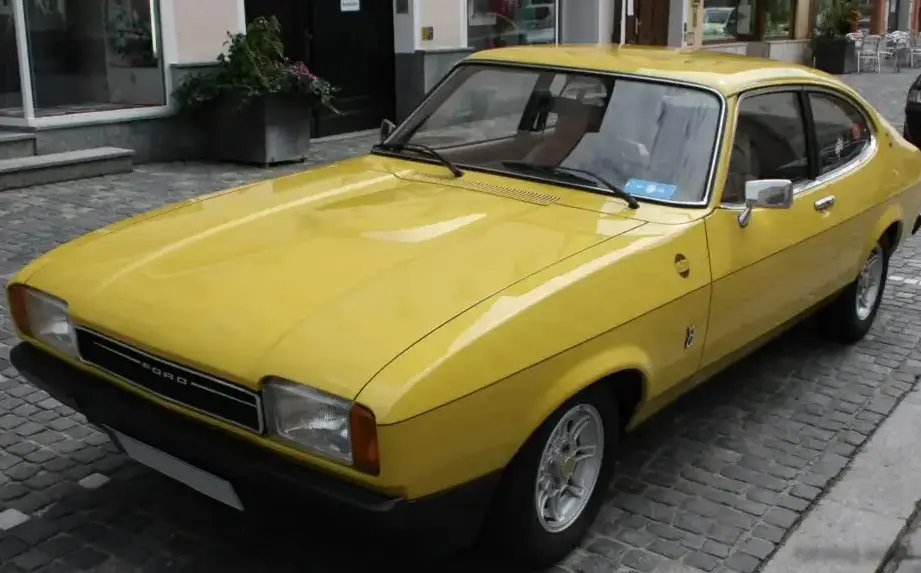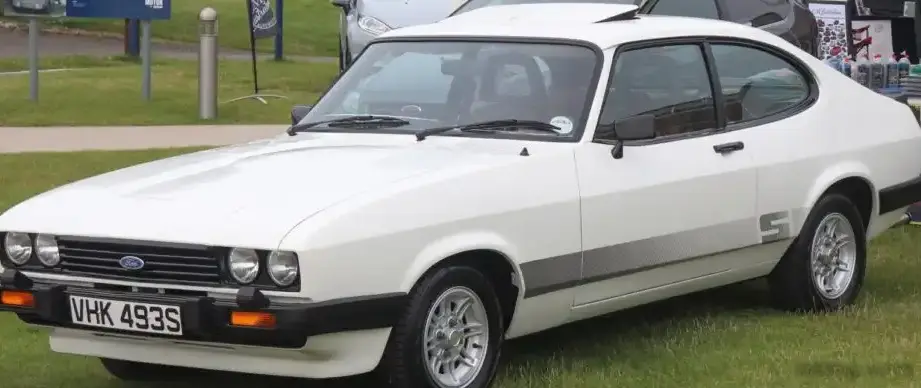
The Ford Capri III 1.3, produced between 1978 and 1982, represented the entry point into the iconic Capri range during the final generation (GECP) of this popular coupe. Positioned as the most affordable option, it aimed to deliver the Capri’s stylish design and rear-wheel-drive experience to a broader audience. While often overshadowed by its more powerful siblings, the 1.3L model played a significant role in maintaining the Capri’s sales volume, particularly in the face of increasing fuel costs and changing consumer preferences. It was built on the platform shared with the Ford Cortina, offering a blend of practicality and sporting appeal.
Technical Specifications
| Brand | Ford |
| Model | Capri |
| Generation | Capri III (GECP) |
| Type (Engine) | 1.3 (73 Hp) |
| Start of production | 1978 |
| End of production | 1982 |
| Powertrain Architecture | Internal Combustion engine |
| Body type | Coupe |
| Seats | 4 |
| Doors | 3 |
| Fuel Type | Petrol (Gasoline) |
| Acceleration 0 – 100 km/h | 16.3 sec |
| Acceleration 0 – 62 mph | 16.3 sec |
| Acceleration 0 – 60 mph | 15.5 sec |
| Maximum speed | 157 km/h (97.56 mph) |
| Power | 73 Hp @ 5750 rpm |
| Power per litre | 56.3 Hp/l |
| Torque | 98 Nm @ 4500 rpm (72.28 lb.-ft. @ 4500 rpm) |
| Engine layout | Front, Longitudinal |
| Engine Model/Code | Crossflow |
| Engine displacement | 1297 cm3 (79.15 cu. in.) |
| Number of cylinders | 4 |
| Engine configuration | Inline |
| Compression ratio | 9.2:1 |
| Number of valves per cylinder | 2 |
| Fuel injection system | Carburettor |
| Engine aspiration | Naturally aspirated engine |
| Valvetrain | OHV |
| Engine oil capacity | 3.25 l (3.43 US qt | 2.86 UK qt) |
| Coolant | 4.65 l (4.91 US qt | 4.09 UK qt) |
| Trunk (boot) space – minimum | 640 l (22.6 cu. ft.) |
| Fuel tank capacity | 58 l (15.32 US gal | 12.76 UK gal) |
| Length | 4440 mm (174.8 in.) |
| Width | 1700 mm (66.93 in.) |
| Height | 1350 mm (53.15 in.) |
| Wheelbase | 2560 mm (100.79 in.) |
| Front track | 1350 mm (53.15 in.) |
| Rear (Back) track | 1380 mm (54.33 in.) |
| Minimum turning circle | 10 m (32.81 ft.) |
| Drivetrain Architecture | Rear wheel drive |
| Number of gears | 4 gears, manual transmission |
| Front suspension | Independent, type McPherson with coil spring and anti-roll bar |
| Rear suspension | Transverse stabilizer, Leaf spring |
| Front brakes | Disc, 245 mm |
| Rear brakes | Disc, 229×43 mm |
| Steering type | Steering rack and pinion |
| Wheel rims size | 5J x 13 |
Powertrain & Engine Architecture
The Capri III 1.3 was powered by the Ford Crossflow engine, a 1.3-liter inline-four cylinder unit. This engine, designated with various codes depending on the specific market, was known for its simplicity and durability. The 1297cc engine produced 73 horsepower at 5750 rpm and 98 Nm (72.28 lb-ft) of torque at 4500 rpm. Fuel delivery was managed by a single downdraft carburetor, a common setup for the time. The engine featured an overhead valve (OHV) valvetrain with two valves per cylinder. The engine was mounted longitudinally in the front of the vehicle, driving the rear wheels. The four-speed manual transmission was the standard offering, providing a relatively simple and robust drivetrain.
Driving Characteristics
The 1.3L Capri offered a distinctly different driving experience compared to its more powerful counterparts, such as the 2.0L or 2.8L models. Acceleration was modest, taking around 16.3 seconds to reach 62 mph (100 km/h). The focus was more on fuel economy and relaxed cruising than outright performance. The gear ratios in the four-speed manual transmission were geared towards maximizing fuel efficiency, meaning the engine needed to be revved to extract the most performance. While not a sports car in the traditional sense, the Capri 1.3 still benefited from the rear-wheel-drive layout, providing a balanced and predictable handling characteristic. It was a comfortable and capable car for everyday driving, particularly on winding country roads.
Equipment & Trim Levels
The Capri 1.3 typically came with a relatively basic level of equipment, reflecting its position as the entry-level model. Standard features included cloth upholstery, a basic instrument cluster, and steel wheels. Optional extras included upgraded interior trim, a vinyl roof, and a radio. The Capri 1.3 was often seen as a blank canvas for personalization, with many owners adding aftermarket accessories to enhance its style and comfort. The interior design was functional and straightforward, prioritizing practicality over luxury.
Chassis & Braking
The Capri III utilized a relatively simple chassis design, based on the Ford Cortina platform. The front suspension featured independent McPherson struts with coil springs and an anti-roll bar, providing a comfortable ride and decent handling. The rear suspension employed a leaf spring setup, which was cost-effective but less sophisticated than the front suspension. Braking was initially equipped with disc brakes on all four wheels, although some later models featured drum brakes on the rear. The steering was a rack and pinion system, offering precise and responsive control.
Market Reception & Comparison
The Capri 1.3 received mixed reviews from automotive critics. While praised for its affordability and stylish design, it was often criticized for its lack of performance. Compared to the 2.0L and 2.8L models, the 1.3L Capri felt significantly underpowered. However, it offered superior fuel economy and lower running costs, making it an attractive option for budget-conscious buyers. The 1.3L Capri was often seen as a good choice for first-time car owners or those seeking a stylish and reliable coupe for everyday use. It provided a taste of the Capri experience without the higher price tag of the more powerful models.
Legacy
The Ford Capri III 1.3, while not the most sought-after variant, holds a special place in the hearts of many enthusiasts. Its simplicity and durability have made it a relatively reliable classic car. Today, well-maintained examples are becoming increasingly collectible. The Crossflow engine is known for its robustness and ease of maintenance, making it a popular choice for classic car restoration projects. While not a performance icon, the Capri 1.3 represents an accessible and affordable entry point into the world of classic Ford coupes, offering a nostalgic driving experience and a stylish design that continues to turn heads.