
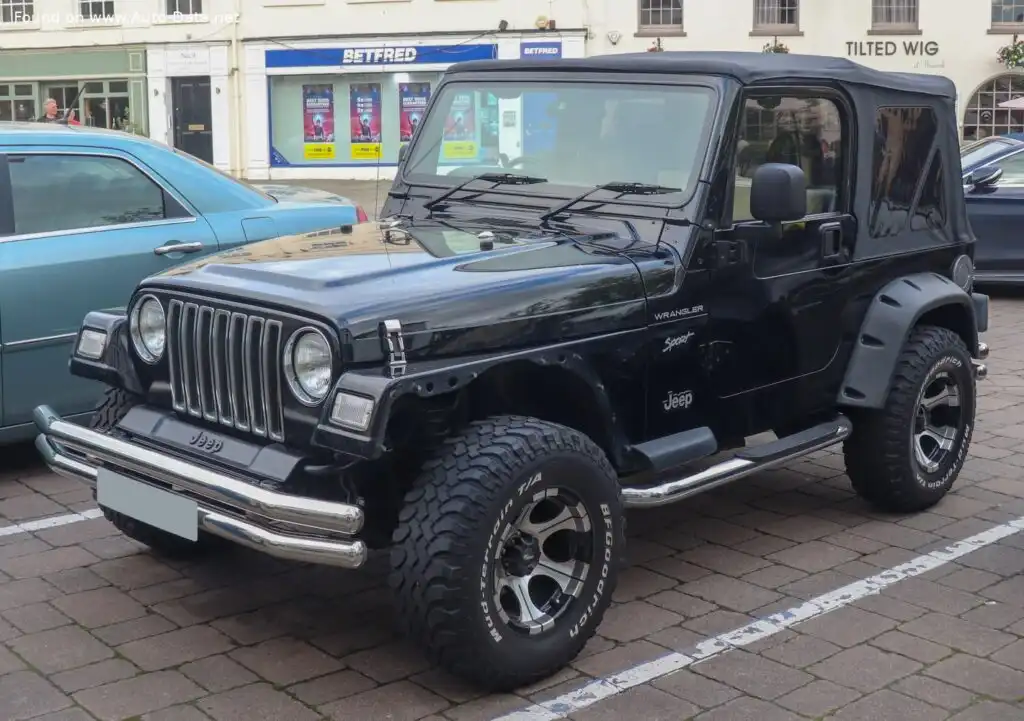
The Jeep Wrangler TJ, produced from 1997 through 2006, represented a significant leap forward for the iconic off-road vehicle. Replacing the YJ model, the TJ brought back the round headlights that had become synonymous with the Wrangler nameplate, appealing to enthusiasts who favored the classic look. The 4.0i variant, equipped with the 4.0-liter inline-six engine producing 178 horsepower, was a mainstay of the TJ lineup throughout its production run. It served as a robust and capable option for both daily driving and serious off-road adventures, positioned as a middle-ground offering between the base 2.5L four-cylinder and the more powerful 4.2L inline-six. This model played a crucial role in maintaining the Wrangler’s reputation for durability and off-road prowess in the North American market.
Technical Specifications
| Brand | Jeep |
| Model | Wrangler |
| Generation | Wrangler II (TJ) |
| Type (Engine) | 4.0 i (178 Hp) |
| Start of production | 1997 |
| End of production | 2006 |
| Powertrain Architecture | Internal Combustion engine |
| Body type | Off-road vehicle |
| Seats | 4 |
| Doors | 2 |
| Fuel consumption (urban) | 18.6 l/100 km (12.6 US mpg) |
| Fuel consumption (extra urban) | 9.3 l/100 km (25.3 US mpg) |
| Fuel Type | Petrol (Gasoline) |
| Acceleration 0 – 100 km/h | 9.4 sec |
| Acceleration 0 – 62 mph | 9.4 sec |
| Acceleration 0 – 60 mph | 8.9 sec |
| Maximum speed | 174 km/h (108.12 mph) |
| Weight-to-power ratio | 8.4 kg/Hp |
| Weight-to-torque ratio | 5.2 kg/Nm |
| Power | 178 Hp @ 4600 rpm |
| Torque | 290 Nm @ 3600 rpm (213.89 lb.-ft. @ 3600 rpm) |
| Engine layout | Front, Longitudinal |
| Engine Model/Code | ERH |
| Engine displacement | 3964 cm3 (241.9 cu. in.) |
| Number of cylinders | 6 |
| Engine configuration | Inline |
| Cylinder Bore | 98.5 mm (3.88 in.) |
| Piston Stroke | 86.6 mm (3.41 in.) |
| Compression ratio | 8.8:1 |
| Number of valves per cylinder | 3 |
| Fuel injection system | Multi-port manifold injection |
| Engine aspiration | Naturally aspirated engine |
| Engine oil capacity | 5.7 l (6.02 US qt | 5.02 UK qt) |
| Coolant capacity | 9.9 l (10.46 US qt | 8.71 UK qt) |
| Kerb Weight | 1495 kg (3295.91 lbs.) |
| Max. weight | 1975 kg (4354.13 lbs.) |
| Max load | 480 kg (1058.22 lbs.) |
| Trunk (boot) space – minimum | 320 l (11.3 cu. ft.) |
| Trunk (boot) space – maximum | 1565 l (55.27 cu. ft.) |
| Fuel tank capacity | 72 l (19.02 US gal | 15.84 UK gal) |
| Length | 3883 mm (152.87 in.) |
| Width | 1732 mm (68.19 in.) |
| Height | 1780 mm (70.08 in.) |
| Wheelbase | 2373 mm (93.43 in.) |
| Front track | 1473 mm (57.99 in.) |
| Rear (Back) track | 1473 mm (57.99 in.) |
| Drive wheel | All wheel drive (4×4) |
| Number of gears | 5 gears, manual transmission |
| Front suspension | Coil spring |
| Rear suspension | Coil spring |
| Front brakes | Ventilated discs |
| Rear brakes | Drum |
| Steering type | Steering rack and pinion |
| Power steering | Hydraulic Steering |
| Tires size | 205/75 R15 |
Introduction
The Jeep Wrangler TJ 4.0i, produced between 1997 and 2006, was a pivotal model in the Wrangler lineage. It represented a return to the round headlight design that many enthusiasts had missed on the previous YJ generation. Built on the 1HX0/A3 platform, the TJ offered a blend of classic Jeep styling with modern engineering. The 4.0i variant, powered by the 4.0-liter inline-six engine, was a popular choice, offering a balance of power, reliability, and affordability. It was positioned as a versatile option, appealing to both weekend adventurers and daily commuters.
Powertrain & Engine Architecture
The heart of the Wrangler TJ 4.0i is the 4.0-liter (3964 cc) inline-six engine, designated as the ERH code. This engine is a descendant of the AMC 258 cubic inch inline-six, known for its durability and relatively simple design. It features a cast iron block and cylinder head, and utilizes a multi-port fuel injection system for improved efficiency and performance. The engine produces 178 horsepower at 4600 rpm and 290 Nm (213.89 lb-ft) of torque at 3600 rpm. The 4.0L engine is known for its robust bottom end and ability to withstand significant mileage. The 5-speed manual transmission was the standard offering, providing a direct connection to the engine’s power. The transmission’s gear ratios were optimized for both on-road cruising and low-speed off-road crawling.
Driving Characteristics
The Wrangler TJ 4.0i with a manual transmission delivers a driving experience that is both engaging and capable. While not a performance machine, the 4.0-liter engine provides adequate power for most driving situations. Acceleration from 0-60 mph takes around 8.9 seconds, and the top speed is approximately 108 mph. The engine’s torque curve is relatively flat, providing good pulling power at lower RPMs, which is particularly useful for off-roading. The manual transmission allows for precise control over gear selection, enhancing the driving experience. Compared to the 2.5L four-cylinder, the 4.0i offers significantly more power and torque, making it more suitable for towing and tackling challenging terrain. However, it doesn’t match the outright performance of the later 4.2L inline-six or the V6 options available in later Wrangler generations.
Equipment & Trim Levels
The Wrangler TJ 4.0i was available in various trim levels, including Sport, Sahara, and Rubicon. The base Sport model typically included features such as air conditioning, a basic sound system, and manually adjustable mirrors and windows. The Sahara trim added upgrades like alloy wheels, upgraded upholstery, and a premium sound system. The Rubicon, the most off-road focused trim, featured heavy-duty axles, a locking rear differential, and rock rails. Interior upholstery was typically cloth, with optional leather available on higher trims. A variety of optional extras were available, including a power sunroof, upgraded sound systems, and various off-road accessories.
Chassis & Braking
The Wrangler TJ utilizes a body-on-frame construction, providing a robust and durable platform for off-road use. The suspension consists of coil springs at all four corners, offering a comfortable ride both on and off-road. The front suspension features a track bar to control lateral movement, while the rear suspension utilizes a multi-link design. Braking duties are handled by ventilated discs at the front and drum brakes at the rear. The braking system is adequate for most driving conditions, but it lacks the stopping power of more modern braking systems. The TJ’s solid axles contribute to its off-road capability, but they can also result in some on-road handling compromises.
Market Reception & Comparison
The Jeep Wrangler TJ 4.0i was generally well-received by critics and consumers alike. It was praised for its classic styling, off-road capability, and durable powertrain. However, some critics noted its relatively basic interior and on-road handling. Compared to the 2.5L four-cylinder, the 4.0i offered a significant improvement in performance and drivability. It also offered better fuel economy than the larger 4.2L inline-six. In terms of reliability, the 4.0L engine proved to be very dependable, with many examples exceeding 200,000 miles with proper maintenance.
Legacy
The Jeep Wrangler TJ 4.0i remains a popular choice among Jeep enthusiasts today. Its robust powertrain, simple design, and off-road capability make it a desirable vehicle for both restoration projects and daily driving. The 4.0L inline-six engine is known for its longevity and relatively low maintenance costs. While finding well-maintained examples can be challenging, the TJ 4.0i continues to hold its value in the used car market, particularly among those seeking a classic and capable off-road vehicle. Its enduring popularity is a testament to its timeless design and proven reliability.
