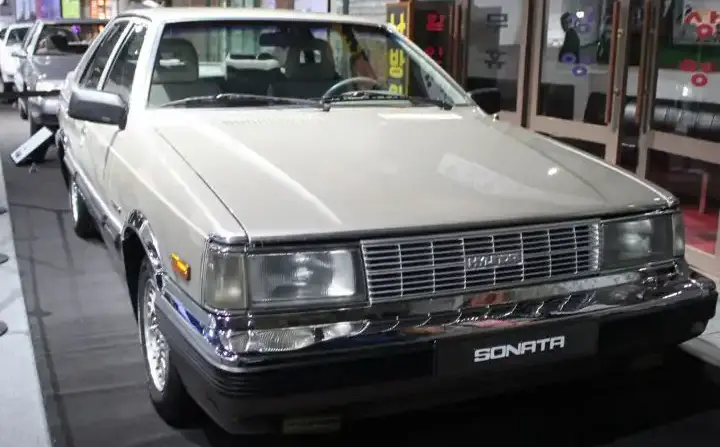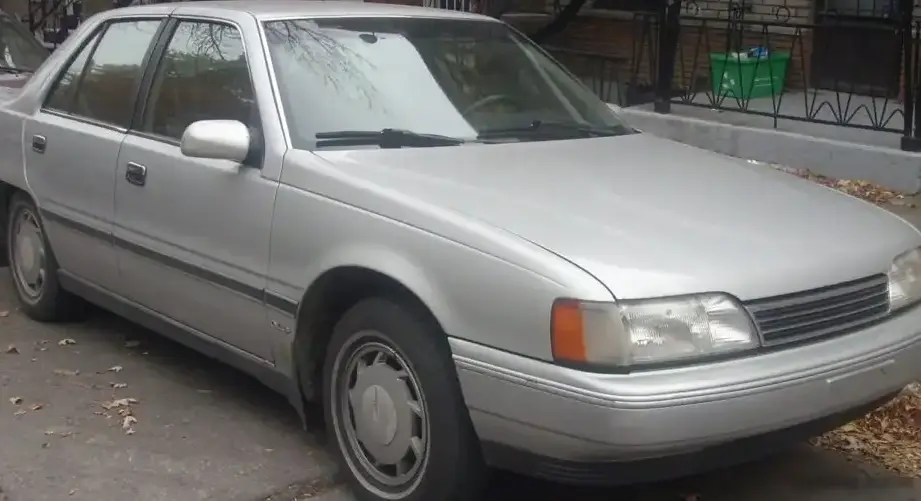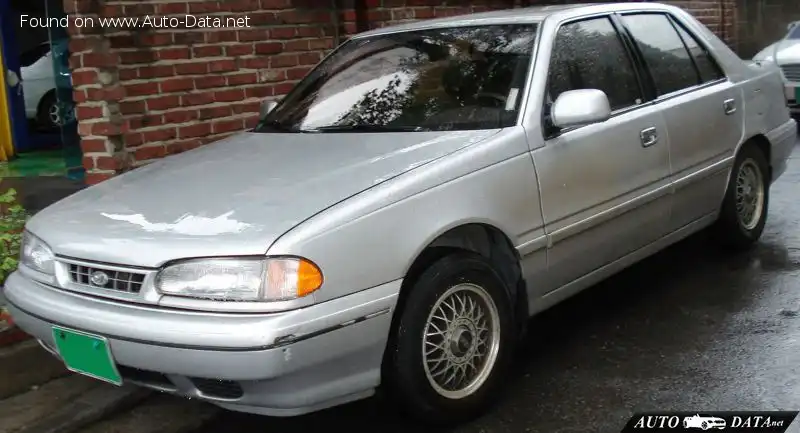
The Hyundai Sonata II (Y2), specifically the 3.0 GLS V6 with an automatic transmission, represented a significant step forward for the South Korean automaker in the mid-size sedan segment. Produced from 1992 to 1993, this facelifted version of the second-generation Sonata aimed to offer a more refined and powerful alternative to established Japanese and American competitors. Positioned as a near-luxury trim, the 3.0 GLS V6 Automatic was the top-of-the-line offering, boasting the largest engine and most convenient transmission option available in the Sonata II range. It was primarily marketed towards buyers seeking a comfortable, well-equipped, and relatively powerful family sedan.
Technical Specifications
| Brand | Hyundai |
| Model | Sonata |
| Generation | Sonata II (Y2, facelift 1991) |
| Type (Engine) | 3.0 GLS V6 (146 Hp) Automatic |
| Start of production | 1992 |
| End of production | 1993 |
| Powertrain Architecture | Internal Combustion engine |
| Body type | Sedan |
| Seats | 5 |
| Doors | 4 |
| Fuel consumption (urban) | 13.3 l/100 km (17.7 US mpg, 21.2 UK mpg, 7.5 km/l) |
| Fuel consumption (extra urban) | 7.8 l/100 km (30.2 US mpg, 36.2 UK mpg, 12.8 km/l) |
| Fuel consumption (combined) | 10.2 l/100 km (23.1 US mpg, 27.7 UK mpg, 9.8 km/l) |
| Fuel Type | Petrol (Gasoline) |
| Acceleration 0 – 100 km/h | 10.7 sec |
| Acceleration 0 – 62 mph | 10.7 sec |
| Acceleration 0 – 60 mph | 10.2 sec |
| Maximum speed | 191 km/h (118.68 mph) |
| Emission standard | Euro 1 |
| Weight-to-power ratio | 9.4 kg/Hp, 106.9 Hp/tonne |
| Weight-to-torque ratio | 5.9 kg/Nm, 169.1 Nm/tonne |
| Power | 146 Hp @ 5000 rpm |
| Power per litre | 49.1 Hp/l |
| Torque | 231 Nm @ 2400 rpm (170.38 lb.-ft. @ 2400 rpm) |
| Engine layout | Front, Transverse |
| Engine displacement | 2972 cm3 (181.36 cu. in.) |
| Number of cylinders | 6 |
| Engine configuration | V-engine |
| Cylinder Bore | 91.1 mm (3.59 in.) |
| Piston Stroke | 76 mm (2.99 in.) |
| Compression ratio | 9:1 |
| Number of valves per cylinder | 2 |
| Fuel injection system | Multi-port manifold injection |
| Engine aspiration | Naturally aspirated engine |
| Valvetrain | OHC |
| Kerb Weight | 1366 kg (3011.51 lbs.) |
| Trunk (boot) space (minimum) | 473 l (16.7 cu. ft.) |
| Fuel tank capacity | 65 l (17.17 US gal, 14.3 UK gal) |
| Max. roof load | 75 kg (165.35 lbs.) |
| Permitted trailer load with brakes (12%) | 1500 kg (3306.93 lbs.) |
| Permitted trailer load without brakes | 700 kg (1543.24 lbs.) |
| Length | 4680 mm (184.25 in.) |
| Width | 1751 mm (68.94 in.) |
| Height | 1408 mm (55.43 in.) |
| Wheelbase | 2650 mm (104.33 in.) |
| Front track | 1480 mm (58.27 in.) |
| Rear (Back) track | 1460 mm (57.48 in.) |
| Drivetrain Architecture | The Internal combustion engine (ICE) drives the front wheels of the vehicle. |
| Drive wheel | Front wheel drive |
| Number of gears and type of gearbox | 4 gears, automatic transmission |
| Front suspension | Independent, type McPherson with coil spring and anti-roll bar |
| Rear suspension | Coil spring |
| Front brakes | Ventilated discs |
| Rear brakes | Ventilated discs |
| Assisting systems | ABS (Anti-lock braking system) |
| Steering type | Steering rack and pinion |
| Power steering | Hydraulic Steering |
| Tires size | 195/70 R14 |
| Wheel rims size | 5.5J x 14 |
Powertrain & Engine Architecture
The heart of the 3.0 GLS was Hyundai’s 2.972-liter (181.36 cubic inch) V6 engine. This engine, internally designated as the Lambda series, was a naturally aspirated, multi-port fuel-injected powerplant. The 90-degree V-angle provided a relatively smooth running character. The engine featured a single overhead camshaft (OHC) design with two valves per cylinder. While not a cutting-edge design by the early 1990s, it proved to be reasonably durable and offered a good balance of power and refinement. The 4-speed automatic transmission was a crucial component of this trim level, offering convenience and ease of driving. It was a conventional hydraulic automatic, lacking the electronic controls found in more modern transmissions. The transmission’s gear ratios were tuned for comfortable cruising and adequate acceleration, prioritizing smooth shifts over outright performance.
Driving Characteristics
The 146 horsepower and 170 lb-ft of torque delivered by the 3.0L V6 and automatic transmission combination provided adequate, though not exhilarating, performance. Acceleration to 60 mph took around 10.2 seconds, and the top speed was approximately 118 mph. Compared to the base 4-cylinder Sonata models, the V6 offered a noticeable improvement in responsiveness, particularly during highway merging and overtaking. However, it wasn’t as sporty or quick as some of its competitors with more powerful engines or manual transmissions. The automatic transmission, while convenient, did result in some power loss compared to a manual gearbox. The gear ratios were spaced to prioritize fuel economy and smooth operation, rather than aggressive acceleration. The ride quality was generally comfortable, thanks to the McPherson strut front suspension and coil spring rear suspension.
Equipment & Trim Levels
The 3.0 GLS Automatic was the most well-equipped Sonata II trim. Standard features typically included power windows, power locks, power steering, air conditioning, and an upgraded sound system. Interior upholstery was typically cloth, though leather was often available as an option. The dashboard featured a straightforward layout with easy-to-read gauges. Optional extras could include a sunroof, upgraded audio systems, and alloy wheels. The GLS trim aimed to provide a comfortable and convenient driving experience with a focus on features that appealed to family buyers.
Chassis & Braking
The Sonata II utilized a front-wheel-drive layout with an independent McPherson strut suspension in the front and a coil spring suspension in the rear. The front suspension incorporated an anti-roll bar to reduce body roll during cornering. Braking duties were handled by ventilated disc brakes on all four wheels, a notable upgrade over the rear drum brakes found on lower trim levels. An Anti-lock Braking System (ABS) was also standard on the 3.0 GLS, enhancing safety and control during emergency braking situations. The chassis was designed to provide a comfortable ride and predictable handling, prioritizing stability over sporty dynamics.
Market Reception & Comparison
The Hyundai Sonata II, and particularly the 3.0 GLS V6 Automatic, was generally well-received by critics as a solid and value-packed mid-size sedan. It offered a compelling alternative to established Japanese brands like Toyota and Honda, often at a lower price point. However, it wasn’t without its drawbacks. Some reviewers noted that the automatic transmission could feel sluggish at times, and the overall driving experience wasn’t as refined as some of its competitors. Fuel economy, at around 23 mpg combined, was average for the time. Compared to the 2.0L 4-cylinder models, the V6 offered significantly more power but at the cost of increased fuel consumption. The V6 also required slightly more maintenance due to its more complex engine design.
Legacy
The Hyundai Sonata II 3.0 GLS V6 Automatic played a crucial role in establishing Hyundai as a credible player in the American automotive market. While not known for exceptional performance or groundbreaking technology, it offered a reliable and affordable option for families seeking a comfortable and well-equipped sedan. Today, these vehicles are relatively rare and are often sought after by collectors and enthusiasts. The Lambda V6 engine, while not without its quirks, proved to be reasonably durable, and many examples are still on the road today. However, age and mileage can lead to issues with seals, gaskets, and the automatic transmission. Finding parts can be challenging, but a dedicated community of Hyundai enthusiasts helps to keep these classic sedans running.