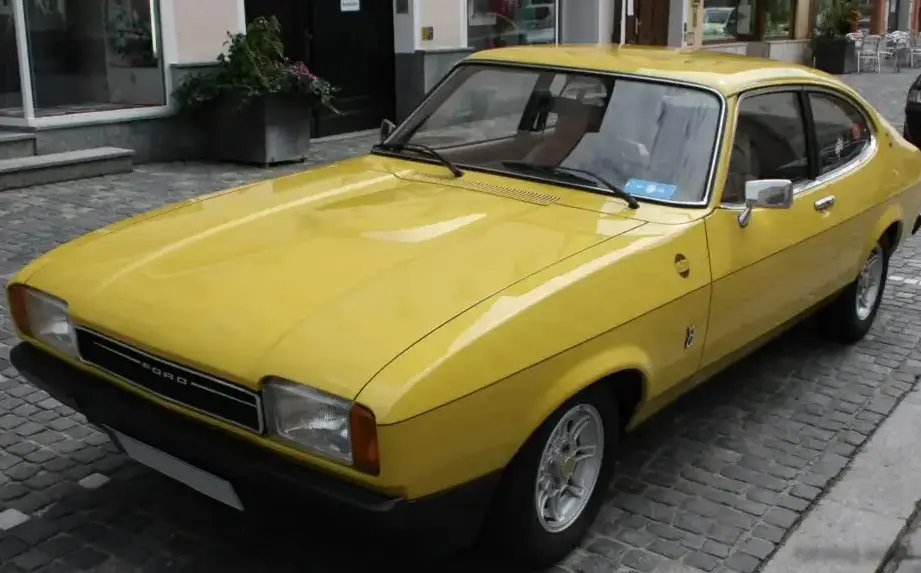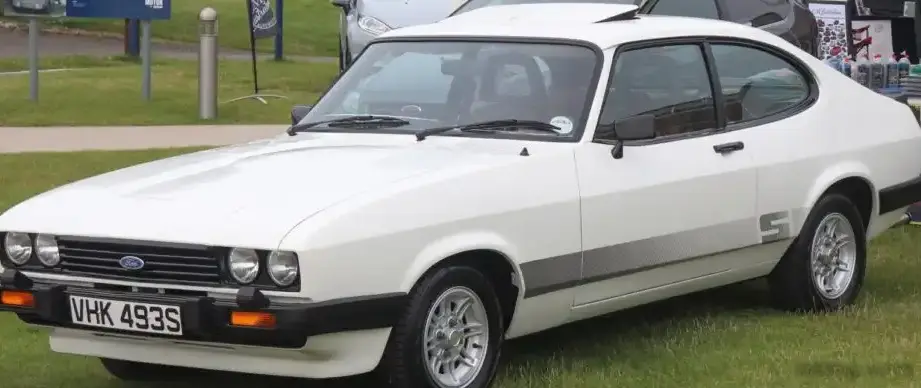
The Ford Capri III 1.6, producing 91 horsepower, was a mainstay of the Capri lineup from 1978 to 1987. Positioned as the entry-level model, it offered a more affordable route into Capri ownership compared to the higher-performance 2.0 and 2.8-liter variants. This version of the Capri, built on the GECP platform, was primarily aimed at buyers seeking a stylish coupe with reasonable running costs, particularly in the European market where the Capri enjoyed significant popularity. While not the fastest Capri, the 1.6 offered a balance of performance and economy that appealed to a broad customer base.
Technical Specifications
| Brand | Ford |
| Model | Capri |
| Generation | Capri III (GECP) |
| Type (Engine) | 1.6 (91 Hp) |
| Start of production | 1978 |
| End of production | 1987 |
| Powertrain Architecture | Internal Combustion engine |
| Body type | Coupe |
| Seats | 4 |
| Doors | 3 |
| Fuel Type | Petrol (Gasoline) |
| Acceleration 0 – 100 km/h | 12.7 sec |
| Acceleration 0 – 62 mph | 12.7 sec |
| Acceleration 0 – 60 mph | 12.1 sec |
| Maximum speed | 173 km/h (107.5 mph) |
| Power | 91 Hp @ 5700 rpm |
| Power per litre | 57.1 Hp/l |
| Torque | 125 Nm @ 4000 rpm (92.2 lb.-ft. @ 4000 rpm) |
| Engine layout | Front, Longitudinal |
| Engine Model/Code | Pinto / TL16 |
| Engine displacement | 1593 cm3 (97.21 cu. in.) |
| Number of cylinders | 4 |
| Engine configuration | Inline |
| Cylinder Bore | 87.7 mm (3.45 in.) |
| Piston Stroke | 66 mm (2.6 in.) |
| Compression ratio | 9.2:1 |
| Number of valves per cylinder | 2 |
| Fuel injection system | Carburettor |
| Engine aspiration | Naturally aspirated engine |
| Valvetrain | SOHC |
| Engine oil capacity | 3.75 l (3.96 US qt | 3.3 UK qt) |
| Coolant | 5.75 l (6.08 US qt | 5.06 UK qt) |
| Trunk (boot) space – minimum | 640 l (22.6 cu. ft.) |
| Fuel tank capacity | 58 l (15.32 US gal | 12.76 UK gal) |
| Length | 4440 mm (174.8 in.) |
| Width | 1700 mm (66.93 in.) |
| Height | 1350 mm (53.15 in.) |
| Wheelbase | 2560 mm (100.79 in.) |
| Front track | 1350 mm (53.15 in.) |
| Rear (Back) track | 1380 mm (54.33 in.) |
| Drivetrain Architecture | The Internal combustion engine (ICE) drives the rear wheels of the vehicle. |
| Drive wheel | Rear wheel drive |
| Number of gears and type of gearbox | 4 gears, manual transmission |
| Front suspension | Independent, type McPherson with coil spring and anti-roll bar |
| Rear suspension | Transverse stabilizer, Leaf spring |
| Front brakes | Disc, 245 mm |
| Rear brakes | Drum, 229×43 mm |
| Steering type | Steering rack and pinion |
| Power steering | Hydraulic Steering |
| Wheel rims size | 5J x 13 |
Introduction
The Ford Capri III 1.6 (91 Hp) was produced between 1978 and 1987 as part of the third generation of the iconic Ford Capri. The Capri, originally launched in 1969, was Ford of Europe’s answer to the Chevrolet Camaro and Ford Mustang, aiming to provide a sporty, stylish, and affordable coupe for the European market. The third generation, introduced in 1978, featured a more angular and modern design. The 1.6-liter variant served as the entry point to the range, offering a balance between performance and fuel efficiency. It was a popular choice for drivers who wanted the Capri’s looks and style without the higher running costs of the larger engine options.
Powertrain & Engine Architecture
The heart of the Capri III 1.6 was the Ford Pinto engine, specifically the TL16 variant. This 1.6-liter inline-four cylinder engine produced 91 horsepower at 5700 rpm and 125 Nm (92.2 lb.-ft.) of torque at 4000 rpm. The Pinto engine, while relatively simple in design, was known for its durability and ease of maintenance. It featured a single overhead camshaft (SOHC) valvetrain with two valves per cylinder. Fuel delivery was handled by a carburetor, a common feature for the time, rather than fuel injection. The engine was mounted longitudinally in the front of the vehicle, driving the rear wheels. The 1.6L engine was paired with a four-speed manual transmission as standard, offering a relatively direct driving experience.
Driving Characteristics
The Capri III 1.6, with its 91 horsepower, wasn’t designed for blistering acceleration. Zero to 60 mph took around 12.1 seconds, and top speed was approximately 107.5 mph. Compared to the 2.0-liter and 2.8-liter models, the 1.6 felt noticeably less powerful, particularly when fully loaded or tackling inclines. However, the engine was reasonably responsive in everyday driving situations. The four-speed manual transmission provided adequate gear spacing, although the gear ratios were optimized for fuel economy rather than outright performance. The rear-wheel-drive layout contributed to a balanced handling feel, but the leaf spring rear suspension could feel somewhat harsh over rough surfaces. The 1.6 offered a more relaxed and economical driving experience than its more potent siblings.
Equipment & Trim Levels
The Capri III 1.6 typically came with a fairly basic level of equipment, reflecting its position as the entry-level model. Standard features generally included cloth upholstery, a basic instrument cluster, and manual windows and door locks. Optional extras included a sunroof, upgraded stereo systems, and more comfortable seats. Trim levels varied slightly depending on the market, but generally, the 1.6 was distinguished by its relatively simple interior appointments. The focus was on providing a functional and stylish interior without the luxury features found in the higher-spec models.
Chassis & Braking
The Capri III utilized a rear-wheel-drive chassis with independent front suspension using McPherson struts and coil springs, complemented by an anti-roll bar. The rear suspension employed a leaf spring setup, which was a cost-effective solution but offered a less sophisticated ride compared to independent rear suspension. Braking was accomplished with disc brakes on the front wheels (245mm diameter) and drum brakes on the rear wheels (229x43mm). Power steering was available as an option, making the car easier to maneuver at low speeds. The suspension setup was tuned to provide a reasonable balance between handling and ride comfort, although the leaf spring rear suspension could sometimes feel bouncy.
Market Reception & Comparison
The Capri III 1.6 was generally well-received as an affordable and stylish coupe. Critics acknowledged its limitations in terms of performance, but praised its fuel efficiency and ease of driving. Compared to the 2.0-liter and 2.8-liter models, the 1.6 offered significantly better fuel economy, making it a more practical choice for everyday use. However, it lacked the performance and prestige of its more powerful siblings. The 1.6 was often seen as a good option for younger drivers or those on a budget who wanted to experience Capri ownership. The 1.9 TDI versions (later models) offered better fuel economy and torque, but lacked the classic feel of the petrol engine.
Legacy
The Ford Capri III 1.6, while not the most sought-after variant, remains a popular classic car today. The Pinto engine is generally considered reliable, although regular maintenance is essential. Parts availability is generally good, although some specific trim pieces can be difficult to find. The 1.6’s affordability and relative simplicity make it a good entry point for classic car enthusiasts. While not a high-performance machine, the Capri III 1.6 offers a stylish and enjoyable driving experience, and its enduring appeal ensures its place in automotive history. Well-maintained examples continue to command reasonable prices in the used car market, appealing to those seeking a nostalgic and affordable classic coupe.