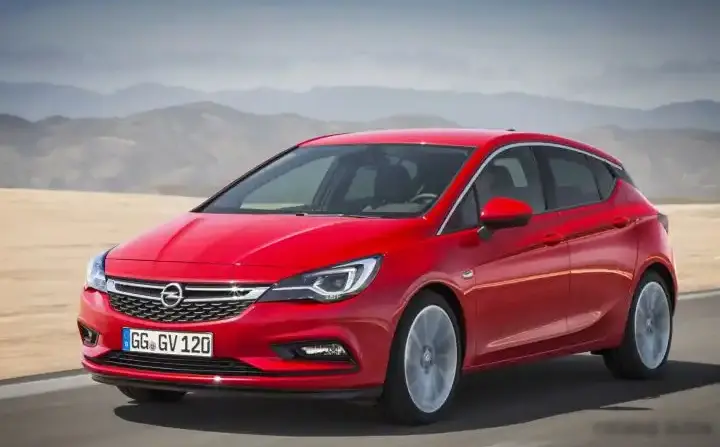
The Opel Astra K 1.6 BiTurbo, producing 150 horsepower, was a mid-range offering within the Astra K generation, manufactured from 2018 to April 2019. Positioned between the lower-powered diesel and gasoline variants and the more performance-oriented OPC (Vauxhall/Opel’s performance division) models, it aimed to provide a balance of fuel efficiency, respectable performance, and modern features. The Astra K, launched in 2015, represented a significant redesign for Opel’s compact family car, built on a new, lighter platform intended to improve handling and efficiency. This particular 1.6 BiTurbo variant was primarily sold in European markets, where diesel and turbocharged engines were highly favored for their fuel economy and torque characteristics.
Technical Specifications
| Brand | Opel |
| Model | Astra |
| Generation | Astra K |
| Type (Engine) | 1.6 BiTurbo (150 Hp) |
| Start of production | 2018 |
| End of production | April, 2019 |
| Powertrain Architecture | Internal Combustion engine |
| Body type | Hatchback |
| Seats | 5 |
| Doors | 5 |
| Fuel consumption (urban) | 6.1-6.3 l/100 km (38.6 – 37.3 US mpg) |
| Fuel consumption (extra urban) | 4.1-4.3 l/100 km (57.4 – 54.7 US mpg) |
| Fuel consumption (combined) | 4.8-5.0 l/100 km (49 – 47 US mpg) |
| CO2 emissions | 127-133 g/km |
| Fuel Type | Diesel |
| Acceleration 0 – 100 km/h | 9 sec |
| Acceleration 0 – 62 mph | 9 sec |
| Acceleration 0 – 60 mph | 8.6 sec |
| Maximum speed | 225 km/h (139.81 mph) |
| Emission standard | Euro 6d-Temp |
| Weight-to-power ratio | 8.8 kg/Hp |
| Weight-to-torque ratio | 3.8 kg/Nm |
| Power | 150 Hp @ 4000 rpm |
| Torque | 350 Nm @ 1500-2520 rpm (258.15 lb.-ft. @ 1500-2520 rpm) |
| Engine layout | Front, Transverse |
| Engine Model/Code | D16DTR |
| Engine displacement | 1598 cm3 (97.52 cu. in.) |
| Number of cylinders | 4 |
| Engine configuration | Inline |
| Cylinder Bore | 79.7 mm (3.14 in.) |
| Piston Stroke | 80.1 mm (3.15 in.) |
| Compression ratio | 16:1 |
| Number of valves per cylinder | 4 |
| Fuel injection system | Diesel Commonrail |
| Engine aspiration | Turbocharger, Intercooler |
| Engine oil capacity | 5 l (5.28 US qt | 4.4 UK qt) |
| Coolant capacity | 5.9 l (6.23 US qt | 5.19 UK qt) |
| Kerb Weight | 1318 kg (2905.69 lbs.) |
| Max. weight | 1910 kg (4210.83 lbs.) |
| Max load | 592 kg (1305.14 lbs.) |
| Trunk (boot) space – minimum | 370 l (13.07 cu. ft.) |
| Trunk (boot) space – maximum | 1210 l (42.73 cu. ft.) |
| Fuel tank capacity | 48 l (12.68 US gal | 10.56 UK gal) |
| AdBlue tank | 13.5 l (3.57 US gal | 2.97 UK gal) |
| Max. roof load | 75 kg (165.35 lbs.) |
| Permitted trailer load with brakes (12%) | 1700 kg (3747.86 lbs.) |
| Permitted trailer load without brakes | 680 kg (1499.14 lbs.) |
| Length | 4370 mm (172.05 in.) |
| Width | 1809 mm (71.22 in.) |
| Width with mirrors folded | 1871 mm (73.66 in.) |
| Width including mirrors | 2042 mm (80.39 in.) |
| Height | 1485 mm (58.46 in.) |
| Wheelbase | 2662 mm (104.8 in.) |
| Front track | 1544 mm (60.79 in.) |
| Rear track | 1558 mm (61.34 in.) |
| Minimum turning circle | 11.05 m (36.25 ft.) |
| Drivetrain | Front wheel drive |
| Number of gears | 6 |
| Gearbox type | Manual transmission |
| Front brakes | Disc |
| Rear brakes | Disc |
| Tires size | 205/55 R16; 225/40 R18 |
| Wheel rims size | 6.5J x 16; 7J x 16; 7.5J x 18 |
Powertrain & Engine Architecture
The heart of the Astra K 1.6 BiTurbo is the D16DTR engine, a 1.6-liter inline-four cylinder diesel. This engine utilizes a sequential twin-turbocharger setup, hence the “BiTurbo” designation. The smaller turbocharger spools up quickly at low engine speeds, providing immediate response and minimizing turbo lag. As engine speed increases, the larger turbocharger takes over, delivering increased boost for higher power output. This configuration aims to combine the benefits of both small and large turbochargers. The engine employs a common rail direct injection system, injecting fuel directly into the combustion chamber at extremely high pressure for efficient combustion. It also features a variable geometry turbocharger (VGT) to optimize performance across the rev range. The 6-speed manual transmission was the standard offering, providing precise gear changes and a more engaging driving experience.
Driving Characteristics
The 150 horsepower and 350 Nm (258 lb-ft) of torque delivered by the 1.6 BiTurbo engine provided the Astra K with brisk acceleration. The 0-60 mph time of around 8.6 seconds was respectable for a compact diesel hatchback. The twin-turbo setup minimized turbo lag, resulting in a relatively linear power delivery. While not as overtly sporty as the OPC version, the 1.6 BiTurbo offered sufficient power for everyday driving and overtaking maneuvers. The manual transmission allowed for greater driver control, but the gear ratios were tuned for fuel efficiency rather than outright performance. Compared to the lower-powered diesel variants, the 1.6 BiTurbo offered a noticeable improvement in acceleration and overall responsiveness. However, it lacked the raw power and sharper handling of the OPC model.
Equipment & Trim Levels
The Astra K 1.6 BiTurbo was typically offered in mid-range trim levels, such as ‘Design’ or ‘Tech Line’ depending on the specific market. Standard equipment generally included air conditioning, a touchscreen infotainment system with Bluetooth connectivity, alloy wheels, and a suite of safety features including ABS, ESP (Electronic Stability Program), and multiple airbags. Optional extras included navigation system, heated seats, parking sensors, and advanced driver-assistance systems like lane departure warning and adaptive cruise control. Interior upholstery was typically cloth, with higher trims offering partial leather options. The dashboard layout was modern and ergonomically designed, with a focus on ease of use.
Chassis & Braking
The Astra K utilized a MacPherson strut front suspension and a torsion beam rear suspension. This setup provided a good balance between ride comfort and handling. The 1.6 BiTurbo variant typically featured disc brakes on all four wheels, providing adequate stopping power. The steering was electrically assisted, offering light and precise control. Stabilizer bars were fitted to both the front and rear axles to reduce body roll during cornering. The suspension tuning was geared towards comfort, but the Astra K still offered a reasonably engaging driving experience.
Market Reception & Comparison
The Opel Astra K 1.6 BiTurbo was generally well-received by automotive critics. It was praised for its fuel efficiency, comfortable ride, and refined engine. However, some reviewers noted that the interior materials were not as premium as those found in some of its competitors. Compared to other trims in the Astra K lineup, the 1.6 BiTurbo offered a compelling balance of performance and economy. It was more expensive than the lower-powered diesel variants, but it provided a noticeable improvement in performance. It was also more affordable than the OPC model, making it a more practical choice for everyday drivers. Competitors included the Volkswagen Golf, Ford Focus, and Peugeot 308.
Legacy
The D16DTR engine, while generally reliable, is known to require regular maintenance, particularly regarding the diesel particulate filter (DPF). Proper servicing and the use of high-quality diesel fuel are crucial to prevent DPF issues. The Astra K 1.6 BiTurbo has maintained a reasonable reputation for reliability in the used car market. However, potential buyers should be aware of the potential for DPF problems and ensure that the vehicle has been properly maintained. Today, the Astra K 1.6 BiTurbo represents a solid choice for buyers seeking a fuel-efficient and comfortable compact hatchback with a decent level of performance.