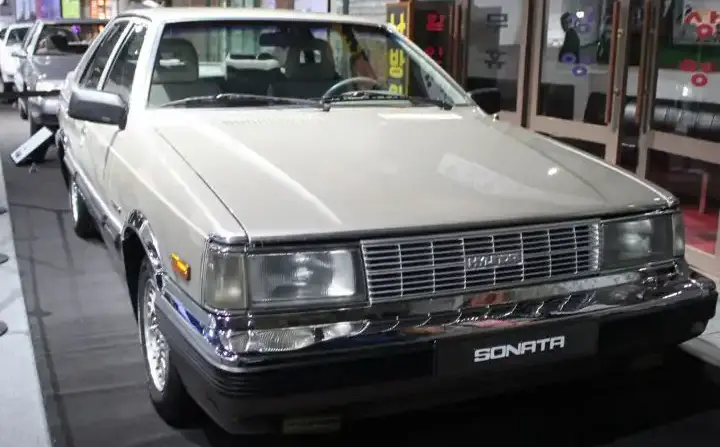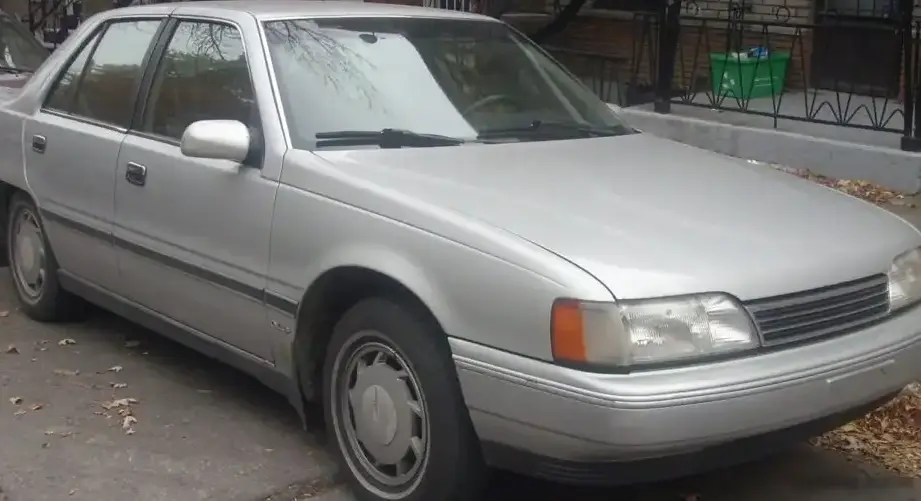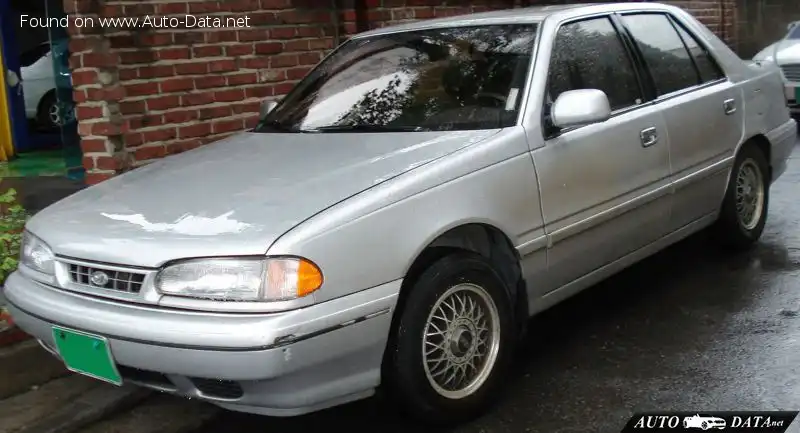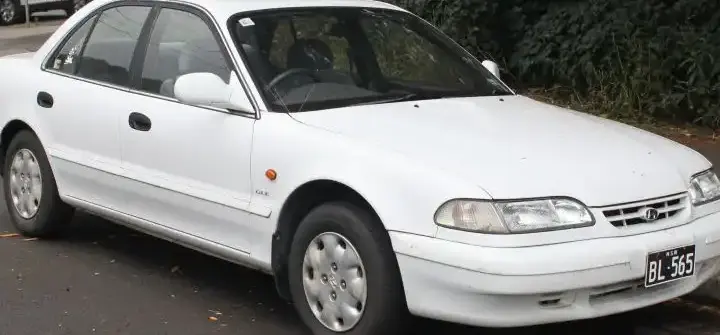
The Hyundai Sonata Y3, produced between 1993 and 1996, represented a significant step forward for the South Korean automaker in establishing a presence in the mid-size sedan market. The 1.8-liter (98 horsepower) variant, equipped with an automatic transmission, served as the entry-level offering within the Y3 range. Positioned below the more powerful 2.0-liter engines, this trim focused on affordability and fuel efficiency, targeting a broader customer base seeking reliable transportation. The Y3 generation was a crucial model for Hyundai, demonstrating improved build quality and design compared to its predecessors, and laying the groundwork for the brand’s future success in international markets. This particular configuration was primarily sold in Asian and some European markets, with limited availability in the United States.
Technical Specifications
| Brand | Hyundai |
| Model | Sonata |
| Generation | Sonata III (Y3) |
| Type (Engine) | 1.8 (98 Hp) |
| Start of production | 1993 |
| End of production | 1996 |
| Powertrain Architecture | Internal Combustion engine |
| Body type | Sedan |
| Seats | 5 |
| Doors | 4 |
| Fuel consumption (urban) | 9.1 l/100 km (25.8 US mpg, 31 UK mpg, 11 km/l) |
| Fuel consumption (combined) | 7 l/100 km (33.6 US mpg, 40.4 UK mpg, 14.3 km/l) |
| Fuel Type | Petrol (Gasoline) |
| Acceleration 0 – 100 km/h | 12.1 sec |
| Acceleration 0 – 62 mph | 12.1 sec |
| Acceleration 0 – 60 mph | 11.5 sec |
| Maximum speed | 165 km/h (102.53 mph) |
| Emission standard | Euro 1 |
| Weight-to-power ratio | 12.9 kg/Hp, 77.5 Hp/tonne |
| Weight-to-torque ratio | 9 kg/Nm, 111.5 Nm/tonne |
| Power | 98 Hp @ 5500 rpm |
| Power per litre | 54.6 Hp/l |
| Torque | 141 Nm @ 4400 rpm (104 lb.-ft. @ 4400 rpm) |
| Engine layout | Front, Transverse |
| Engine Model/Code | Sirius / G4CM |
| Engine displacement | 1796 cm3 (109.6 cu. in.) |
| Number of cylinders | 4 |
| Engine configuration | Inline |
| Cylinder Bore | 80.6 mm (3.17 in.) |
| Piston Stroke | 88 mm (3.46 in.) |
| Compression ratio | 8.9:1 |
| Number of valves per cylinder | 2 |
| Fuel injection system | Multi-port manifold injection |
| Engine aspiration | Naturally aspirated engine |
| Valvetrain | SOHC |
| Kerb Weight | 1265 kg (2788.85 lbs.) |
| Max. weight | 1740 kg (3836.04 lbs.) |
| Max load | 475 kg (1047.2 lbs.) |
| Trunk (boot) space – minimum | 373 l (13.17 cu. ft.) |
| Fuel tank capacity | 65 l (17.17 US gal | 14.3 UK gal) |
| Max. roof load | 70 kg (154.32 lbs.) |
| Length | 4700 mm (185.04 in.) |
| Width | 1770 mm (69.69 in.) |
| Height | 1405 mm (55.31 in.) |
| Wheelbase | 2700 mm (106.3 in.) |
| Front track | 1515 mm (59.65 in.) |
| Rear (Back) track | 1500 mm (59.06 in.) |
| Drag coefficient (Cd) | 0.35 |
| Minimum turning circle | 10.5 m (34.45 ft.) |
| Drivetrain Architecture | The Internal combustion engine (ICE) drives the front wheels of the vehicle. |
| Drive wheel | Front wheel drive |
| Number of gears | 5 gears, automatic transmission |
| Front suspension | Independent, type McPherson with coil spring and anti-roll bar |
| Rear suspension | Independent multi-link suspension |
| Front brakes | Ventilated discs |
| Rear brakes | Drum |
| Assisting systems | ABS (Anti-lock braking system) |
| Steering type | Steering rack and pinion |
| Power steering | Hydraulic Steering |
| Tires size | 195/70 R14 |
| Wheel rims size | 5.5J x 14 |
Powertrain & Engine Architecture
The heart of the Sonata Y3 1.8 was the Hyundai Sirius engine, internally designated G4CM. This 1.8-liter inline-four cylinder engine utilized a single overhead camshaft (SOHC) valvetrain with two valves per cylinder. The engine featured multi-port fuel injection, a relatively common technology at the time, which improved fuel atomization and efficiency compared to earlier carburetor systems. The Sirius engine was known for its relatively simple design, contributing to its reliability. Paired with this engine was a 4-speed automatic transmission. While not known for its sporty performance, this transmission provided smooth shifts and ease of use, appealing to drivers prioritizing comfort over outright acceleration. The automatic transmission was a key differentiator for this trim, as the base models were typically offered with a 5-speed manual.
Driving Characteristics
The 1.8-liter Sonata with the automatic transmission delivered modest performance. Acceleration from 0 to 60 mph took approximately 11.5 to 12.1 seconds, and top speed was around 102.5 mph. The automatic transmission’s gear ratios were optimized for fuel economy rather than rapid acceleration. Power delivery was linear but lacked the punch of the 2.0-liter variants. In real-world driving, the 1.8L automatic was best suited for city commuting and highway cruising, where its relaxed nature and fuel efficiency were most appreciated. Compared to the manual transmission versions, the automatic offered less driver engagement but greater convenience. The higher-output 2.0-liter models provided significantly more responsive acceleration and were favored by drivers seeking a more dynamic driving experience.
Equipment & Trim Levels
The 1.8-liter automatic Sonata typically came with a fairly basic level of equipment. Standard features generally included power steering, air conditioning, and a basic audio system. Interior upholstery was typically cloth, and the dashboard featured a functional but somewhat spartan design. Optional extras, depending on the market, could include power windows, central locking, and upgraded audio systems. The trim level was generally positioned as the entry point to the Sonata range, offering essential features at an affordable price. Higher trim levels, available with the 2.0-liter engines, offered more luxurious appointments such as leather upholstery, alloy wheels, and more advanced audio systems.
Chassis & Braking
The Sonata Y3 featured an independent suspension setup, with McPherson struts at the front and a multi-link suspension at the rear. This configuration provided a reasonably comfortable ride, absorbing bumps and irregularities in the road surface effectively. Front brakes were ventilated discs, offering adequate stopping power, while the rear brakes were drums. The braking system was assisted by ABS (Anti-lock Braking System), a valuable safety feature for the time. The suspension tuning was geared towards comfort rather than sporty handling, resulting in a slightly softer and more forgiving ride. Stabilizer bars were included to reduce body roll during cornering, but the overall handling characteristics were not particularly sharp.
Market Reception & Comparison
The Hyundai Sonata Y3 1.8 automatic was generally well-received as an affordable and reliable family sedan. Critics praised its fuel efficiency and comfortable ride, but noted its lack of outright performance. Compared to its competitors, such as the Toyota Camry and Honda Accord, the Sonata offered a lower price point but lacked the established reputation for quality and refinement of the Japanese brands. Within the Sonata lineup, the 1.8-liter automatic was often seen as a sensible choice for budget-conscious buyers who prioritized practicality over performance. The 2.0-liter models, while more expensive, offered a more engaging driving experience and were favored by those willing to pay a premium for extra power.
Legacy
The Hyundai Sonata Y3 1.8 automatic, while not a performance icon, played a crucial role in establishing Hyundai as a viable competitor in the global automotive market. The Sirius engine proved to be relatively durable, and many examples remain on the road today. In the used car market, these Sonatas are often sought after for their affordability and simplicity. Maintenance costs are generally low, and parts availability is reasonable. While not a collector’s item, the Y3 1.8 represents a significant milestone in Hyundai’s history, demonstrating the brand’s commitment to producing reliable and affordable vehicles.