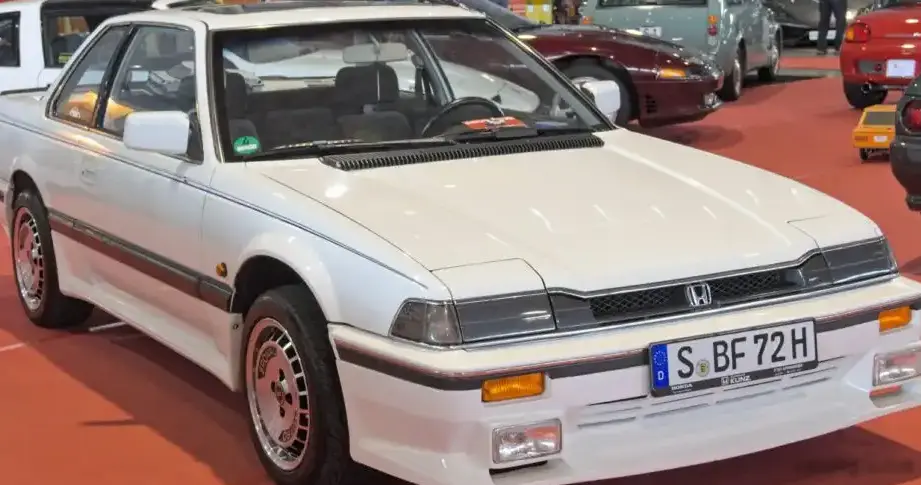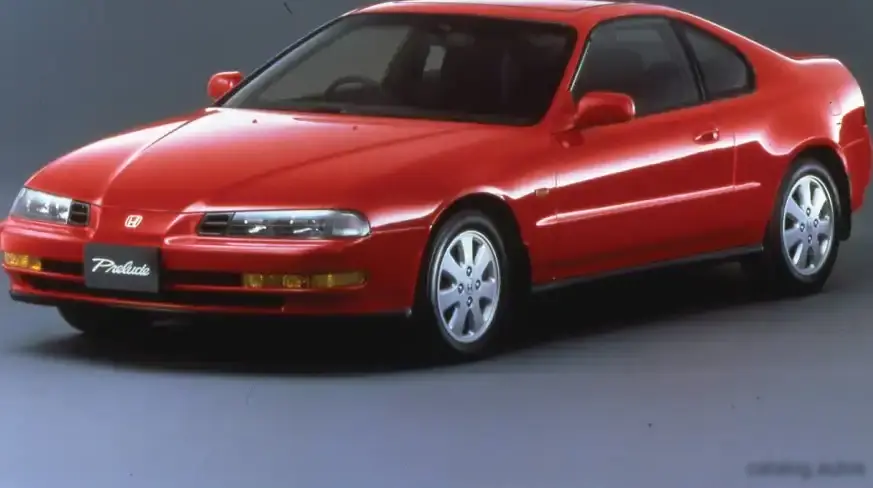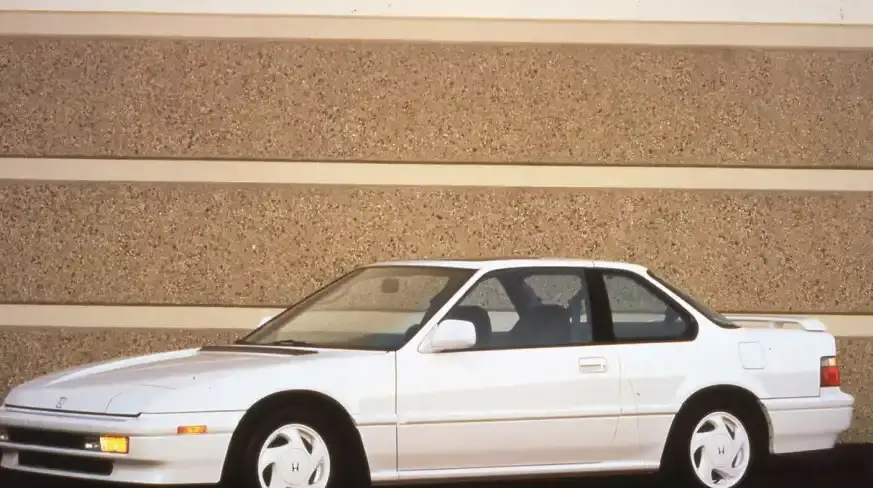
The Honda Prelude III (BA4) 2.0 i EX 16V, produced from 1990 to 1992, represents a significant iteration in Honda’s popular coupe lineage. Falling within the third generation (BA) of the Prelude, the BA4 variant was specifically tailored for European and Japanese markets, though examples have found their way to North America through grey market imports. This model occupied a mid-range position within the BA series, offering a balance between performance and affordability, slotting below the more powerful 2.1-liter models and above the base 1.6 and 2.0-liter non-VTEC options. The BA generation, built on the extended Honda Accord platform, aimed to provide a more sophisticated and sporty grand touring experience than its predecessors.
Technical Specifications
| Brand | Honda |
| Model | Prelude |
| Generation | Prelude III (BA) |
| Type | 2.0 i EX 16V (BA4) (140 Hp) |
| Start of Production | 1990 |
| End of Production | 1992 |
| Powertrain Architecture | Internal Combustion Engine |
| Body Type | Coupe |
| Fuel Type | Petrol (Gasoline) |
| Engine Power | 140 Hp |
| Engine Aspiration | Naturally Aspirated |
Powertrain & Engine Architecture
The BA4 Prelude is powered by Honda’s F20A SOHC 16-valve engine, a 1997cc (2.0-liter) inline-four cylinder. While not featuring Honda’s then-revolutionary VTEC (Variable Valve Timing and Lift Electronic Control) system, the F20A still delivered a respectable 140 horsepower at 6,300 rpm and 139 lb-ft of torque at 4,800 rpm. The engine utilized a multi-point fuel injection system, contributing to improved fuel efficiency and smoother operation compared to earlier carbureted or single-point injection systems. The cylinder head featured four valves per cylinder, enhancing breathing and overall performance. The engine block was constructed from cast iron, providing durability, while the cylinder head was made of aluminum to reduce weight.
The BA4 typically came equipped with a four-speed automatic transmission. This transmission, while offering convenience, was geared more towards comfortable cruising than outright performance. It featured electronic control for smoother shifts, but lacked the responsiveness of the available five-speed manual transmission. The automatic transmission’s gear ratios were optimized for fuel economy and relaxed highway driving, resulting in a 0-60 mph time of approximately 9.5-10.5 seconds, slower than the manual variants.
Driving Characteristics
The 2.0 i EX 16V automatic offered a comfortable and refined driving experience. The automatic transmission, while not sporty, provided smooth and predictable gear changes. Acceleration was adequate for everyday driving, but the engine felt somewhat strained when pushed hard, particularly when attempting quick overtaking maneuvers. The lack of VTEC meant the engine’s power delivery was more linear, without the noticeable surge associated with VTEC-equipped models. The steering was light and precise, contributing to easy maneuverability. The suspension, tuned for comfort, absorbed bumps and imperfections in the road well, but resulted in some body roll during cornering. Compared to the manual transmission versions, the automatic BA4 felt less engaging and offered a less direct connection to the engine.
Equipment & Trim Levels
The “EX” designation indicated a higher level of equipment compared to the base Prelude models. Standard features on the BA4 2.0 i EX 16V typically included power windows, power locks, power mirrors, air conditioning, and a decent stereo system. The interior featured comfortable cloth upholstery, and the dashboard layout was driver-focused, with easy-to-read gauges. Optional extras included a sunroof, upgraded sound system, and alloy wheels. The BA4 also featured a distinctive rear spoiler, adding to its sporty appearance. The interior trim was generally well-appointed for its time, with a focus on practicality and durability.
Chassis & Braking
The Prelude BA4 utilized a MacPherson strut front suspension and a double-wishbone rear suspension, providing a good balance between ride comfort and handling. The front suspension incorporated a stabilizer bar to reduce body roll. The braking system consisted of ventilated disc brakes on the front wheels and drum brakes on the rear wheels. While adequate for normal driving conditions, the rear drum brakes were a point of criticism, as they lacked the stopping power and fade resistance of disc brakes. The chassis was relatively lightweight, contributing to the car’s nimble handling characteristics. The steering system was a power-assisted rack-and-pinion setup, providing precise and responsive steering feel.
Market Reception & Comparison
The BA4 2.0 i EX 16V was generally well-received by automotive critics. It was praised for its comfortable ride, refined interior, and reliable engine. However, the automatic transmission was often criticized for its lack of sportiness and its impact on fuel economy. Compared to the 2.1-liter models, the BA4 offered less power and performance, but at a lower price point. Compared to the base 1.6 and 2.0-liter models, the BA4 provided a noticeable increase in power and a more refined driving experience. Fuel economy was respectable for its time, averaging around 25-30 mpg in mixed driving conditions. Reliability was a strong point, with the F20A engine proving to be durable and long-lasting.
Legacy
The Honda Prelude BA4 2.0 i EX 16V has developed a loyal following among enthusiasts. The F20A engine is known for its reliability and relatively simple maintenance requirements. While not as sought-after as the VTEC-equipped models, the BA4 offers a more affordable entry point into Prelude ownership. Today, well-maintained examples are becoming increasingly rare and are considered collectible. Common issues include wear and tear on the suspension components, corrosion in areas prone to rust, and occasional problems with the automatic transmission. However, parts availability is generally good, and the car’s relatively simple mechanical design makes it a popular choice for DIY mechanics. The BA4 represents a sweet spot in the Prelude lineage, offering a blend of comfort, reliability, and affordability that continues to appeal to enthusiasts today.