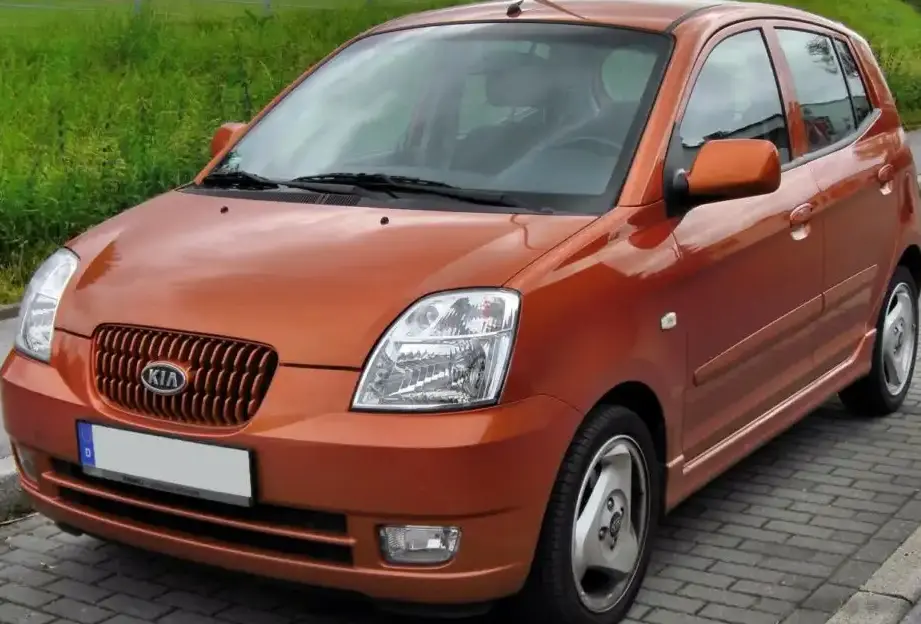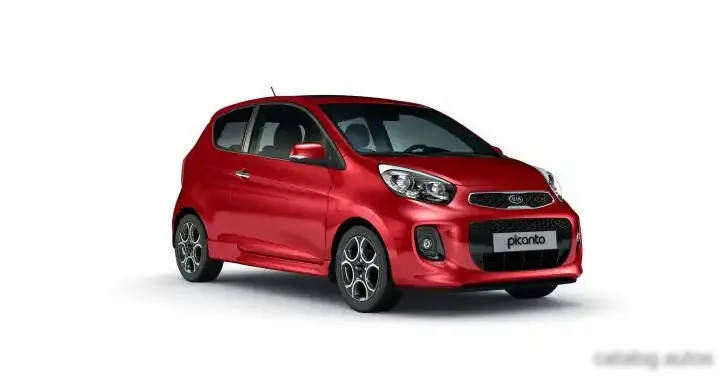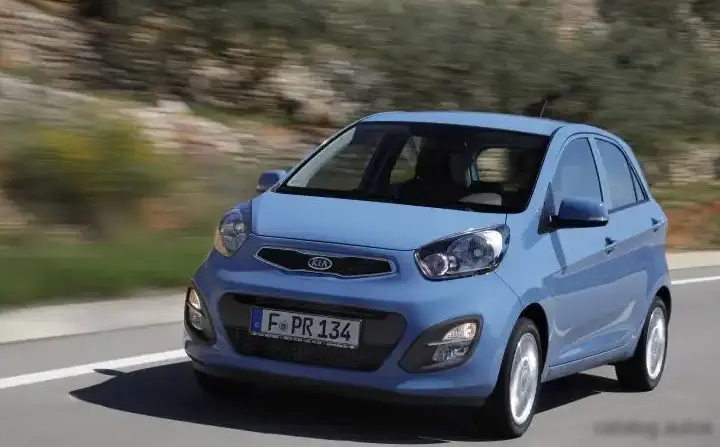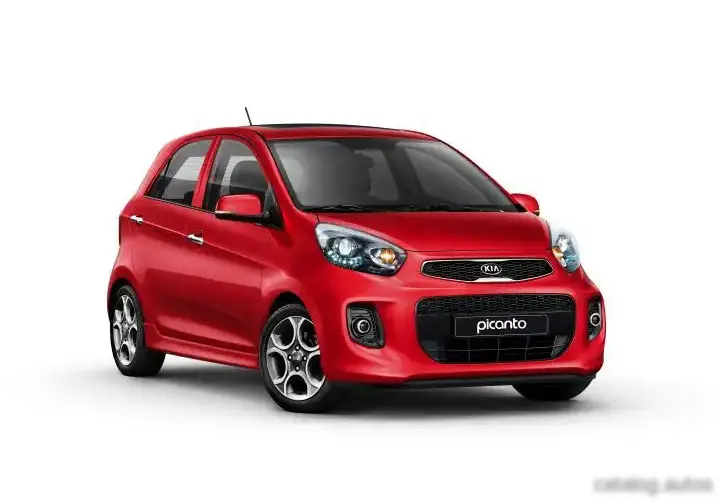
The Kia Picanto II 5-door, specifically the facelifted version released in 2015, represented a significant step forward for Kia’s city car offering. Produced from 2015 to 2017, the 1.2-liter (85 horsepower) automatic variant occupied an important position in the Picanto lineup, aimed at buyers prioritizing ease of use and affordability within the compact hatchback segment. This model was primarily marketed in Europe and other regions where small, fuel-efficient vehicles are highly sought after. It built upon the TA platform (internally known as the 1HX0/A3) which offered improved space and refinement over its predecessor.
Technical Specifications
| Brand | Kia |
| Model | Picanto |
| Generation | Picanto II 5D (facelift 2015) |
| Type (Engine) | 1.2 (85 Hp) Automatic |
| Start of production | 2015 |
| End of production | 2017 |
| Powertrain Architecture | Internal Combustion engine |
| Body type | Hatchback |
| Seats | 5 |
| Doors | 5 |
| Fuel consumption (urban) | 7.3 l/100 km (32.2 US mpg, 38.7 UK mpg, 13.7 km/l) |
| Fuel consumption (extra urban) | 4.6 l/100 km (51.1 US mpg, 61.4 UK mpg, 21.7 km/l) |
| Fuel consumption (combined) | 5.6 l/100 km (42 US mpg, 50.4 UK mpg, 17.9 km/l) |
| CO2 emissions | 130 g/km |
| Fuel Type | Petrol (Gasoline) |
| Acceleration 0 – 100 km/h | 13.7 sec |
| Acceleration 0 – 62 mph | 13.7 sec |
| Acceleration 0 – 60 mph | 13 sec |
| Maximum speed | 163 km/h (101.28 mph) |
| Emission standard | Euro 6 |
| Weight-to-power ratio | 10.4 kg/Hp |
| Weight-to-torque ratio | 7.4 kg/Nm |
| Power | 85 Hp @ 6000 rpm |
| Torque | 120 Nm @ 4000 rpm (88.51 lb.-ft. @ 4000 rpm) |
| Engine layout | Front, Transverse |
| Engine Model/Code | G4LA |
| Engine displacement | 1248 cm3 (76.16 cu. in.) |
| Number of cylinders | 4 |
| Engine configuration | Inline |
| Cylinder Bore | 71 mm (2.8 in.) |
| Piston Stroke | 78.8 mm (3.1 in.) |
| Compression ratio | 10.5:1 |
| Number of valves per cylinder | 4 |
| Fuel injection system | Multi-port manifold injection |
| Engine aspiration | Naturally aspirated engine |
| Engine oil capacity | 3.5 l (3.7 US qt | 3.08 UK qt) |
| Coolant capacity | 5.1 l (5.39 US qt | 4.49 UK qt) |
| Kerb Weight | 885-994 kg (1951.09 – 2191.39 lbs.) |
| Max. weight | 1430 kg (3152.61 lbs.) |
| Max load | 436-545 kg (961.22 – 1201.52 lbs.) |
| Trunk (boot) space – minimum | 200 l (7.06 cu. ft.) |
| Trunk (boot) space – maximum | 870 l (30.72 cu. ft.) |
| Fuel tank capacity | 35 l (9.25 US gal | 7.7 UK gal) |
| Length | 3595 mm (141.54 in.) |
| Width | 1595 mm (62.8 in.) |
| Width including mirrors | 1880 mm (74.02 in.) |
| Height | 1480 mm (58.27 in.) |
| Wheelbase | 2385 mm (93.9 in.) |
| Front track | 1409-1421 mm (55.47 – 55.94 in.) |
| Rear (Back) track | 1412-1424 mm (55.59 – 56.06 in.) |
| Minimum turning circle | 9.6 m (31.5 ft.) |
| Drivetrain Architecture | Front wheel drive |
| Number of gears | 4 |
| Gearbox type | Automatic transmission |
| Front suspension | Independent, McPherson with coil spring and anti-roll bar |
| Rear suspension | Semi-independent, coil spring |
| Front brakes | Ventilated discs |
| Rear brakes | Disc |
| Assisting systems | ABS (Anti-lock braking system) |
| Steering type | Steering rack and pinion |
| Power steering | Electric |
| Tires size | 155/70 R13 75T; 165/60 R14 75H; 175/50 R15 75H |
| Wheel rims size | 4.5J x 13 ET 46; 5.0J x 14 ET 49; 5.5J x 15 |
Powertrain & Engine Architecture
The heart of this Picanto variant is the Kia G4LA 1.2-liter inline-four cylinder engine. This engine, a mainstay in several Hyundai and Kia models, is known for its simplicity and reliability. It utilizes a multi-point fuel injection system, delivering fuel directly into the intake ports. The engine features a single overhead camshaft (SOHC) design with four valves per cylinder, contributing to reasonable efficiency and power output for its size. The 85 horsepower and 120 Nm (88.5 lb-ft) of torque are modest, but sufficient for urban driving. Paired with a four-speed automatic transmission, the powertrain prioritizes smooth operation over outright performance. This transmission, while not the most technologically advanced, is durable and provides a comfortable driving experience, especially in stop-and-go traffic. The automatic transmission’s gear ratios are tuned for fuel economy and ease of driving, rather than rapid acceleration.
Driving Characteristics
The 1.2-liter automatic Picanto delivers a predictable and undemanding driving experience. Acceleration is leisurely, taking approximately 13.7 seconds to reach 62 mph (100 km/h). The automatic transmission shifts smoothly, but can feel somewhat sluggish when needing to downshift for overtaking. Compared to the five-speed manual version, the automatic sacrifices some responsiveness and fuel efficiency. However, it offers a significant convenience advantage for drivers who frequently encounter congested roads. The steering is light and easy, making maneuvering in tight spaces effortless. The suspension is tuned for comfort, absorbing bumps and imperfections in the road surface reasonably well.
Equipment & Trim Levels
The 1.2-liter automatic Picanto typically came equipped with a reasonable level of standard features. These included air conditioning, central locking, power windows, and a basic audio system with USB connectivity. Higher trim levels, such as the ‘2’ or ‘3’ variants, added features like alloy wheels, a more sophisticated audio system, and additional safety equipment. Interior upholstery was typically cloth, with a simple and functional dashboard layout. Optional extras included a sunroof, parking sensors, and a navigation system.
Chassis & Braking
The Picanto II utilizes a front-wheel-drive layout with an independent McPherson strut suspension at the front and a semi-independent torsion beam suspension at the rear. This setup provides a good balance between ride comfort and handling. The braking system consists of ventilated discs at the front and solid discs at the rear, providing adequate stopping power for the vehicle’s weight and performance. Anti-lock Braking System (ABS) was standard, enhancing safety during emergency braking situations.
Market Reception & Comparison
The 1.2-liter automatic Picanto was generally well-received by critics as a practical and affordable city car. It was praised for its fuel efficiency, ease of driving, and surprisingly spacious interior for its size. However, some reviewers noted its lack of outright performance and the somewhat dated feel of the four-speed automatic transmission. Compared to other trims, such as the 1.0-liter manual, the automatic offered greater convenience but at the expense of fuel economy and a slightly higher price point. Against competitors like the Fiat 500 and Volkswagen Up!, the Picanto offered a compelling value proposition with its longer warranty and generous standard equipment.
Legacy
The Kia Picanto II 1.2-liter automatic has proven to be a reliable and durable vehicle in the used car market. The G4LA engine is known for its longevity, and the four-speed automatic transmission, while not cutting-edge, is generally robust. Common issues are relatively minor, often related to wear and tear on suspension components or routine maintenance items. Today, these Picantos represent an affordable and practical option for buyers seeking a small, fuel-efficient city car. Their simplicity and relatively low running costs make them an attractive choice for first-time car owners or those seeking a dependable second vehicle.