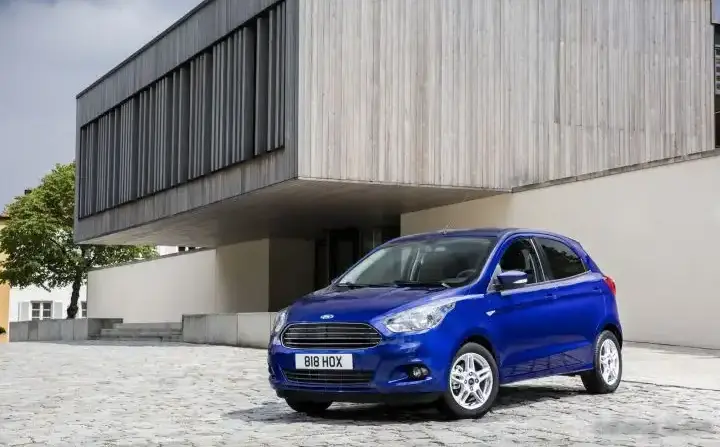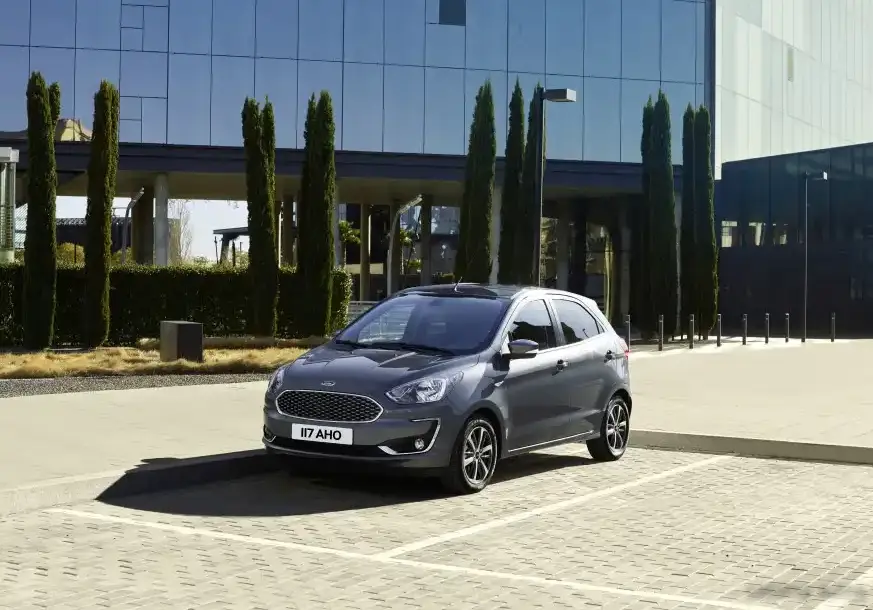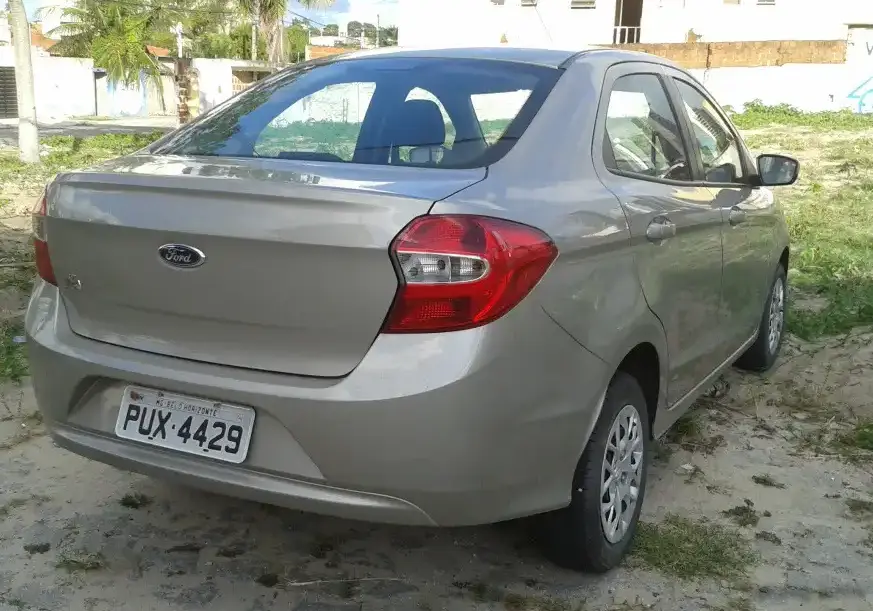
The Ford KA III 1.0 TiVCT 12V (85 hp) represents an entry-level offering within the third generation of the Ford KA, produced between 2014 and 2018. This variant was primarily marketed in Europe and South America, serving as a budget-friendly and fuel-efficient option in the subcompact car segment. It was built on the global Ford B-platform, shared with models like the Ford Fiesta, and aimed at buyers seeking a practical and affordable vehicle for urban driving. This specific engine and transmission combination occupied the base trim level, offering a balance between cost and usability.
Technical Specifications
| Brand | Ford |
| Model | KA |
| Generation | KA III |
| Type (Engine) | 1.0 TiVCT 12V (85 Hp) |
| Start of production | 2014 |
| End of production | 2018 |
| Powertrain Architecture | Internal Combustion engine |
| Body type | Sedan |
| Seats | 5 |
| Doors | 4 |
| Fuel Type | Petrol / Ethanol – E85 |
| Weight-to-power ratio | 12 kg/Hp, 83.2 Hp/tonne |
| Weight-to-torque ratio | 9.7 kg/Nm, 102.7 Nm/tonne |
| Power | 85 Hp @ 6300-6500 rpm |
| Power per litre | 85.3 Hp/l |
| Torque | 105 Nm @ 4500 rpm (77.44 lb.-ft. @ 4500 rpm) |
| Maximum engine speed | 6900 rpm |
| Engine layout | Front, Transverse |
| Engine displacement | 997 cm3 (60.84 cu. in.) |
| Number of cylinders | 3 |
| Engine configuration | Inline |
| Cylinder Bore | 71.9 mm (2.83 in.) |
| Piston Stroke | 81.8 mm (3.22 in.) |
| Compression ratio | 12:1 |
| Number of valves per cylinder | 4 |
| Fuel injection system | Multi-port manifold injection |
| Engine aspiration | Naturally aspirated engine |
| Valvetrain | DOHC, Ti-VCT |
| Engine oil capacity | 4 l (4.23 US qt | 3.52 UK qt) |
| Coolant | 5.5 l (5.81 US qt | 4.84 UK qt) |
| Kerb Weight | 1022 kg (2253.12 lbs.) |
| Max. weight | 1460 kg (3218.75 lbs.) |
| Max load | 438 kg (965.62 lbs.) |
| Trunk (boot) space – minimum | 445 l (15.72 cu. ft.) |
| Fuel tank capacity | 51.6 l (13.63 US gal | 11.35 UK gal) |
| Length | 4254 mm (167.48 in.) |
| Width | 1695 mm (66.73 in.) |
| Width including mirrors | 1911 mm (75.24 in.) |
| Height | 1460 mm (57.48 in.) |
| Wheelbase | 2491 mm (98.07 in.) |
| Front track | 1480 mm (58.27 in.) |
| Rear (Back) track | 1460 mm (57.48 in.) |
| Ride height (ground clearance) | 140 mm (5.51 in.) |
| Drag coefficient (Cd) | 0.35 |
| Minimum turning circle (turning diameter) | 9.8 m (32.15 ft.) |
| Drivetrain Architecture | The Internal combustion engine (ICE) drives the front wheels of the vehicle. |
| Drive wheel | Front wheel drive |
| Number of gears and type of gearbox | 5 gears, manual transmission |
| Front brakes | Disc |
| Rear brakes | Drum |
| Assisting systems | ABS (Anti-lock braking system) |
| Steering type | Steering rack and pinion |
| Power steering | Electric Steering |
| Tires size | 175/65 R14; 195/55 R15 |
| Wheel rims size | 5.5J x 14; 6.0J x 15 |
INTRODUCTION
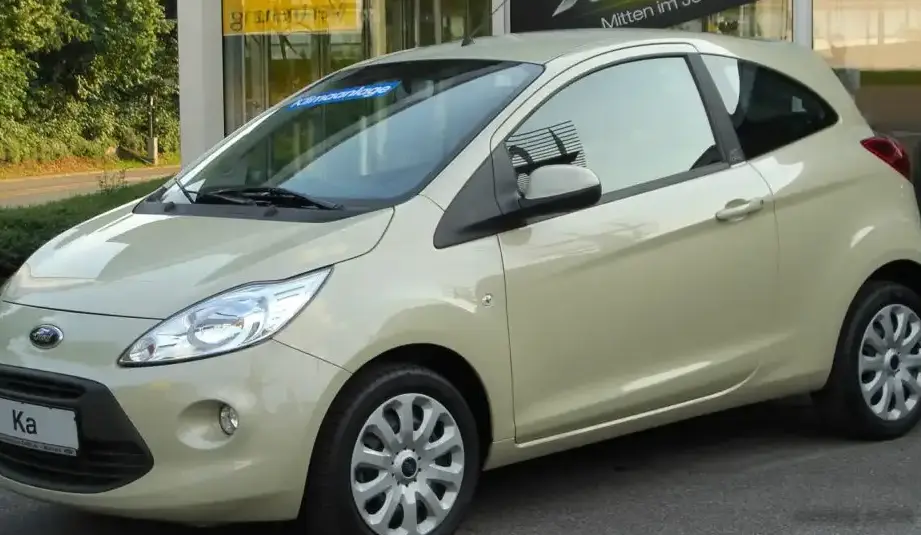
The Ford KA III, launched in 2014, represented a significant departure from its predecessors, adopting a more global design language and a focus on practicality. The 1.0 TiVCT 12V (85 hp) variant served as the entry point to the KA III range, aimed at cost-conscious buyers. This model was a key component of Ford’s strategy to offer affordable transportation in emerging markets and as a city car in Europe. It replaced the older KA II, offering improved space, safety features, and a more modern driving experience. The KA III was produced as a four-door sedan, a departure from the earlier KA models which were primarily three-door hatchbacks.
Powertrain & Engine Architecture
At the heart of the KA III 1.0 TiVCT is the Ford 1.0-liter three-cylinder petrol engine, internally designated as the AJKE. This engine is part of Ford’s EcoBoost family, though this particular version lacks turbocharging. It features a double overhead camshaft (DOHC) valvetrain with Twin Independent Variable Camshaft Timing (Ti-VCT), allowing for optimized valve timing for improved efficiency and performance. The engine utilizes multi-point fuel injection and a compression ratio of 12:1. The 85 hp output is achieved at 6300-6500 rpm, with a torque figure of 105 Nm (77.44 lb-ft) at 4500 rpm. The engine is transversely mounted at the front of the vehicle. The KA III 1.0 TiVCT was typically paired with a five-speed manual transmission, designed for durability and ease of use. While an automatic transmission was offered in some markets, it was not common with this specific engine configuration.
Driving Characteristics
The 1.0 TiVCT 12V engine, coupled with the five-speed manual transmission, provides adequate performance for urban driving. Acceleration is modest, with a 0-60 mph time estimated around 14-15 seconds. The engine feels relatively responsive at lower RPMs, thanks to the Ti-VCT technology, but power does taper off as the revs climb. The gear ratios are tuned for fuel efficiency rather than outright performance. Compared to higher-output versions of the KA III, such as those equipped with the 1.5-liter engine, the 1.0 TiVCT feels noticeably slower, particularly when fully loaded or tackling inclines. However, its lighter weight and nimble handling make it enjoyable to drive in city environments. The steering is light and precise, making maneuvering in tight spaces easy.
Equipment & Trim Levels
The KA III 1.0 TiVCT typically came with a basic level of equipment, reflecting its position as the entry-level trim. Standard features generally included power steering, air conditioning, central locking, and front power windows. Safety features such as ABS (Anti-lock Braking System) and dual front airbags were also standard. Interior upholstery was typically cloth, with a simple dashboard layout. Optional extras included rear power windows, a radio/CD player, and alloy wheels. Higher trim levels offered additional features like a more sophisticated audio system, upgraded interior trim, and fog lights.
Chassis & Braking
The KA III utilizes a MacPherson strut front suspension and a twist-beam rear suspension. This setup provides a comfortable ride quality, particularly on smoother roads. The front brakes are disc brakes, while the rear brakes are drum brakes, a cost-saving measure common in this segment. The steering is a rack and pinion system with electric power assistance. The relatively lightweight construction of the KA III contributes to its agile handling. Stabilizer bars were typically fitted to the front suspension to reduce body roll during cornering.
Market Reception & Comparison
The Ford KA III 1.0 TiVCT was generally well-received by critics as a practical and affordable city car. Its fuel efficiency was a major selling point, with combined fuel economy figures typically around 45-50 mpg. However, some reviewers criticized its lack of power and basic interior. Compared to other trims in the KA III lineup, the 1.0 TiVCT offered the lowest price point but also the least amount of performance. Competitors in the subcompact segment, such as the Volkswagen up!, Hyundai i10, and Fiat Panda, offered similar levels of practicality and affordability. The KA III’s advantage lay in its spacious interior and Ford’s established brand reputation.
Legacy
The 1.0 TiVCT engine has proven to be a relatively reliable unit, with few major mechanical issues reported. The KA III, in general, has established a reputation for being a durable and low-cost-to-maintain vehicle. On the used car market, the 1.0 TiVCT variant remains a popular choice for buyers seeking an affordable and fuel-efficient runabout. Its simplicity and ease of repair make it an attractive option for those on a budget. While not a performance icon, the Ford KA III 1.0 TiVCT 12V (85 hp) played a significant role in providing accessible transportation to a wide range of buyers.