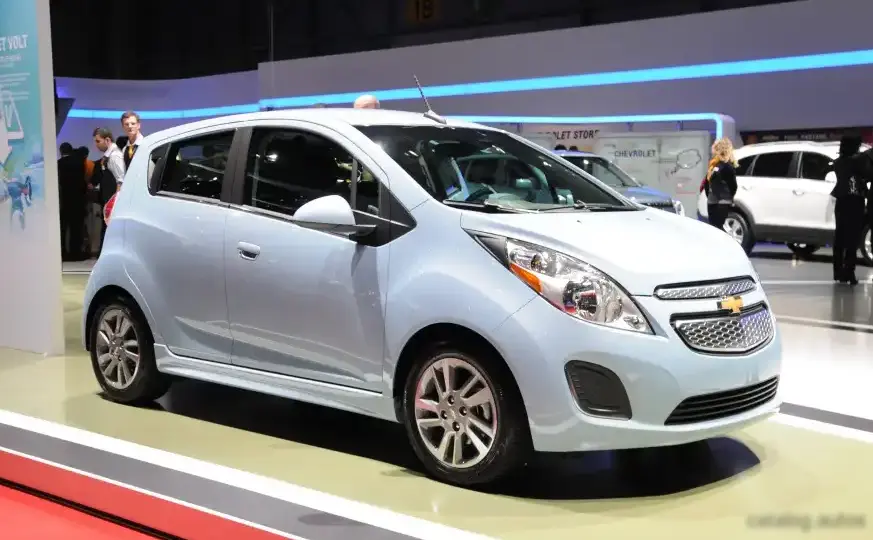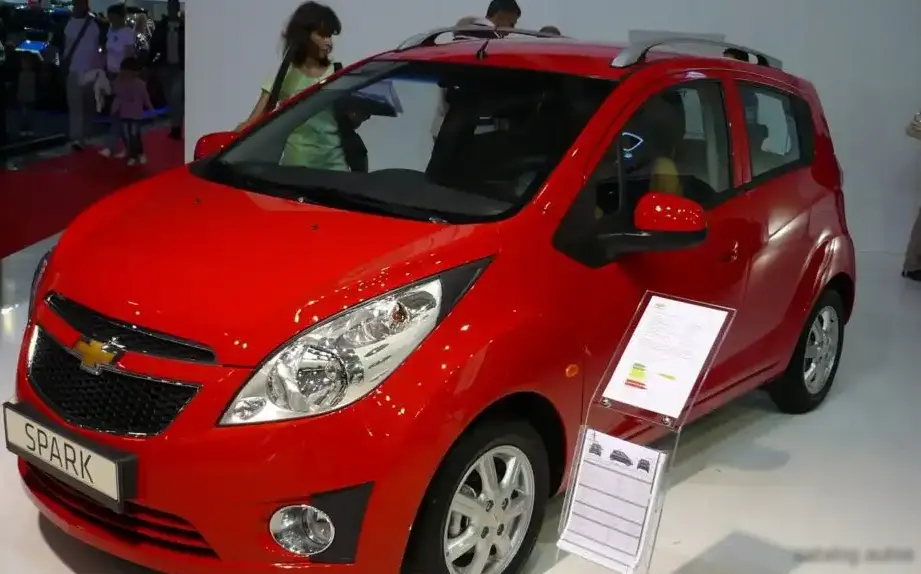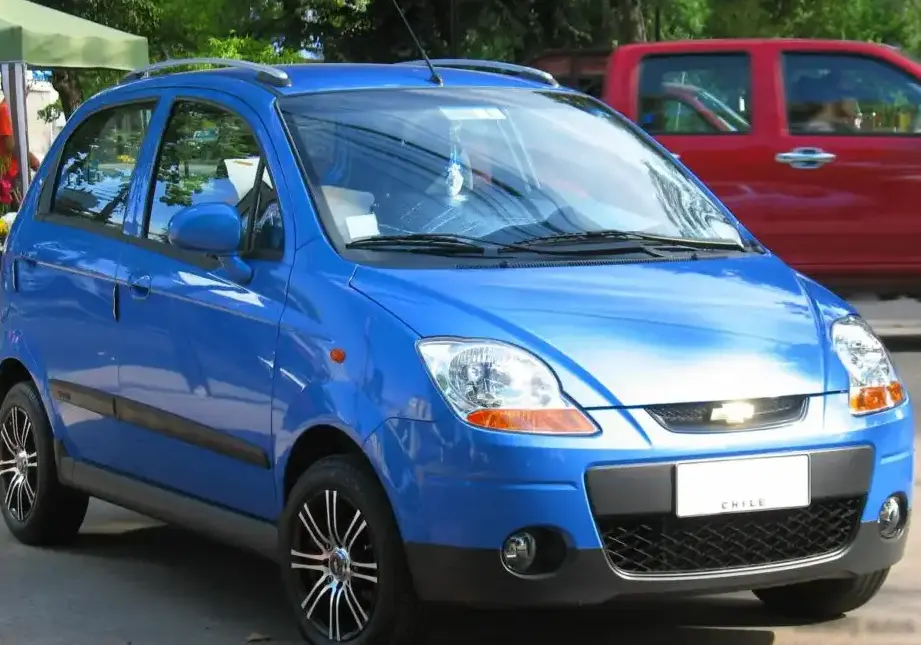
The Chevrolet Spark II 1.0 i (63 hp) was a subcompact hatchback produced from 2005 to 2009, primarily aimed at the European and Asian markets. Positioned as the entry-level trim of the second-generation Spark (also known as the Daewoo Kalos in some regions), this variant offered an affordable and economical transportation solution. It represented Chevrolet’s attempt to compete in the burgeoning microcar segment, offering a practical and relatively spacious interior for its diminutive size. The Spark II, built on the GM4 platform, was a significant departure from its predecessor, offering improved styling, safety features, and overall refinement.
Technical Specifications
| Brand | Chevrolet |
| Model | Spark |
| Generation | Spark II |
| Type (Engine) | 1.0 i (63 Hp) |
| Start of production | 2005 |
| End of production | 2009 |
| Powertrain Architecture | Internal Combustion engine |
| Body type | Hatchback |
| Seats | 5 |
| Doors | 5 |
| Fuel consumption (urban) | 8.8 l/100 km (26.7 US mpg) |
| Fuel consumption (extra urban) | 5.3 l/100 km (44.4 US mpg) |
| Fuel consumption (combined) | 6.6 l/100 km (35.6 US mpg) |
| Fuel Type | Petrol (Gasoline) |
| Acceleration 0 – 100 km/h | 12.9 sec |
| Acceleration 0 – 62 mph | 12.9 sec |
| Acceleration 0 – 60 mph | 12.3 sec |
| Maximum speed | 152 km/h (94.45 mph) |
| Weight-to-power ratio | 12.6 kg/Hp |
| Weight-to-torque ratio | 9.1 kg/Nm |
| Power | 63 Hp @ 5400 rpm |
| Torque | 87 Nm @ 4200 rpm (64.17 lb.-ft. @ 4200 rpm) |
| Engine layout | Front, Transverse |
| Engine displacement | 995 cm3 (60.72 cu. in.) |
| Number of cylinders | 4 |
| Engine configuration | Inline |
| Cylinder Bore | 68.5 mm (2.7 in.) |
| Piston Stroke | 67.5 mm (2.66 in.) |
| Compression ratio | 9.3:1 |
| Number of valves per cylinder | 2 |
| Fuel injection system | Multi-port manifold injection |
| Engine aspiration | Naturally aspirated |
| Valvetrain | OHC |
| Engine oil capacity | 3.2 l (3.38 US qt | 2.82 UK qt) |
| Coolant capacity | 4.2 l (4.44 US qt | 3.7 UK qt) |
| Kerb Weight | 796 kg (1754.88 lbs.) |
| Max. weight | 1230 kg (2711.69 lbs.) |
| Max load | 434 kg (956.81 lbs.) |
| Trunk (boot) space – minimum | 145 l (5.12 cu. ft.) |
| Trunk (boot) space – maximum | 830 l (29.31 cu. ft.) |
| Fuel tank capacity | 38 l (10.04 US gal | 8.36 UK gal) |
| Length | 3495 mm (137.6 in.) |
| Width | 1495 mm (58.86 in.) |
| Height | 1485 mm (58.46 in.) |
| Wheelbase | 2340 mm (92.13 in.) |
| Front track | 1315 mm (51.77 in.) |
| Rear track | 1280 mm (50.39 in.) |
| Minimum turning circle | 9.2 m (30.18 ft.) |
| Drivetrain | Front wheel drive |
| Number of gears | 5 gears, manual transmission |
| Front suspension | Spring Strut |
| Rear suspension | Coil spring |
| Front brakes | Disc |
| Rear brakes | Drum |
| Assisting systems | ABS (Anti-lock braking system) |
| Steering type | Steering rack and pinion |
| Tires size | 145/70 R13; 155/65 R13 |
| Wheel rims size | 4.5Jx13 |
Powertrain & Engine Architecture
The heart of the Spark II 1.0 i was the X10XE engine, a small-displacement, inline-four cylinder petrol engine. This engine, part of the GM Family 0 family, was known for its simplicity and fuel efficiency. It featured a single overhead camshaft (SOHC) valvetrain with two valves per cylinder. Fuel delivery was handled by a multi-point fuel injection system, providing adequate, though not exceptional, performance. The engine’s 995cc displacement produced 63 horsepower at 5400 rpm and 87 Nm (64 lb-ft) of torque at 4200 rpm. The engine was transversely mounted, driving the front wheels. The transmission was a standard five-speed manual gearbox, optimized for economy rather than sporty driving. While an automatic transmission was offered in some markets with the Spark II, it was not commonly paired with the base 1.0L engine.
Driving Characteristics
The 1.0L engine and five-speed manual transmission combination in the Spark II delivered modest performance. Acceleration was leisurely, taking approximately 12.9 seconds to reach 62 mph (100 km/h). The car was best suited for urban driving and shorter commutes. The gear ratios were relatively tall, prioritizing fuel economy over rapid acceleration. Compared to higher-trim Spark II models equipped with the 1.2L engine, the 1.0L felt noticeably underpowered, especially when fully loaded or tackling inclines. However, the light weight of the vehicle (around 796 kg or 1755 lbs) helped to mitigate the lack of horsepower. The steering was light and easy, making it maneuverable in tight spaces, but lacked significant feedback.
Equipment & Trim Levels
The 1.0 i variant of the Spark II typically represented the base trim level. Standard equipment generally included power steering, central locking, and front airbags. Interior appointments were basic, with cloth upholstery and a functional, if somewhat spartan, dashboard layout. Air conditioning was often an optional extra, as were power windows and a radio/CD player. The rear seats could be folded down to increase cargo space, offering some flexibility for carrying larger items. The overall focus was on providing essential transportation at an affordable price point.
Chassis & Braking
The Spark II utilized a relatively simple chassis design. Front suspension consisted of MacPherson struts, while the rear employed a torsion beam axle with coil springs. This setup provided a comfortable, if not particularly sporty, ride. Braking duties were handled by disc brakes at the front and drum brakes at the rear. Anti-lock Braking System (ABS) was standard, enhancing safety. The relatively light weight of the vehicle contributed to acceptable braking performance, but the drum brakes on the rear wheels limited overall stopping power compared to all-disc setups found on higher-spec models.
Market Reception & Comparison
The Chevrolet Spark II 1.0 i was generally well-received as an affordable and economical city car. Critics praised its fuel efficiency and surprisingly spacious interior for its size. However, the engine’s lack of power was a common criticism. Compared to other microcars of the time, such as the Fiat Panda or the Toyota Aygo, the Spark II offered a competitive level of equipment and practicality. The 1.2L engine offered in higher trims provided a noticeable performance boost, but at a higher price point. Fuel economy figures were competitive, averaging around 35.6 US mpg (6.6 l/100km) in combined driving conditions.
Legacy
The Chevrolet Spark II 1.0 i, while not a performance icon, proved to be a reliable and economical choice for budget-conscious buyers. The X10XE engine, while simple, is known for its durability and relatively low maintenance costs. On the used car market, these Sparks are often found with high mileage but remain relatively affordable. Common issues are typically related to wear and tear, such as suspension components and exhaust systems. The Spark II laid the groundwork for subsequent generations of the Spark, which continued to evolve as a popular choice in the microcar segment. Its legacy lies in providing accessible and practical transportation for a wide range of drivers.