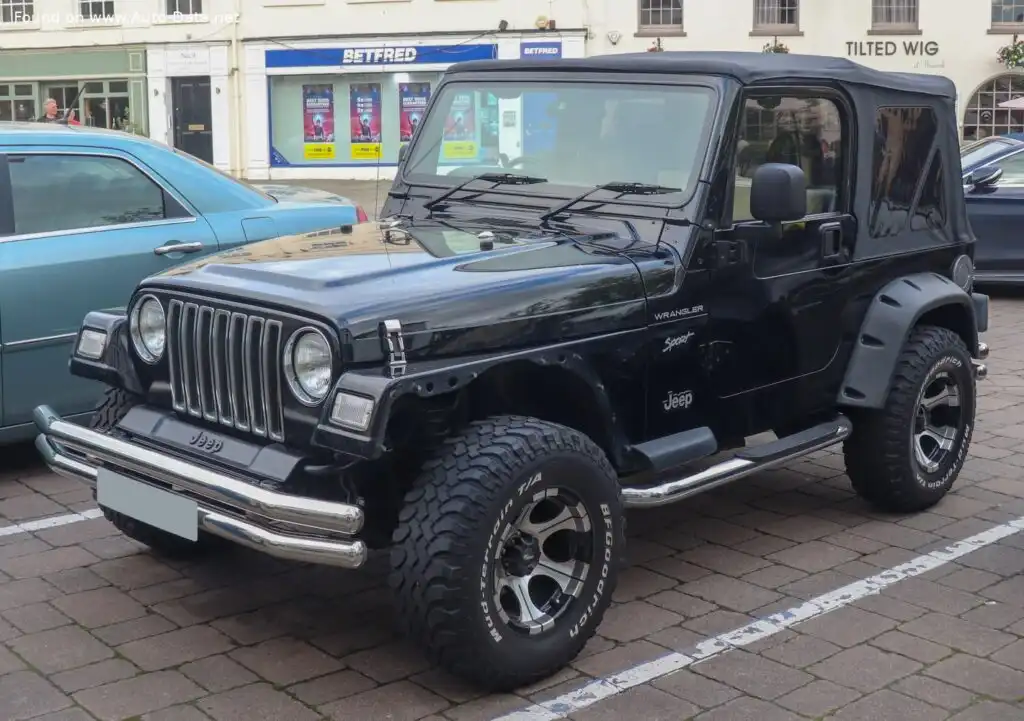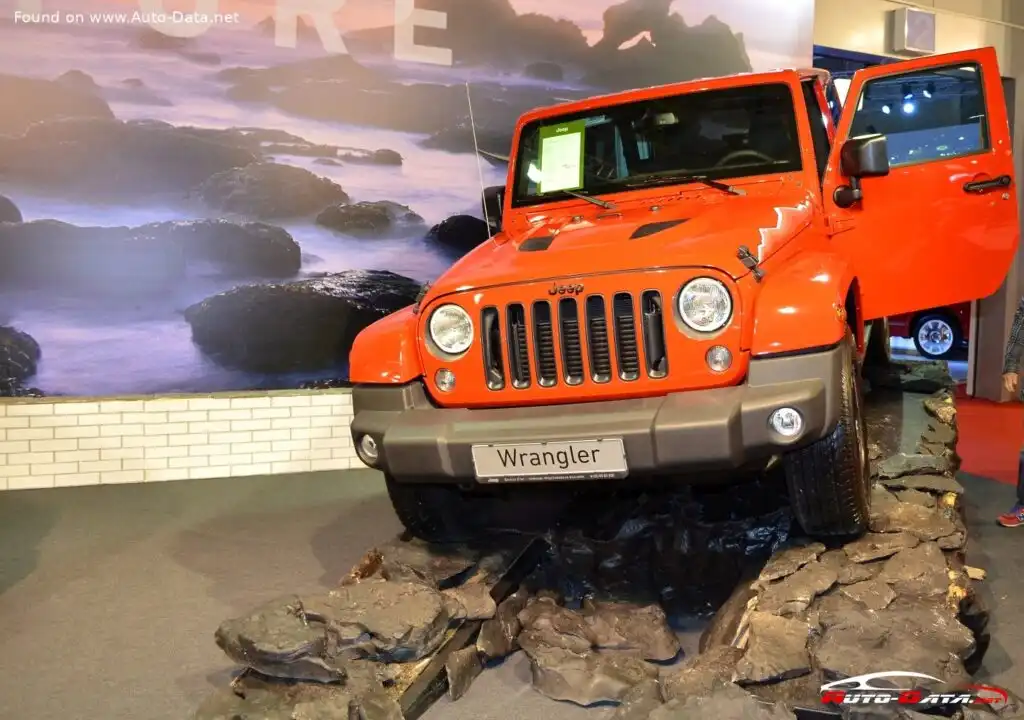
The Jeep Wrangler JK Sahara 3.6i V6 24V 4×4 Automatic represents a significant iteration of the iconic Wrangler, produced from 2011 to 2018. Falling within the third generation (JK) of the Wrangler lineage, this variant aimed to blend the model’s renowned off-road capability with a degree of everyday comfort and convenience. Positioned as a mid-to-high trim level, the Sahara offered a more refined experience than the base Sport model, while remaining a capable off-roader, unlike the more luxury-focused Rubicon. This particular configuration, featuring the 3.6-liter Pentastar V6 engine paired with a five-speed automatic transmission, was a popular choice for buyers seeking a balance between power, usability, and ease of driving.
Technical Specifications
| Brand | Jeep |
| Model | Wrangler |
| Generation | Wrangler III (JK) |
| Type | Sahara 3.6i V6 24V (285 Hp) 4×4 Automatic |
| Start of production | 2011 |
| End of production | 2018 |
| Powertrain Architecture | Internal Combustion engine |
| Body type | Off-road vehicle |
| Seats | 4 |
| Doors | 2 |
| Fuel consumption (urban) | 15.6 l/100 km (15.1 US mpg, 18.1 UK mpg, 6.4 km/l) |
| Fuel consumption (extra urban) | 8.8 l/100 km (26.7 US mpg, 32.1 UK mpg, 11.4 km/l) |
| Fuel consumption (combined) | 11.3 l/100 km (20.8 US mpg, 25 UK mpg, 8.8 km/l) |
| CO2 emissions | 263 g/km |
| Fuel Type | Petrol (Gasoline) |
| Acceleration 0-100 km/h | 8.1 sec |
| Acceleration 0-60 mph | 7.7 sec |
| Maximum speed | 180 km/h (111.85 mph) |
| Emission standard | Euro 5 |
| Weight-to-power ratio | 6.2 kg/Hp |
| Weight-to-torque ratio | 5.1 kg/Nm |
| Power | 285 Hp @ 6350 rpm |
| Torque | 347 Nm @ 4300 rpm (255.93 lb.-ft. @ 4300 rpm) |
| Maximum engine speed | 6600 rpm |
| Engine layout | Front, Longitudinal |
| Engine Model/Code | Pentastar / ERB |
| Engine displacement | 3604 cm3 (219.93 cu. in.) |
| Number of cylinders | 6 |
| Engine configuration | V-engine |
| Cylinder Bore | 96 mm (3.78 in.) |
| Piston Stroke | 83 mm (3.27 in.) |
| Compression ratio | 10.2:1 |
| Number of valves per cylinder | 4 |
| Fuel injection system | Multi-port manifold injection |
| Engine aspiration | Naturally aspirated |
| Valvetrain | DOHC |
| Engine oil capacity | 5.7 l (6.02 US qt, 5.02 UK qt) |
| Coolant capacity | 13.25 l (14 US qt, 11.66 UK qt) |
| Kerb Weight | 1753 kg (3864.7 lbs.) |
| Max. weight | 2268 kg (5000.08 lbs.) |
| Max load | 515 kg (1135.38 lbs.) |
| Trunk space (min) | 142 l (5.01 cu. ft.) |
| Trunk space (max) | 430 l (15.19 cu. ft.) |
| Fuel tank capacity | 70 l (18.49 US gal, 15.4 UK gal) |
| Trailer load (braked) | 1000 kg (2204.62 lbs.) |
| Trailer load (unbraked) | 750 kg (1653.47 lbs.) |
| Length | 4223 mm (166.26 in.) |
| Width | 1873 mm (73.74 in.) |
| Height | 1840 mm (72.44 in.) |
| Wheelbase | 2424 mm (95.43 in.) |
| Front track | 1572 mm (61.89 in.) |
| Rear track | 1572 mm (61.89 in.) |
| Ride height | 259 mm (10.2 in.) |
| Drag coefficient | 0.495 |
| Turning circle | 10.36 m (33.99 ft.) |
| Approach angle | 38.4° |
| Departure angle | 31.3° |
| Ramp-over angle | 25.1° |
| Drivetrain | All wheel drive (4×4) |
| Gearbox | 5 gears, automatic transmission |
| Front suspension | Coil spring, Rigid axle, Transverse stabilizer |
| Rear suspension | Rigid axle, Transverse stabilizer, Coil spring |
| Front brakes | Ventilated discs, 302×28 mm |
| Rear brakes | Disc, 316×12 mm |
| Steering | Cone worm with recirculation balls, Hydraulic power steering |
| Tire size | 245/75 R17 |
| Wheel size | 17″ |
Powertrain & Engine Architecture
The heart of the JK Sahara is the 3.6-liter Pentastar V6 engine, designated as the ERB engine code. This engine represented a significant upgrade over the previous 3.8-liter V6, offering substantially more power and improved fuel efficiency. The Pentastar utilizes a 60-degree V-angle, contributing to a smoother running character. It features multi-port fuel injection and a double overhead camshaft (DOHC) valvetrain with four valves per cylinder. The engine’s design prioritizes low-end torque, making it well-suited for off-road driving. Paired with this engine is a five-speed automatic transmission (545RFE), chosen for its durability and relatively smooth shifts. While not the most technologically advanced automatic available at the time, it proved to be a reliable partner for the Pentastar V6, providing adequate gear ratios for both on-road cruising and off-road crawling.
Driving Characteristics
The 285 horsepower and 260 lb-ft of torque delivered by the 3.6L Pentastar, when channeled through the five-speed automatic, provided a noticeable improvement in performance over earlier Wrangler models. Acceleration from 0-60 mph was achieved in around 7.7 seconds, making it reasonably quick for an off-road vehicle. The automatic transmission, while not offering the driver engagement of a manual, provided convenient operation, particularly in urban environments or during challenging off-road conditions. The gear ratios were optimized for low-end torque, allowing for confident crawling over obstacles. However, the automatic transmission could sometimes feel hesitant during quick acceleration, and the lack of a sixth gear resulted in higher engine speeds at highway cruising speeds, impacting fuel economy. Compared to the manual transmission equipped Wranglers, the automatic version sacrificed some responsiveness for ease of use.
Equipment & Trim Levels
The Sahara trim level included several standard features designed to enhance comfort and convenience. These typically included air conditioning, power windows and locks, a premium audio system with a touchscreen display, and upgraded cloth upholstery. The Sahara also featured body-color fender flares and a chrome grille, giving it a more refined appearance than the base Sport model. Optional extras included leather upholstery, a navigation system, a premium sound system, and a dual-top configuration (soft top and hard top). The Sahara aimed to provide a balance between off-road capability and on-road comfort, making it a popular choice for daily drivers who also enjoyed occasional off-road adventures.
Chassis & Braking
The JK Wrangler utilizes a robust body-on-frame construction, providing excellent durability and off-road capability. The front suspension features a coil spring and rigid axle setup with a transverse stabilizer bar, while the rear suspension employs a similar configuration. This setup provides ample wheel articulation for navigating challenging terrain. Braking duties are handled by ventilated discs at the front and solid discs at the rear. Anti-lock brakes (ABS) were standard equipment. The Sahara trim generally featured slightly upgraded components compared to the base Sport model, but the overall chassis and braking systems remained largely consistent across the JK range.
Market Reception & Comparison
The JK Wrangler Sahara 3.6i V6 Automatic was generally well-received by automotive critics. The Pentastar V6 engine was praised for its power and refinement, while the automatic transmission was appreciated for its ease of use. However, some critics noted the relatively high fuel consumption and the lack of a sixth gear in the automatic transmission. Compared to other trims, the Sahara offered a more comfortable and well-equipped experience than the base Sport model, but it lacked the extreme off-road focus of the Rubicon. Fuel economy figures averaged around 20.8 US mpg combined, which was typical for a vehicle of this type and size. Reliability was generally good, with the Pentastar V6 proving to be a durable and dependable engine.
Legacy
The JK Wrangler, and specifically the Sahara 3.6i V6 Automatic variant, has proven to be a popular and reliable vehicle in the used car market. The Pentastar V6 engine has a reputation for longevity, and the five-speed automatic transmission, while not without its quirks, has generally held up well over time. The JK Wrangler’s enduring popularity is a testament to its iconic design, off-road capability, and overall durability. Today, these Wranglers continue to be sought after by enthusiasts and those looking for a capable and versatile off-road vehicle. Maintenance costs are generally reasonable, and parts availability remains good, ensuring that these vehicles can be enjoyed for many years to come.